

惯性聚合 高效追踪和阅读你感兴趣的博客、新闻、科技资讯
阅读原文 在惯性聚合中打开

推荐订阅源

D
Docker
B
Blog RSS Feed
Microsoft Security Blog
Y
Y Combinator Blog
N
Netflix TechBlog - Medium
M
MIT News - Artificial intelligence
奇客Solidot–传递最新科技情报
奇客Solidot–传递最新科技情报
B
Blog
钛媒体:引领未来商业与生活新知
钛媒体:引领未来商业与生活新知
C
Check Point Blog
The GitHub Blog
The GitHub Blog
让小产品的独立变现更简单 - ezindie.com
P
Proofpoint News Feed
Martin Fowler
Martin Fowler
大猫的无限游戏
大猫的无限游戏
GbyAI
GbyAI
博客园_首页
A
About on SuperTechFans
Blog — PlanetScale
Blog — PlanetScale
人人都是产品经理
人人都是产品经理
T
Tailwind CSS Blog
aimingoo的专栏
aimingoo的专栏
T
The Blog of Author Tim Ferriss
The Cloudflare Blog

South China Morning Post

Singapore drama sparks Malaysian ire over scam hub depiction Time to act on stalled proposal toughening child abuse penalties, lawmakers say ‘Eager to explore’: Chinese migrants return to Venezuela after Maduro’s capture ‘We have no trust in the other side’: Iran blames US as talks end with no deal Opinion | Why securing Hong Kong’s economic future is a cultural question Hong Kong’s ministerial team spent HK$46.6 million on visits in past 3 years China family creates AI clone to comfort elderly mum after only son dies in crash Canada Olympic star Williams plans on ‘having a ‘blast’ at Hong Kong Sevens Singapore’s robotaxi drive revs up with help from Chinese AV leaders Editorial | Making Hong Kong desirable to overseas students must be a priority All 7 are dentists and hot. The Asian-American family blowing up social media Editorial | Ageing Hong Kong should welcome more open conversations around death My Take | Discovery Bay will never be the same if the restriction on taxi access is lifted Medical intern suspended after complaint over patient data in social media post Fish and vegetarianism major flashpoints in India’s West Bengal election Chinese crystal ‘paves way’ for GPS-free thorium clock navigation SCMP Best Bets: Endued can show his quality at Sha Tin Russia and Ukraine begin 32-hour ceasefire for Orthodox Easter Israeli spy firm Black Cube involved in Cyprus corruption probe ‘A big deal’: military drills show Tokyo’s growing focus on deterring China China targets middlemen in renewed crackdown on ‘hidden’ corruption Hong Kong-born gymnast leading quest to turn Singapore into elite hub Thais celebrate new year despite fuel price shocks delaying travel Harry Bentley tees up two good chances in Smart Golf and Elite Golf at Sha Tin Is this Kenyan rail project a model for Chinese and Western firms in Africa? Unearthing peace: ancient China gravesite reveals significance of broken weapons Meet Queen Elizabeth’s youngest grandchild, James, who was at Easter service Turtle found dead after apparent fall in Hong Kong’s Wong Tai Sin Landlords of 5,557 subdivided homes seek 3-year grace period to fix flats Trump critique pauses UK handover of Chagos Islands to Mauritius
Opinion | How Chinese philosophy influenced US founding f...
Chow Chung-yan · 2026-06-26 · via South China Morning Post

“Founding Father, Benjamin Franklin, published the sayings of Confucius in his colonial newspaper and today’s sculpture recognising that ancient Chinese age is carved into the face of the United States Supreme Court very proudly,” said US President Donald Trump in Beijing last month.

It took two-and-a-half centuries for an American president to explicitly acknowledge the profound Chinese impact on the US founding fathers. Trump’s recent declaration could be a historical first. Unless archival evidence surfaces to suggest otherwise, he is the first US president to formally recognise this intellectual gap on the world stage.

This admission stands in stark contrast to our current geopolitical discourse. Today, Western political commentary frequently depicts China as the ultimate cultural and ideological antithesis to the West. Yet, a deeper dive into history reveals that ancient Chinese philosophy did not just sit on the periphery of Western thought; it actively inspired both the European Enlightenment and the American founders.

To see this connection hidden in plain sight, one need only look at the architecture of American democracy itself. Sitting atop the East Pediment of the US Supreme Court building is a monumental trio of ancient lawgivers: Moses, Solon and Confucius.

Sculpted by Hermon MacNeil in the 1930s under the direction of architect Cass Gilbert, these figures were chosen to represent the core foundational pillars of American jurisprudence. MacNeil wanted to trace the lineage of American law. He included Confucius because he believed that true justice must prioritise collective civic virtue and social harmony over mere individual rights. Today, this statue of Confucius sits directly above the window of the chief justice’s office suite, serving as a silent, historic guardian watching over the highest judicial seat in America.

The Supreme Court pediment, however, is merely the physical manifestation of a deep intellectual current. While it would be a stretch to suggest that Thomas Jefferson sat down with The Analects to draft the Declaration of Independence, the structural parallels between ancient Chinese thought and American revolutionary ideals are unmistakable.
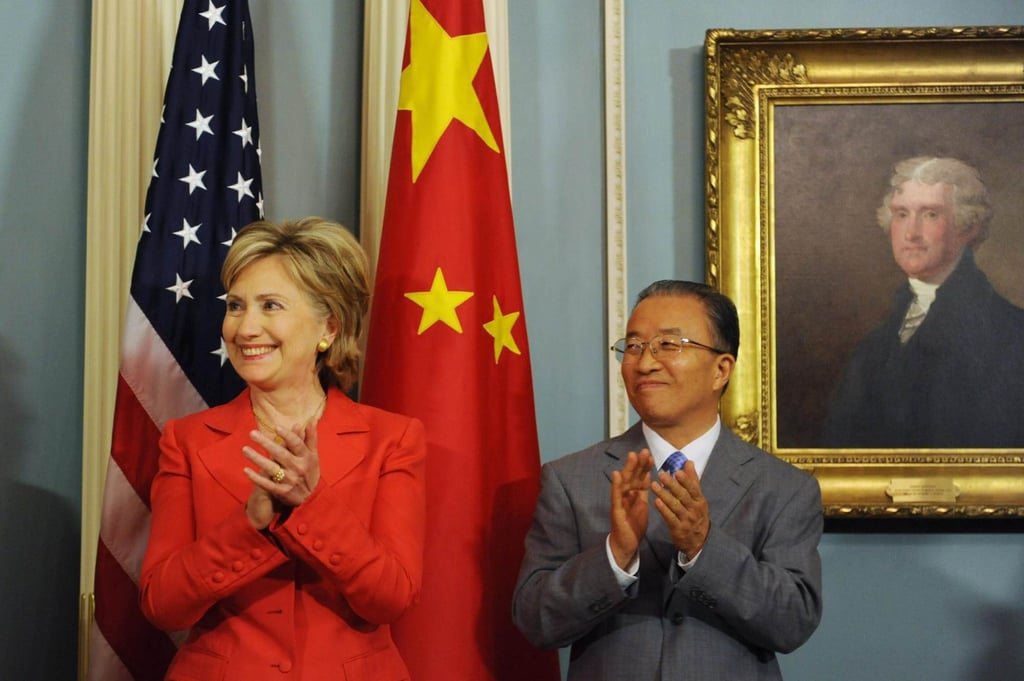
Then US secretary of state Hillary Clinton and then state councillor Dai Bingguo applaud beside a portrait of former US president Thomas Jefferson during the signing of a memorandum of understanding on clean energy and climate change in Washington on July 28, 2009. Photo: EPA

Then US secretary of state Hillary Clinton and then state councillor Dai Bingguo applaud beside a portrait of former US president Thomas Jefferson during the signing of a memorandum of understanding on clean energy and climate change in Washington on July 28, 2009. Photo: EPA