





[The content of this article has been produced by our advertising partner.]
In a world defined by constant change, Stephen A. Schwarzman, Chairman, CEO, and Co-Founder of Blackstone, has spent four decades building an institution designed to perform across cycles. In this conversation, he reflects on Blackstone’s rise to the world’s largest alternative asset manager, the culture that shaped the firm, and the opportunities he sees in private markets, Artificial Intelligence (AI), and Asia. Today, Blackstone’s scale includes more than 250 portfolio companies and over 12,500 real estate assets.
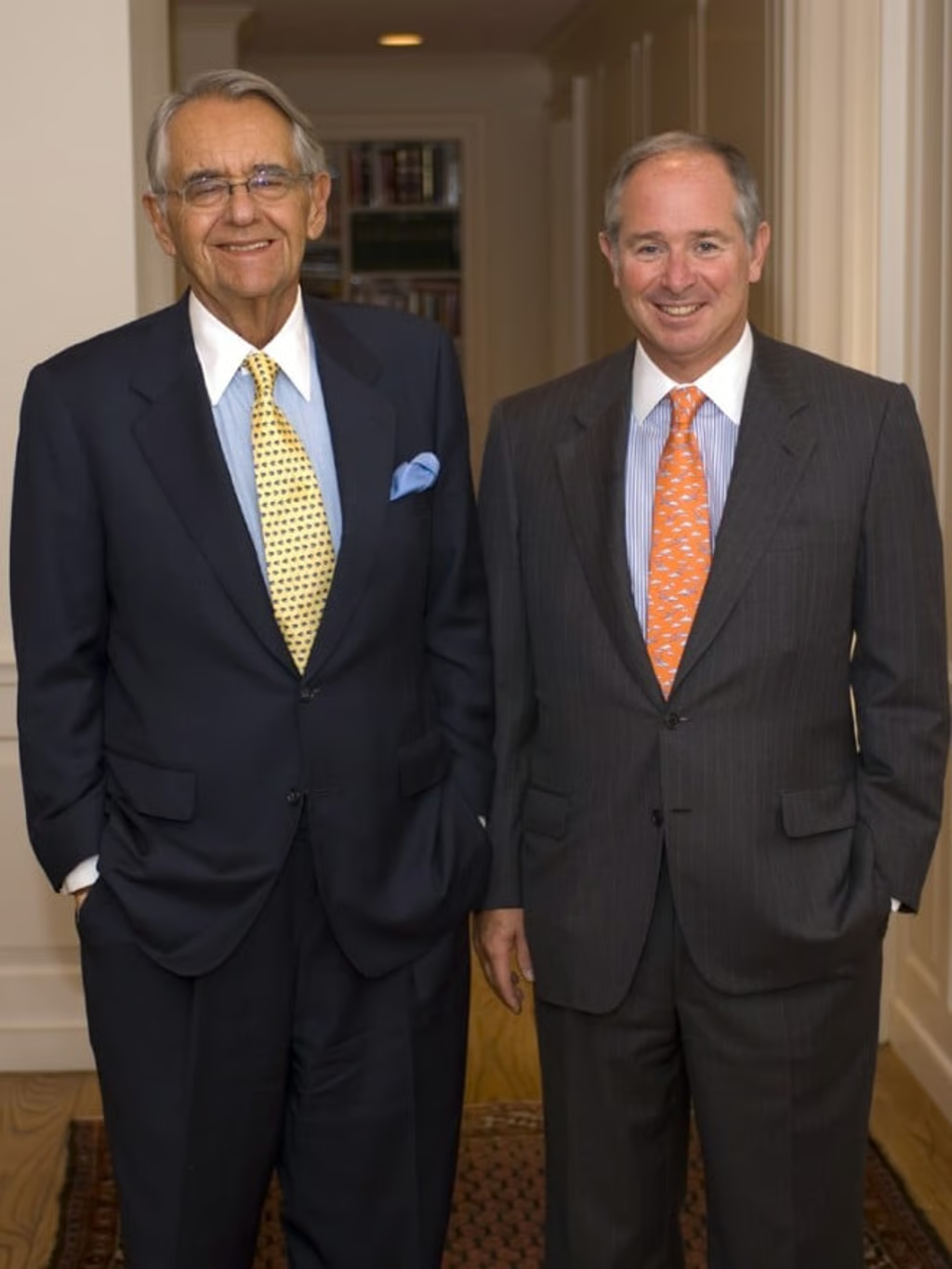
1. You co-founded Blackstone more than 40 years ago and built it into the world’s largest alternative asset manager. Tell us about the journey and how you shaped the culture of Blackstone.
When Pete Peterson and I started Blackstone in 1985, we began with US$400,000 of our own capital and a single ambition: to build an enduring institution, not just a successful business. You could not be a one-product firm, because there are no patents in this business. That is why, we built leadership across private equity, real estate, credit, infrastructure, and other businesses, with each one strengthening the others.
Blackstone’s success comes down to culture. One formative experience was an early failed investment in a steel distribution company. It taught me that organizations make better decisions when people speak candidly, challenge one another, and depersonalize debate. That lesson shaped how we built Blackstone: rigorous debate, written analysis, a strong focus on downside risk, and a culture where the best ideas win regardless of hierarchy.
Those principles have helped shape the firm that has US$1.3 trillion in assets under management today.
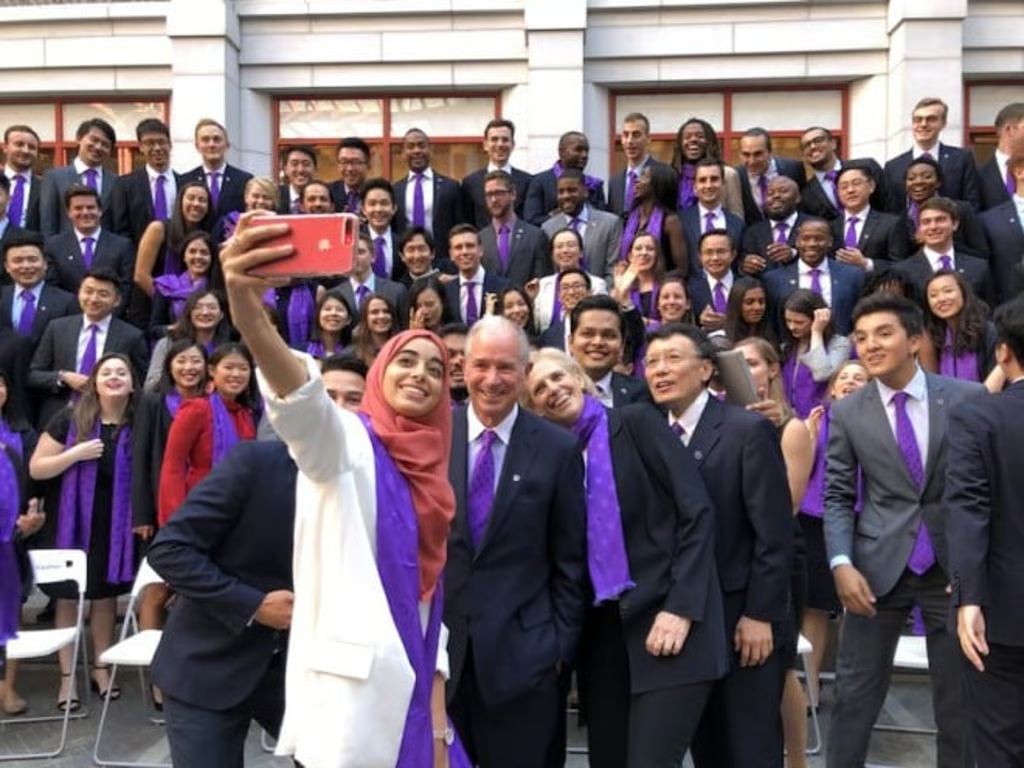
2. Blackstone has been through many cycles for over 40 years. How do you stay focused amid volatility and geopolitical shifts?
Experience teaches that value is not created by reacting to every headline. Periods of volatility are when discipline matters most.
We stay grounded in fundamentals and keep a long-term perspective. Through the dot-com bubble, the global financial crisis, the pandemic, and other dislocations, that consistency has helped us grow across cycles. Our scale, global reach, local knowledge, and leadership positions across businesses give us resilience and the ability to act when others hesitate.
I have lived through enough cycles to know that uncertainty often creates opportunity for firms with capital, patience, and a clear framework. Our Hilton investment, made just ahead of the global financial crisis, is a strong example: we stayed disciplined through the downturn, worked closely with management, and helped position Hilton for its 2013 IPO, then the largest IPO in hotel industry history. It is regarded as one of the most successful private equity investments ever.
We do not try to predict every short-term move. We stay calm, protect capital, and act with conviction.
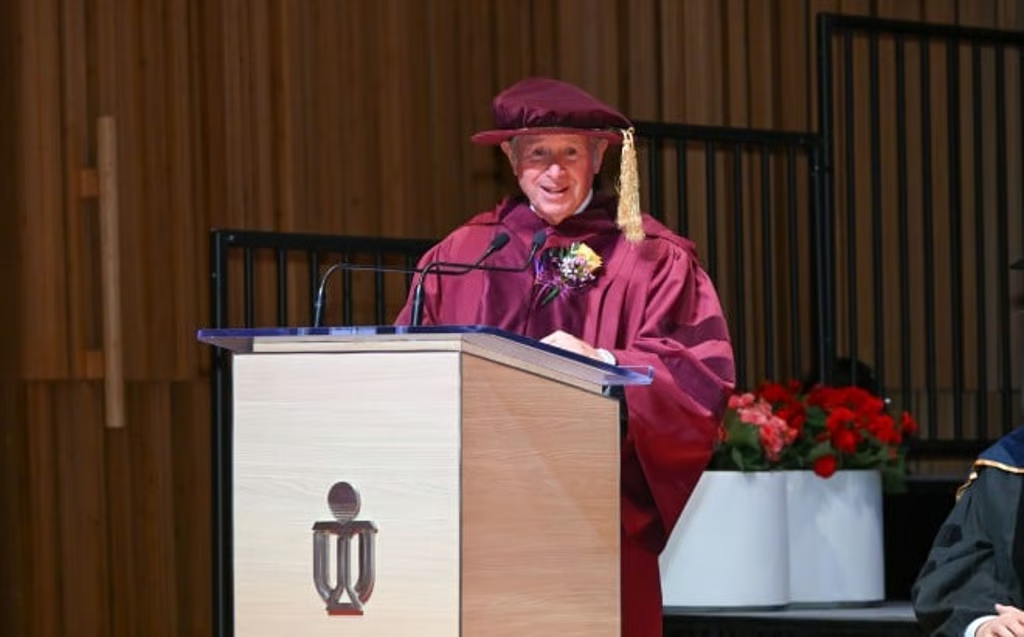
3. Institutional investors have long seen the value of private markets, and now more individuals are gaining access. Do you think today’s environment is accelerating that trend?
For many years, institutional investors have understood the value of private markets in a long-term portfolio. They provide access to opportunities beyond the public markets and to assets that can be built, improved, and grown over time. Nearly 90% of companies in the United States with more than US$100 million in revenue are private, which underscores the size of the opportunity set beyond public markets.
What is changing now is access. We recognized that shift early and began partnering with the private wealth community more than two decades ago because we believed individual investors should have access to many of the same opportunities institutions have long used.
What matters most is taking a long-term view. That is especially relevant for individual investors, whose goals often span years or decades. Private markets are not investments to judge over the short term. Over time, they have the potential to enhance returns, add diversification, and make portfolios more resilient through cycles.
Manager selection is also critical. In private markets, outcomes can vary widely across firms, so working with experienced, disciplined managers can make a meaningful difference.
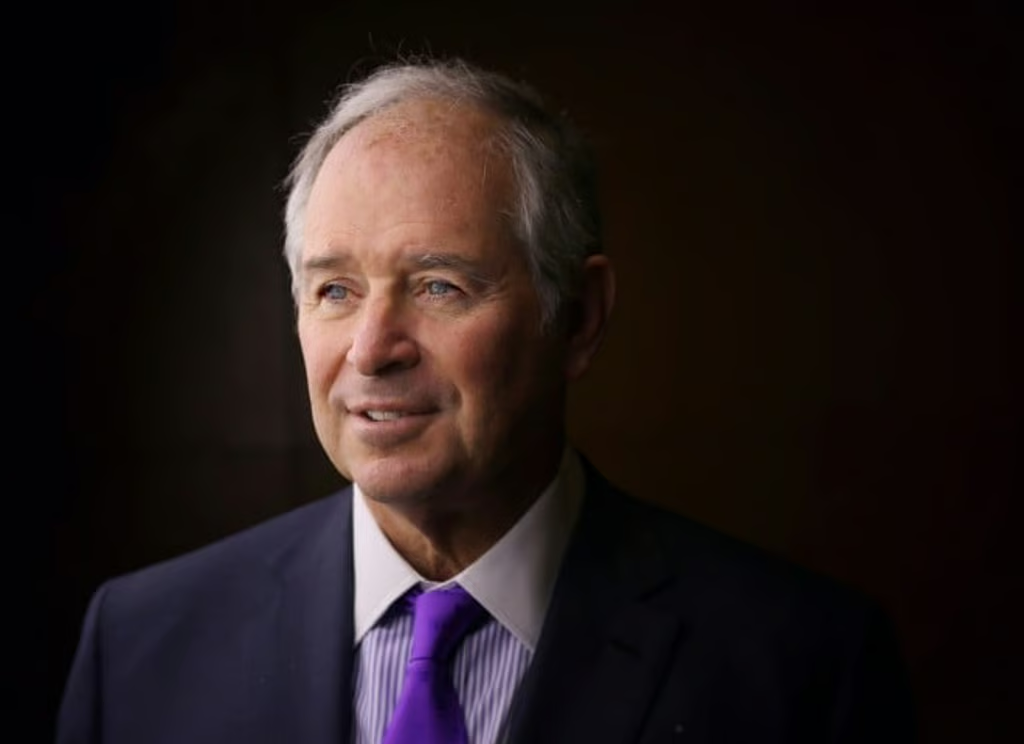
4. You have said that AI is as transformational for society as the invention of the light bulb. Do you view it primarily as an opportunity or a disruption?
AI is one of the most defining transformations of our time. The volume of data being created globally is roughly doubling every two to three years. Hyperscalers’ data-center spending has increased eightfold since 2021. The opportunity is extraordinary, but it is not uniform. It will be a powerful growth engine for some companies, while disrupting others where barriers to entry are changing quickly. If AI is going to reshape economies and societies, governance and ethics cannot be an afterthought. That perspective also shaped my philanthropic commitments at the Massachusetts Institute of Technology and the University of Oxford.
AI is one of our highest conviction investment themes, and capturing its potential requires patient capital, disciplined underwriting, and a long-term approach. We have invested across the AI value chain in areas such as data centers, cooling, and electricity – the “picks and shovels” of the AI revolution – including AirTrunk, the leading data center platform in Asia Pacific. Today, Blackstone is the world’s largest data center provider, giving us a distinctive perspective on how AI demand is reshaping digital infrastructure.
5. What excites you the most about Asia and the opportunity ahead?
Asia Pacific has been a long-term priority for Blackstone, and we continue to see significant opportunity across multiple markets, both in investing and in private wealth.
Hong Kong was one of our earliest offices in Asia and remains our regional hub. Over nearly two decades, we have built a full-fledged Blackstone platform there.
India and Japan are two of our highest-priority markets. We were early in India nearly 20 years ago, and Japan holds a special place in our history — without Japan, there would be no Blackstone. Nikko Securities was one of our earliest backers, and we have also been a pioneer in private wealth there.
Succeeding in any market requires people on the ground, real local insight, and a willingness to build over time.
此内容由惯性聚合(RSS阅读器)自动聚合整理,仅供阅读参考。 原文来自 — 版权归原作者所有。