


惯性聚合 高效追踪和阅读你感兴趣的博客、新闻、科技资讯
阅读原文 在惯性聚合中打开

推荐订阅源

Hugging Face - Blog
Hugging Face - Blog
Vercel News
Vercel News
C
Check Point Blog
G
Google Developers Blog
博客园 - 司徒正美
量子位
Engineering at Meta
Engineering at Meta
S
SegmentFault 最新的问题
Google DeepMind News
F
Fortinet All Blogs
A
About on SuperTechFans
美团技术团队
D
DataBreaches.Net
Stack Overflow Blog
Stack Overflow Blog
Jina AI
Jina AI
Y
Y Combinator Blog
奇客Solidot–传递最新科技情报
奇客Solidot–传递最新科技情报
Apple Machine Learning Research
J
Java Code Geeks
MongoDB | Blog
MongoDB | Blog
人人都是产品经理
人人都是产品经理
H
Hackread – Cybersecurity News, Data Breaches, AI and More
The Cloudflare Blog
U
Unit 42

South China Morning Post

Singapore drama sparks Malaysian ire over scam hub depiction Time to act on stalled proposal toughening child abuse penalties, lawmakers say ‘Eager to explore’: Chinese migrants return to Venezuela after Maduro’s capture ‘We have no trust in the other side’: Iran blames US as talks end with no deal Opinion | Why securing Hong Kong’s economic future is a cultural question Hong Kong’s ministerial team spent HK$46.6 million on visits in past 3 years China family creates AI clone to comfort elderly mum after only son dies in crash Canada Olympic star Williams plans on ‘having a ‘blast’ at Hong Kong Sevens Singapore’s robotaxi drive revs up with help from Chinese AV leaders Editorial | Making Hong Kong desirable to overseas students must be a priority All 7 are dentists and hot. The Asian-American family blowing up social media Editorial | Ageing Hong Kong should welcome more open conversations around death My Take | Discovery Bay will never be the same if the restriction on taxi access is lifted Medical intern suspended after complaint over patient data in social media post Fish and vegetarianism major flashpoints in India’s West Bengal election Chinese crystal ‘paves way’ for GPS-free thorium clock navigation SCMP Best Bets: Endued can show his quality at Sha Tin Russia and Ukraine begin 32-hour ceasefire for Orthodox Easter Israeli spy firm Black Cube involved in Cyprus corruption probe ‘A big deal’: military drills show Tokyo’s growing focus on deterring China China targets middlemen in renewed crackdown on ‘hidden’ corruption Hong Kong-born gymnast leading quest to turn Singapore into elite hub Thais celebrate new year despite fuel price shocks delaying travel Harry Bentley tees up two good chances in Smart Golf and Elite Golf at Sha Tin Is this Kenyan rail project a model for Chinese and Western firms in Africa? Unearthing peace: ancient China gravesite reveals significance of broken weapons Meet Queen Elizabeth’s youngest grandchild, James, who was at Easter service Turtle found dead after apparent fall in Hong Kong’s Wong Tai Sin Landlords of 5,557 subdivided homes seek 3-year grace period to fix flats Trump critique pauses UK handover of Chagos Islands to Mauritius
Explore Jiangnan’s rural retreats and escape the city hustle
Thomas Bird · 2026-05-31 · via South China Morning Post

There was once a province called Jiangnan. Although no longer marked on maps, it exists in everyday parlance as a cultural region – somewhere rich, fertile and evocative of the fabled Song dynasty (AD960-1279).

Sometimes referred to as the Yangtze River Basin, Jiangnan is associated by many with Shanghai and the industrial cities of the lower valley of that waterway. Yet, while Jiangnan does boast an unequal share of China’s top-tier cities, swathes of the region – from the lower half of Jiangsu and southeastern Anhui through inland Zhejiang – remain rural. Furthermore, roughly 70 per cent of Jiangnan is hill country, bearing craggy topography that has sequestered villages from the prosperity concentrated along the port-studded coast.

This situation is changing only now, as roads and railways connect remote villages, transforming them into seductive bolt-holes for burned-out urbanites, a trend that is being repeated across the country.
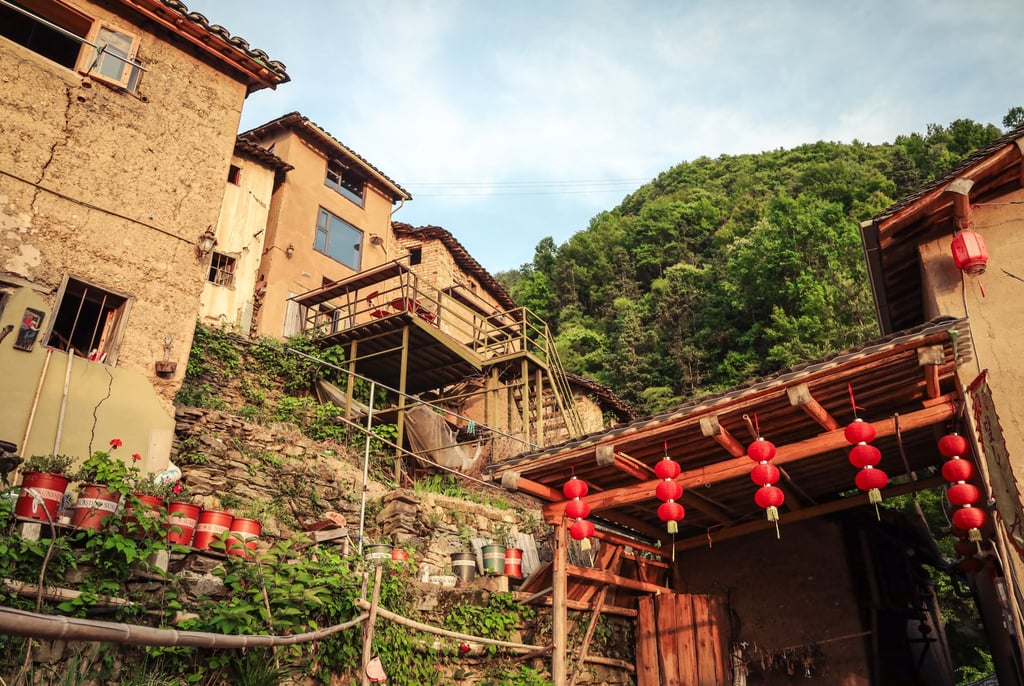
The mountain village of Yangchan. Photo: Thomas Bird

The mountain village of Yangchan. Photo: Thomas Bird

Last year, rural tourism revenue in China exceeded 950 billion yuan (US$139 billion), according to government data, reflecting a 5.8 per cent increase on the previous year, as mainland travellers sought an escape from the “996” work culture of the major east coast cities. That money is flowing into an increasing number of villages recognised by UN Tourism as Best Tourism Villages, such as Digang (Zhejiang province), Dongluo (Jiangsu) and Jikayi (Sichuan), as well as more established attractions such as Wuyuan (Jiangxi), Hongcun (Anhui) and Baisha (Yunnan). But with many of those destinations having become victims of their own success, in-the-know travellers are turning their backs on commercialised old towns and embracing the great vistas, cultural integration and escape from the crowds found in even more remote settings.

It is that promise of rural quietude and pastoral scenery that had me plotting a passage south.

Fast trains from Beijing take between six and seven hours to get to Huangshan but I instead hop on the K1109, which departs Beijing Fengtai Station just after lunch and will arrive at Huangshan Station 20 hours later, in time for breakfast.

An expanse of wheat is all that fills the windows as the locomotive rolls southwards across the Central Plains. It isn’t until after sunrise that I find that the uniform north has been supplanted by verdant mountains overnight, evidence that we’ve crossed the Yangtze and are now, quite literally, in Jiangnan, which means “south of the river”.

At Huangshan, a rendezvous with a friend, Xu Du, in the station forecourt leads to a drive northeast through the zhuhai (“bamboo seas”) of She county.