


惯性聚合 高效追踪和阅读你感兴趣的博客、新闻、科技资讯
阅读原文 在惯性聚合中打开

推荐订阅源

小众软件
小众软件
博客园 - Franky
罗磊的独立博客
G
Google Developers Blog
The GitHub Blog
The GitHub Blog
P
Proofpoint News Feed
Recent Announcements
V
V2EX
F
Fortinet All Blogs
阮一峰的网络日志
阮一峰的网络日志
Blog — PlanetScale
Blog — PlanetScale
月光博客
月光博客
U
Unit 42
GbyAI
GbyAI
A
About on SuperTechFans
WordPress大学
WordPress大学
Engineering at Meta
Engineering at Meta
雷峰网
雷峰网
Microsoft Azure Blog
Martin Fowler
Martin Fowler
D
DataBreaches.Net
The Cloudflare Blog
H
Hackread – Cybersecurity News, Data Breaches, AI and More
MongoDB | Blog
MongoDB | Blog

South China Morning Post

Singapore drama sparks Malaysian ire over scam hub depiction Time to act on stalled proposal toughening child abuse penalties, lawmakers say ‘Eager to explore’: Chinese migrants return to Venezuela after Maduro’s capture ‘We have no trust in the other side’: Iran blames US as talks end with no deal Opinion | Why securing Hong Kong’s economic future is a cultural question Hong Kong’s ministerial team spent HK$46.6 million on visits in past 3 years China family creates AI clone to comfort elderly mum after only son dies in crash Canada Olympic star Williams plans on ‘having a ‘blast’ at Hong Kong Sevens Singapore’s robotaxi drive revs up with help from Chinese AV leaders Editorial | Making Hong Kong desirable to overseas students must be a priority All 7 are dentists and hot. The Asian-American family blowing up social media Editorial | Ageing Hong Kong should welcome more open conversations around death My Take | Discovery Bay will never be the same if the restriction on taxi access is lifted Medical intern suspended after complaint over patient data in social media post Fish and vegetarianism major flashpoints in India’s West Bengal election Chinese crystal ‘paves way’ for GPS-free thorium clock navigation SCMP Best Bets: Endued can show his quality at Sha Tin Russia and Ukraine begin 32-hour ceasefire for Orthodox Easter Israeli spy firm Black Cube involved in Cyprus corruption probe ‘A big deal’: military drills show Tokyo’s growing focus on deterring China China targets middlemen in renewed crackdown on ‘hidden’ corruption Hong Kong-born gymnast leading quest to turn Singapore into elite hub Thais celebrate new year despite fuel price shocks delaying travel Harry Bentley tees up two good chances in Smart Golf and Elite Golf at Sha Tin Is this Kenyan rail project a model for Chinese and Western firms in Africa? Unearthing peace: ancient China gravesite reveals significance of broken weapons Meet Queen Elizabeth’s youngest grandchild, James, who was at Easter service Turtle found dead after apparent fall in Hong Kong’s Wong Tai Sin Landlords of 5,557 subdivided homes seek 3-year grace period to fix flats Trump critique pauses UK handover of Chagos Islands to Mauritius
Opinion | How scientist-entrepreneurs are shaping China’s...
Ningrong Liu · 2026-05-07 · via South China Morning Post

During a summer trip to Europe 15 years ago, I sat with friends in a Monaco hotel as we discussed their bold new idea. One of them, trained in technology and just beginning his entrepreneurial journey, shared his vision: to make the lectures of world-class professors accessible online to college students across China. I admired his passion, though I doubted whether such a venture could succeed.

Not long ago, that company, now a leading provider of digital solutions for higher education in China, went public in Hong Kong with a valuation exceeding HK$10 billion. My friend’s journey is not an isolated tale, but an example of a broader transformation: a growing number of Chinese scientists, engineers and technically trained graduates are emerging as a new breed of entrepreneurs. Their rise signals a fundamental shift in China’s growth model, from decades of property-driven expansion towards an innovation-led future.

Over the last year, during my visits to mainland China, I have met many scientist-entrepreneurs. Their conversations often return to a single theme: how to capture the momentum of a hi-tech surge that began more than a decade ago and has since redefined China’s growth logic and the aspirations of its younger generation.

That surge traces its roots to the 2014 “mass entrepreneurship and innovation” campaign, which encouraged grass-roots start-ups and laid the groundwork for a new wave of enterprise. By 2017, this foundation had matured into a full-fledged hard-tech expansion, giving rise to many of today’s leading listed companies.

From 2018 onwards, rising geopolitical risks compelled China to pursue self-sufficiency in semiconductors and industrial software. National policies elevated technological innovation to a strategic priority, aligning state ambition with entrepreneurial drive and igniting nationwide enthusiasm for hi-tech ventures.
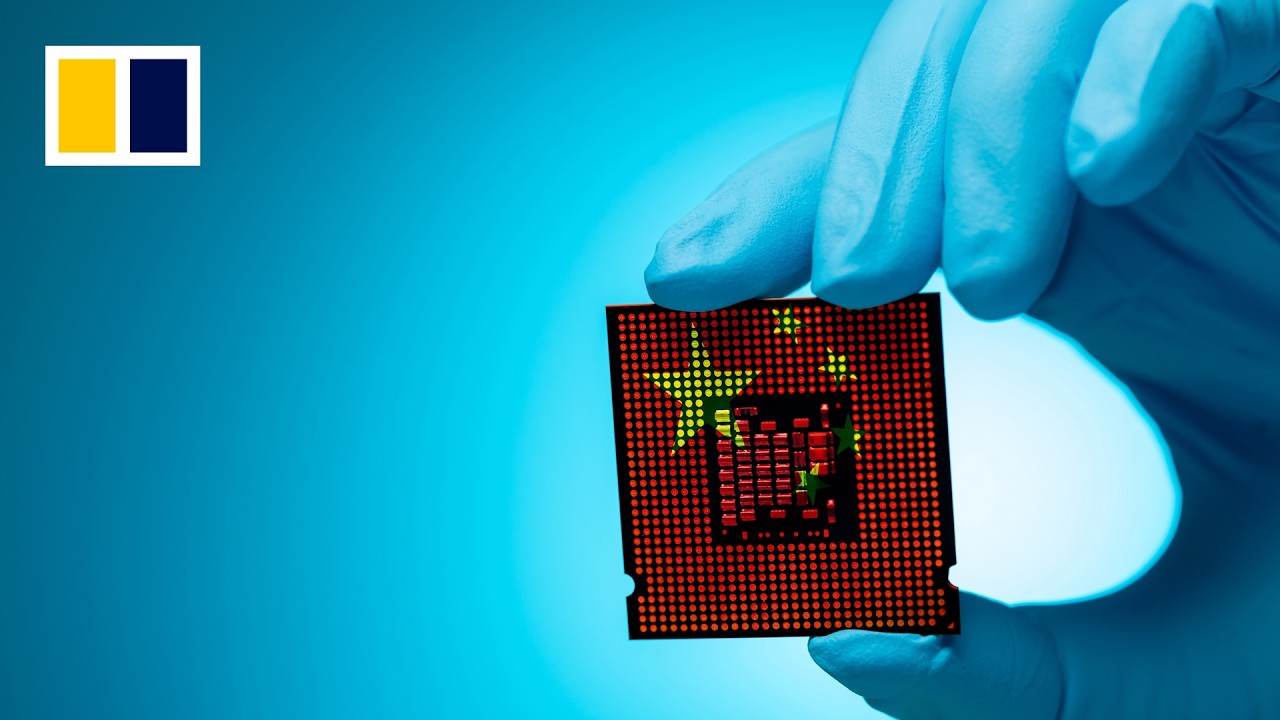
05:04

China creates analogue AI chip said to be 1,000 times faster than Nvidia GPU

China creates analogue AI chip said to be 1,000 times faster than Nvidia GPU

This emerging cohort is strikingly diverse: seasoned researchers with decades in the lab, ambitious postgraduates fresh from university, home-grown talent trained entirely in China, and returnee scholars educated abroad. They form a talent pool unlike the first generation of internet entrepreneurs, who thrived by adapting Western business models and chasing market expansion with less focus on core technology.