


惯性聚合 高效追踪和阅读你感兴趣的博客、新闻、科技资讯
阅读原文 在惯性聚合中打开

推荐订阅源

腾讯CDC
OSCHINA 社区最新新闻
OSCHINA 社区最新新闻
博客园 - 叶小钗
人人都是产品经理
人人都是产品经理
博客园 - 聂微东
The Cloudflare Blog
爱范儿
爱范儿
阮一峰的网络日志
阮一峰的网络日志
WordPress大学
WordPress大学
小众软件
小众软件
博客园 - 三生石上(FineUI控件)
Last Week in AI
Last Week in AI
Jina AI
Jina AI
V
V2EX
罗磊的独立博客
V
Visual Studio Blog
A
About on SuperTechFans
IT之家
IT之家
P
Proofpoint News Feed
B
Blog
博客园 - Franky
Blog — PlanetScale
Blog — PlanetScale
Google DeepMind News
Y
Y Combinator Blog

South China Morning Post

Singapore drama sparks Malaysian ire over scam hub depiction Time to act on stalled proposal toughening child abuse penalties, lawmakers say ‘Eager to explore’: Chinese migrants return to Venezuela after Maduro’s capture ‘We have no trust in the other side’: Iran blames US as talks end with no deal Opinion | Why securing Hong Kong’s economic future is a cultural question Hong Kong’s ministerial team spent HK$46.6 million on visits in past 3 years China family creates AI clone to comfort elderly mum after only son dies in crash Canada Olympic star Williams plans on ‘having a ‘blast’ at Hong Kong Sevens Singapore’s robotaxi drive revs up with help from Chinese AV leaders Editorial | Making Hong Kong desirable to overseas students must be a priority All 7 are dentists and hot. The Asian-American family blowing up social media Editorial | Ageing Hong Kong should welcome more open conversations around death My Take | Discovery Bay will never be the same if the restriction on taxi access is lifted Medical intern suspended after complaint over patient data in social media post Fish and vegetarianism major flashpoints in India’s West Bengal election Chinese crystal ‘paves way’ for GPS-free thorium clock navigation SCMP Best Bets: Endued can show his quality at Sha Tin Russia and Ukraine begin 32-hour ceasefire for Orthodox Easter Israeli spy firm Black Cube involved in Cyprus corruption probe ‘A big deal’: military drills show Tokyo’s growing focus on deterring China China targets middlemen in renewed crackdown on ‘hidden’ corruption Hong Kong-born gymnast leading quest to turn Singapore into elite hub Thais celebrate new year despite fuel price shocks delaying travel Harry Bentley tees up two good chances in Smart Golf and Elite Golf at Sha Tin Is this Kenyan rail project a model for Chinese and Western firms in Africa? Unearthing peace: ancient China gravesite reveals significance of broken weapons Meet Queen Elizabeth’s youngest grandchild, James, who was at Easter service Turtle found dead after apparent fall in Hong Kong’s Wong Tai Sin Landlords of 5,557 subdivided homes seek 3-year grace period to fix flats Trump critique pauses UK handover of Chagos Islands to Mauritius
Forget air-con, Singapore looks underground for a cooler ...
Bloomberg · 2026-06-09 · via South China Morning Post

Deep underneath Singapore’s northeastern district of Punggol, a 5km (three-mile) network of metal pipes roars as it pumps chilled water to cool offices and classrooms overhead.

The 140-year-old concept known as district cooling uses less electricity than centralised air conditioners – a major advantage for a resource-starved tropical island-nation that has to import nearly all its energy and where temperatures are rising twice as fast as the global average.

The city state has laid pipes beneath at least eight neighbourhoods so far, with the Marina Bay network – the world’s largest underground system – having begun operations in 2006. More buildings will be linked up to that system, and separate facilities are being rolled out in other parts of the city by firms like Keppel EaaS.
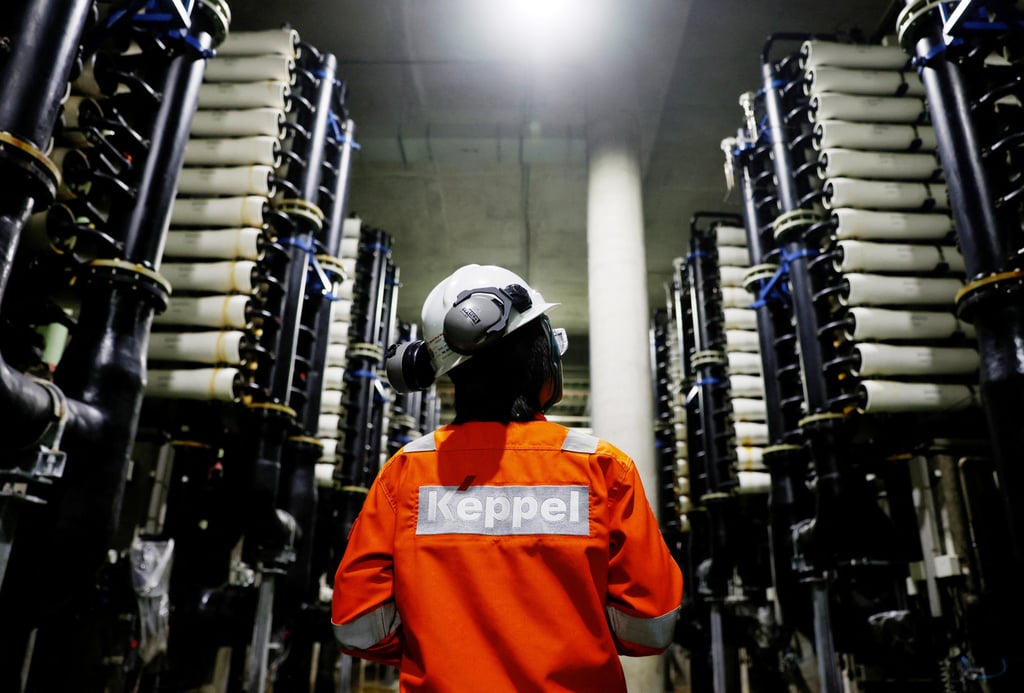
A Keppel employee checks reverse osmosis membrane pipes at a desalination plant in Singapore. Photo: Reuters

A Keppel employee checks reverse osmosis membrane pipes at a desalination plant in Singapore. Photo: Reuters

The roll-out comes as energy security takes centre stage in countries, including Singapore, that are reeling from energy shortages caused by the US-Iran war, while also bracing for an exceptionally hot summer due to a projected “super El Nino”. District cooling is a solution that is gaining traction around the world, particularly in the Middle East, and is projected to grow to a US$60 billion market by 2034 by one estimate.

“Cooling demand is rising with urbanisation, income growth, heat stress and commercial floor-area expansion” across Southeast Asia, said Lee Poh Seng, professor and head of mechanical engineering at the National University of Singapore.

Singapore had the potential to “demonstrate district cooling systems that credibly deliver energy, water, carbon, comfort, reliability and economic performance under hot and humid conditions”, he said.
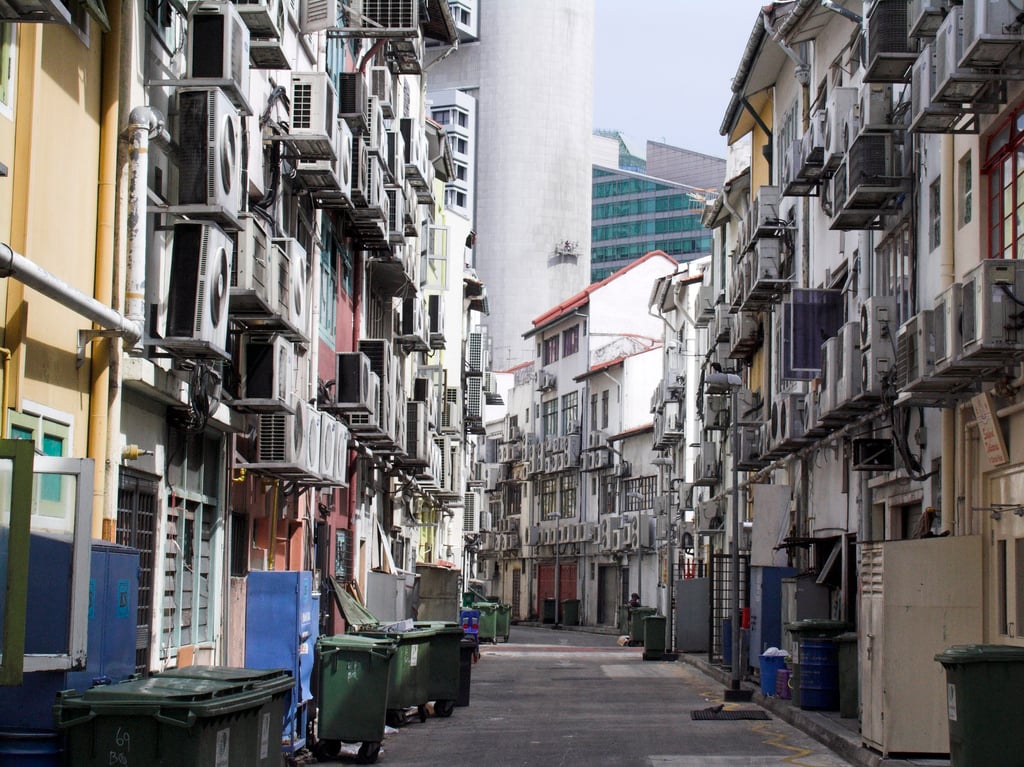
Dozens of air conditioners are seen on the rear of buildings Singapore. The city state has among the highest per capita use of air conditioners in the Asia-Pacific region. Photo: Education Images/Universal Images Group/Getty Images

Dozens of air conditioners are seen on the rear of buildings Singapore. The city state has among the highest per capita use of air conditioners in the Asia-Pacific region. Photo: Education Images/Universal Images Group/Getty Images

The local market for the technology could double over the next decade from about 323,000 refrigeration tons today, according to Engie, which is among the world’s largest operators of such facilities. The firm runs two systems in Punggol district capable of cooling about 8,000 public housing units.