







US President Donald Trump is a long-time climate denier and oil industry ally, who sums up his own energy policy as “drill, baby, drill”. Yet he is doing more than almost anyone to speed up the global shift from fossil fuels to clean energy and electric vehicles.
After the US and Israel struck Iran in late February, Tehran closed the Strait of Hormuz and triggered the largest disruption of oil supply in history.
Ironically for Trump and his oil industry donors, this crisis may be an irreversible tipping point for clean energy. For years, fossil fuel advocates touted oil, gas and coal as “reliable” energy. That narrative has been reversed. Fossil fuels have become expensive and unreliable, while renewables are cheap, reliable and secure.
For the first time ever, more than 50 nations will gather this week in Colombia to hash out how to wind down and end their dependence on coal, oil and gas. The history-making conference was planned before the Iran war. But this year’s energy crisis has greatly raised the stakes.
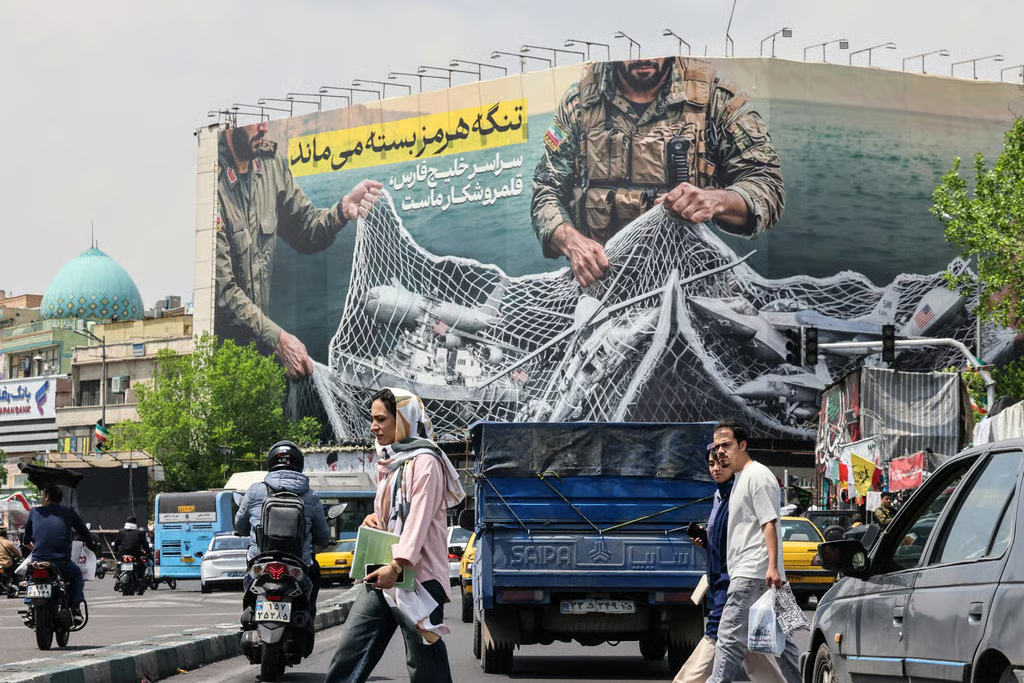
Iran’s closure of the narrow Strait of Hormuz stopped oil tankers reaching their destinations. But that wasn’t all. More than 60 gas and oil sites have been damaged in the conflict so far. Even if a durable ceasefire is reached, these impacts will reverberate for months and years to come.
此内容由惯性聚合(RSS阅读器)自动聚合整理,仅供阅读参考。 原文来自 — 版权归原作者所有。