
惯性聚合 高效追踪和阅读你感兴趣的博客、新闻、科技资讯
阅读原文 在惯性聚合中打开

推荐订阅源

Google DeepMind News
I
InfoQ
Engineering at Meta
Engineering at Meta
D
DataBreaches.Net
L
LangChain Blog
Cyber Security Advisories - MS-ISAC
奇客Solidot–传递最新科技情报
奇客Solidot–传递最新科技情报
Recent Announcements
GbyAI
GbyAI
爱范儿
爱范儿
Microsoft Security Blog
腾讯CDC
美团技术团队
罗磊的独立博客
Microsoft Azure Blog
WordPress大学
WordPress大学
T
The Blog of Author Tim Ferriss
freeCodeCamp Programming Tutorials: Python, JavaScript, Git & More
雷峰网
雷峰网
M
MIT News - Artificial intelligence
D
Docker
MongoDB | Blog
MongoDB | Blog
F
Fortinet All Blogs
博客园 - 叶小钗

South China Morning Post

Singapore drama sparks Malaysian ire over scam hub depiction Time to act on stalled proposal toughening child abuse penalties, lawmakers say ‘Eager to explore’: Chinese migrants return to Venezuela after Maduro’s capture ‘We have no trust in the other side’: Iran blames US as talks end with no deal Opinion | Why securing Hong Kong’s economic future is a cultural question Hong Kong’s ministerial team spent HK$46.6 million on visits in past 3 years China family creates AI clone to comfort elderly mum after only son dies in crash Canada Olympic star Williams plans on ‘having a ‘blast’ at Hong Kong Sevens Singapore’s robotaxi drive revs up with help from Chinese AV leaders Editorial | Making Hong Kong desirable to overseas students must be a priority All 7 are dentists and hot. The Asian-American family blowing up social media Editorial | Ageing Hong Kong should welcome more open conversations around death My Take | Discovery Bay will never be the same if the restriction on taxi access is lifted Medical intern suspended after complaint over patient data in social media post Fish and vegetarianism major flashpoints in India’s West Bengal election Chinese crystal ‘paves way’ for GPS-free thorium clock navigation SCMP Best Bets: Endued can show his quality at Sha Tin Russia and Ukraine begin 32-hour ceasefire for Orthodox Easter Israeli spy firm Black Cube involved in Cyprus corruption probe ‘A big deal’: military drills show Tokyo’s growing focus on deterring China China targets middlemen in renewed crackdown on ‘hidden’ corruption Hong Kong-born gymnast leading quest to turn Singapore into elite hub Thais celebrate new year despite fuel price shocks delaying travel Harry Bentley tees up two good chances in Smart Golf and Elite Golf at Sha Tin Is this Kenyan rail project a model for Chinese and Western firms in Africa? Unearthing peace: ancient China gravesite reveals significance of broken weapons Meet Queen Elizabeth’s youngest grandchild, James, who was at Easter service Turtle found dead after apparent fall in Hong Kong’s Wong Tai Sin Landlords of 5,557 subdivided homes seek 3-year grace period to fix flats Trump critique pauses UK handover of Chagos Islands to Mauritius
Spam musubi? How American flavours were absorbed and adap...
Lisa Cam · 2026-05-02 · via South China Morning Post

Blue Seal ice cream, Spam musubi and taco rice have one thing in common: they are uniquely Okinawan, and locals absolutely love them.

Tubarama is a popular Okinawan restaurant and izakaya in Naha. It is famous for its immersive experiences, in which traditional shima-uta, or folk music, is performed, in a setting resembling a pre-war Okinawan village, as local cuisine is served. There are live sanshin – a traditional lute – and other performances every evening on the restaurant’s second floor.

“I eat [taco rice] at least once a week,” says Tatsuyoshi Kubota, manager of Tubarama, who says the dish took hold across the prefecture after World War II, when tacos from Mexico brought over by Americans were adapted to Japanese tastes.
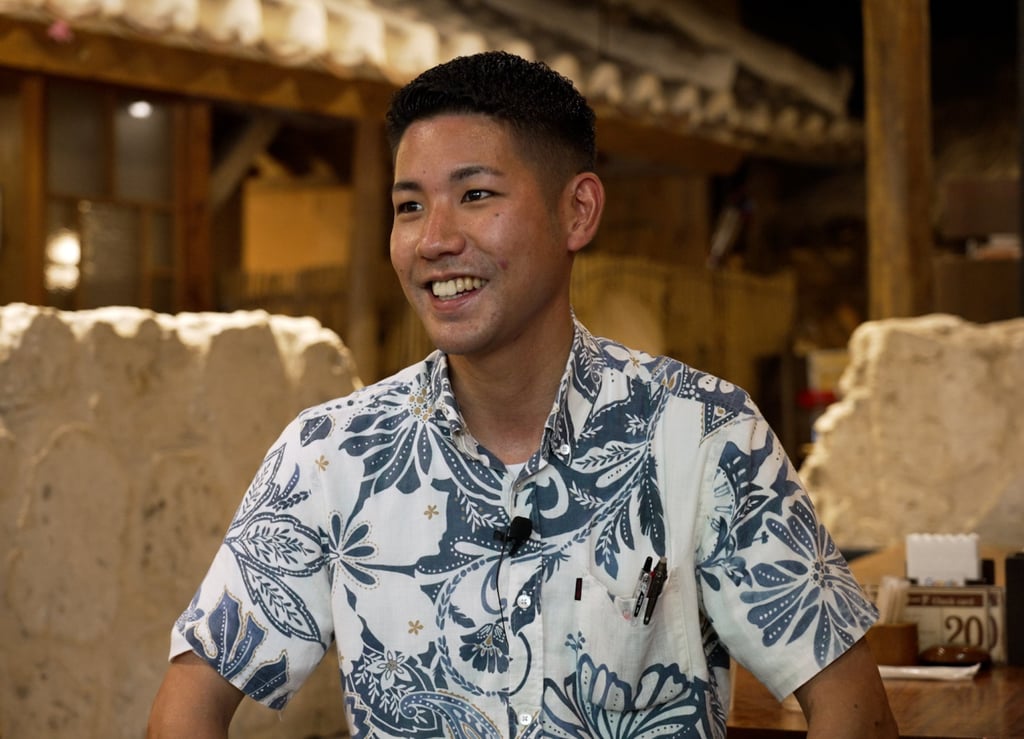
Tatsuyoshi Kubota is the manager of Tubarama, a popular Okinawan restaurant and izakaya in Naha. Photo: Llewellyn Cheung

Tatsuyoshi Kubota is the manager of Tubarama, a popular Okinawan restaurant and izakaya in Naha. Photo: Llewellyn Cheung

On the surface, this is a simple story of culinary transition. But in Okinawa, American food did not just arrive – it came and occupied.

That occupation began in earnest after the second world war, and the US administered Okinawa from 1945 until 1972. To this day, the US maintains a massive military presence there, and around 70 per cent of US bases in Japan are squeezed onto just 0.6 per cent of the country’s land.

After World War II, many Okinawans resented the American military presence. Locals felt they were being treated as second-class citizens, and US soldiers often acted above local laws. Frequent incidents, such as hit-and-run accidents involving military vehicles, sparked outrage.

In a 1955 case, a young Okinawan girl was assaulted and murdered by a US soldier. The soldier was sentenced to death, which was later reduced to imprisonment without parole and the criminal was returned to the US. This incident and similar ones since have fuelled protests and deepened distrust.