




惯性聚合 高效追踪和阅读你感兴趣的博客、新闻、科技资讯
阅读原文 在惯性聚合中打开

推荐订阅源

D
Docker
阮一峰的网络日志
阮一峰的网络日志
T
Tailwind CSS Blog
博客园 - 【当耐特】
量子位
博客园 - 叶小钗
有赞技术团队
有赞技术团队
Jina AI
Jina AI
钛媒体:引领未来商业与生活新知
钛媒体:引领未来商业与生活新知
博客园 - Franky
博客园 - 司徒正美
爱范儿
爱范儿
美团技术团队
小众软件
小众软件
酷 壳 – CoolShell
酷 壳 – CoolShell
让小产品的独立变现更简单 - ezindie.com
V
V2EX
罗磊的独立博客
freeCodeCamp Programming Tutorials: Python, JavaScript, Git & More
Last Week in AI
Last Week in AI
Hugging Face - Blog
Hugging Face - Blog
I
InfoQ
D
DataBreaches.Net
宝玉的分享
宝玉的分享

South China Morning Post

Singapore drama sparks Malaysian ire over scam hub depiction Time to act on stalled proposal toughening child abuse penalties, lawmakers say ‘Eager to explore’: Chinese migrants return to Venezuela after Maduro’s capture ‘We have no trust in the other side’: Iran blames US as talks end with no deal Opinion | Why securing Hong Kong’s economic future is a cultural question Hong Kong’s ministerial team spent HK$46.6 million on visits in past 3 years China family creates AI clone to comfort elderly mum after only son dies in crash Canada Olympic star Williams plans on ‘having a ‘blast’ at Hong Kong Sevens Singapore’s robotaxi drive revs up with help from Chinese AV leaders Editorial | Making Hong Kong desirable to overseas students must be a priority All 7 are dentists and hot. The Asian-American family blowing up social media Editorial | Ageing Hong Kong should welcome more open conversations around death My Take | Discovery Bay will never be the same if the restriction on taxi access is lifted Medical intern suspended after complaint over patient data in social media post Fish and vegetarianism major flashpoints in India’s West Bengal election Chinese crystal ‘paves way’ for GPS-free thorium clock navigation SCMP Best Bets: Endued can show his quality at Sha Tin Russia and Ukraine begin 32-hour ceasefire for Orthodox Easter Israeli spy firm Black Cube involved in Cyprus corruption probe ‘A big deal’: military drills show Tokyo’s growing focus on deterring China China targets middlemen in renewed crackdown on ‘hidden’ corruption Hong Kong-born gymnast leading quest to turn Singapore into elite hub Thais celebrate new year despite fuel price shocks delaying travel Harry Bentley tees up two good chances in Smart Golf and Elite Golf at Sha Tin Is this Kenyan rail project a model for Chinese and Western firms in Africa? Unearthing peace: ancient China gravesite reveals significance of broken weapons Meet Queen Elizabeth’s youngest grandchild, James, who was at Easter service Turtle found dead after apparent fall in Hong Kong’s Wong Tai Sin Landlords of 5,557 subdivided homes seek 3-year grace period to fix flats Trump critique pauses UK handover of Chagos Islands to Mauritius
Asian Angle | A year after corporal punishment ban, Thail...
Panarat Anam · 2026-05-02 · via South China Morning Post

An old Thai proverb says, “If you love your cow, tie it up; if you love your child, beat them”. It is meant to convey that a loving and responsible guardian should discipline their child and that corporal punishment is an act of care as sensible as tethering one’s cattle so that it does not wander off. For many generations, this proverb and traditional practices have normalised corporal punishment. This attitude is also displayed by teachers in schools.

One year after Thailand legally banned corporal punishment, the law is still undermined by weak enforcement, lack of accountability and entrenched cultural beliefs.

Today, corporal punishment is considered harmful to the physical and mental health of children. The World Health Organization asserts that such punishment increases behavioural problems, impairs socio-emotional development and, crucially, violates children’s rights to good health and physical integrity.

Since 2005, the Thai Ministry of Education (MOE) has permitted four forms of punishment in schools: verbal warning, formal written warning, grade deduction and remedial activities to correct behaviour. Punishing students by “violent means” is strictly prohibited. In March 2025, Thailand amended Section 1567 of its Civil and Commercial Code to ban all types of violent or corporal punishment in homes, schools and other facilities. This amendment elevates the ban from a ministerial regulation to the legal code, which fully enshrines the protection of children’s bodily autonomy.
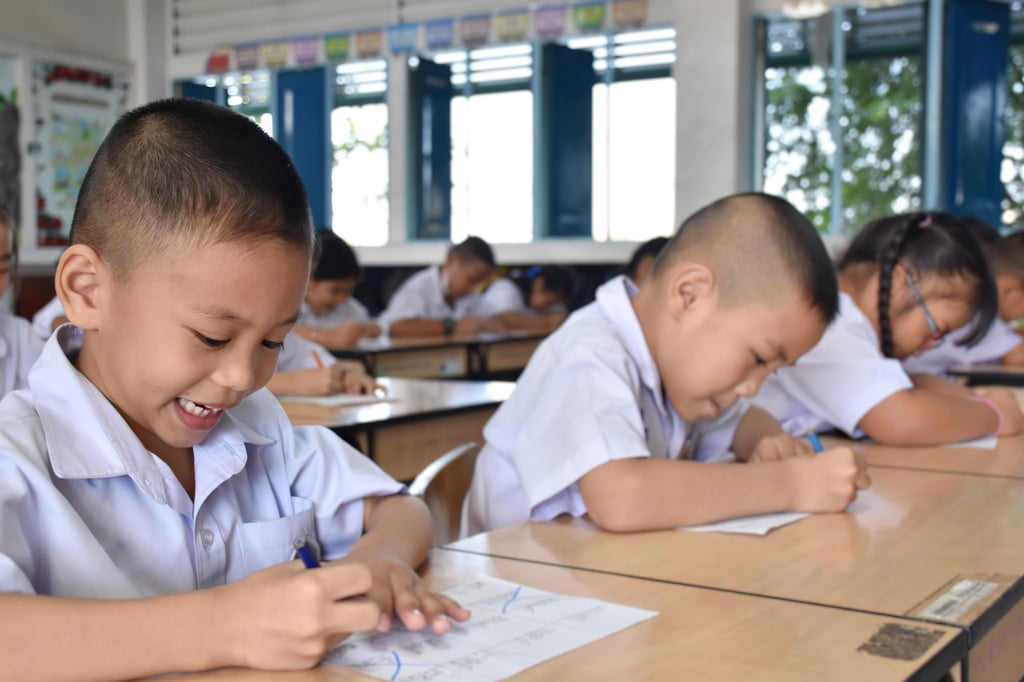
Pupils play games to promote Thai language skills in the classroom in Bangkok. Thailand in 2025 banned all types of violent or corporal punishment in homes, schools and other facilities. Photo: Shutterstock

Pupils play games to promote Thai language skills in the classroom in Bangkok. Thailand in 2025 banned all types of violent or corporal punishment in homes, schools and other facilities. Photo: Shutterstock

Regardless of these recommendations and the ban, corporal punishment has been and continues to be prevalent in Thailand. In 2020, the Thailand Development Research Institute found that 60 per cent of Thai students had been physically punished in schools. In June 2025 – three months after the ban – Unicef found that 54 per cent of children in Thailand had been subjected to violent discipline. While the two surveys were conducted by organisations with different methodologies, a negligible decline is arguably an insufficient rate of progress for something as serious and well-studied as corporal punishment.