






If a certain tiny bubble suddenly appeared somewhere in the cosmos, physicists say, it could expand and erase everything in its path.
Known as “false vacuum decay”, the scenario has been one of the most unsettling ideas in theoretical physics for nearly half a century.
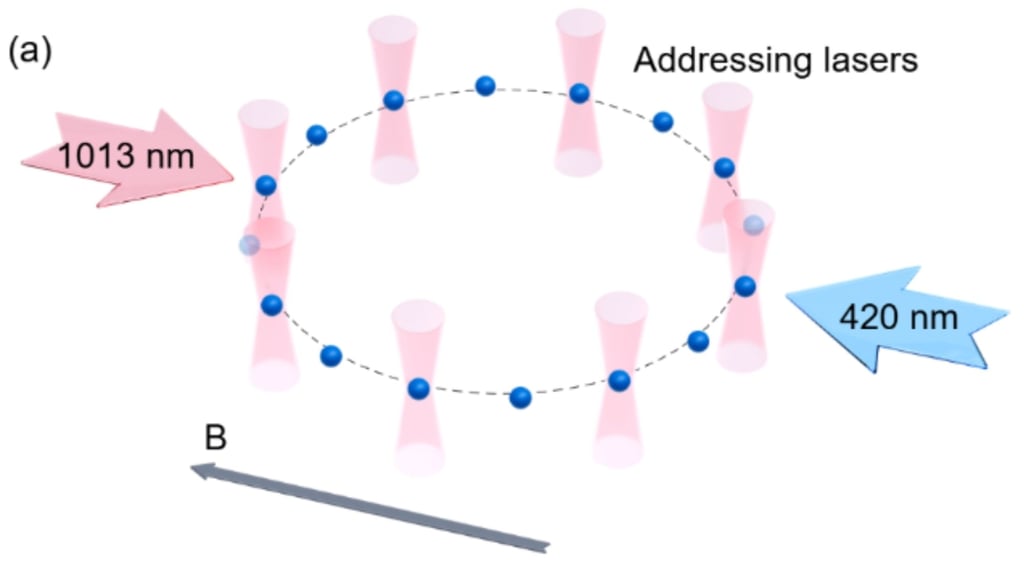
Now, researchers at Tsinghua University say they have recreated the core mechanism behind the phenomenon using a programmable quantum simulator.
The results of the experiment were published in the journal Physical Review Letters on March 27 and could open up a new pathway in quantum computing.
The experiment simulated how a metastable “false vacuum” could tunnel into a lower-energy “true vacuum” through purely quantum effects, triggering the formation and expansion of destructive vacuum bubbles.
The research does not suggest the universe is about to collapse.
此内容由惯性聚合(RSS阅读器)自动聚合整理,仅供阅读参考。 原文来自 — 版权归原作者所有。