


惯性聚合 高效追踪和阅读你感兴趣的博客、新闻、科技资讯
阅读原文 在惯性聚合中打开

推荐订阅源

有赞技术团队
有赞技术团队
G
Google Developers Blog
T
Tailwind CSS Blog
让小产品的独立变现更简单 - ezindie.com
人人都是产品经理
人人都是产品经理
J
Java Code Geeks
P
Proofpoint News Feed
V
Visual Studio Blog
爱范儿
爱范儿
The Cloudflare Blog
博客园 - 叶小钗
V
V2EX
freeCodeCamp Programming Tutorials: Python, JavaScript, Git & More
M
MIT News - Artificial intelligence
Microsoft Security Blog
博客园 - 聂微东
H
Help Net Security
B
Blog
OSCHINA 社区最新新闻
OSCHINA 社区最新新闻
博客园 - 【当耐特】
量子位
宝玉的分享
宝玉的分享
WordPress大学
WordPress大学
钛媒体:引领未来商业与生活新知
钛媒体:引领未来商业与生活新知

South China Morning Post

Singapore drama sparks Malaysian ire over scam hub depiction Time to act on stalled proposal toughening child abuse penalties, lawmakers say ‘Eager to explore’: Chinese migrants return to Venezuela after Maduro’s capture ‘We have no trust in the other side’: Iran blames US as talks end with no deal Opinion | Why securing Hong Kong’s economic future is a cultural question Hong Kong’s ministerial team spent HK$46.6 million on visits in past 3 years China family creates AI clone to comfort elderly mum after only son dies in crash Canada Olympic star Williams plans on ‘having a ‘blast’ at Hong Kong Sevens Singapore’s robotaxi drive revs up with help from Chinese AV leaders Editorial | Making Hong Kong desirable to overseas students must be a priority All 7 are dentists and hot. The Asian-American family blowing up social media Editorial | Ageing Hong Kong should welcome more open conversations around death Over the moon: Artemis astronauts make emotional homecoming after record trip My Take | Discovery Bay will never be the same if the restriction on taxi access is lifted Medical intern suspended after complaint over patient data in social media post Fish and vegetarianism major flashpoints in India’s West Bengal election Chinese crystal ‘paves way’ for GPS-free thorium clock navigation SCMP Best Bets: Endued can show his quality at Sha Tin Russia and Ukraine begin 32-hour ceasefire for Orthodox Easter Israeli spy firm Black Cube involved in Cyprus corruption probe ‘A big deal’: military drills show Tokyo’s growing focus on deterring China China targets middlemen in renewed crackdown on ‘hidden’ corruption Hong Kong-born gymnast leading quest to turn Singapore into elite hub Thais celebrate new year despite fuel price shocks delaying travel Harry Bentley tees up two good chances in Smart Golf and Elite Golf at Sha Tin Is this Kenyan rail project a model for Chinese and Western firms in Africa? Unearthing peace: ancient China gravesite reveals significance of broken weapons Meet Queen Elizabeth’s youngest grandchild, James, who was at Easter service Turtle found dead after apparent fall in Hong Kong’s Wong Tai Sin Landlords of 5,557 subdivided homes seek 3-year grace period to fix flats
Reflections | Cremation was frowned upon in ancient China...
Wee Kek Koon · 2026-04-11 · via South China Morning Post

On a recent trip to Hong Kong, I visited the Aberdeen Chinese Permanent Cemetery. The ashes of a friend, who died eight months ago, are interred there. I had not been able to attend his funeral. Our last encounter was a distressing video call from his hospital bed a few days before he passed away.

Standing before his niche, I recalled the good times we had shared in Hong Kong and on holidays abroad, and how kind he had been to me. He was also a window into a world that I was never privy to – a mid-century Hong Kong of gentler sensibilities and slower, more deliberate comportment, before much of it was bulldozed by the grating brashness of the 1980s and 90s.

Like most people in land-scarce Hong Kong today, he was cremated, contrary to the traditional Chinese belief that burial brings the dead peace. Cremation was once even regarded as a form of humiliation or punishment, often reserved as an extreme penalty for heinous crimes. The intention was to obliterate the remains, thereby condemning the soul to eternal oblivion.

Yet during China’s Song dynasty (960-1279), cremation became remarkably widespread. This was not a fringe practice confined to the margins of society but a genuine popular movement that challenged the very core of tradition. Its rise was driven by a blend of religious faith, circumstance and pragmatism.
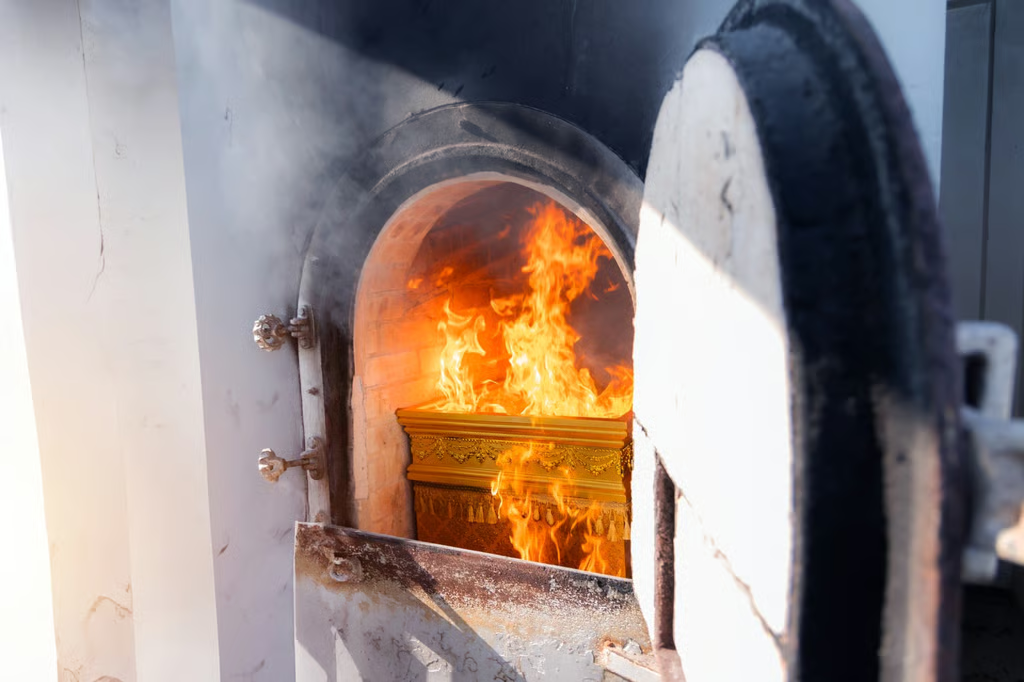
These days, most people in Hong Kong are cremated, but the practice was regarded as a form of humiliation or punishment in ancient China. Photo: Shutterstock

These days, most people in Hong Kong are cremated, but the practice was regarded as a form of humiliation or punishment in ancient China. Photo: Shutterstock

First was the profound influence of Buddhism, which viewed cremation as a sacred act that could guide the soul to the Western Paradise. Economics played a role, too. The Song era saw massive land grabs by the wealthy, leaving many ordinary people without a plot of earth to call their own, let alone the means to afford a costly burial. Funeral expenses – for burial plots, coffins, ceremonial goods and the hiring of ritual specialists – were simply beyond the reach of many families.