


Across Southeast Asia, governments are seeking Russian oil and gas to ease fuel shortages triggered by the continuing chokehold on the Strait of Hormuz, a crisis that has sent energy prices higher and forced import-dependent countries to look beyond their usual suppliers.
But analysts say the scramble for Russian fuel also raises a bigger question for the region: whether Moscow can turn a short-term role as an emergency energy supplier into longer-term influence there.
Member states of the Association of Southeast Asian Nations have pursued separate efforts to procure fuel supplies from Russia to shore up domestic reserves, using a temporary US sanctions waiver for some Russian oil transactions even as Moscow remains under broader Western sanctions over its war in Ukraine.
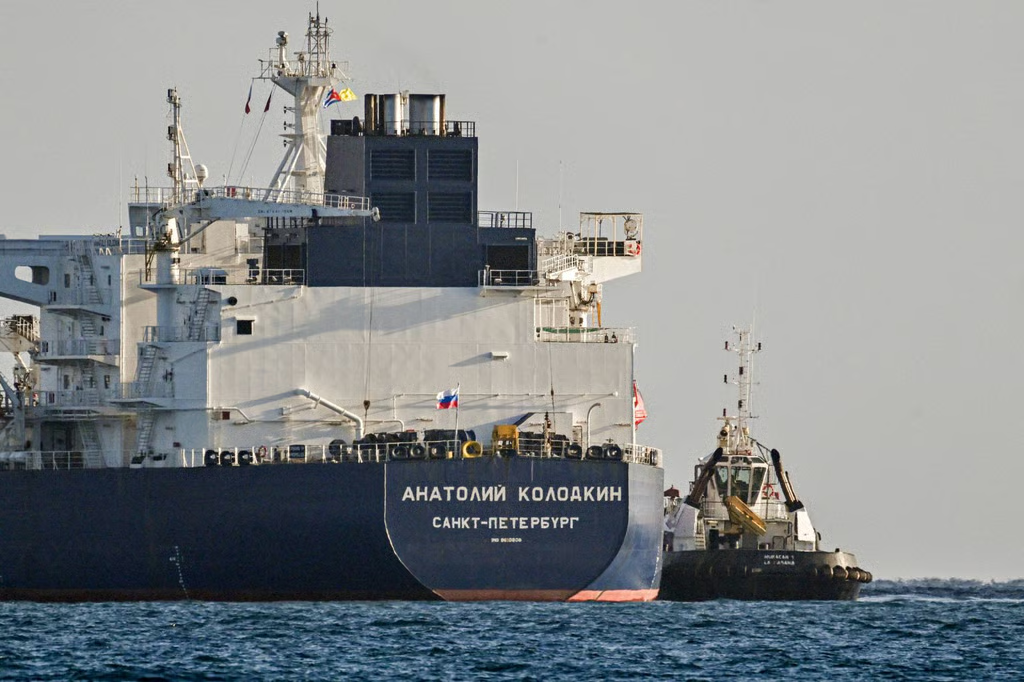
The move by Asean members – including Malaysia, Indonesia, Vietnam, the Philippines and Myanmar – to seek Russian oil could lead to the “reshaping of regional alliances to achieve supply chain resilience”, Chester Cabalza, founder and president of the Manila-based think tank International Development and Security Cooperation, told This Week in Asia.
Cabalza said there was a high probability that Russia could use its role as an “energy lifeline” in the region as an opening to secure the “currency of influence” in Asean, with the closure of the Strait of Hormuz continuing to place pressure on a region dependent on imports from the Gulf for over half of its oil and gas needs.
Southeast Asia produces 2 million barrels of oil of its daily requirement of 5 million barrels, forcing it to import the remainder to meet its energy demands, according to the Carnegie Endowment for International Peace.
Meanwhile, data from the US Energy Information Administration showed that 84 per cent of crude oil and 83 per cent of liquefied natural gas passing through the Strait of Hormuz in 2024 was bound for Asia.
此内容由惯性聚合(RSS阅读器)自动聚合整理,仅供阅读参考。 原文来自 — 版权归原作者所有。