


惯性聚合 高效追踪和阅读你感兴趣的博客、新闻、科技资讯
阅读原文 在惯性聚合中打开

推荐订阅源

Google DeepMind News
WordPress大学
WordPress大学
S
SegmentFault 最新的问题
小众软件
小众软件
爱范儿
爱范儿
freeCodeCamp Programming Tutorials: Python, JavaScript, Git & More
量子位
博客园_首页
T
Tailwind CSS Blog
The Cloudflare Blog
J
Java Code Geeks
奇客Solidot–传递最新科技情报
奇客Solidot–传递最新科技情报
U
Unit 42
OSCHINA 社区最新新闻
OSCHINA 社区最新新闻
人人都是产品经理
人人都是产品经理
N
Netflix TechBlog - Medium
Cyber Security Advisories - MS-ISAC
腾讯CDC
P
Proofpoint News Feed
aimingoo的专栏
aimingoo的专栏
Recent Announcements
T
The Blog of Author Tim Ferriss
D
Docker
Microsoft Azure Blog

South China Morning Post

Singapore drama sparks Malaysian ire over scam hub depiction Time to act on stalled proposal toughening child abuse penalties, lawmakers say ‘Eager to explore’: Chinese migrants return to Venezuela after Maduro’s capture ‘We have no trust in the other side’: Iran blames US as talks end with no deal Opinion | Why securing Hong Kong’s economic future is a cultural question Hong Kong’s ministerial team spent HK$46.6 million on visits in past 3 years China family creates AI clone to comfort elderly mum after only son dies in crash Canada Olympic star Williams plans on ‘having a ‘blast’ at Hong Kong Sevens Singapore’s robotaxi drive revs up with help from Chinese AV leaders Editorial | Making Hong Kong desirable to overseas students must be a priority All 7 are dentists and hot. The Asian-American family blowing up social media Editorial | Ageing Hong Kong should welcome more open conversations around death My Take | Discovery Bay will never be the same if the restriction on taxi access is lifted Medical intern suspended after complaint over patient data in social media post Fish and vegetarianism major flashpoints in India’s West Bengal election Chinese crystal ‘paves way’ for GPS-free thorium clock navigation SCMP Best Bets: Endued can show his quality at Sha Tin Russia and Ukraine begin 32-hour ceasefire for Orthodox Easter Israeli spy firm Black Cube involved in Cyprus corruption probe ‘A big deal’: military drills show Tokyo’s growing focus on deterring China China targets middlemen in renewed crackdown on ‘hidden’ corruption Hong Kong-born gymnast leading quest to turn Singapore into elite hub Thais celebrate new year despite fuel price shocks delaying travel Harry Bentley tees up two good chances in Smart Golf and Elite Golf at Sha Tin Is this Kenyan rail project a model for Chinese and Western firms in Africa? Unearthing peace: ancient China gravesite reveals significance of broken weapons Meet Queen Elizabeth’s youngest grandchild, James, who was at Easter service Turtle found dead after apparent fall in Hong Kong’s Wong Tai Sin Landlords of 5,557 subdivided homes seek 3-year grace period to fix flats Trump critique pauses UK handover of Chagos Islands to Mauritius
How parents can help their children deal with grief after...
Amanda Shepp · 2026-04-30 · via South China Morning Post

In recent months, families across Hong Kong have faced the difficult task of helping children process emotions resulting from the fire at Wang Fuk Court in Tai Po, on top of a stream of unsettling news from around the world. Even children not directly affected may have seen images online, overheard adult conversations, or sensed anxiety at school and at home. Many parents struggle with how much to explain and how to respond to reactions that can seem unpredictable or confusing.

“Children often process grief through what we describe as ‘normal reactions to abnormal events’,” says Lyndsey Gormley, psychologist at MindNLife. “Unlike adults, who have the cognitive tools to articulate their feelings, young people are highly sensitive to the emotional climate around them. Even hearing about an event can cause what we call vicarious trauma [where empathy for trauma sufferers can itself induce trauma].”

Age can also shape how grief presents. Gormley adds, “Younger children often show distress through behaviour and physical symptoms. We see regressive behaviours like bedwetting, difficulty sleeping alone or nightmares. Stomach aches, headaches and general irritability are also common. Adolescents tend to experience more psychological and social effects, such as withdrawing from friends, acting out or having trouble concentrating at school. Because teenagers are forming their sense of identity, a traumatic event can challenge their feeling of security in ways that are not always obvious.”
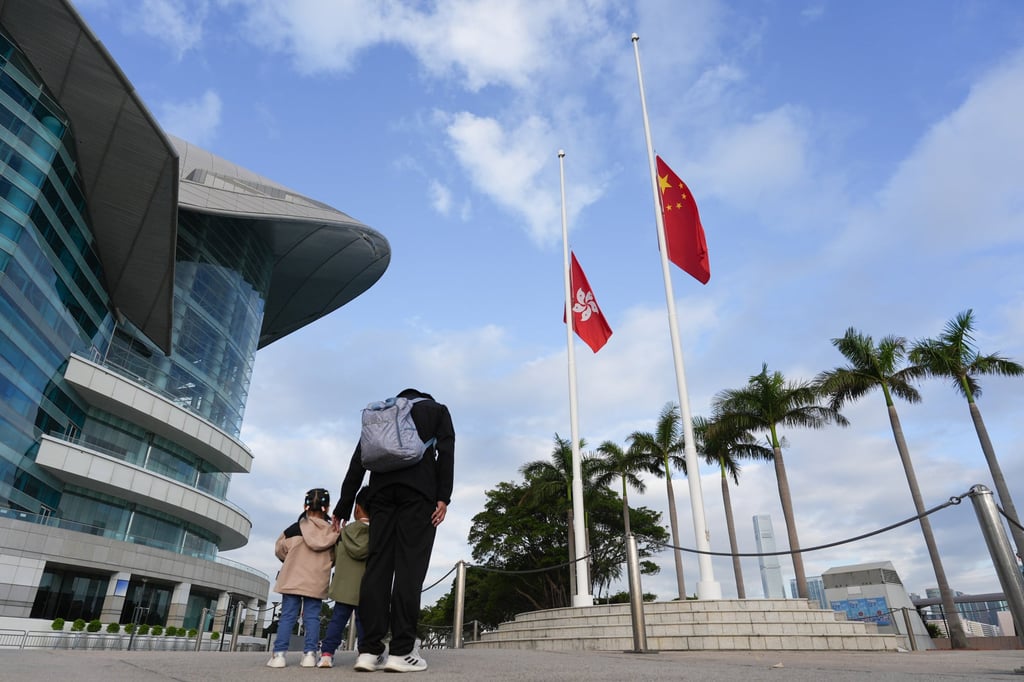
A father and his children stand solemnly at Golden Bauhinia Square in Wan Chai to mourn the fire victims of Wang Fuk Court in Tai Po, last November. Photo: Eugene Lee

A father and his children stand solemnly at Golden Bauhinia Square in Wan Chai to mourn the fire victims of Wang Fuk Court in Tai Po, last November. Photo: Eugene Lee

Teachers are often the first to notice something. Lauren O’Brien, head of guidance at American School Hong Kong, explains that teachers may observe small changes, from difficulty focusing to a shift in level of academic attainment, or becoming unusually anxious or tearful, while “physical complaints and withdrawal are also common indicators that a student is carrying more than they can manage”.

She adds that changes can appear socially or behaviourally, as “some children avoid reminders of the incident, while others may be more irritable or argumentative. Regression in younger students or a decline in peer interactions can be telling signs”.

Lyndsey Gormley, child and family therapist at MindNLife. Photo: Handout

Lyndsey Gormley, child and family therapist at MindNLife. Photo: Handout

Grief and resilience often coexist. Paul Wickes, headmaster at Malvern College Hong Kong, observes, “Our students showed empathy and compassion while processing the fire. They organised book sales, bake sales, donation drives and collected essential supplies for those affected. Channelling concern into practical action helps them feel a sense of agency and connection, which is especially important in a culture where care is often shown through deeds rather than words.”

Cultural norms also influence how children express grief. “Some families feel pressure to remain composed or avoid burdening others with strong emotion,” O’Brien explains. “Others show care through action rather than words. Our approach is to respect these differences and support students in ways that fit their family and culture.” Wickes notes that beliefs around death can give children a framework for understanding loss. “These perspectives can help, but they may also make it harder for some students to openly express emotion. Educators need to be sensitive to both the philosophy and the practical behaviours that individual families encourage.”