
惯性聚合 高效追踪和阅读你感兴趣的博客、新闻、科技资讯
阅读原文 在惯性聚合中打开

推荐订阅源

Vercel News
Vercel News
奇客Solidot–传递最新科技情报
奇客Solidot–传递最新科技情报
Apple Machine Learning Research
T
Tailwind CSS Blog
让小产品的独立变现更简单 - ezindie.com
人人都是产品经理
人人都是产品经理
V
V2EX
量子位
Last Week in AI
Last Week in AI
Jina AI
Jina AI
博客园 - 【当耐特】
爱范儿
爱范儿
宝玉的分享
宝玉的分享
OSCHINA 社区最新新闻
OSCHINA 社区最新新闻
Hugging Face - Blog
Hugging Face - Blog
博客园 - 三生石上(FineUI控件)
有赞技术团队
有赞技术团队
小众软件
小众软件
IT之家
IT之家
博客园_首页
博客园 - 聂微东
S
SegmentFault 最新的问题
阮一峰的网络日志
阮一峰的网络日志
博客园 - 叶小钗

South China Morning Post

Singapore drama sparks Malaysian ire over scam hub depiction Time to act on stalled proposal toughening child abuse penalties, lawmakers say ‘Eager to explore’: Chinese migrants return to Venezuela after Maduro’s capture ‘We have no trust in the other side’: Iran blames US as talks end with no deal Opinion | Why securing Hong Kong’s economic future is a cultural question Hong Kong’s ministerial team spent HK$46.6 million on visits in past 3 years China family creates AI clone to comfort elderly mum after only son dies in crash Canada Olympic star Williams plans on ‘having a ‘blast’ at Hong Kong Sevens Singapore’s robotaxi drive revs up with help from Chinese AV leaders Editorial | Making Hong Kong desirable to overseas students must be a priority All 7 are dentists and hot. The Asian-American family blowing up social media Editorial | Ageing Hong Kong should welcome more open conversations around death My Take | Discovery Bay will never be the same if the restriction on taxi access is lifted Medical intern suspended after complaint over patient data in social media post Fish and vegetarianism major flashpoints in India’s West Bengal election Chinese crystal ‘paves way’ for GPS-free thorium clock navigation SCMP Best Bets: Endued can show his quality at Sha Tin Russia and Ukraine begin 32-hour ceasefire for Orthodox Easter Israeli spy firm Black Cube involved in Cyprus corruption probe ‘A big deal’: military drills show Tokyo’s growing focus on deterring China China targets middlemen in renewed crackdown on ‘hidden’ corruption Hong Kong-born gymnast leading quest to turn Singapore into elite hub Thais celebrate new year despite fuel price shocks delaying travel Harry Bentley tees up two good chances in Smart Golf and Elite Golf at Sha Tin Is this Kenyan rail project a model for Chinese and Western firms in Africa? Unearthing peace: ancient China gravesite reveals significance of broken weapons Meet Queen Elizabeth’s youngest grandchild, James, who was at Easter service Turtle found dead after apparent fall in Hong Kong’s Wong Tai Sin Landlords of 5,557 subdivided homes seek 3-year grace period to fix flats Trump critique pauses UK handover of Chagos Islands to Mauritius
Opinion | Blinding the world with lies makes peacemaking ...
Michael Vati · 2026-04-25 · via South China Morning Post

The fog of war is getting thicker. The world is beset by conflicts, yet we are increasingly in the dark regarding their causes. Without this understanding, we lack the insight necessary to resolve them.

Understanding conflict is a basic tool of mediation. It helps us define who the main actors are, the context in which they operate and the positions they hold. These data points are vital precursors to resolving conflict through mediation, of any kind.

Yet in today’s world, the basic information we once relied upon is often either missing entirely – withheld by states pursuing their own agendas – or grossly distorted by modern tools of manipulation and disinformation. This partly reflects the growing complexity of conflict and the higher stakes involved, which makes the fog of war convenient for those who benefit from obscuring the truth.
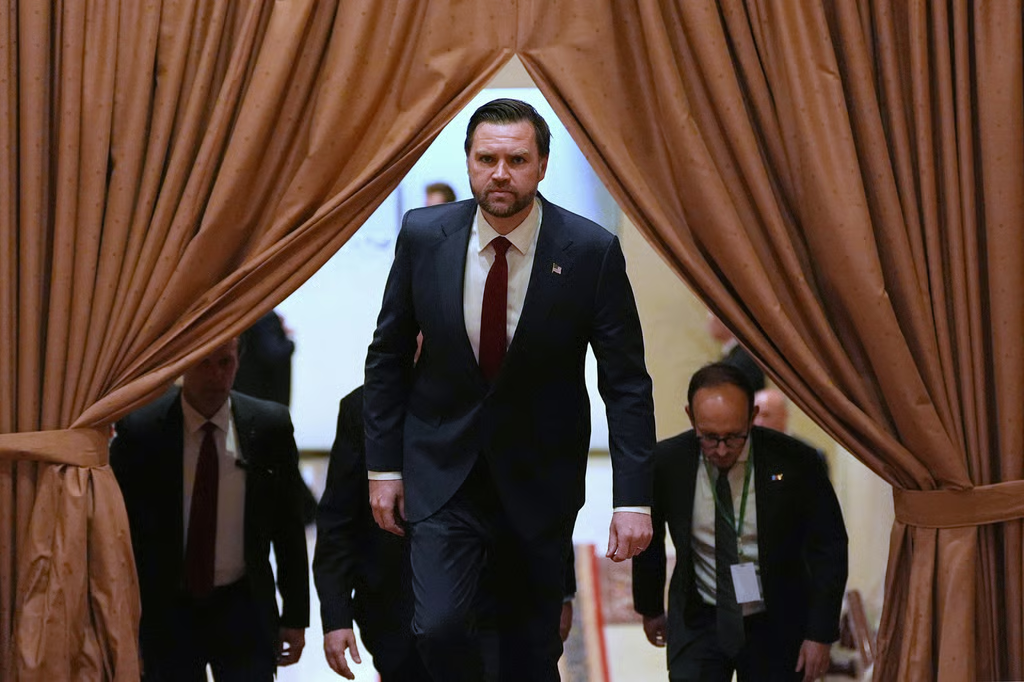
US Vice-President J.D. Vance arrives for a meeting with Pakistan’s Prime Minister Shehbaz Sharif in Islamabad on April 11 before US-Iran talks. Photo: AFP/Getty Images

US Vice-President J.D. Vance arrives for a meeting with Pakistan’s Prime Minister Shehbaz Sharif in Islamabad on April 11 before US-Iran talks. Photo: AFP/Getty Images

Peacemaking is exceptionally challenging in an information vacuum. As a reporter turned professional conflict mediator, I find it hard to imagine how conflicts can be settled and peace negotiated if we are flying blind. Mediators need to understand how others see the same situation differently. Distorted or exaggerated claims are the enemy of trust and make it hard to shape credible negotiating positions.

There is perhaps no better example of this than the negotiations Pakistan has led to end the war against Iran, which suffer from a lack of clarity about what positions Washington and Tehran are actually bringing to the table.

Part of the problem is that many of the world’s conflicts have grown far more complex and difficult to analyse. Local conflicts that stem from specific factors – such as competition over resources or displacement – are today far more susceptible to outside interference. Local actors become proxies for external forces that import entirely different agendas such as strategic competition. The line between local and external causality becomes almost impossible to distinguish, particularly when the same actors are allies in one theatre and adversaries in another.
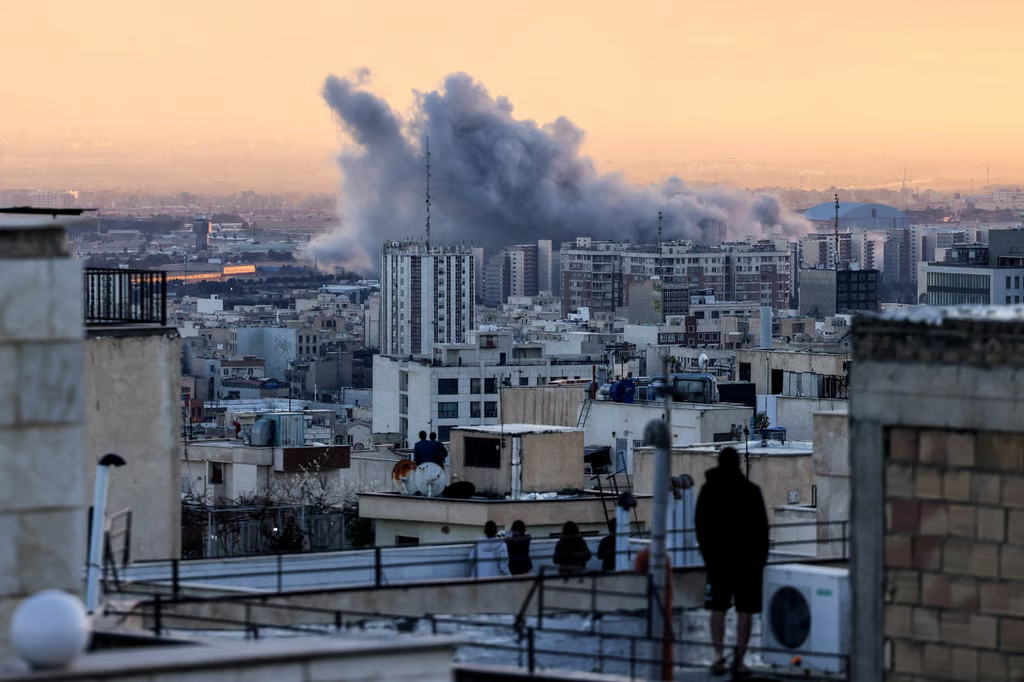
People watch a plume of smoke rise after a strike on the Iranian capital Tehran on March 3. Photo: AFP/Getty Images/TNS

People watch a plume of smoke rise after a strike on the Iranian capital Tehran on March 3. Photo: AFP/Getty Images/TNS

Worse still, groups actively engaged in the fighting may be genuinely inclined to settle, but their outside handlers drive the conflict forward. This makes it hard to identify who the real decision makers are and what it would take to create incentives for peace. Much of what we see today in the Horn of Africa, including the complex internal conflicts in Sudan, Ethiopia and Somalia, can be seen through precisely this lens.