









Chinese robotaxi firms from Pony AI to WeRide are accelerating global roll-outs of commercial fleets, leveraging cost competitiveness from the country’s world-leading new energy vehicle (NEV) supply chain and improved operational efficiency, company executives have said.
China’s NEV supply chain had helped reduce the total cost of Pony AI’s upgraded seventh-generation robotaxi – including the base vehicle, battery and autonomous driving kit – to below 230,000 yuan (US$33,700), making it cheaper than a basic Tesla Model 3, according to James Peng, founder and CEO of the Guangzhou-based robotaxi firm. The Model 3 is the US electric vehicle giant’s most affordable car.
“We will push China’s autonomous driving technology to every corner of the world with overwhelming cost competitiveness,” Peng said on Friday, the opening day of the Beijing Auto Show, which runs until May 3.
He added that the company’s technological strength had also helped drive down prices, supporting wider adoption of robotaxis. Pony AI’s latest model is set to hit the market next year.
Peng described robotaxis as a new mode of transport rather than simply driverless taxis, presenting them as private, safe mobile spaces for work, leisure and daily travel, while enhancing urban mobility.
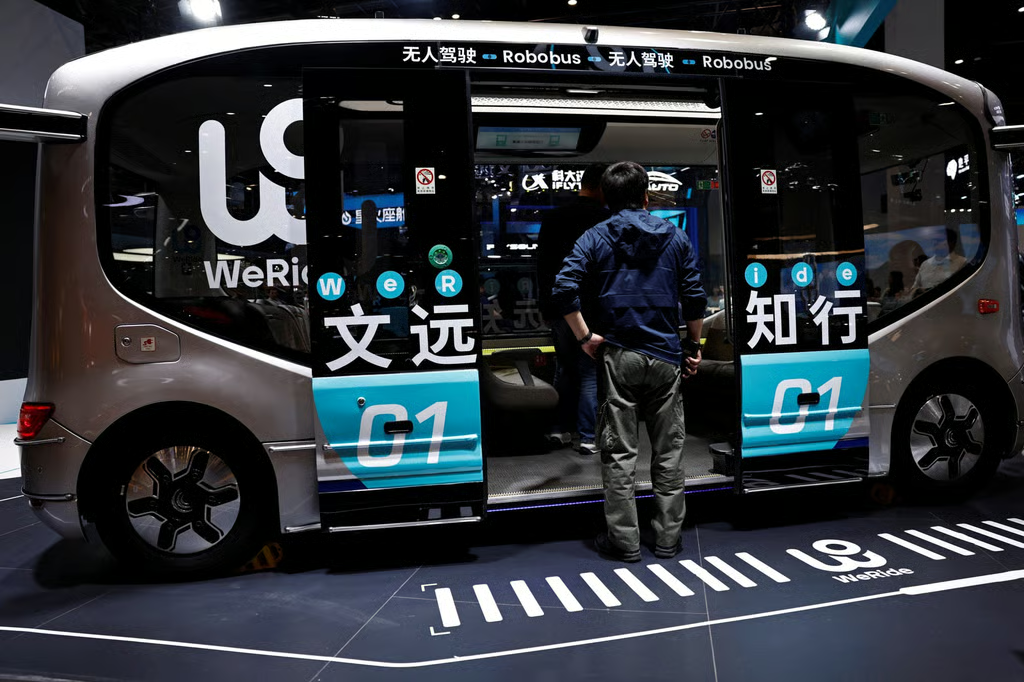
Cross-town rival WeRide is also making bigger bets on autonomous vehicles. On Monday the company announced one of the industry’s most ambitious plans: to put around 200,000 autonomous vehicles, including robotaxis, on roads worldwide over the next five years through a deepened tie-up with technology powerhouse Lenovo Group.
此内容由惯性聚合(RSS阅读器)自动聚合整理,仅供阅读参考。 原文来自 — 版权归原作者所有。