








In the contest for influence in Southeast Asia, the United States and China agree on one thing: the region is indispensable. Yet beneath the flurry of high-level summits lies a quieter divergence in how each cultivates knowledge about the region.
The US is hollowing out the university-based programmes that have long trained its students in Southeast Asian languages, history and politics. China, conversely, is elevating area studies into a top-tier, state-backed academic field. Beyond a shift in academic funding, this divergence exposes a fundamental difference in the kind of knowledge each system values, and how those choices may shape each power’s ability to understand Southeast Asia’s complexity.
In the US, area studies have never been detached from national strategy, but the funding model has proved fragile. Historically, Title VI National Resource Centres and Foreign Language and Area Studies fellowships were explicitly designed to serve national needs by supporting language training, research and public education. However, this foundation is now being abruptly dismantled. Following the sudden termination of federal Title VI funding in 2025, the US knowledge ecosystem has been pushed to the brink.
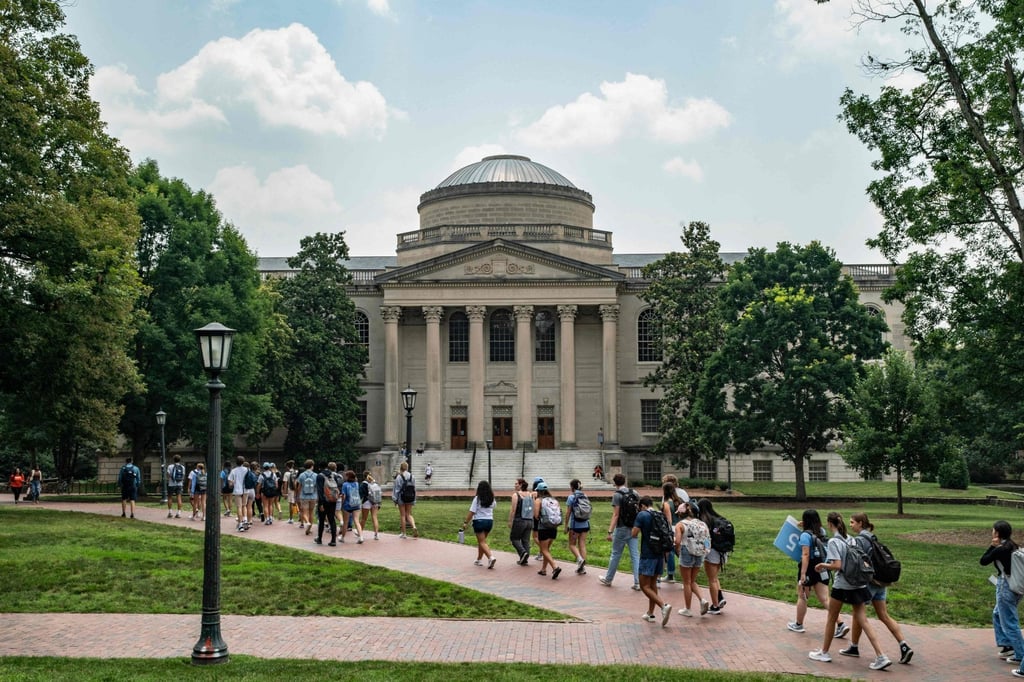
The consequences are immediate and visceral. The University of North Carolina at Chapel Hill is closing all six of its area studies centres, including the Carolina Asia Centre. The University of Washington has had to seek emergency funding to prevent its Khmer language programme, one of only seven in the US, from disappearing entirely. This is an ecosystem that takes decades of fieldwork, language training and trust-building to cultivate, yet only a single budget cycle to hollow out.
Regional expertise often begins with knowledge not easily reduced to policy relevance: literature, local newspapers, archival sources, village politics, religious life, oral histories and conversations that do not fit neatly into policy memos. This is why universities matter. They sustain forms of inquiry whose value may not be visible during the next budget cycle. When funding is cut, it narrows the future pool of Americans who can study Southeast Asia in its own languages and on its own terms.
China is taking the opposite path. Country and regional studies became a first-level graduate discipline in 2022 and was added to China’s undergraduate major catalogue last year. Official narratives, including speeches by President Xi Jinping, emphasise comprehensive, interdisciplinary, practical and timely research on the politics, economy and culture of different countries and regions. For Southeast Asia, this expansion reflects proximity and geopolitics: China is deeply involved in the region through trade, infrastructure and diplomacy, while also being entangled in several territorial disputes.
此内容由惯性聚合(RSS阅读器)自动聚合整理,仅供阅读参考。 原文来自 — 版权归原作者所有。