


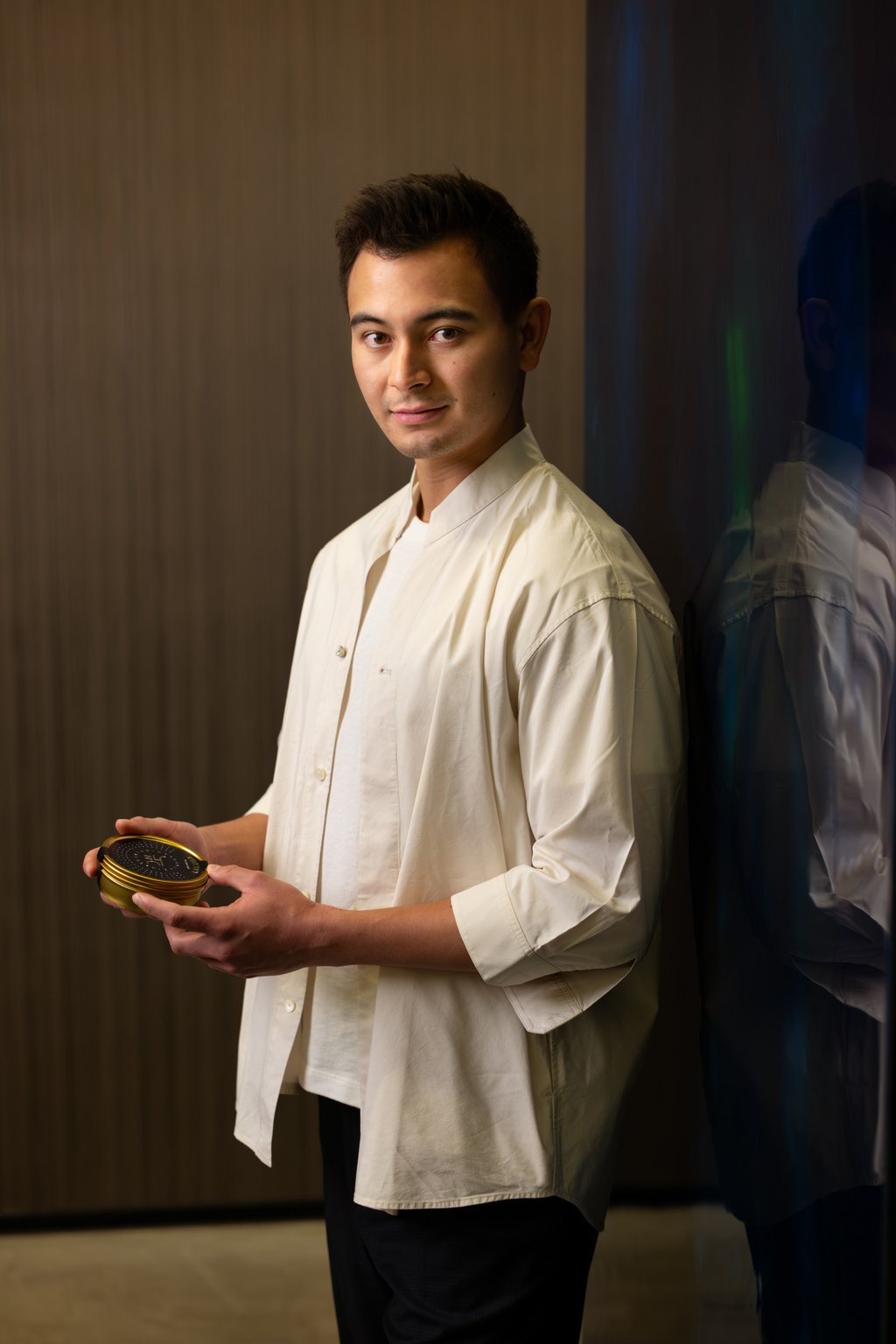
When 20-year-old Hermes Gehnen set up his company N25 Caviar in 2017, he had a lot of convincing to do. He was sourcing sturgeon roe – unfertilised fish eggs that are salt-cured to make caviar – from China, which is not known for producing luxury ingredients that end up on the white tablecloths of fine-dining establishments in the West.
Almost 10 years on, N25 Caviar is served in top restaurants across more than 20 countries, including Baan Tepa in Bangkok, Blackswan in Beijing, Cloudstreet in Singapore, Saint Peter in Sydney, and Da Terra, Ikoyi and The Ledbury in London.
Last year, N25 Caviar ambassadors Bjorn Frantzen, of three-Michelin-star Zen in Singapore, and Jan Hartwig, of three-Michelin-star Restaurant Jan in Munich, Germany, even put their names on a bespoke release of N25 Caviar processed to their specifications.
Gehnen’s journey with N25 Caviar has not always been plain sailing.
“A decade ago, it wasn’t too common to be flying the flag for Chinese caviar. I was always explaining why China made the best caviar, how the terroir, the environment, is so good,” the now 29-year-old explains.
“But, of course, not everyone wanted to hear that or would accept that. This is a bigger problem that goes beyond caviar.”
此内容由惯性聚合(RSS阅读器)自动聚合整理,仅供阅读参考。 原文来自 — 版权归原作者所有。