

惯性聚合 高效追踪和阅读你感兴趣的博客、新闻、科技资讯
阅读原文 在惯性聚合中打开

推荐订阅源

The Cloudflare Blog
小众软件
小众软件
奇客Solidot–传递最新科技情报
奇客Solidot–传递最新科技情报
T
Tailwind CSS Blog
WordPress大学
WordPress大学
有赞技术团队
有赞技术团队
博客园 - 司徒正美
V
Visual Studio Blog
G
Google Developers Blog
freeCodeCamp Programming Tutorials: Python, JavaScript, Git & More
月光博客
月光博客
aimingoo的专栏
aimingoo的专栏
博客园_首页
Blog — PlanetScale
Blog — PlanetScale
博客园 - 聂微东
S
SegmentFault 最新的问题
T
The Blog of Author Tim Ferriss
D
Docker
Vercel News
Vercel News
Recent Announcements
Last Week in AI
Last Week in AI
爱范儿
爱范儿
J
Java Code Geeks
大猫的无限游戏
大猫的无限游戏

South China Morning Post

Singapore drama sparks Malaysian ire over scam hub depiction Time to act on stalled proposal toughening child abuse penalties, lawmakers say ‘Eager to explore’: Chinese migrants return to Venezuela after Maduro’s capture ‘We have no trust in the other side’: Iran blames US as talks end with no deal Opinion | Why securing Hong Kong’s economic future is a cultural question Hong Kong’s ministerial team spent HK$46.6 million on visits in past 3 years China family creates AI clone to comfort elderly mum after only son dies in crash Canada Olympic star Williams plans on ‘having a ‘blast’ at Hong Kong Sevens Singapore’s robotaxi drive revs up with help from Chinese AV leaders Editorial | Making Hong Kong desirable to overseas students must be a priority All 7 are dentists and hot. The Asian-American family blowing up social media Editorial | Ageing Hong Kong should welcome more open conversations around death My Take | Discovery Bay will never be the same if the restriction on taxi access is lifted Medical intern suspended after complaint over patient data in social media post Fish and vegetarianism major flashpoints in India’s West Bengal election Chinese crystal ‘paves way’ for GPS-free thorium clock navigation SCMP Best Bets: Endued can show his quality at Sha Tin Russia and Ukraine begin 32-hour ceasefire for Orthodox Easter Israeli spy firm Black Cube involved in Cyprus corruption probe ‘A big deal’: military drills show Tokyo’s growing focus on deterring China China targets middlemen in renewed crackdown on ‘hidden’ corruption Hong Kong-born gymnast leading quest to turn Singapore into elite hub Thais celebrate new year despite fuel price shocks delaying travel Harry Bentley tees up two good chances in Smart Golf and Elite Golf at Sha Tin Is this Kenyan rail project a model for Chinese and Western firms in Africa? Unearthing peace: ancient China gravesite reveals significance of broken weapons Meet Queen Elizabeth’s youngest grandchild, James, who was at Easter service Turtle found dead after apparent fall in Hong Kong’s Wong Tai Sin Landlords of 5,557 subdivided homes seek 3-year grace period to fix flats Trump critique pauses UK handover of Chagos Islands to Mauritius
Opinion | Why executive branches are best placed to gauge...
Ronny Tong · 2026-06-14 · via South China Morning Post

Ronny Tong, SC, was chairman of the Hong Kong Bar Association from 1999 to 2001, and was first elected a member of the Legislative Council in 2004.

The recent enactment of a subsidiary legislation in Hong Kong regarding the appropriate procedure to be followed in cases of non-national security offences involving national security considerations not surprisingly spurred some to revisit the chief executive’s power, granted under the national security law in 2020, to issue a certificate as to whether an act involves issues of national security.

That some people express concern that such an important task is left to the executive and not the judiciary is understandable only because they have failed to understand the governing rationale behind this distinction.

Many common law jurisdictions accept that the court is not an appropriate forum to determine matters of national security. Note that I am referring to national security issues and NOT national security offences. There is a vital difference.

In the United States, this difference has been recognised and accepted for decades. Supreme Court cases from Navy vs Egan (1988) to Holder vs Humanitarian Law Project (2010) to the most recent case of FBI vs Fazaga (2022) have confirmed repeatedly that national security risk assessments fall within the exclusive competence of the executive branch because they require predictive judgments based on sensitive intelligence.

Courts may not second-guess these determinations as they lack the necessary institutional competence to evaluate sensitive intelligence or threat assessments. It follows that there is a clear and necessary distinction between executive national security determinations and the judicial adjudication of national security crimes.
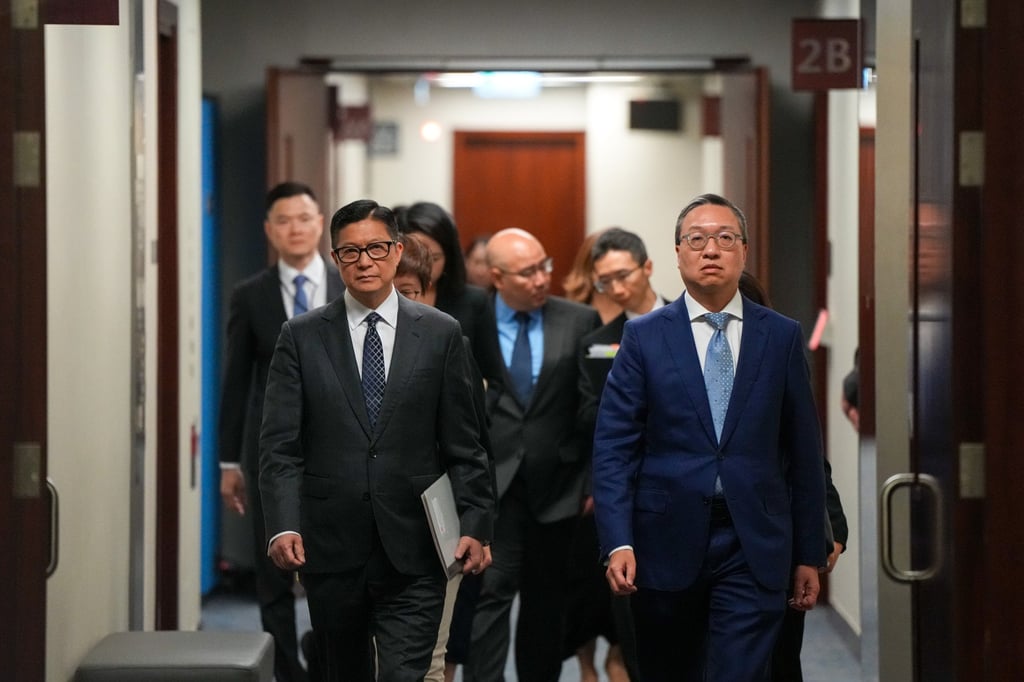
(From left) Hong Kong Secretary for Security Chris Tang Ping-keung and Secretary for Justice Paul Lam Ting-kwok meet the media at the Legislative Council Complex on June 8, as the government proposed legislation to clarify the definition of national security offences. Photo: Sam Tsang

(From left) Hong Kong Secretary for Security Chris Tang Ping-keung and Secretary for Justice Paul Lam Ting-kwok meet the media at the Legislative Council Complex on June 8, as the government proposed legislation to clarify the definition of national security offences. Photo: Sam Tsang

The position in Britain is no different. In the landmark case of Secretary of State for the Home Department vs Rehman (2001), the House of Lords, then Britain’s highest court, reaffirmed the principle that identifying a threat to national security is an executive function, not a judicial one, and that the courts cannot substitute their own assessment of national security risk for that of the home secretary’s.