








Beneath the rigid honour codes of the criminal underworld, ancient Chinese thieves operated in a high-stakes gamble against the state. For those who broke the law and were captured, the cost of failure was inscribed on their skin or paid in blood through facial tattooing, brutal amputations, or the executioner’s blade.
From mastering qinggong (light body technique) to extreme contortion, their skills offered insight into a shadowy realm characterised by cunning, strict discipline, and paradoxical ethics.
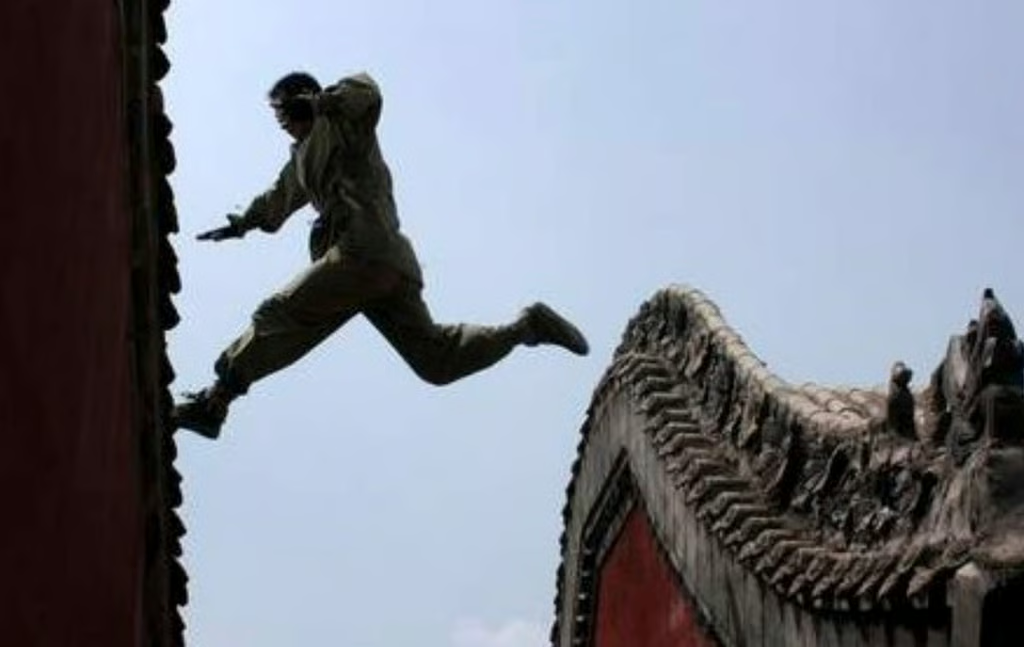
In ancient China, burglars were expected to master qinggong, allowing them to glide effortlessly across rooftops, walls, and trees. Historical records note that they skilfully lifted tiles to create small openings, descending stealthily on ropes.
After scouting a target, they would leave discreet marks for themselves and fellow thieves, using arrows to indicate safe entry points and circles or crosses to signal guard dogs.
Some were said to practise “bone-compressing skills,” employing extreme flexibility and precise joint control to slip through narrow gaps and evade capture.
Timing was essential; they chose windy or rainy nights to mask sounds and hide their tracks, keen to avoid bright full moons or snowy days that would betray their footprints.
In this world, gangs often recruited street kids, rigorously training them as pickpockets. Training emphasised finger dexterity, speed, and strength, utilising exercises like fishing coins from hot water or gripping slippery soap in a basin.
Teamwork was crucial. Accomplices created distractions, feigned collisions, blocked sightlines with umbrellas or clothing, and executed precise sleight-of-hand tricks.
此内容由惯性聚合(RSS阅读器)自动聚合整理,仅供阅读参考。 原文来自 — 版权归原作者所有。