


Rachel Whiteread, artist: ‘I think about him every time I go swimming’
My earliest memories of modern artists were of David Hockney, Andy Warhol and Bridget Riley. I remember seeing a TV programme about David in the 1970s as a young kid and thinking “wow, is that what being an artist is like?” Because my mum was an artist but she wasn’t anything like that!
Compared with Bridget Riley, who was very sort of cool, David seemed out there, embracing it all. He was charismatic and fashionable and very out and proud. He made being an artist look fun. I don’t know if it always is that fun, but he made it look that way.
I actually think about him every time I go swimming. And I swim a lot. I might be diving to the bottom of a pool or looking up from the bottom, and it always astounds me how he painted water, and figures within water. The multitudes of layering and light and depth. Those LA swimming pool paintings were like such an alien landscape compared with cold, dreary London. They were my favourite period of his, but I also liked when he got really bold and colourful in the 1990s. And as a kid I loved his drawings: the lines, the draughtsmanship, the space … they just showed you what a master he is. He’s created such an incredible body of work. I can’t say I’ve loved all of it but I do love how he just never stopped painting. It was like he was breathing art.
Jeremy Deller, artist: ‘He made an anti-smoking councillor hit the roof!’
David was a great role model – always up to something and enjoying it. He humanised technology in a way that few have managed. In 2009 he helped me by designing a banner titled The Unrepentant Smokers for a procession in Manchester. When an anti-smoking councillor found out about it he hit the roof, which DH found funny. The last work I saw by him was his Lightroom immersive show. That, in itself, was a fun and tech savvy obituary.
Tacita Dean, artist: ‘He gave us our family motto: Inspiration, she does not visit the lazy!’

Of course my husband, Mathew [Hale], and I were utterly awestruck when printmaking publisher Sidney Felsen first took us up through the Hollywood Hills to meet David in 2014. Every art student of our era had a copy of the David Hockney on David Hockney book. Even back in the 1980s, he was mythical. But David was instantly warm and welcoming and had little interest in too much reverence. After that, we saw him often at Getty events and, once, on a terrace looking out over Los Angeles, I observed the particular way he was holding his cigarette, between his third and fourth fingers, as he smoked. I later asked him if I could film him smoking and he replied that he’d happily sit for me. He was in the midst of an extended portrait series himself, which was the work that enabled him to transition to working again in LA after his period back in Yorkshire.
It was Thanksgiving break so we took our son Rufus with us to recce the space and talk the film through with David. Rufus had just had his 11th birthday and always chose to dress himself in a tie and a three piece suit, possibly in reaction to his poorly dressed parents. Looking at him, David said: “Actually, Rufus, you might be rather good to paint yourself.” And then, as his assistant Jonathan Mills went to fetch a canvas, he added “Inspiration, she does not visit the lazy” and started that morning to sketch Rufus out. That phrase has since become our family maxim.
We spent the next three days going up to the studio. There have been few greater pleasures in my life than watching David paint Rufus. He painted him with blue eyes (they are brown) because, we believe, he saw something of his young self in him. When the time came to film David smoking, the painting he’d made of Rufus was hanging with the others on the wall behind him, which is why I titled the film Portraits.
After that, we became friends. David even came to see Rufus in his school play Cabaret. Some years later, my brother Ptolemy, newly appointed as surveyor of the fabric of Westminster Abbey, was asked by the then Dean, John Hall, if he knew how to get in contact with David to invite him to make a stained glass window in the Abbey in honour of the queen’s Platinum Jubilee. David took a bit of convincing and the long email chain bore the subject line 3 Deans, but in the end he resolved it by thinking of the hawthorn bushes exploding like champagne in celebration in the hedgerows in his native Yorkshire.
David was insatiably curious and deeply intelligent. His curiosity guided him to understand optics, master new technologies and new mediums, seek out scientists, watch recent movies. He was a voracious reader. His studio was full of friends coming through who he was always happy to entertain while looking at his morning’s work on the wall beyond them. He was a passionate smoker but never smoked when he painted, only when he was looking and he looked a lot. Like few other artists of his stature, David felt assured enough as an artist, and who he was, to be unencumbered by prevailing styles and prohibitions. His 2025 show in LVMH was unafraid and generous and finally vanquished those who had underestimated him. David was an inspiration to artists and an evangelist for joy who gave the gift of his art to a world that really needs more not less of him right now.
Marlene Dumas, artist: ‘He showed me it was possible to paint love stories and do it delicately’
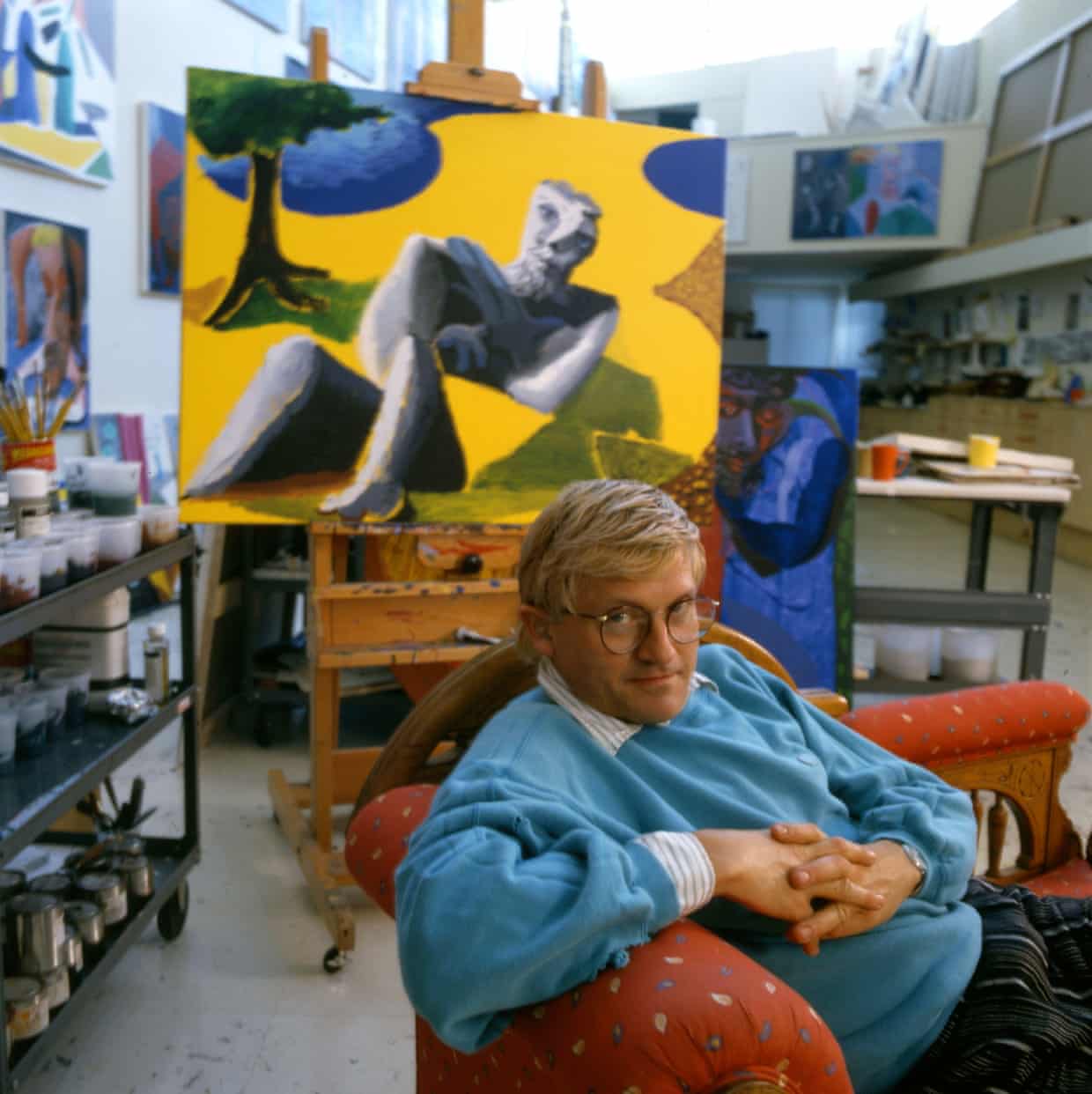
Hearing the news of Hockney’s death made me quite tearful. I went back to the poems of CP Cavafy and the etchings that Hockney made in the late 1960s as a homage to them … and then I got really sad. Hockney inspired the young me in many colourful ways, but the most important for me was discovering an artist that could make such touching work with simplicity and tenderness about love.
I admired the works of Francis Bacon about human relationships, but this was something very different! Up until then, I never thought of gentleness as something strong in terms of modern art. Yet these drawings and etchings of intimate gay couples are not only special because of their subject matter, and when it was made, but also because Hockney’s technique is so arrestingly sparse. He showed me that it was possible to paint love stories and to do it delicately.
Hockney said about Vincent van Gogh: “he really looked … and what he saw, he loved.” That was the special quality of Hockney too. He treated his subjects lovingly. He seemed to completely lack the aggressive neurosis that is part of so many artworks of our time.
Mark Wallinger, artist: ‘He was the best draughtsman since Picasso’
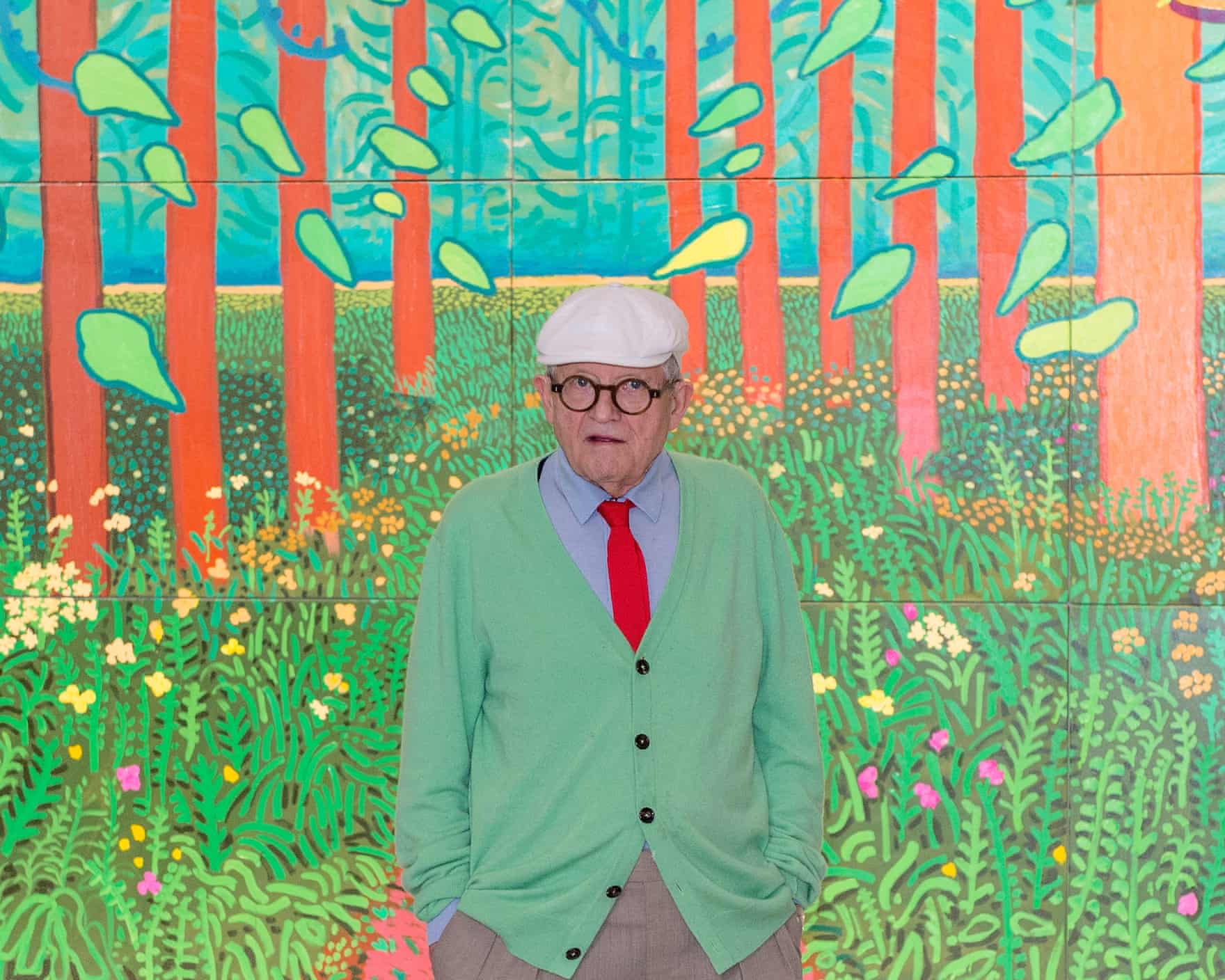
David didn’t just paint things – he shaped the way we see the world. Think of his move to Los Angeles in the 1960s: what we think about LA today really rests upon those swimming pool paintings. I would say he’s the best draughtsman since Picasso. He really did know how to look – and you looked with him. He’s one of those rare artists where you sort of felt you were joining in with him. What a privilege and an honour.
He was always pushing things forward. In his last show at Annely Juda his iPad works of gardens in moonlight were miraculous. He had this uncanny facility to find the right medium for whatever it was he wanted to depict. My most gobsmacking moment with Hockney was 13 years ago. I was in San Francisco and saw a series of charcoal drawings of the coming spring in East Yorkshire. Through the most delicate marks you could feel the light reflecting from melting snow in a field.
He said he painted the things he loved, and he loved life. His work was really all about the pleasure of being alive. And actually, he painted quite humble pleasures. There’s passion and light and heat and libido and all the rest of it, but he’s only painting things we’ve all felt or known. Our eyes are the things that conjure the world for us and yet we can take the act of seeing and looking and examining for granted. David wanted us to look properly. Beyond all else, it was a delight to see the world refracted through his eyes.
Andy Holden, artist: ‘My mum bought me some Hockney socks’
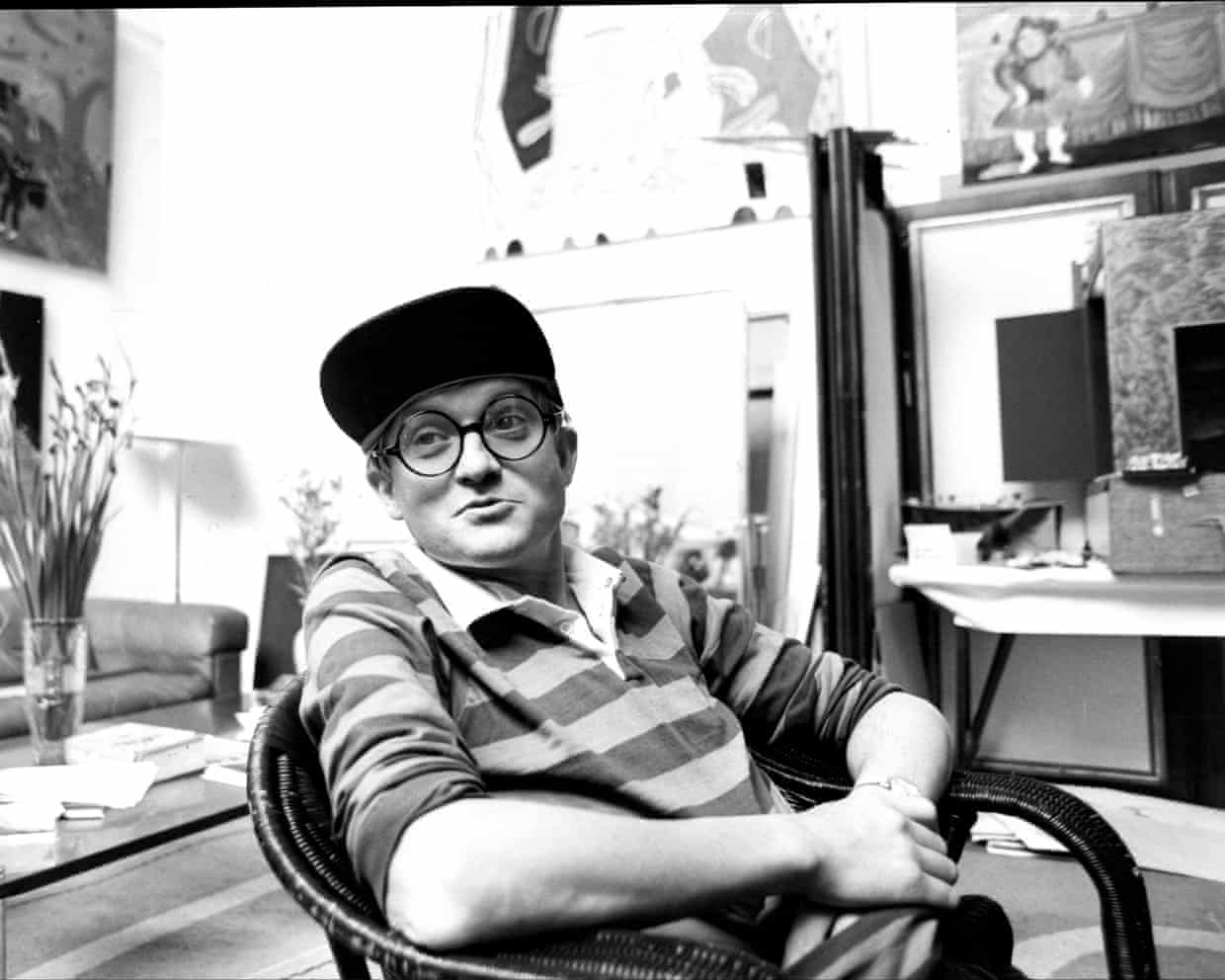
When I left Bedfordshire for Los Angeles, my mother bought me a pair of David Hockney picture socks. At a party soon afterwards, everyone had to take their shoes off, and my Hockney socks were suddenly very visible. I wasn’t embarrassed: no harm in wearing your influences on your feet. Hockney threw down a gauntlet: be consistent, but keep changing. I always keep a postcard of My Parents, his painting of his mother and father, somewhere in my studio, because it is, to me, a perfect painting. It has the quality I want from any work of art. So too do the Los Angeles paintings: even when cool and detached, they do the rare, enviable thing of arresting time. The splash of pool water after the dive is suspended for ever. As a teenager, it was the Grand Canyon paintings that first hooked me: the most splendid tourist pictures, so vast they required multiple panels and gave you vertigo. Hockney’s work was a crucial early gateway into art. You soon realise he has laid out a full syllabus, a rounded lesson in art history. He takes photography seriously, points you towards Matisse, shows you mirrors, and makes you aware of the possibility that anything can be your subject, as long as you stay present and look at what is in front of you.
Helen Marten, artist: ‘He made teabags and toothpaste glamorous’
David Hockney made the wild milkshake of the world a place of granular human interest, a place where teabags and toothpaste held equal pathos or glamour with the wide blue pools and naked torsos of Hollywood. I have looked so often at his work with great jealousy and consternation, perhaps the two greatest gifts one artist can give another. Treachery in making is not ultimately deception but rather the kind of carnal, political, or erotic power that instills new knowledge in things we believe we already know. Hockney taught everyone how to read a puddle, a scratch, a bloom, a cartoonish line, the enveloping totality of vivid colour. And he did so much, never falling into the vacuum of technological reproduction, but dancing gleefully at its edge, lighting fires that placed substance and taste in ever-changing relationships with image-making. To find a radical queer articulacy is to persist continually against the lodged social anticipation of problems solved via seduction or silence. Hockney imbued everything he did with a defiant semantic touch, working all the while with wild optimism and without hubris. He is one of those rare, obsessive intellects who knew that between the danger of carnage and the miracle of beauty, there might be a measure to find that marks the point at which ourselves begin, amid the chaos of our strongest feelings. The passing of David Hockney is a cultural paradigm shift; a deep legacy that holds great magic and eternal pleasure.
Nicholas Serota, Arts Council England chair: ‘He announced a new generation of painters’
In his paintings, drawings, iPad compositions and opera set designs, David touched the popular imagination – his exhibition at the Fondation Louis Vuitton last year drew nearly a million visitors. His curiosity about the way the world can be depicted encouraged him to explore many different styles. He saw himself as being in a dialogue with great masters like Picasso and Matisse, but was also inspired by other traditions such as Japanese scroll paintings. In the early 1960s paintings like We Two Boys Together Clinging, painted at a time when homosexuality was a criminal offence, announced the arrival of a new generation of painters. Throughout his career, Hockney continually explored new forms of painting and new subjects ranging from his striking views of life in Los Angeles to the rolling landscapes of Yorkshire and the abundance of nature in Normandy. His influence, generosity, and legacy are immeasurable. He was, quite simply, a great artist.
I was lucky to have been at the Royal College of Art shortly after him, following in the wake of his artistic energy. I will always recall his charming Yorkshire voice explaining in his unique and articulate way his approach to art. I remember a lunch with him in Paris, where he revealed his iPad which had been hidden in a poacher’s pocket. He inspired every one of us with his bold realism, his perceptive colours and his breathtaking iPad paintings. David experimented and experimented. He was a creative genius.
Benjamin Myers, novelist: ‘I go on pilgrimage to see his works in Saltaire’
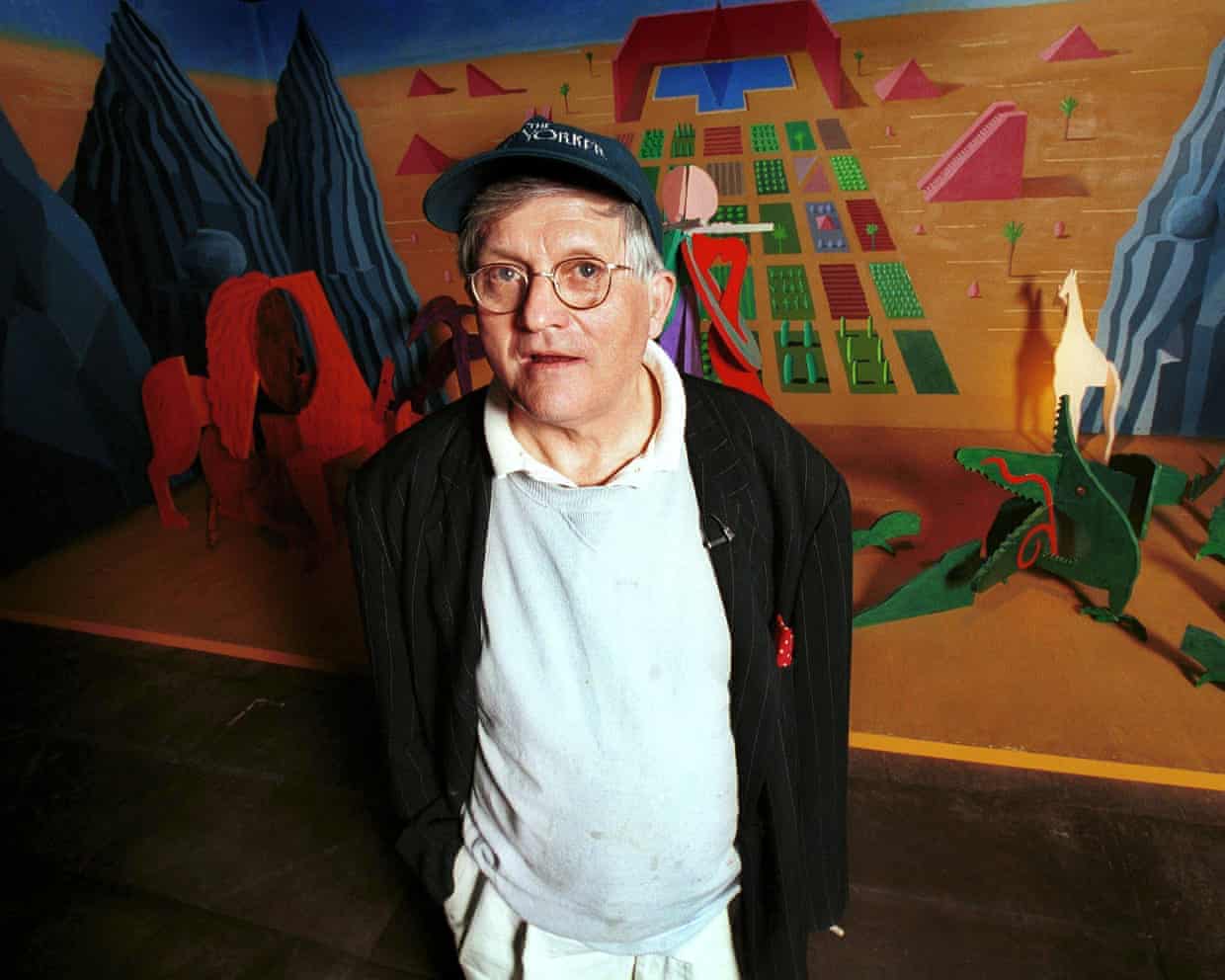
I’ve always known Hockney represented the pinnacle of his chosen art-form, just as I knew the Beatles did. Growing up British, he was just always there – telling the truth, enjoying himself and being the living ideal of what a working artist can be (in a word: free).
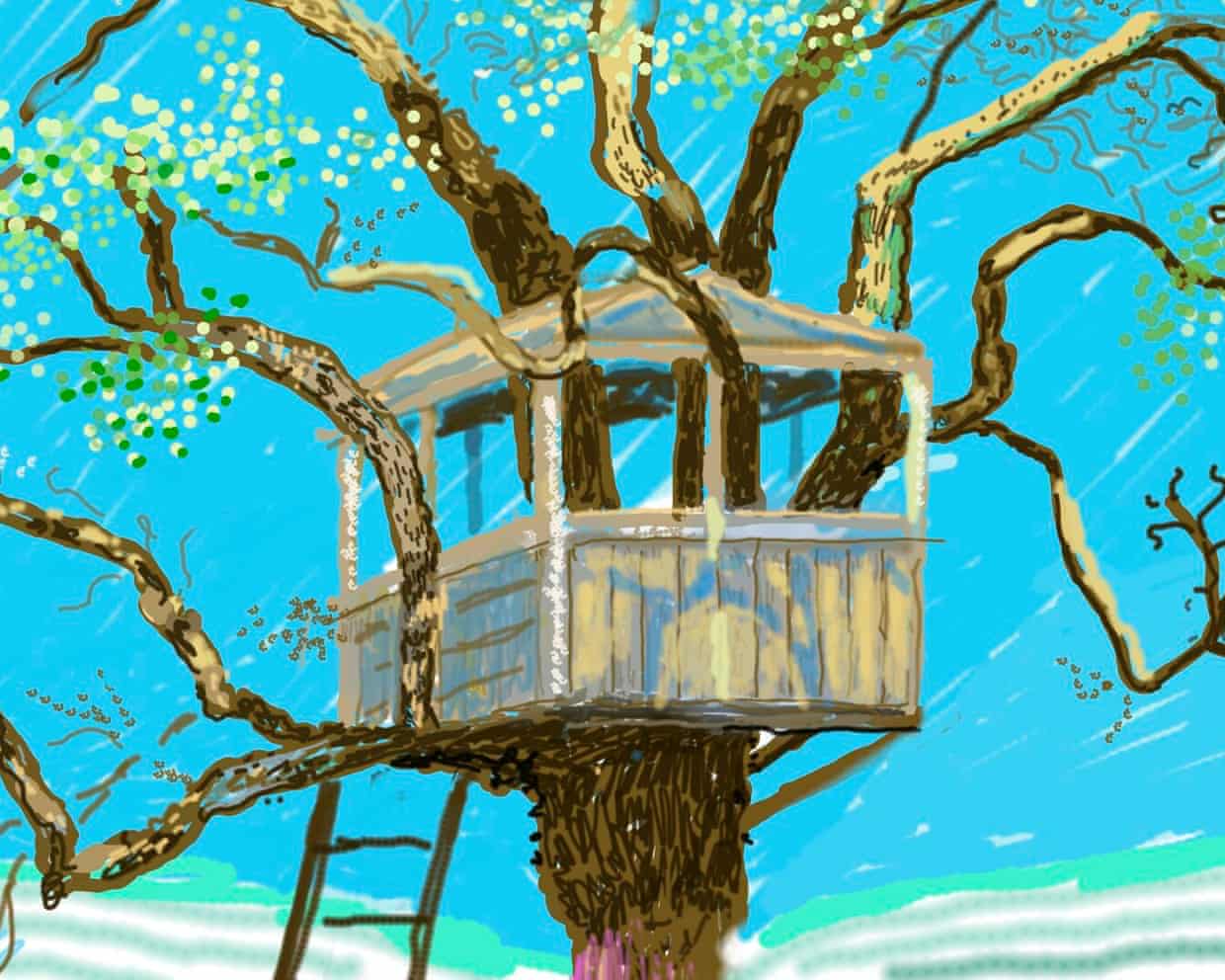
For nearly two decades I have made visits to Salt’s Mill in Saltaire, a cathedral-like space that Hockney helped find a new purpose for. For the past 10 years my trips have been specifically to view his The Arrival of Spring collection. These were the master’s attempts to capture a different spring day, using only an iPad and the Brushes app, of the same tree-lined road near in Woldgate in the East Riding. This, I believe, was the moment that painting truly went digital; even Luddites could see that an artist’s eye will aways matter more than the format and that beauty transcends materials and form.
For years I stood in front of these works, drawing inspiration, energy and peace from them. Then, duly revitalised, I’d pop to the art shop downstairs to buy a postcard of the famous picture of Hockney and Alan Bennett together in profile – “Dave” and “Al”, two of the great Yorkshire gay men – and smile at it all the way home.
Jonathan Anderson, designer for Dior and JW Anderson: ‘He depicted queer love unapologetically’
Hockney was the first artist I was completely obsessed with. His paintings were sun-soaked and joyful, but more importantly for me they opened up a world in which queer love and desire were depicted unapologetically. They were a life-saving escape for a young gay kid in rural Northern Ireland (it’s incredible to think that his “love paintings” were made more than 20 years before homosexuality was decriminalised there). He’s remained an inspiration to me ever since: his endless curiosity, his effortless style, of course, and the fearlessness with which he explored new tools and ideas, always somehow a couple of steps ahead of everyone else.
Jane and Louise Wilson, artists: ‘He never stopped looking or questioning’
David Hockney’s passing marks the loss of an artist who truly transformed how we see the world. Although we never met him, his work has always been there for us, something that we have revisited many times both in our lives and art practice. We remember not only Hockney’s iconic pools in the California light, but his constant curiosity about how images are created and how we experience them. His work with photography and reproduction was not just about technique, it made us all ask the question: what does it mean to see, and how does technology change what we see?
Hockney’s set designs for The Rake’s Progress were remarkable. Based on William Hogarth’s engravings, transformed into three-dimensional space using perspective and heavy cross-hatching. He created these immersive drawings that you could almost step into. It was a brilliant vision of how a drawn line doesn’t just describe space but can become space itself.
Hockney’s impact on contemporary art is profound, and it will take us all time to fully appreciate his loss. But what still feels so inspiring is the sense that he never stopped looking, questioning and testing the limits of how we see ourselves and how an image can be made.
Clarrie Wallis, director of Turner Contemporary: ‘Few have done more to shape the world we see’
David Hockney was one of the greatest artists of our age. Few have done more to shape the way we see the world. Throughout a career spanning seven decades, he combined extraordinary innovation with a rare generosity of spirit, reminding us that the world is, in his words, “very, very beautiful if you look at it”. Whether working in paint, photography or on an iPad, Hockney encouraged us to look more closely, finding wonder in the changing seasons, the landscape and everyday life.
This spring at Turner Contemporary we were honoured to unveil Hockney’s 27th April 2020, No 1 as this year’s Sunley Gallery Window commission. Drawn on an iPad in his home in Normandy, this sunrise scene forms part of his celebrated exploration of light and the changing rhythms of nature. Here the work is enlarged to architectural scale and illuminated after dark - transforming our seafront window into a radiant celebration of light, hope, and renewal. It embodies the optimism and joy that characterised Hockney’s remarkable practice.
Thomas Demand, artist: ‘I learned a great deal from one little blue spot’
David Hockney was a significant influence on me, especially as a student, and I have always watched closely what he was up to. I read his early writings and learned a great deal from them — David Hockney by David Hockney, for instance, and his notes on photography. I did not always share his views, but they were full of fundamental insights. His tone in these books was unpretentious and lucid, directly applicable to daily practice, even for someone like me, who at the time neither painted nor made photographs.
In Bavaria, at the moment when the Teutonic wave of bad figurative painting swept through like a tempest, one hardly ever saw his works in the flesh. So I travelled, and discovered how carefully considered they were — and yet how much he allowed things to happen. He was undogmatic, generous towards the work in a way that almost no one else was at the time.
One detail in particular stayed with me: the unpainted white border around A Bigger Splash, with a small drop of blue paint at the bottom — the kind of thing one might furiously try to clean away or somehow rescue. Hockney simply let it remain. I learned a great deal from that little spot: about beauty, perfection, and the grace of not being rigid.
Philippe Parreno, artist: ‘With Hockney, colour becomes intelligence. Perspective becomes desire’
Seeing, in Hockney’s work, was never passive. We do not simply receive the world through the eyes; we construct it through memory, desire, movement and attention. The painting becomes a plane where time suddenly appears.
A splash!
Synchronicity between sound and image does not come only from the fact that they happen at the same moment. It comes from the feeling that the sound has already been heard. What we recognize is not a cause, but a memory. We are haunted by an earlier listening.
Hockney’s splashes, pools and beaches are acoustic. A brief sound enters the image: a disturbance of the surface, something appearing and disappearing at the same time. It is not only water being represented; it is an event. Something has happened, or is about to happen. The painting holds that interval.
The ancient theory of extramission imagined vision as something emitted by the eye. Greek mathematicians and astronomers described eye-beams as straight, conical rays extending outward from the eye toward the observed object. Seeing was a form of emission. As a science, the idea belongs to the past. But as a poetic truth, it feels very close to David Hockney’s work. His paintings do not seem to receive the world passively. They send something toward it.
In questioning the single fixed viewpoint, Hockney made this even more explicit: the feeling that seeing is mobile, constructed, alive. Classical perspective places one eye before one world. Hockney opened that structure. He allowed many moments of vision, many positions, many durations to coexist.
The visible world feels unfinished in his work. Colour becomes intelligence. Perspective becomes desire. Painting becomes a form of attention to something that may happen.
Andrew McMillan, poet: ‘Things seem slightly duller now’
Two quickly sketched thoughts on David Hockney 12.6.2026
i)
how so often in his portraits
he seemed to capture the sitter
in the moment just after
they’d been told that they were beautiful
ii)
how things seem slightly duller now
a little drier my friend Joe saying
he feels a sudden urge to live
while I’m thinking of trees our brevity how they’ll outlast