


It took Camille 15 years to make her new album. The Sound of Milk is a triple record, each part documenting a distinct stage of the French musician’s experience raising two kids with composer Clément Ducol: Naissance is from 2015, Enfance 2020 and Adolescence 2025. She could have put each one out when it was complete, she says, but realised she wasn’t ready. Her son and daughter, now teenagers, “were too little, and I would have felt too exposed to talk about it because it’s about beauty, joy, it’s very deep,” says Camille, calling from her home in the French countryside. “I needed to be able to step back and look at the journey. I needed to feel grounded enough to release it in a world that does not respect children and mothers.”
On the surface, much of Camille’s sixth album may sound very sweet. Naissance features no real instruments – it’s essentially a field recording of raising babies, all gurgles and found sound. Known for her vocal experimentation – beatboxing, raspberries – Camille saw it as a manifesto freeing singing from how disembodied it can be in pop. “As a woman, music is about a way of living,” she says. “It’s about breathing, being with my kids, singing along with what’s going on around me in an open world.” She calls Enfance a “pocket musical”: similarly atmospheric, it’s full of the kinds of ditties parents make up when they’re teaching kids about stairs and the washing machine – raising everyday maternal expressions up as art, I suggest. “I like what you’re saying,” she says. “All families are pieces of art. We create our values, our worlds, a way of talking to each other.”
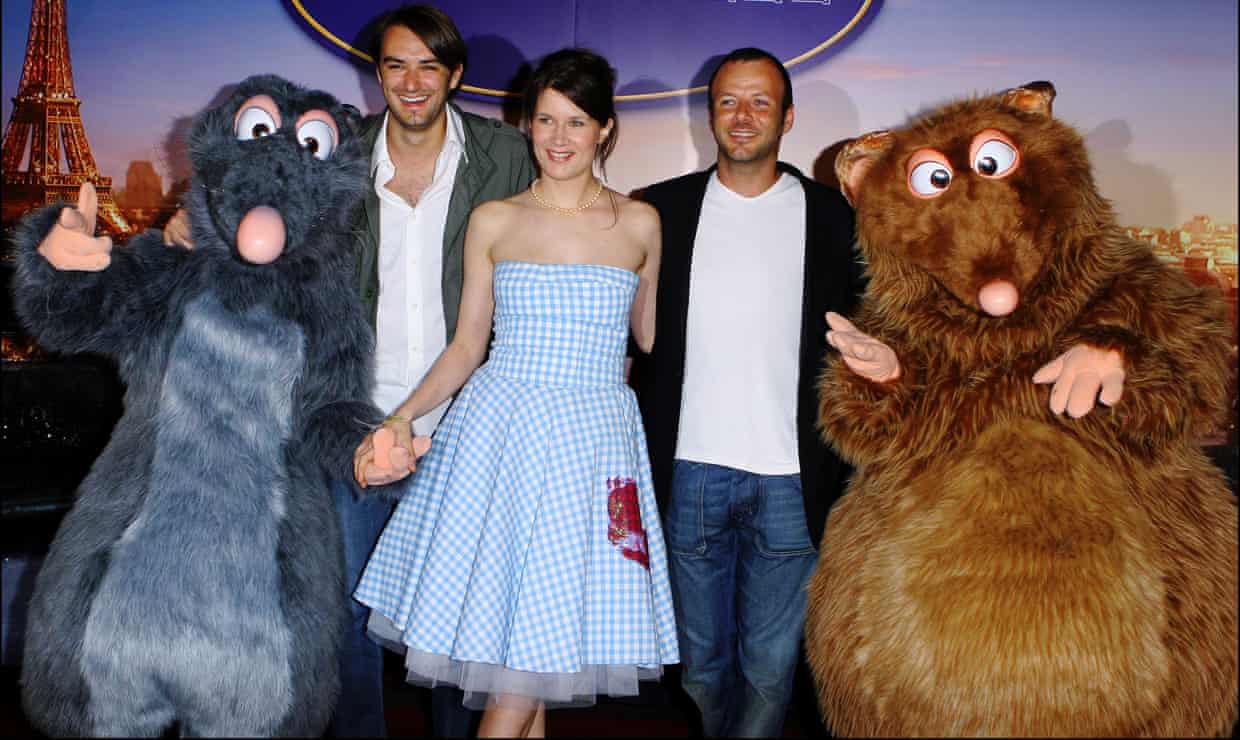
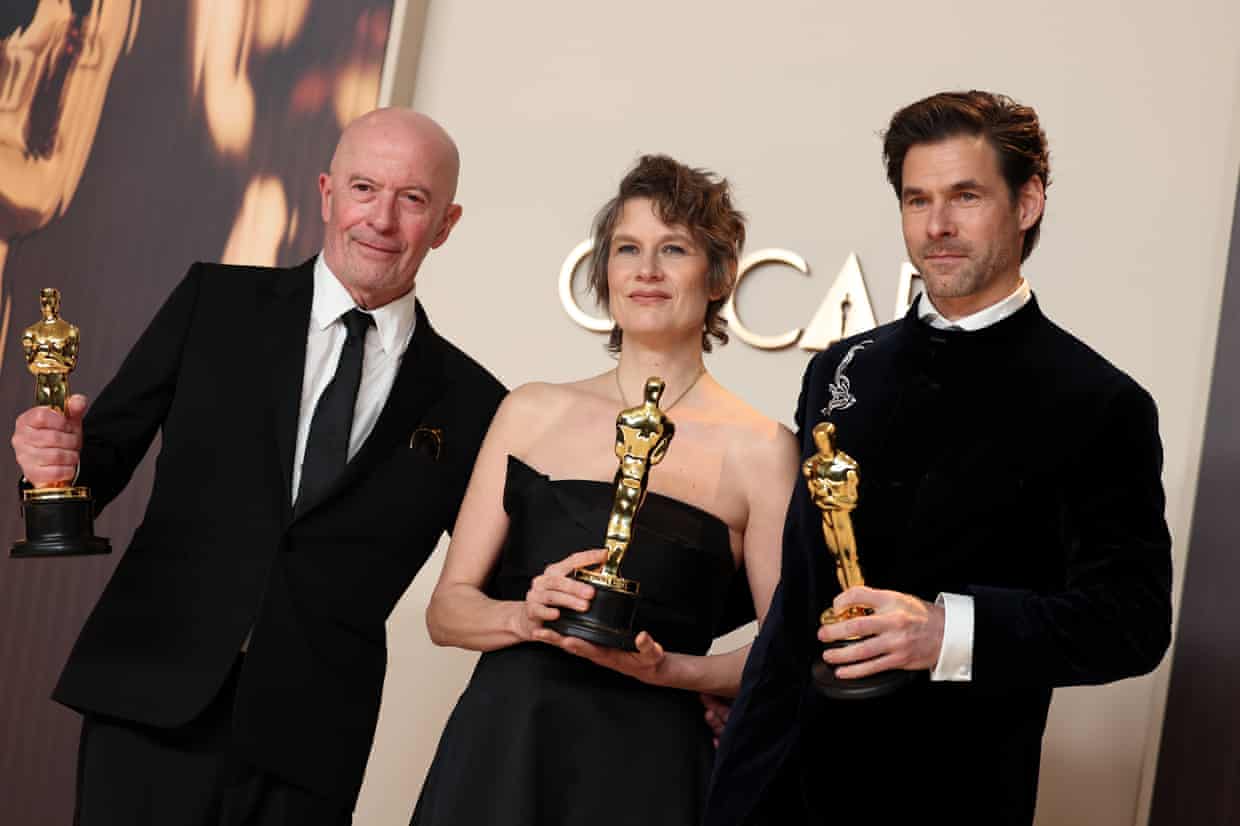
Only the fully produced Adolescence is in keeping with the idiosyncratic, frisky pop catalogue Camille has built since 2002, one that has threaded together drone, cabaret, bodily percussion and ecclesiastical reveries, along with tracks for the animations Ratatouille and Le Petit Prince, songs about how sperm eventually becomes milk, and Oscar-winning songs for the soundtrack to Jacques Audiard’s 2024 film Emilia Pérez.
Now 48, Camille exists in conversation with artists such as Meredith Monk, Laurie Anderson and David Byrne, as much for their musical and conceptual innovations as the humour they bring to them. Adolescence is the most overtly politicised part of The Sound of Milk, with songs about ecological collapse, disrespect for future generations and screen-mediated myopia, but there’s a defiance to the whole record: joy in the face of darkness, foregrounding the maternal experience – and her own difficult family history – in a world that would rather sideline it.
Camille is rousing, emphatic company on the topic. She had to fight to make the album this way. “You know,” she says, “it took a lot of time to convince my label” – Because, also home to Charlotte Gainsbourg – “that this could be a record, because these songs are considered mother’s things: ‘This should stay in your house. Do proper songs, radio songs, in the studio.’ But these are songs. This is my life, and this” – mothering – “is making the world go around, guys, because this is where we all come from, and if nobody sings to us when we’re little, if nobody’s creating for us, then we’re dying.”
I confess that the first time I listened, the sing-songy vignettes of family life made me cringe, then I checked myself: even as someone who loves kids and my mum friends, clearly I still carry internalised misogyny about how women can express themselves and be taken seriously. “It’s provocative,” she agrees. “I completely understand what you’re saying and I really appreciate you telling me that because I think lots of people are going to feel that way.”
At first, so did she. Some internal voice told her that she shouldn’t be turning her family recordings into music: “This is my private life, this is not commercial, this is not art; it’s too joyful.” It felt “cucul” – sappy. “Then I realised: no, this is internalised misogyny, and it’s the worst misogyny because you believe you shouldn’t be there.” Her minimalist 2011 album Ilo Veyou dealt in part with her first pregnancy, so she thought she shouldn’t make another one in that vein: “‘I’m not going to go on about motherhood.’ Then I thought, ‘But I’ll always be about that. I’ll always be a mother – I can make 10 records about motherhood.’”
People keep likening The Sound of Milk to Richard Linklater’s similarly childhood-spanning film Boyhood but Camille hasn’t seen it; she writes it down to remind herself. The Sound of Milk contains its own kind of time travel. A few songs appear across the record in different incarnations; Monsieur Garçon, from Adolescence, contrasts visions of her teenage son with his toddler self. That aspect of parenthood, says Camille, is “how would you say, hallucinatory? It’s mystical.” The album, she says, is about “that vertigo, that wonder at the miracle of life”.
She has short shrift for those who degrade it. She brings up president François Macron calling in 2024 for “le réarmement démographique” – literally rearming the population to counter waning birthrates. “You can feel like you’re making soldiers for the world, and if they’re not soldiers, they can get bombed, because children and mothers and families can be bombed in this world,” she says, reminding me of Käthe Kollwitz’s pacifist works.
That approach doesn’t address the structural causes behind the issue: “Mothers deliver then they’re asked to be efficient the next day, month or three months after. This is now what life is about.” The Sound of Milk stands for “time, for joy, for what happens when you have time with your children.” She intentionally left out the tough parts of parenting. “Today, joy has become a taboo. It’s irritating. We don’t want to hear about it, it’s like it’s in the way. It’s like ecology – oh, this is a luxury. Come on guys, let’s rearm the population and talk about wars and real problems.”
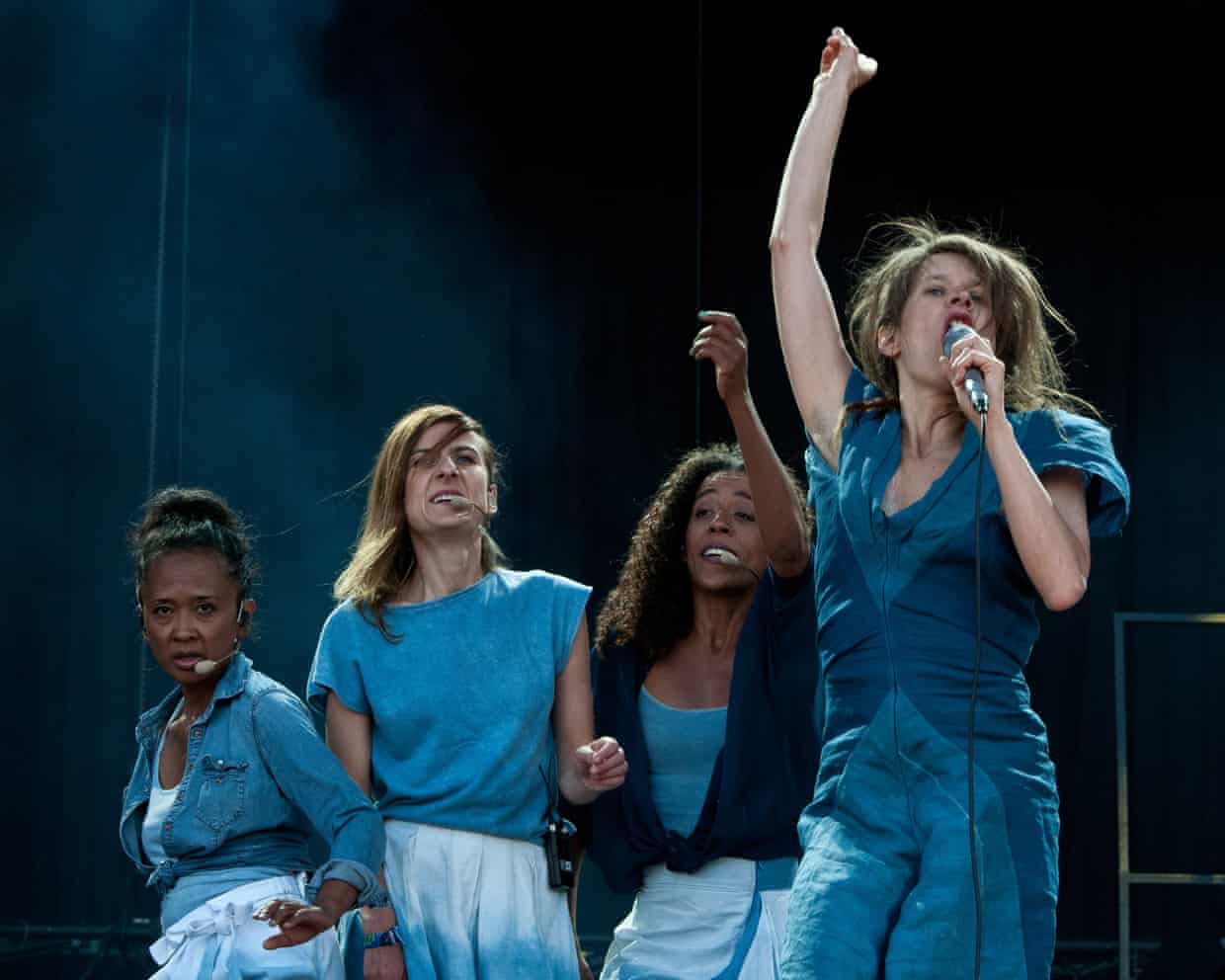
Camille has always been an exuberantly playful artist. Her 2005 album Le Fil is threaded together by a constant drone; when she performed on Jools Holland, she drew that line across her face and body. Music Hole, performed primarily with and on her own body, credited “lip fart synth” and “the Donald Duck”. She doesn’t believe that artists need to be unhappy to create. In fact, her optimism helps her counter her true nature as “completely a dark person”, she says, laughing. “I carry the pain of the world. To fight depression you need joy. It sounds very redundant, but this is why I chose singing.”
That “high level of sensitivity”, she says, often comes when kids grow up in families where “there’s too much darkness”. Camille’s father came from a poor family and was abandoned as a child, then adopted. Her mother was from a rich family in which babies were raised and fed by nannies. “She had three children and she had a huge breakdown because she had to go back to work when my brother was three months,” says Camille. She saw breastfeeding as a way of “slightly mending a transgenerational void on both sides”. The album artwork shows her naked, feeding a baby on a blank tarmac surface, no other life around – her comment on the realities of raising kids in the west. “This is not a world for children and mothers,” she reiterates.
Her kids love the new record. “They’re really proud,” she says. “For his end-of-year show, my son invited me to sing the songs with his friends. And he’s a teenager – he’s going to be 16 – so I think it’s very sweet.” She cries a few happy tears. Paradoxically, this will be the first tour that Camille’s family don’t join her for. “So it’s going to be about how I create a family with my band and the public – what is the human family about?”
Her kids’ teenage years have created a new kind of adolescence for Camille. “In adolescence, you feel you could live without your parents, but you still need them,” she says. “And as a parent, you feel, oh, I just love being with my children and they depend on me, but one day they’ll be living their own lives. You’re in between two worlds and you need to prepare. It feels so good to care for the ones you love, it takes you out of your egocentric world, but then you think, who am I? How can I feel good with just myself so that they feel freer to become adults because they can feel that the mother is not depending on them to be happy? It’s a big kick in the ass!”
That’s also why she made this record, she says. “This is magic, and I’m celebrating the magic of it. I’m thanking my children so I am able to move on and become someone else again – and reinvent myself again and again and again.”