








Londoners may have spotted a giant green pickle bobbing through the capital, turning up at landmarks including the Tate Modern and Southbank Centre, with a simple message: the UK’s first Jewish culture month has been launched.
The celebration is aimed at bringing “less oy and more joy” after difficult years for the Jewish community.
Beginning on 16 May, the festival, organised by the Board of Deputies of British Jews, will include more than 150 events across the UK, spanning food, music, comedy, architecture, fashion, film and literature. Institutions taking part include the V&A Museum, National Portrait Gallery, JW3 (London’s Jewish community centre), the British Library and the National Holocaust Museum.
Liat Rosenthal, the Board’s director of culture, education and communities, said the project emerged from conversations with artists and cultural workers who felt Jewish life had become increasingly defined through hostility, grief and security concerns since the 7 October 2023 attacks in Israel.
“For me, the response to antisemitism has to be this bold, proud, public moment,” she said. “The history of British Jews is incredibly rich, and the contribution of British Jews to life across the UK spans not just arts and culture, but science, technology, innovation, psychotherapy, medicine and politics.”
But she stressed that the month was intended for all, regardless of background or religion. “Everyone should get involved, learn something and eat lots of food.”
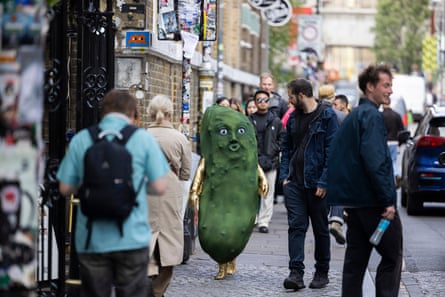
That invitation to eat runs through much of the programme. At one event, the east London pickling company Shedletsky will host a traditional Friday night dinner.
“The Jewish communities that came out of eastern Europe were deeply entrenched in pickling and preserving traditions,” said James Cooper, a co-founder. “There’s this great through-line from ancient preservation techniques” to the “big explosion” in modern deli culture where pickles have become the perfect accompaniment.
His co-founder, Natalie Preston, said the pair had agreed with organisers who told them there “can’t be Jewish culture month without pickle involvement”.
But food had also been a way of opening conversations between communities, she added. “I think that is one of the ways we can hopefully break down these awful barriers that are being put up at the moment.”
At JW3, in Hampstead, north London, one event, L’Chaim / L’Chaos: 50 Years of Jewish Punk, will explore the enduring relationship between Jewish youth culture and Britain’s 1970s punk scene.
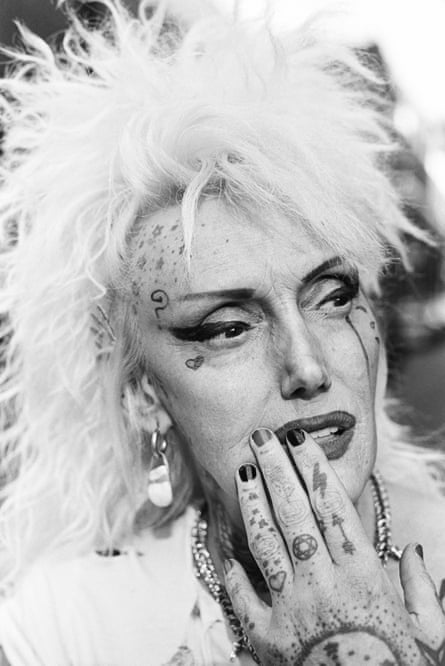
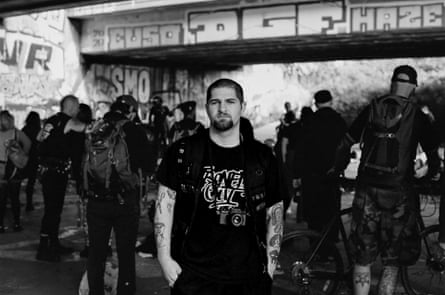
“There was something about this outsider teen culture that really attracted young Jewish people in the 1970s,” said William Galinsky, JW3’s director of programming. “A lot of those young people were the first to go to university, or the first to decide they didn’t want to go into the family business.”
Other events at JW3, which is marking its 13th anniversary with a “B’Mitzvah” (coming of age) celebration, include Miriam Elia’s satirical exhibition and book, Moses and the 613 Health and Safety Commandments.
“I’ve been thinking a lot recently about the playwright Jack Rosenthal,” Galinsky said. “He was one of the first writers to show the non-Jewish British public that Jews were just like them. They might have had slightly different holidays and eaten different food, but essentially this generation of Jewish immigrants that came before the immigrants from south-east Asia and the West Indies, were just like them.”
That message is as important now as it was in the 60s and 70s, he added.
Elsewhere, the Association of Jewish Refugees (AJR) will run walking tours exploring Jewish histories outside London, including in Cardiff. Its head of next generations, Debra Barnes, said the month was partly an attempt to broaden public understanding of Jewish life beyond trauma.
“If you mention Jews in Britain today, you think of antisemitism and attacks. It’s a very depressing outlook at the moment,” she said. “But we don’t want to only be seen as victims, and we don’t want to hide.”
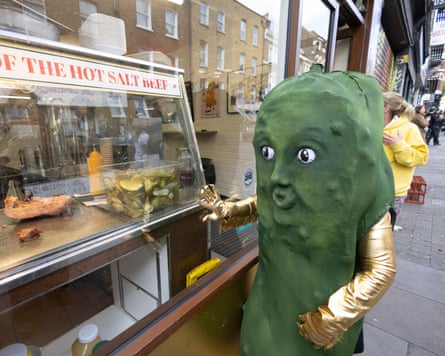
The tour will end in Wally’s Delicatessen & Kaffeehaus, which was started by a Jewish refugee and is now run by his grandson.
The National Holocaust Museum in Newark, Nottinghamshire, will host an event titled What Does it Mean to be Jewish? in which visitors will hear stories from young British Jews from across the country.
“This particular exhibition is about the celebration of Jewish life,” said the museum’s chief executive, Abi Levitt. “It asks what are the meaningful objects that bring Jewish culture to life? Whether it’s food, or things associated with religious observance, or community identity.”
One exhibition at the museum includes a Friday night dinner table laid out with Shabbat (Sabbath) candlesticks and challah bread; also on display are mezuzahs – the small scroll cases attached to the entrances of Jewish homes – which children can touch and ask questions about.
Levitt said: “It’s about just bringing the Jewish world to people in this part of the country.”