






A World Cup that Fifa’s president, Gianni Infantino, billed at the draw last December as “the greatest event that humanity has ever seen” will certainly be the most lucrative competition in sporting history.
Fifa has spent the last few years upgrading its revenue projections, with the most recent financial report stating that the world governing body will make $13bn (£9.6bn) from the four-year cycle culminating in this summer’s tournament, almost $9bn of which will be brought in this year.
By way of contrast, the most recent edition of the original Greatest Show on Earth, the Paris 2024 Olympics, generated €4.48bn ($5.24bn).
The financial importance of the World Cup will be spelt out further on Thursday when Infantino will provide further details of Fifa’s draft budget for 2027 to 2030 at its annual congress in Vancouver, with another big increase expected.
It seems hard to believe now that in financial terms the World Cup trailed the Olympics until the 2010 tournament in South Africa, which brought in revenue of $4.19bn compared to the $3.23bn at current exchange rates produced by the London 2012 Games. Although it has been Fifa’s decision to take the tournament to the United States that appears to have taken its earnings to another stratosphere.
From increasing revenues by 18% between the 2018 World Cup in Russia and the Qatar edition four years later, a cycle that brought in $7.5bn, Fifa’s yield will have increased by another 73% by the end of the summer, based on its projections.
As a result of exceeding its revenue target for 2022-26, in the most recent financial report published last month Fifa increased its budget for the next four years to $14bn.
As Ricardo Fort, a sponsorship consultant who has negotiated commercial deals with Fifa on behalf of Visa and Coca Cola, puts it: “If you ignore the noise and the politics then the work done by Fifa’s commercial team is very impressive.”
The money spinners
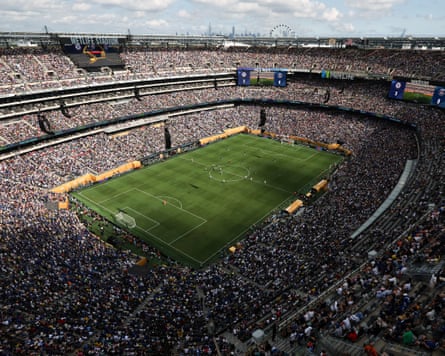
The sale of global TV rights is Fifa’s biggest money spinner, with forecast revenue from broadcast deals projected up from $3.4bn in Qatar and $3.1bn in Russia four years earlier.
Fifa’s controversial decision to expand the World Cup from 32 to 48 teamshas clearly played a major part in this growth, as with the number of matches increasing from 64 to 104 it simply has far more content to sell to broadcasters, while the kick-off times are also more attractive to the most lucrative markets in North America and Europe than was the case four years ago.
Beyond the happenstance of tournament size and location Fifa has made some significant innovations, bringing in extra revenue by selling TV rights for the Women’s World Cup as a standalone property for the first time during this cycle, as well as monetising social media by selling rights to live-stream the first 10 minutes of matches on TikTok and YouTube, which it is hoped will drag younger fans towards the network coverage.
Second in value for Fifa to broadcast deals is ticket sales and hospitality at around $3bn, the biggest driver of growth from the $950m made from matchdays in Qatar.
Again the sheer number of matches and the demand driven by the large North American market has been the key, with the latter in particular enabling Fifa to really push the envelope on ticket prices.
While Fifa’s use of dynamic pricing makes attempts to calculate average prices futile, in an official complaint sent to the European Commission last month campaign group Football Supporters Europe claimed that the minimum cost for a disabled fan seeking to watch their team from the first match to the final would be $6,900 for tickets alone, five times more than in Qatar.
As for the final at New Jersey’s MetLife Stadium, renamed the New York New Jersey stadium for the World Cup, on July 19, prices start at $4,185, seven times the cost of the cheapest ticket for the final four years ago, and more than 40 times the cost of the most affordable seat at the 2024 European Championship final in Germany. The most expensive ticket for the final is $10,990, nearly seven times the price of the top priced ticket for the 2022 final in Qatar.
In their bid to host the tournament in 2018 the USA, Canada and Mexico estimated that the average ticket price for the final would be $1,408.
Despite widespread complaints, demand appears to be outstripping supply, with Infantino telling CNBC last month that Fifa has received over 500 million applications for the seven million seats available, although many remain on sale. Sixteen cities are hosting matches – 11 in the US, three in Mexico and two in Canada.
“In the last four weeks we have had requests for a thousand years of World Cups,” Infantino said. “We have received ticket requests from over 200 countries as everyone wants to be part of something special. The prices have been fixed, but in the US there is a thing called dynamic pricing which means they can go up as well as down. That’s part of the market we’re in. It’s not a problem as the demand is there.”
Fifa has also benefited from huge demand from commercial partners and sponsors, which will bring in a record $2.7bn, plus a further $670m from licensing deals.
“We have seen unprecedented interest from brands across the globe,” Fifa’s chief business officer, Romy Gai, told the Business of Soccer Conference in Atlanta last month. “This is already the most successful commercial programme in Fifa’s history, and we are still building momentum.”
Fifa has signed 16 global partner deals with the likes of Adidas, Aramco and Coca Cola, as well as myriad regional and local sponsorships, and while the strength of the North American market has again been significant, Fort claims Fifa’s commercial team deserve credit for their innovative approach.
“In the past there was a fixed fee for a certain set of rights, and it was all very structured,” Fort says. “For this World Cup they have shown much greater flexibility.
“Companies are being offered basic commercial rights, plus the opportunity to bolt-on extras for an additional fee. They can add World Cup experiences for guests and clients, for example, or do multi-regional deals.”
Where the cash goes
As a not-for-profit organisation Fifa says it will reinvest at least $11.67bn of its $13bn revenues “to boost global football development,” a 20% increase on the current cycle, although how that money is distributed is controversial.
Around $2.7bn is allocated in direct funding to Fifa’s 211 member federations and the six continental confederations, which critics argue is a highly effective means of ensuring the current regime remains in place.
Fifa’s biggest cost is the expense of running tournaments, with their budget for all their competitions over the last four years coming in at $7.6bn, of which the 2026 World Cup is by far the costliest at $3.8bn, a figure that includes all operational costs and prize money.
Infantino is expected to stand unopposed for a third full term as Fifa president next year, having altered Fifa statutes to enable him to do so. The Swiss-Italian lawyer was first elected as a reform candidate to replace Sepp Blatter in 2016, but is likely to stay in post for 15 years, just two years less than his predecessor.
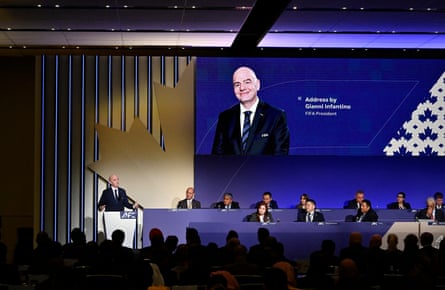
In keeping with Fifa’s one-member one-vote electoral system each national association - from England to San Marino - receives a guaranteed payment of $5m to assist with operational costs every four-year cycle, while they can also apply for a further $3m for specific projects. The six confederations get $60m each per-cycle to help develop football in their regions.
Beyond this development funding, the immediate beneficiaries this summer appear less clearcut. Fifa announced last year that it was increasing its prize fund by 50% from that on offer in Qatar to $727m, with each of the 48 teams originally due to receive at least $10.5m and the winners getting $50m. The Guardian has been reporting for several months that countries are unhappy with their projected payouts amidst concerns they will lose money on the tournament, and revealed last weekend that Fifa were ready to increase the prize and participation fund.
At a meeting of the Fifa Council in Vancouver on Tuesday it was agreed to increase payments by 15%, with the overall pot now totalling $871m, with all 48 countries now guaranteed to receive $12.5m.
As the Guardian revealed, Fifa also held last-ditch negotiations to remove the US federal tax liability for the national associations. The US had been expecting the national associations to pay federal tax of 21%, a liability that increases to 37% on the earnings of individual players, plus a range of city and state taxes. Canada and Mexico, the World Cup’s other co-hosts this summer, have granted tax exemptions to national associations who play in their countries.
While Fifa seems to have been successful in securing federal tax exemptions, there is significant variance in levels of state and city taxation across the country, so the burden will be not be carried equally.
“A year ago, Fifa was telling everyone that they would have a tax agreement and they would be paying no taxes,” says Oriana Morrison, a tax accountant who advises the Brazilian and Portuguese federations. “In US politics there’s huge resistance to giving tax breaks to sporting organisations. The NFL used to be a tax exempt organisation, but they were making such vast amounts of money that there was enormous backlash and it was removed.
“While Fifa has been tax-exempt in the US since the 1994 World Cup the FAs are not. For Fifa it’s fine. The ticketing, hospitality and sponsorship income, which runs into billions, will be tax exempt.
“But for the FAs, no. For the players, no. For the delegations, hopefully yes, provided they are coming from a country that has a tax treaty. So Fifa and the US tax authorities will be the biggest winners from the World Cup.”
As one of the three host federations US Soccer will make a profit, with its chief executive, JT Batson, telling the Guardian it is expecting to receive around $100m from Fifa, based on a revenue-share of 1% of tournament proceeds with Canada Soccer and the Mexican Football Federation.
As a proportion of Fifa’s revenues however, such a payout pales compared to how US Soccer was treated in 1994, when the hosts were permitted to keep the ticket and domestic commercial revenue, as then US Soccer president Alan Rothenberg explains.
According to Fifa’s annual report the 1994’s $235m revenue generated a surplus of $99.6m, of which 30% went to the hosts and 70% to the other federations.
“In 1994 Fifa retained the international marketing and TV rights, and then turned everything over to us,” Rothenberg says. “We had all the responsibility, but we also had revenue opportunities from ticketing and selling sponsorships and licensing.
“In this tournament the host committees have the responsibility to put on the matches, but have been given very, very limited revenue opportunities. So it’s been a real challenge for a lot of these host committees to get it all together and do it in a way that it won’t be a financial disaster.”
Fifa v the host cities
Rothenberg’s words are something of an understatement, as there have been considerable tensions between many of the 11 host US cities and Fifa over the last 12 months in particular.
As per the terms of the hosting agreements Fifa is taking the income from broadcasting, sponsorship, ticket sales and even subsidiary services provided by the venues such as parking fees, while the host cities are charged with paying for “safety, security and protection”.
A long-running standoff over who would pay for security at the Gillette Stadium in Foxborough, Massachusetts (to be known as the Boston Stadium for the World Cup), was only resolved last month, while there remain outstanding problems over public transport at many venues.
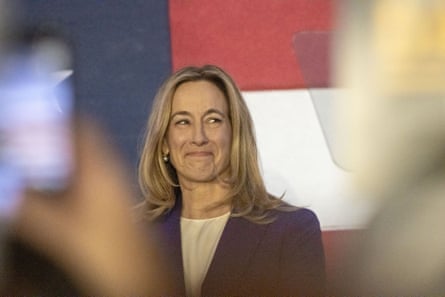
The New Jersey governor, Mikie Sherrill, criticised Fifa earlier this month for failing to contribute to transportation costs after NJ Transit caused outrage by revealing it will charge $150 for a round-trip from Manhattan to the New York/New Jersey Stadium. Sherrill defended the pricing, saying that in the absence of Fifa support the only alternative was to pass a $48m bill onto the city’s taxpayers, which she is unwilling to do.
Escalating costs have also led to many cities cancelling or scaling back their commitment to offering official Fifa Fan Festivals, with the one planned for New York in Liberty State Park scrapped altogether. Of the other host cities, only Philadelphia and Houston are fulfilling Fifa’s original brief of staging a 39-day-long festival throughout the whole tournament.
One man who will be present, front and centre, throughout of course, is Infantino, who will also be one of the World Cup’s undoubted beneficiaries.
Fifa’s 2025 financial report published last month revealed that the president’s annual bonus increased from $2m to $3m last year due to the success of the Club World Cup, taking his overall pay package to $6m.
The safest bet of the World Cup is likely to be that figure increasing this year.