



There are certain states whose reputations in the global community are tainted. For habitual violations of international law, they are shunned, boycotted or slammed with economic sanctions. Reading these words, perhaps you’re thinking of Russia, Israel, Iran or North Korea. But there is one country that is rarely considered an outlaw, even if its actions increasingly fit the bill.
The United Arab Emirates (UAE) is belatedly starting to draw some scrutiny over mounting evidence that it is backing the Rapid Support Forces (RSF) that have been terrorising Sudan for years. Since the beginning of the civil war in 2023, which was triggered by a contest for power between the RSF militia and the Sudanese army, the RSF has been accused of ethnic cleansing and sexual violence. A United Nations fact-finding mission concluded that its assault on non-Arab populations in the west of the country carried “the hallmarks of genocide”.
Over the course of the war, evidence has been found of the UAE providing arms to the RSF, smuggling weapons and drones to them via Chad, and backing Colombian mercenary forces that are providing critical support to the militia. The UAE continues to deny all these charges, saying it is a neutral party in the war. But this has become an almost comical performance of outraged innocence in the face of common knowledge. The act seemed to be working, though, as the UAE broadly managed to weather the allegations of its complicity without consequences.
But something is beginning to turn. Last week, in quick succession, two blows landed. In the first, the human rights organisation FairSquare called on the UK’s Foreign Office to investigate Sheikh Mansour bin Zayed Al Nahyan, the deputy prime minister of the UAE and owner of Manchester City, and sanction him over his alleged role in the UAE government’s backing of the RSF.
The complaint, submitted to the UK government, stated that “there is an abundance of evidence from multiple credible sources, including the UN panel of experts on the Sudan, that the UAE has been providing weapons, ammunition and other supplies to the RSF since June 2023”. The complaint argues that Mansour’s alleged links to the RSF should be investigated. It points out that should the UK decide to sanction him, he would be disqualified from ownership of a football club under Premier League rules. (FairSquare say they offered Mansour an opportunity to respond to their complaint but did not receive a response. I have also reached out to his office but have had no reply).
It’s a big swing for an investigation into the UAE to name an individual member of the Emirati government; it also frames inaction against the UAE not only as a matter of poor principle, but a potential violation of the integrity of the UK’s domestic institutions. Mansour is also not just a remote owner of a football club, but a royal whose private equity company owns swathes of Manchester itself, notably after a deal with the city council that saw land sold for a fraction of its value according to a 2022 report (the council disagreed with the report’s findings, saying that it got the best deal it could for each site).
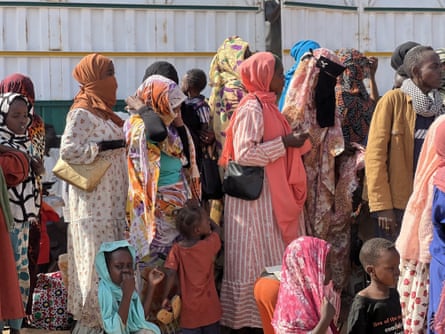
But an even bigger swing against the entire UAE government has come from the US. Two congressmen, the co-chairs of the bipartisan Tom Lantos Human Rights Commission, sent letters two weeks ago to the Walt Disney Company, the National Basketball Association and the National Football League, urging them to “take a position of moral leadership” and end all associations with the UAE, which include sponsorships and joint ventures, in response to its role “in abetting genocide, war crimes, crimes against humanity, and ethnic cleansing in Sudan by arming one faction in that country’s civil war”.
Such calls – which detail not just the UAE’s complicity in the Sudan war, but the extent of the country’s involvement in the economies and entertainment and sporting industries of the west – inflict serious reputational damage. The UAE is clearly sensitive on the issue: in 2024, when a Sudanese representative accused the UAE of supporting the RSF at a UK-sponsored UN meeting, the UAE reacted by cancelling ministerial meetings with Britain to punish the country for not responding vociferously enough as the UAE was “defamed”. As the Americans say, a hit dog will holler.
UAE’s reputation has been anchored in Dubai, a cosmopolitan safe haven of sunny holidays and luxurious lifestyles. Less attention is paid to the capital, Abu Dhabi, and its royals – the Al Nahyans, who hold the presidency of the UAE and govern it in federal constitutional partnership with Dubai’s royal family, the Al Maktoums. For years they have been a destabilising force in the region and Africa, backing separatist groups in Yemen against the Houthis, as well as Gen Khalifa Haftar in Libya against the internationally recognised government. In its regional operations, the UAE’s goal appears to be to anoint leaders it can do business with and prevent the rise to power of forces hostile to it. Sudan has precious port territory across the Red Sea and a trade route that the UAE covets in order to consolidate what has been described as its “archipelago of influence” in the region.
Sudan is also rich in gold, most of which since the war began has ended up in Dubai, one of the world’s largest retail gold markets. But more broadly, beyond assets and geostrategic clout, the UAE has been on a campaign since the Arab spring 15 years ago to erect proxy powers, considering nascent Muslim Brotherhood forces as the enemy of established regimes and monarchies. Its ambitions for regional power have broken the UAE from its Gulf partners – most recently in leaving the oil cartel Opec, in what was seen as a rejection of Saudi Arabia’s dominance within the organisation – and in its normalisation policy with Israel. This week it was revealed that the UAE diverged from the non-retaliatory approach of Saudi and Qatar and had secretly launched a major attack on Iran before the April ceasefire.
The UAE’s efforts to establish itself as a regional player have left war and devastation in its wake, most calamitously in Sudan. But it has been supported in that by the US and the UK, not only political allies but financial beneficiaries. At a parliamentary reception in the House of Lords last month, an Emirati official boasted about the UK and the UAE’s multibillion investment partnership, the product of “deep institutional trust”. And earlier this year, days before Donald Trump’s inauguration, the UAE signed a $500bn (£370bn) investment in the Trump family’s cryptocurrency venture. When so much money is involved, is it any wonder that both countries have gone to farcical lengths to express concern over the war in Sudan while avoiding any mention of the UAE?
Both the US and UK have sanctioned the senior leadership of the RSF and several UAE-based companies linked to the leadership of the RSF, without naming the UAE as a sponsor. “The world must not look away [from Sudan],” said the foreign secretary, Yvette Cooper, in reference to sexual violence in the country, when the truth is that successive British governments have studiously looked away from one of the primary sponsors of the Sudan calamity.
But now the calls are getting louder, demanding that governments say what they have yet to say: that the UAE has earned its place among the ranks of the world’s outlaws.