


At a fundraising event, I looked across the crowded room and saw a woman with a cleft – a gap in the lip (and sometimes the palate) where a baby’s face doesn’t fuse properly during pregnancy. She was standing on her own, and I beckoned her over to join the small group I was with. She politely declined and before I quite realised what I was doing, I was crossing the room to speak to her.
I too had been born with a cleft. I’d talked to doctors, my parents, my wife and other friends about it to varying degrees over the years, but as I walked towards her, I knew this was going to be the first time – in more than 60 years – that I was going to have a conversation about living with a cleft with someone who also has one. I was terrified I might offend her, but I said something like: “Isn’t it scary walking into a crowded room? Because it feels as if everyone is looking at us.”
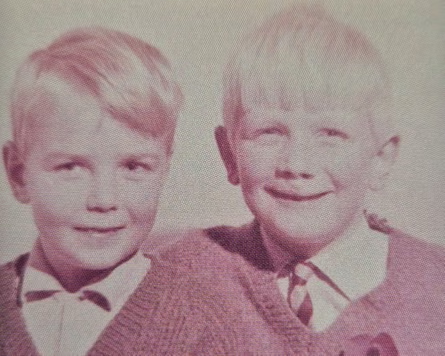
Rose and I then dived straight into one of the most emotional, joyous, exciting and edgy conversations I’ve ever had. We talked about the insecurities that come from living with a facial difference, the bullying and traumas, and the way we had shaped ourselves to try to navigate a normal life – psychologically but also physically, including surgery. Rose talked so openly that it allowed me to realise and share things I hadn’t discussed with anyone. Neither of us had had that sort of depth of conversation about our clefts before. I finally felt as if I could connect with someone on a subject I’d tried to ignore all my life.
The conversation was so intense that we ducked the call to go through for dinner – the staff had to come and collect us. Then we realised we had been seated together, and we carried on talking. The next day, I cried for the first time about my cleft, letting go of a lot of sadness and emotion that I had never given myself the space to reflect on.
When I was five, I had an operation to close my cleft lip. At 19, I had two more operations, this time to fill out my upper lip, which involved having my lips stitched together for nearly two months – I had to eat blended food through a straw. Then I went off to university with quite a lot of noticeable scar tissue. The surgeons had done a good job over the years, and although my teeth remained a mess I thought: I’m done with having a cleft. And so I just tried to ignore it. Over the next few decades, whenever I met people with clefts, through work or socially, I would never mention it. I managed to get into my 60s without ever really talking about its impact on me, or anyone else. It felt as if I had ghosted myself and the whole cleft community.
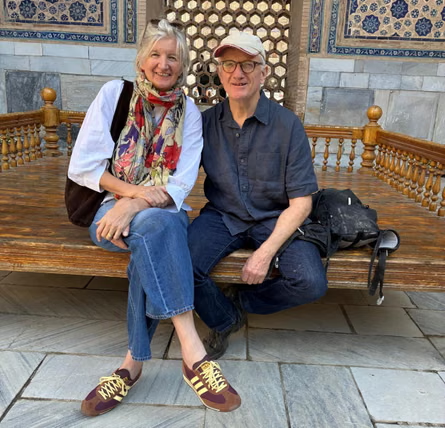
By the time I was attending the dinner last October, I was happily married, with three grownup children, and had enjoyed a career in public relations. But I had also recently started seeing a therapist, keen to unravel a few feelings and beliefs I felt had been holding me back. Over the course of our sessions, I came to realise how being born with a cleft may have made me sit back a bit – I wouldn’t put myself forward at school, and at work I’ve been a company director but never the CEO. There are opportunities I’ve missed, such as turning down an offer to be on television, or not joining team sports, even though I love them.
I’ve always had a desire for approval, and a fear of being bullied (which I have been). I never felt fully comfortable walking into a crowded room. I seem sociable and gregarious, but underneath I feel as if I’m having to work harder because I fear being rejected.
When I realised I was ready to embrace my cleft more, I became a regular donor to Smile Train, a cleft care nonprofit organisation. Later, I joined their advisory council and it was at a Smile Train fundraising dinner that I met Rose. I had expected the event to be full of other people with clefts, but I think she was the only one. It was the first time I’d met someone who really understood what it was like to live with a facial difference – and it was a relief to discover that I was not alone in my long-held insecurities.
After that evening, we kept in contact. Since then, I’ve been able to talk to others more freely, including my wife and friends. Many have said they don’t “see” my cleft, or that it doesn’t define me. That’s a wonderful thought, but it also doesn’t acknowledge my feelings about it, and the way I mask them, just to function. Rose was a huge part of me being able to build a bridge to the past, and find a way forward. As told to Emine Saner