


I am six years old, and I am watching a man turn into a werewolf. The film is Abbott and Costello Meet Frankenstein, a 1948 comedy. I am staring up at our black-and-white TV fixated on the werewolf transformation unfolding in slow motion and I begin to scream so inconsolably that my parents must carry me upstairs to calm me down.
That night was the beginning of my lifelong fear of horror films and of the supernatural, of darkness and of being alone in a house.
I am now a psychiatrist, and for years I have been unsettled by a question: why are horror movies so popular (and profitable) when I personally find them so traumatic? Today, the demand for simulated terror has never been higher. Even as cinemas struggle to win back their pre-pandemic crowds, and as comedy and drama releases increasingly migrate to streaming, horror has gone the other way: the genre took roughly 70% more at the North American box office in 2023 than it did a decade earlier.
Why does watching the same freaky transformation make one child howl at the moon in delight and consign another to decades of avoiding the dark? (I am not alone. In surveys conducted in the late 90s, one in four US undergraduate students reported having enduring fears linked to a frightening movie experienced in childhood.)
There is a clinical term for what may have happened to me: cinematic neurosis. It describes a reaction to a film so intense and so enduring that it clears the bar for post-traumatic stress disorder (PTSD) – the persistent arousal, the anxiety, the thing relived through intrusive thoughts and images. We usually retain PTSD for survivors of violence or disaster. A 1948 Abbott and Costello comedy is not, on paper, either. Yet the diagnosis makes room for ordinary events that are nonetheless lived as catastrophic – and watching a film, it turns out, can qualify.
The most striking case I know was written up in 2007. A woman identified only as Ms X had watched The Exorcist as a teenager. At 22 she turned up at an ER in crisis, convinced she was possessed, drowning in flashbacks of a film she had seen years before. Her case was extreme, and partly explained by mental health difficulties that predated the film. I’ve never come close to her symptoms. But I recognise the experience, because a quieter version of it has affected me since I was six.
To understand why a film can do this to a person, it helps to understand why for nearly everyone else it doesn’t. We’ve always told ourselves frightening stories, from the Minotaur of Greek mythology to Beowulf’s Grendel, from tales of medieval vampires to Edgar Allan Poe. Freud, my preferred guide to this sort of thing, argued that the most potent of them tap a specific dread he called the uncanny – in German, unheimlich – which literally translates as un-homely, meaning the strange thing that wears a familiar face.
His richest example is the double: two beings that are seemingly the same but we know they are not. It’s the evil twin, the mirror that betrays you, Jekyll and Hyde. What frightens us is not the knowledge that monsters are out there but the fear the monster shares our address.
You can see why cinemas have reached for the un-homely so hungrily of late. The two horror films currently buoying box offices, Backrooms and Obsession – both made by gen Z former YouTubers – trade on exactly this. Backrooms leaves you stranded in the endless liminal nowhere of a shop basement drained of people and purpose. It’s the most familiar architecture imaginable, but made wrong. Obsession sees a relationship violently unravel after a young man wishes for his girlfriend to love him “more than anyone else in the world”. Both are the unheimlich rendered almost literally; familiar people, places and objects taken from the home and un-homed.
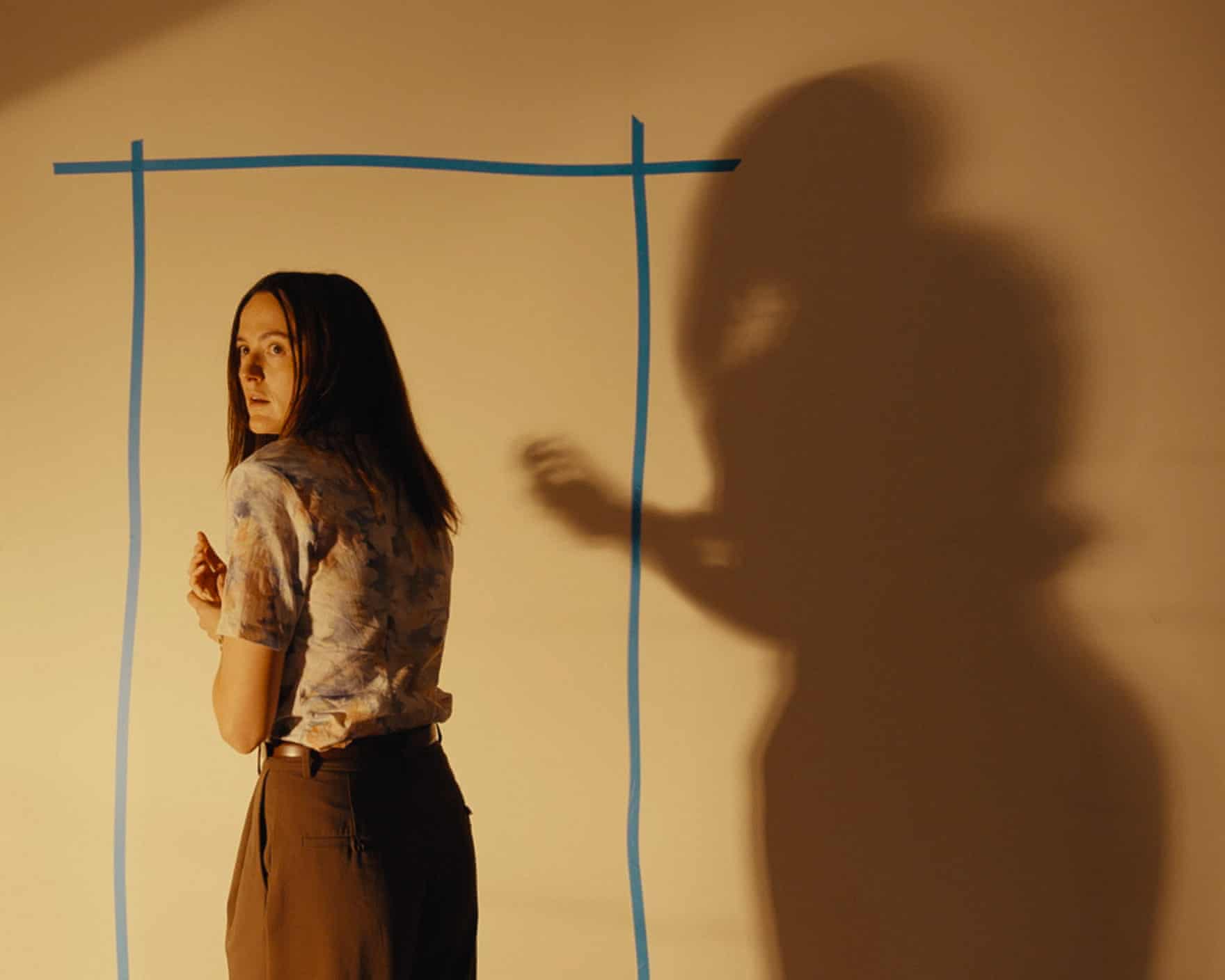
It makes sense that we’d want to summon this dread on purpose. A horror film builds a safe enclosure where we can rehearse terror, chaos and helplessness with no adverse consequences. It’s the same machinery as the bedtime fairytale, with its witches and caged children and murderous stepmothers. We frighten children, gently, as a form of inoculation.
But the body can’t always tell the rehearsal from the real thing. My own research is on the links between mind and body, and I still find it remarkable that a film can lift your blood pressure and activate your immune cells into readiness as though a fight were coming. The brain’s fear centres fire up not only at the jump scare but across the long, taut wait that sets it up.
In 2012, researchers wrote about a woman, known as SM, whose illness had destroyed her amygdala, the brain’s central alarm; she lost the ability to be frightened by horror films at all. She could experience appropriate anger, sadness, disgust and happiness when watching film clips – but did not react to anything from The Blair Witch Project or Arachnophobia.
In Danse Macabre, Stephen King’s landmark study of horror fiction, he argued that horror conveys the threats society can’t name out loud. He wrote about cinema during his boyhood in 1956, in America’s Red Scare era, and the alien-invasion pictures that dominated: Earth vs the Flying Saucers and Invasion of the Body Snatchers. The first is a fantastical allegory of communism arriving from outside, the second a nastier story of it changing your neighbours from within. The second is always the scarier idea, and it runs through multiple generations of horror cinema from The Exorcist and Alien to Jordan Peele’s Get Out and Us. In the current decade – a frightened, fractured one – it should come as no surprise that horrormania has reached new heights.
after newsletter promotion
As for why horror films had frightened a six-year-old me past the point of pleasure, the research gets uncomfortably close to home. A few traits tip a child towards reacting with trauma rather than thrill. Seeing the film at a very young age is one: until the age of seven, children can’t reliably tell fantasy from reality, and “it’s only a story” lands on closed ears. Higher empathy is another: the more a child feels for the victim, the worse the ordeal. The one that fits me best is what researchers call fantasy empathy: the readiness to dissolve into a made-up world. If you ever catch yourself watching an action film, lost in a trance somewhere between your sofa and a burning building you are single-handedly clearing of strangers, you’ll know you have it in spades.
And then there is the last finding, the one I sat with longest. Children who meet horror with trauma are more likely to have known a loss or some other emotional difficulties at home. For that child, the monster on the screen becomes somewhere to put the feelings there’s no other room for.
Years later, in therapy, I went back to the werewolf. I had always assumed my reaction was about what I was seeing on screen but I came to understand it was really about my house. The man becoming a beast frightened me so badly because it triggered a fear I already had: that you can lose the people you love when they suddenly turn into something you don’t recognise, that calm can suddenly give way to rage. The werewolf didn’t plant the fear; it unleashed something that was already beneath the surface.
So what do you do, if you’re the parent of a terrified child, or if the terrified child is still living in you? When the fear runs this deep, no amount of reassurance is effective. You can’t talk a six-year-old out of the dark – you have to show them. One study took frightened children and played them footage of an actor being made up, step by step, into the Hulk: they saw a man with some latex and some paint, who looked a monster but was still a man. The children who had watched the transformation were less afraid afterwards than those who hadn’t.
It is more or less the only trick that works on me. When a film starts to pull me under, I detach for a second and picture what’s happening just outside the frame: the camera operator, the boom hovering over the actors’ heads, the director in his headphones, the crew standing a few feet from the monster, looking bored. Long enough to climb out of the fantasy, short enough to climb back in. It is its own small act of doubling: a second self at the edge of the set while the first stays lost in the dark.
So – to borrow a concept from one of the biggest horror hits of the decade – I’ll be watching something scary, witnessing the terror of the Upside Down. Then, as I detach for for a few seconds, I’m a grown man on his own sofa, lights on, the house quiet in the good way. After that, I breathe, and go back down.
Carmine M Pariante is professor of biological psychiatry at King’s College London, and editor of the mental health blog platform Inspire the Mind.