
惯性聚合 高效追踪和阅读你感兴趣的博客、新闻、科技资讯
阅读原文 在惯性聚合中打开

推荐订阅源

V
V2EX
爱范儿
爱范儿
Martin Fowler
Martin Fowler
T
The Blog of Author Tim Ferriss
B
Blog RSS Feed
博客园 - 聂微东
G
GRAHAM CLULEY
Engineering at Meta
Engineering at Meta
Threat Intelligence Blog | Flashpoint
WordPress大学
WordPress大学
Scott Helme
Scott Helme
AI
AI
S
Security Affairs
T
Threat Research - Cisco Blogs
M
MIT News - Artificial intelligence
T
Troy Hunt's Blog
H
Hackread – Cybersecurity News, Data Breaches, AI and More
人人都是产品经理
人人都是产品经理
AWS News Blog
AWS News Blog
T
Threatpost
Cyberwarzone
Cyberwarzone
www.infosecurity-magazine.com
U
Unit 42
V
Vulnerabilities – Threatpost
J
Java Code Geeks
博客园 - Franky
月光博客
月光博客
Blog — PlanetScale
Blog — PlanetScale
NISL@THU
NISL@THU
D
Docker
小众软件
小众软件
N
News and Events Feed by Topic
Microsoft Security Blog
Y
Y Combinator Blog
A
Arctic Wolf
D
DataBreaches.Net
云风的 BLOG
云风的 BLOG
Forbes - Security
Forbes - Security
量子位
PCI Perspectives
PCI Perspectives
美团技术团队
K
KPMG report finds enterprise disconnect between AI and its ROI | CIO
I
InfoQ
Security Archives - TechRepublic
有赞技术团队
有赞技术团队
腾讯CDC
P
Proofpoint News Feed
S
Security @ Cisco Blogs
G
Google Developers Blog
C
Cisco Blogs

The Guardian

New Zealand’s North Island braces for Cyclone Vaianu with thousands ordered to evacuate Artemis II splashdown – in pictures Swalwell denies allegations of sexual assault as calls grow for him to withdraw from California governor race Trump news at a glance: Epstein survivors have words for Melania Trump after surprise statement Multiple people face charges, including murder, in California fireworks blast Rory McIlroy surges into six-shot Masters lead with stunning second-round flourish Roberto De Zerbi targets ‘Ange-ball’ revival to save Spurs from relegation Bath hit back to reach semi-final after stunning Northampton in 11-try epic Australia crash out of BJK Cup after Britain secure upset with doubles win Zebras, wealth and power: Hungary’s election tests Orbán’s grip on power ‘TikTok effect’ brings sellout crowds and younger fans to Grand National meeting King signs up David Beckham to his Chelsea flower show team The war over Omagh’s gold: the £21bn mine plan tearing a community apart Britain’s shadow workforce is paid as little as 65p an hour. Who cares for the carers? Tim Dowling: my wife is on a quest to restore my thinning hair SUVs are making Britain’s potholes worse, say scientists Blind date: ‘She claimed she was usually shy. I wouldn’t have guessed’ I’m a sauna person now: the Becky Barnicoat cartoon ‘I got everything I dreamed of – when I had no ability to handle it’: Lena Dunham on toxic fame, broken friendships and her ‘lost decade’ Six great reads: the man who let snakes bite him, masked heavy metal and the brutal reality for foreign students in the UK Meera Sodha’s recipe for noodles with rose beancurd, spring greens and egg Cuba’s doctors were a lifeline for the world. Now the Caribbean is shamefully complicit in the US drive to expel them An environmental disaster in Moldova has Russia’s fingerprints all over it ‘This is as important as your teeth’: are you skipping this key part of mouth hygiene? Man arrested after four die trying to cross Channel in small boat Ukraine war briefing: doubts linger in Kyiv over Moscow’s promise to uphold Orthodox Easter ceasefire Ichiro Suzuki statue unveiling goes awry as bronze bat snaps during ceremony Arrest of national war hero Ben Roberts-Smith cuts deeply to core of Australian psyche European football: Real Madrid held at home by Girona to extend winless run ‘You come back different’: how rugby players change after motherhood Human rights groups decry US plan for Guantánamo camp for Cuban migrants Potential US host cities for 2031 Women’s World Cup games mull withdrawal over Fifa concerns Arne Slot insists he is ‘aligned’ with Liverpool board and fans as squad is rebuilt Kamala Harris ‘thinking about’ running for president again in 2028 JD Vance warns Iran against trying to ‘play’ the US in peace talks West Ham double up twice to thrash Wolves and put Spurs in relegation zone Trump administration releases new renderings of so-called ‘Arc de Trump’ Bafta apologises for events surrounding John Davidson’s Tourette’s outburst Cocktail of the week: Bar Shrimp’s la rosita – recipe New drug may extend survival in aggressive ovarian cancer, trial shows One dead and 27 injured after bus with British passengers crashes in Canary Islands OpenAI CEO Sam Altman’s home targeted with molotov cocktail Alarm as acting CDC director delays report showing Covid vaccine benefits Argentina just ripped up its pioneering glacier law. What does this mean for millions of people’s drinking water? ‘Illegal’ forest service overhaul risks causing ‘chaos’ across US public lands, union claims Prince Harry sued for defamation by charity he co-founded Anthropic’s new AI tool has implications for us all – whether we can use it or not Concerns raised about motorbike tourist trail after death of British teenager in Vietnam The Guardian view on Trump’s civilisational threats: the words that fuel war must be condemned The Guardian view on dystopias for our times: the American nightmare Weather tracker: Cyclone Maila batters Solomon Islands with 115mph winds Doctors’ leader claims new reduced pay offer killed chances of ending strikes in England Netanyahu-ism has achieved nothing for Israelis – and come at a monstrously high price Deborah Levy: ‘CS Lewis’s White Witch terrified me – but I wanted to meet her’ How I Shop with Michelle Ogundehin: ‘We grownups have enough stuff already’ ‘Butter Birkin’: popcorn plastic It bag in demand by Devil Wears Prada fans Trump’s war and Melania’s Epstein statement, with US editor Betsy Reed – The Latest Orbán and Magyar trade accusations in last days of Hungary election campaign Reckonwrong: How Long Has It Been? review | Safi Bugel's experimental album of the month Martin Rowson on Middle East peace talks – cartoon Fears of UK and EU flight cancellations as airports warn of jet fuel shortages Peers vote to ban pornography depicting sex acts between stepfamily members Week in wildlife: an ostrich on the lam, a tortoise crossing a road and surfing seals ‘There’s no shortage of terrifying technology’: how AI became TV drama’s new go-to villain Texas court overturns sentence for man on death row for nearly 50 years Power up! Could force be the secret to supercharging your fitness? ‘Irresponsible failure’: Google, Meta, Snap and Microsoft slam EU over child sexual abuse law lapse Blank canvas: what to wear with white trousers Critics assemble! Here’s my list of the greatest superhero movies of all time Amazon to finally launch Leo satellite internet in ‘mid-2026’, says CEO Pete Hegseth’s holy war: the militant Christian theology animating the US attack on Iran Toxic putdowns, brutal zingers ... and an unexpected love story – inside the joyful climax to brilliant sitcom Hacks Add to playlist: the beautifully dazed, countrified indie-rock of Tracey Nelson and the week’s best new tracks ‘I’m worried there’s too much of me,’ says a birch: inside the interspecies council giving nature a voice Dolce & Gabbana says co-founder Stefano Gabbana has quit as chair Why is anyone surprised by the US and Israel’s latest war? It’s only what the world allowed them to do in Gaza Super Mario what?! The seven best obscure Mario games Holly Humberstone: Cruel World review – Taylor Swift fave trades gothic melancholy for pop glow-up Thrash review – cursed shark thriller sinks like a stone on Netflix ‘The biggest, baddest, saltiest chick you would ever see’: why no one sang the blues like Big Mama Thornton Go Gentle by Maria Semple review – a joyfully clever New York romcom ‘Tranquil, natural and barely a tourist in sight’: readers’ favourite hidden gems in Spain Benjamina Ebuehi’s sweet and salty chocolate chip cookies recipe ‘I’m not a commercial director – I’m not even a professional film-maker’: Jim Jarmusch on the seven-year journey to make his new film Malcolm in the Middle: Life’s Still Unfair review – the TV magic they’ve created here is absolutely miraculous The Miniature Wife review – Matthew Macfadyen is wasted in this pointless comedy From soups and greens to roots, how to survive the ‘hungry gap’ From fat transplants to LED mittens: how the fear of ‘old lady hands’ mobilised the beauty industry Anna Wintour’s Vogue cover is more than a cameo – it’s a power play ‘They’re gonna make me cry’: I competed at a speed puzzling championship You be the judge: should my girlfriend stop mixing gold and silver jewellery? Maritime and port workers: how is the Middle East conflict affecting you? How games capture the awe and terror of cosmic isolation Why does alcohol make us both happy and miserable – and what else does it do to our minds and bodies? I never text back – and it’s ruining my relationships The pet I’ll never forget: Beau, the labrador who saved my life Life Is Strange: Reunion review – a decade-long story comes to an impassioned close Why is gaming becoming so expensive? The answer is found in AI Sign up for the First Edition newsletter: our free daily news email Sign up for the Feast newsletter: our free Guardian food email
Avalanche deaths have surged in the Alps this season. Here’s why
Johan Gaume · 2026-04-29 · via The Guardian

Many avalanche accidents occur just after a storm, when blue-sky conditions return and people head to the backcountry to enjoy fresh powder. These kinds of accidents happen every year, despite warnings to those heading out into the snow. It is easy to dismiss some behaviour as reckless, and sometimes it is – but it is also human behaviour, and it is nothing new.

I have been there too; I have made mistakes and got lucky. When I was about 18, while freeriding with my brother, we suddenly changed direction towards a beautiful and untracked powder field. It felt magical, until we realised we were heading straight for a 100-metre cliff. We turned back just in time, and moments later, a huge avalanche released exactly where we had been, and went over the edge.

This winter in the Alps has been marked by a very high number of deadly avalanche accidents, prompting headlines about “unstoppable walls of snow” and a far-reaching search for answers. At the time of writing, the death toll for the season, counted from 1 October, is 146. This is not without precedent, but it is clearly above average – and more than twice the number recorded in some recent years.

This season has shown that even very experienced people, such as mountain guides, ski patrollers and professional riders, can get caught in perilous situations. So what has gone wrong?

The composition of the snowpack was particularly tricky. The season started early, with snowfall in November. Then came a long period of drought, with very little precipitation, but extremely cold temperatures and many sunny days. This is the perfect recipe for the formation of what we call “persistent weak layers”: the snow crystals transform into large, fragile grains with very poor bonding.

Then, when snowfall finally returned in January, it did so in relatively large amounts. Usually, when there is new, powdery snow, we recommend being patient and waiting a few days before going into backcountry terrain, so the snow has time to bond with the rest of the snowpack and increase stability.

However, this year the situation was more complicated. The new snow became denser and gained cohesion, forming what we call a “snow slab”, which covered the weak layer that had formed earlier in the season. Essentially, the snow slab was resting on a very fragile house of cards, always at risk of collapse.

This season’s avalanche accidents show how difficult such weak layers are to manage and predict: an avalanche can be triggered from a locally thin or weak part of the snowpack, or after a sharp, high-pressure turn or a fall by a skier on top of it. While these unstable conditions are not visible on the surface of the snow, they are usually very well described in the avalanche bulletin, which is published daily. Most of the time, the relevant safety information is out there.

In fact, given how tricky this winter’s snowpack was, the number of fatalities is not notably high everywhere. In Switzerland, we have had 18 fatalities so far, whereas the 20-year mean is about 21 per year. So is it luck? Or have we provided better avalanche bulletins, improved rescue operations and educated more people? Probably a bit of everything.
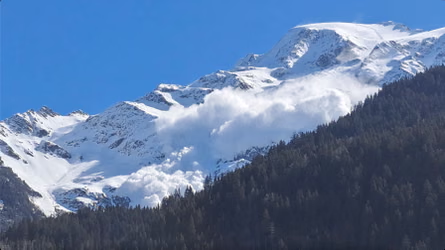
An avalanche in the French Alps in 2023.
An avalanche in the French Alps in 2023. Photograph: Domaine Skiable des Contamines-Montjoie/Reuters

We should not ignore the human dimension to the problem. After long dry periods, frustration can build up. So when the snow finally returns, some skiers want to immediately take advantage, chasing those first tracks or the perfect powder turn to share on social media. We witnessed some striking scenes this year. In Verbier in February, for instance, dozens of people were skiing the same steep slope together, despite clear warnings of high avalanche risk they ultimately triggered an avalanche that buried several people. Fortunately all were successfully rescued.

Again, this behaviour is not entirely new: what may be changing is the scale. There are more people in the mountains, more accessibility, more equipment and more tourism. This increases overall exposure.

And then there is the question of climate. What we observed this season – long, dry, very cold spells followed by intense snowfall – is consistent with what we expect from climate change: more variability, more extremes and longer periods without precipitation, combined with short, intense snow events. We may see more seasons with such persistent weak layers, and therefore more complex and dangerous avalanche situations.

Education remains key to ensuring fewer fatalities in future. There has been a lot of effort in recent years to improve avalanche awareness in Europe, through courses, outreach events, academic teaching and role models promoting conservative decision-making on social media.

But there is still a gap in public understanding. In particular, I believe we need to put more emphasis on consequences: not only on the likelihood of an avalanche being triggered, but on how much snow could be released if it were, how to avoid exposed terrain and how to plan a safe tour. The White Risk app is an excellent example of a tool that provides the kind of detailed information needed.

For those heading out with skis or snowboards, the message is simple: carry avalanche safety gear and practise using it regularly. Terrain choice is always critical, and even more so when a persistent weak layer is present. This means avoiding slopes steeper than about 30 degrees, and avoiding areas where avalanches from above could reach you. It means paying attention to warning signs: recent avalanches, collapsing snowpacks and the classic “whumpf” sound that tells you a weak layer is failing beneath you. If you hear a whumpf when approaching a slope, that is a very clear sign: it’s time to go home.

Effectively managing avalanche risk is not always popular: it means being patient, and sometimes accepting that you should not ski the best lines. In avalanche terrain, the goal is not to win the day. It is to keep playing the game.

  • Johan Gaume is an ex-pro snowboarder and a professor of alpine mass movements at ETH Zürich and SLF Davos