






A Green party member for more than 30 years, Elise Benjamin admits to bittersweet feelings even as fellow activists anticipate a historic breakthrough in next week’s elections.
Benjamin was involved in drawing up the party’s guidance on antisemitism, which she describes as comprehensive. But the former Green councillor in Oxford now wonders whether further guidance is needed: “Now that we have such a large membership, I think there needs to be an urgent review of how to make our complaints process fit for purpose.”
On the brink of power in some councils, particularly in London, and with ambitions to eclipse Labour in the long term, the Greens have been wrestling for months with charges that antisemitism has taken root in their ranks.
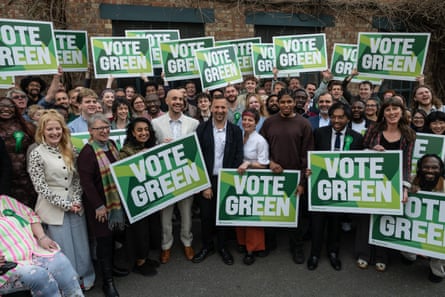
The level of scrutiny of comments by candidates and activists has increased since Zack Polanski, who is Jewish, took over as leader of the Greens in England and Wales in September, with the party’s membership almost quadrupling since then. But this week, with the elections just days away, the stabbing of two Jewish men in Golders Green has brought the subject to new prominence.
On Thursday, two Green candidates standing for Lambeth council in south London, one of the party’s targets next week, were arrested for allegedly stirring up racial hatred online with antisemitic posts.
Another Green candidate to be accused of antisemitism was Tina Ion, who is standing for Newcastle city council. She said this week that posts, including a call for “every single Zionist” to be killed, were “isolated fragments” of her statements.
Then Polanski himself became embroiled in a public spat with the head of the Metropolitan police after sharing an online post that questioned the level of force used by officers who tackled the Golders Green suspect. On Friday afternoon he apologised, saying he has “a responsibility for lowering the temperature at a time of such tension”.
As with some other parties on the left, notably Labour, this in part reflects a longstanding debate about the definition of Zionism, the political movement whose supporters see it as the necessary struggle for a Jewish homeland, and whose critics see it as a colonial project that has inevitably led to the dispossession of Palestinians.
But following the 7 October 2023 attack by Hamas on Israel, and Israel’s near-levelling of Gaza in response, arguments within the Greens about the subject have played out publicly and privately in branch meetings, Zoom calls and other gatherings – reflecting a wider social tension over how Jewish people in the UK have experienced the fallout from Israel’s assault.
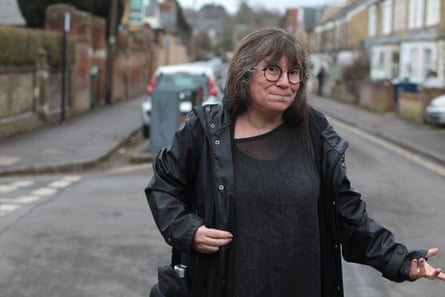
Benjamin said: “It’s wonderful for me as an older person to see the Greens enjoying the electoral success that we have all worked towards for so long but I also feel very conflicted.
“What we have is a small but noisy core of people who are very, very loud on just one issue and not interested in, for example, our policies on transport.”
Thousands of new members have joined the party since Polanski became leader on an “eco populism” platform, one that particularly attracted many who had been in Labour under Jeremy Corbyn.
Membership in England and Wales passed 200,000 in March after the Greens overturned a huge Labour majority in the Gorton and Denton byelection, and is now beyond 220,000.
With that growth has come a repetition of the dynamic that vexed Corbyn’s Labour party. To critics in both eras, support for Palestinian rights has sometimes been thoughtlessly muddled with generalised attacks that seem to apply to Jews writ large – or, worse, have acted as a disguise for straightforwardly bigoted views.
Against that argument is the view of many of those whose support has shifted from Corbyn to Polanski: that the problem of antisemitism in their movements has been deliberately exaggerated by their enemies for political gain.
They may point, for example, to news coverage such as a story in the Daily Mail quoting members of Polanski’s extended family saying he is “the leader of the future Islamic party of Britain” and warning that the Greens are “the most antisemitic party in British history”. Polanski said the people quoted in the piece were “random ‘anon’ relatives”, and that those to whom he was closehad refused to talk to the newspaper.
Polanski said in 2018 that he could not vote for Labour under Corbyn because of concerns about antisemitism as a Jewish voter. But in a recent interview he said he had been deceived by “the cynical and systemic deliberate obfuscation of a really serious issue like antisemitism,” adding: “I think we need to take antisemitism really seriously, and I don’t believe political weaponisation of it is the way to do it.”
He has also complained that some allegations of antisemitism have themselves presumed that Jewish people are bound to support Israel. Last year he accused the Campaign Against Antisemitism of “conflating being Jewish with the Israeli government”.
Long before this week, a series of cases had led to party suspensions. Mothin Ali, a Leeds councillor who last year became one of the party’s two deputy leaders, and who symbolises the desertion of Labour by many Muslim voters since the conflict in Gaza, has been caught up in the controversy.
On the day of the 7 October attack, he had said in remarks on social media that Palestinians had the right to “fight back”. In a separate video, a rabbi who went into hiding after receiving online threats because he had served with the Israel Defense Forces was described by Ali as a “creep”.
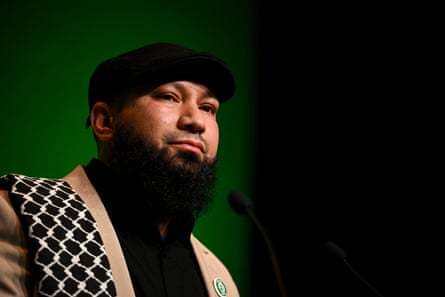
Ali later apologised “for the upset caused” by his remarks, adding: “I do not support violence on either side: violence leads to more violence and this is what I have tried to convey.” But he also criticised what he called Islamophobic attacks against him.
Since then, Ali has been associated with a more defiant reaction against what some in the Greens describe as a witch-hunt, reportedly telling a private meeting of the Greens for Palestine group that they needed to seek “serious legal advice” and put the “party on notice straight away” over the handling of candidate suspensions.
Among those claiming an unfair targeting of legitimate criticism of Israel is Lubna Speitan, a London-based British-Palestinian contemporary artist who was the co-author of a motion which she and others attempted to bring before the Greens’ spring conference and would have designated Zionism as racism.
Though it was kicked into touch by what Speitan regarded as filibustering, the motion could yet return at the Greens’ autumn conference and looms in the background of the party’s near-continual and often tortuously decentralised process of developing policy. Polanksi has expressed his support for the motion.
“This was one for the Palestinians, by the Palestinians, who are denied a voice in their own home,” said Speitan, who had originally signed up to join Corbyn’s Your Party after an exodus of leftwingers from Labour. “We had the input and support from Jewish, Christian and Muslim allies, and legal input, so that it became a united effort to call for liberation and equality.”
Since the motion was proposed, Speitan says it has come under attack by what she describes as “a small but vocal group of Zionists in the party”, a reference to the Jewish Greens.
Critics of the motion say its logical consequence would be the proscription of those in the party who described themselves as Zionist, which Speitan does not push back on.
“No form of racism should be tolerated,” she said. “In the same way as I oppose antisemitism, I also oppose anti-Palestinian racism, anti-Muslim racism.”
The Jewish Greens say they have about 170 members, adding that there are Jewish people in the Greens who are not in its group. They claim that repeated attempts to engage with the proposers of the motion have been rebuffed. This is rejected by Speitan, who cited full compliance with requirements to consult.
For Benjamin, the motion is part of a change in atmosphere. She likens the language used by others in the party to that of the far right: “I’ve had experiences where someone has been telling me where my family are from and questioning – in a way that has been quite aggressive – the origins of my DNA and the very basis of how I identify.”
Green MPs have been keeping their heads down on the issue, partly out of loyalty to a new leader but also because Polanski’s mandate from members was so clear when he defeated Adrian Ramsay and Ellie Chowns – two of the party’s four MPs – by 20,411 to 3,705 votes in a ballot of party members.
MPs contacted by the Guardian about the debate over antisemitism declined to respond or cited busy schedules.
Most senior Greens, even those who had initial doubts about Polanski, are known to be largely supportive of him, acknowledging the surge in attention, membership and poll numbers that his media-friendly approach has brought. Some feel the party’s willingness to describe Israel’s assault on Gaza as a genocide has opened a space for bad-faith attacks from opponents, and believe voters will be sceptical about criticisms that they see as eliding the two subjects.
But there have been some glimpses of dissent, albeit cryptic. After a long-serving Norfolk Green councillor quit in March – launching an attack on Polanski’s focus on issues including Palestine, and claiming he was speaking as one of “a very significant number of older, deeper Greens who are looking on in horror” – Ramsay ventured on X that he was “deeply sorry”.
“As a party we must adopt a strategy which unites long-term members & new supporters behind our core values,” he added.