








They have long been the norm in the world of jazz clubs and hotel lounges, but transcriptions in the classical world were for many years a bit of a naughty word – or at least a guilty pleasure. To arrange someone else’s music in a way they hadn’t originally intended, often with extravagant decoration, is still regarded in some quarters as displaying a lack of seriousness, a lapse of taste – or even as sacrilege.
Listen to Mozart’s Don Giovanni in the hands of Liszt. The venerated 18th-century opera underwent a metamorphosis, becoming a blisteringly virtuoso potpourri, its melodies serving as mere launch pads for the most exaggerated form of showing off. Our jaws may drop with astonished delight but is it serious or tasteful?
A condemnatory attitude used to be everywhere in the last century, especially in the German-speaking world, the shift in taste evidenced by how many recordings there were of transcriptions up to the second world war – and how few for the next three or so decades.
Much mid-20th century negativity was a reaction against a perceived cult of excessive virtuosity, from a time when audiences would flock to hear famous pianists more because of their playing than the music being performed. The transcription genre was the most extreme example of this because the music itself was subsumed into the transcriber’s or pianist’s own identity – often the same person. A piece such as the Bach-Busoni Chaconne took on a life of its own, and was made into the grandest gothic monument, far distant from the original slender, vulnerable version for solo violin. And Myra Hess is remembered more for her arrangement of Jesu, Joy of Man’s Desiring than she is for playing any of Bach’s unadulterated music.
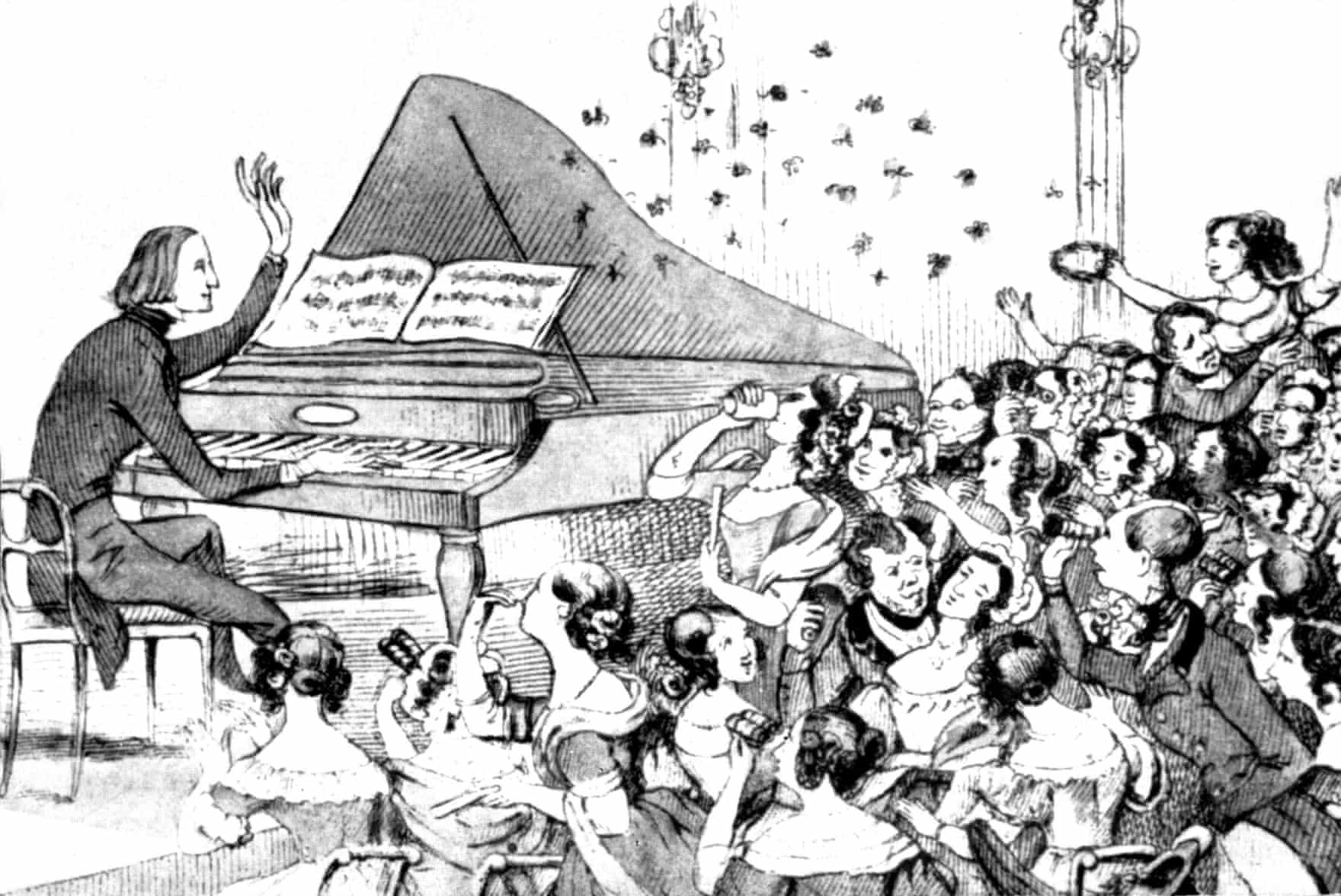
But if we go back earlier in history, composers were far less squeamish about reworking others’ music.
Transcription began as soon as written-down instrumental music began. Strictly speaking, any work played on an instrument different from the original is a transcription. But this “appropriation” turned into variation with the Elizabethan virginalists (Byrd, Bull, Gibbons et al) taking famous tunes of the day as the basis for much of their keyboard music. A century on, Bach wrote a fugue on a theme of Corelli and transcribed violin concertos by Vivaldi for the keyboard, and most composers from then to the present day have written variation sets based on other composers’ material – Beethoven’s 33 transformations of a little waltz by Diabelli being the non plus ultra of the form.
In the 19th century, piano transcriptions developed down two different paths. Firstly, as the classical orchestral and operatic repertoire increased and there was a desire to be able to enjoy this music at home, arrangements were made for the amateur market. These were never meant to be played in public; they were purely for home consumption, often published as duets. Everything from symphonies to overtures were newly rendered for four hands, sometimes by the composers themselves. Brahms comes immediately to mind – he arranged all four of his symphonies for piano duet.
On the other hand, as the piano evolved as an instrument and the pianists playing it acquired superhuman skills, transcriptions as high-octane embellishment expanded to fiendish proportions, with opera paraphrases in particular showcasing the virtuosi of the day, most notably Liszt and Sigismond Thalberg. We can imagine Liszt arriving at a rich patron’s home from the opera house after a performance of, say, Bellini’s Norma and sitting down at the piano to remind everyone of the hummable tunes, now shamelessly embellished in his hands, sometimes combining a couple of melodies at the same time in layers of acrobatic audacity.
In many ways such transcriptions are related to jazz: a familiar song is played in a distinctive, personal way, close enough to the original to evoke an Aha! moment of recognition but different enough to be amusing or admirable. Autumn Leaves played by Bill Evans or Gonzalo Rubalcaba ... these are transcriptions in all but name, originality judged more by inventive treatment than raw material.
I’ve always had a fascination for this form, mainly because my introduction to the piano in early LPs came from the pianists whose repertoire was filled with such delights: Rachmaninov’s arrangement of Kreisler’s Liebesleid, Lhévinne’s dazzling recording of Schulz-Evler’s Blue Danube, Paderewski’s fleet, fastidious rendition of the Spinning Chorus from Wagner’s Flying Dutchman - another of Liszt’s arrangements, Percy Grainger’s Shepherd’s Hay (“dished up” for piano, as he put it) ... the list goes on. The genre ran out of steam around the same time as the railways did, but some courageous pianists kept the tradition going at the cost of not being taken seriously in more standard repertoire – Shura Cherkassky, Jorge Bolet and Earl Wild spring to mind, the latter actually composing some of the most fabulous examples. But now in the 21st century the tide has turned back somewhat and most pianists today have one or two of these bonbons up their sleeves.
There are basically three different kinds of piano transcriptions designed for the concert platform. Firstly a faithful rendering of the original, staying as close as possible to the original. Liszt’s Beethoven Symphonies are a brilliant example of this. He is trying to make his piano version sound like the orchestra, a tall order realised with genius. In my transcription of the Franck Chorale No 3 I tried to do this too, as well as aiming to create the acoustic aura of an organ in a cathedral with pedalling and voicing effects.
Then there are transcriptions that are faithful to the shape and spirit of the original but highly decorated for virtuoso purposes. Schutz-Evler’s is a glittering example – the keyboard becomes a display of kaleidoscopic colours. Rachmaninov’s version of Kreisler’s Liebesleid allows us to see the personality and harmonic footprint of the Russian while maintaining love and respect for the source violin piece. This category lends itself especially to the encore, those after-dinner mints offered after the works on the printed programme are finished.
Finally there are transcriptions that use the original merely as a starting point for freewheeling elaboration. Liszt did this in his opera paraphrases, as did Vladimir Horowitz more recently in his Carmen Variations; then there’s Arcardi Volodos in his outrageous Turkish March arrangement, or György Cziffra in almost everything he touched.
My new album celebrates transcriptions. Each of the works on it could fit on to one side of an old 78 – four minutes maximum. The music ranges from classic 20th-century transcriptions by Rachmaninov and Wilhelm Kempff to 10 of my own including a rollercoaster version of Supercalifragilisticexpialidocious, a transformation of the Taiwanese song Pining for the Spring Breeze in the style of Rachmaninov, the Japanese children’s song Aka Tombo made into a gentle, nostalgic lullaby, and an intense, chromatic take on Nature Boy made famous by Nat King Cole. When I lost confidence composing my own music in my 20s I made a number of arrangements of songs by Richard Rodgers, Roger Quilter and others. It’s how I kept my creative flame alive, and it’s what I suggest to young pianists I meet today. We should all write music as the pianists of the past did; if an original work seems beyond our skill or inspiration then take a song for a ride.