







As thick smoke spread through the narrow streets of Havana, seeping into homes, schools and shops, Carlos Blanco, a chef, opened his bedroom window to see what was going on. “I saw a mist. But it wasn’t mist – it was smoke,” he says, describing the toxic smog emanating from a smouldering mountain of rubbish.
As the US oil blockade on Cuba enters its fourth month, choking off most of the island’s fuel supplies, growing mounds of waste lie on street corners across Havana. Amid fuel scarcity, authorities have opted to ration petrol by reducing waste collection, leaving less than half of Havana’s rubbish trucks operational.
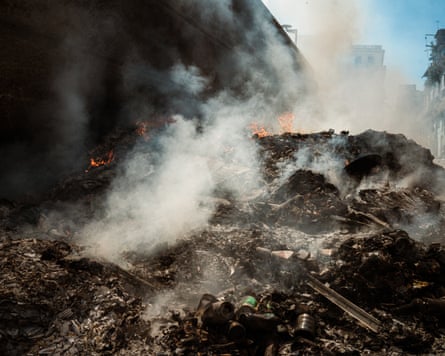
Many desperate Cubans throw their household waste into the street rather than let it fester in their homes as they wait for collection. With removal reduced, the government has allowed rubbish to be burned in crowded urban areas, with authorities designating 122 temporary waste collection points in Havana, at 24 of which there is “controlled incineration”.
Yet burning rubbish in the open air not only has harmful effects on health, it also pollutes the air, soil and water. The state-run Cuban Neuroscience Center has said that unofficial fires – which it says burn at lower, inconsistent temperatures – are more perilous than controlled ones.
“This releases substances from the waste and creates new ones as molecules break down and re-form in the flames … [which] can persist in the environment for years and in the human body for perhaps a decade or more,” warned the health body.
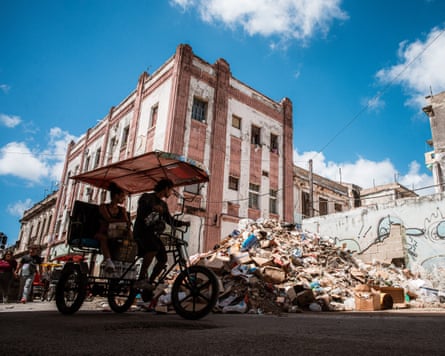
However, Alexis González Inclán, a sanitation department official, justified the measures. “They are not ideal from an environmental standpoint, but they serve to mitigate risks to public health and urban order,” he told the news outlet Cubadebate.
As informal rubbish fires continue to blaze across the capital, residents fear possible health effects. At a clothing market in central Havana, Yani Cabrera dons a face mask as plumes of white smoke seep into her shop, smothering the terraced buildings and the busy street outside.
“Some guys from the street lit [the fire],” Cabrera says, pointing at the burning pile of rubbish. “I use this [mask] when there is a lot of smoke … I’m worried because this is dangerous.”
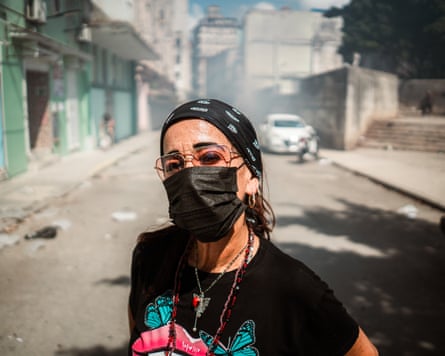
Cabrera notes that burning waste has increased since the US imposed its blockade in December and January, and has little hope things will improve soon. “We have to try to survive and hang in there because things aren’t getting any better,” she says. “What can we do?”
While the smoke from rubbish fires poses medical and environmental risks, some Cubans view it as the lesser of two evils. Francisco Castillo lives in a decaying house in central Havana. Opposite his home, passersby throw rubbish bags and rotten food on to an ever-growing heap of refuse, attracting swarms of flies.
He says trucks used to collect the waste once a week. Since the blockade, they come once a month. “Since there is no proper oversight and no collection, the result is an epidemic of flies, rats, waste and foul odours,” Castillo says. Flies buzz around his house, even though he keeps his front door shut and burns insect-repellent incense.
As Cuba approaches the rainy season, which runs from May to November, uncollected waste piles threaten to trigger a fresh wave of mosquito-borne illnesses.
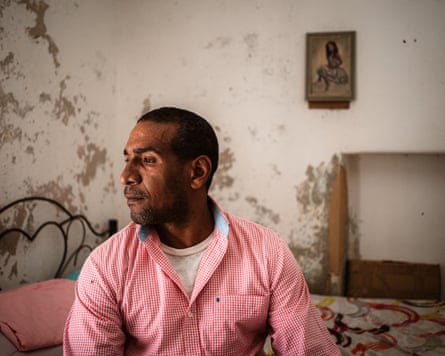
“The flies outside come inside your house. But you’re eating, and those flies might spread poo on to your food. And that’s food you’re going to eat,” says Castillo, who has first-hand experience of the risks posed by uncollected rubbish. In January, he contracted the painful mosquito-borne disease chikungunya.
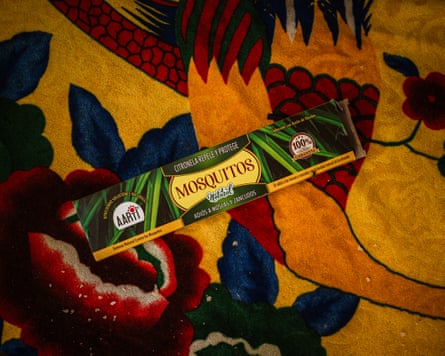
“I was bitten by the chikungunya mosquito, and I was really, really sick for a few days,” says Castillo, who could not walk due to the pain in his limbs.
Poor waste collection has been linked to mosquito-borne illnesses, with the Aedes aegypti species proliferating in stagnant water that pools in discarded plastic in rubbish tips, causing a chikungunya epidemic late last year that affected as much as a third of the island’s population.
A wave of other health problems in Cuba has also been fuelled by the piles of rubbish, according to Dr Maria Salvador*.
“At the hospital, we’ve seen an increase in hygiene-related illnesses and gastrointestinal issues,” the doctor says, noting an increase in hepatitis, particularly among children. “It is harder to keep an eye on kids – everything they put in their mouths, their tendency to wander off, and everything they eat while in the street.”
At the foot of many of Havana’s informal waste tips, children can be seen playing marbles on the ground and chasing each other. Dogs gnaw at discarded scraps, while some desperate locals pick through the rubbish in search of something to sell.
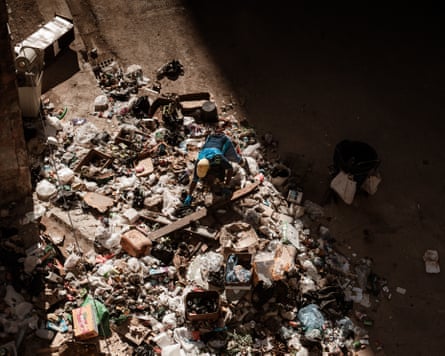
Not only are collection trucks unable to clear rubbish, but fumigation also demands petrol and chemicals, which have become prohibitively expensive due to the blockade. Diego Sanchez*, the owner of a private fumigation company, reports that many of his costs have increased tenfold since the US imposed oil restrictions.
He is convinced that inadequate fumigation will probably lead to another mosquito infestation in Cuba. “It’s going to stay the same this year, because there aren’t any clear solutions yet,” he says, adding that the public health crisis is likely to only get worse. “I imagine [diseases] will continue to rise if nothing changes.”
Faced with a mounting public health crisis, authorities are trying to adapt their waste management system. In March, the government launched “Cuba Recycles”, a year-long initiative aimed at increasing awareness about recycling and introducing new collection points for recyclable waste. “Here we don’t have a culture of recycling. None,” notes Blanco, the Havana chef.
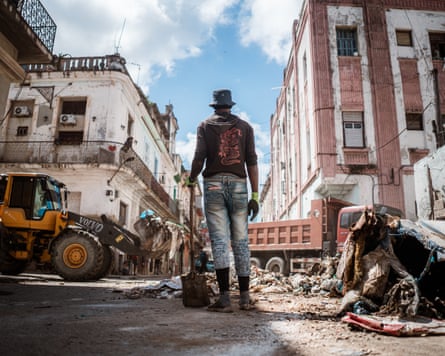
Most of the city’s waste is sent to what residents call El Bote del 100 (The Dump on 100th street), a landfill just a few kilometres from central Havana. Home to 52m cubic metres (1.8bn cubic ft) of waste piled at heights of up to 25 metres, the rubbish tip is a 105-hectare (260-acre) wasteland of smouldering garbage and black flies, with nearby communities complaining about noxious fumes spilling into their homes.
With no quick solution to Havana’s waste problems and no end in sight to the US blockade, the island could be on the verge of a health crisis. Its medical system is already buckling under pressure from regular blackouts and scarce medicine, with surgeries cancelled and patients forced to buy medication on the hidden market.
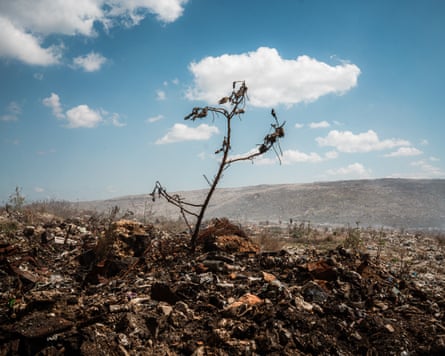
“I have seen how the quality of the healthcare system has been declining – not in terms of the doctors, but in terms of the resources we have to work with,” says Salvador.
In a country historically renowned for the quality of its healthcare, many Cubans are now accustomed to being unable to access it. “There’s a saying – not an old one, but a modern one – ‘try not to get sick, because there is nothing at the hospital’,” says Blanco.
* Some names changed at the request of sources, who fear official repercussions for speaking to foreign media