










The discovery of a new work by Ralph Vaughan Williams has set the world alight this week. Well, not quite, but it’s a great story. In a box in the archives of London’s Morley College Elaine Andrews came across a previously unknown Vaughan Williams song. Titled Before the Mirror, it sets a Swinburne poem that itself was inspired by a Whistler painting.
Hearing it played on Radio 4’s PM on Monday [58 mins in] reveals music of surprising tonal adventure and expressive ambiguity, written shortly after Vaughan Williams married Adeline Fisher in 1897. And the manuscript’s workings, its crossings-out and corrections, are a fascinating insight into Vaughan Williams’s creative process.
But a single song pales into comparison compared to the musical riches that may be lying dormant in libraries, archives and lofts all over the world. One of the most significant musical finds of all time was the treasure-trove of manuscripts by Florence Price found in a derelict house in St Anne, Illinois in 2009, once Price’s summer home, that included her two violin concertos, Fourth Symphony and dozens of other pieces.
That discovery revealed not only wonderful music, but also pointed to the priorities – and prejudices – of music historians. The discovery of previous unknown manuscripts by the most familiar composers – a single page of Mozart, an exercise by Beethoven, a sketch by Haydn, say – often happen because historians know where to look for ephemera of lives whose every artefact has been combed over for centuries. But that had not been the case for Price, or for other composers who have been musicologically marginalised. Their work is supposed to be “lost” simply because no one had been looking for it.
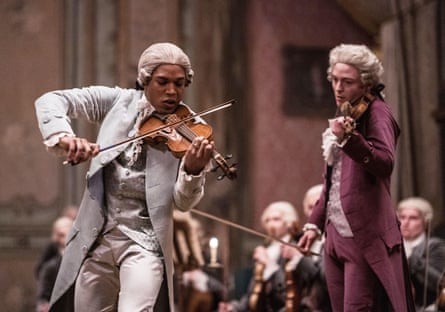
That’s why some of the deepest holes in musical history – works that we know composers wrote and that were performed in their lifetimes, but which their biographies say are now “lost” – are by female composers. Francesca Caccini wrote more than 13 stage works in her lifetime in 17th-century Italy, but only one survives today, La Liberazione di Ruggiero. That’s a piece in which gender roles are swapped and it’s the female characters who save the males. Caccini’s dozen other operas may currently be “lost”, but have researchers been looking for them as assiduously as they search for a page by Bruckner or a letter by Mahler? My bet – and music history’s hope – is that this hugely significant corpus of the story of early opera in Italy might yet be uncovered in a loft or bundled in a trunk in a dusty archive.
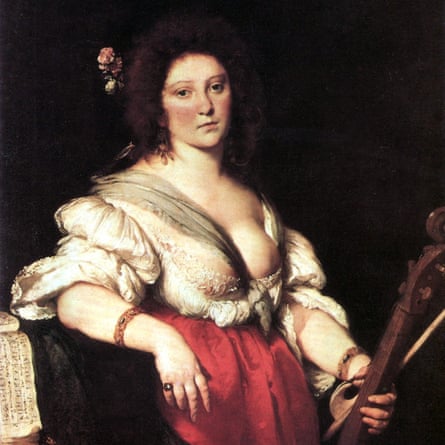
The same goes for at least three complete operas by Joseph Bologne, who lived an extraordinary life in 18th-century France, as composer, violinist, orchestral leader, fencer and soldier, becoming a colonel in the revolution’s only all-black regiment. But Bologne’s legacy suffered the prejudices of a culture that reinstated slavery and which erased his contribution to the revolution and to musical society after his death in 1799. Now that Bologne’s work is at last finding its place there must be renewed focus on recovering these vital “lost” operas from the oblivion that they never deserved.
Thank goodness for exceptions to the rule, such as when vocal parts of the 16th-century composer Maddalena Casulana’s five-voice madrigals were unearthed in St Petersburg in 2022 by Laurie Stras: but again, there is much more of her work to find, as there is of Élisabeth Jacquet de La Guerre, Barbara Strozzi, and Maria Theresia von Paradis – and many more.
Mind you, there is also lost music whose absence has been known of for centuries – we can only dream of what could be. Bach’s St Mark Passion and scores of his cantatas, Monteverdi’s Arianna and other stage works, the dozens of quartets and sonatas that Brahms threw out as unworthy, or Sibelius’s Eighth Symphony, likely consigned to the flames by Sibelius himself.
The Royal Scottish National Orchestra has announced that Lithuanian conductor Giedrė Šlekytė is to be their next music director, succeeding Thomas Søndergård from the 2027 season. The appointment comes after just two projects: a well-received week of Mahler’s First Symphony, and a subsequent recording session, but, as the RSNO’s chief executive Alistair Mackie said: “When she joined us last year, her musical ideas and the way she works with players spoke for themselves. Giedrė gives the orchestra room to breathe and to play.” It’s exciting news for an orchestra that is having a good year so far – with both the RPS Ensemble Award and the ABO innovation award already under its belt.
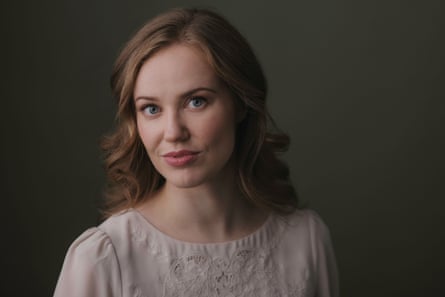
Šlekytė has conducted at the Staatsoper in Vienna, as well as Humperdinck’s Hansel und Gretel at Covent Garden, and she led a complete Brahms cycle with the Staatskapelle Berlin in Toronto. There are some fascinating programmes of hers online, from Hannah Eisendle and Berlioz in Dallas to Martinů in Amsterdam, a range of repertoire that the RSNO will no doubt continue to explore. Her appointment also makes her - astoundingly - the only female conductor leading or currently scheduled to lead any major UK orchestra; the last was her fellow Lithuanian, Mirga Gražinytė-Tyla, with her transformative tenure at the City of Birmingham Symphony Orchestra.
This week, Tom has been listening to: Meco’s Moondancer: from the genius who gave the world Star Wars and Other Galactic Funk, this is one of the great late disco symphonic albums, in which – of course – the arrangements are cosmically lavish, the scale epic, and the listening pleasure out of this world.