










We’ve been talking for less than five minutes when I spot the swastika. It’s just above the head of László Nemes, one of Europe’s most acclaimed directors, as he sits in the suite of a London hotel, talking about Orphan, his intensely personal new film that dwells on – among other things – the impact of the Holocaust on the generations that followed. It’s an ancient, Hindu swastika, part of a decorative wall-hanging – but still.
I’m halfway through a question when I notice it. Nemes laughs; of course, he’d seen it immediately. “I wanted to point that out to you,” he says. “It is so funny. Before leaving this room, I will take pictures.” Mind you, he’s had worse. “When I was at the San Sebastián film festival with Son of Saul, they put me in the Mel Gibson room.”
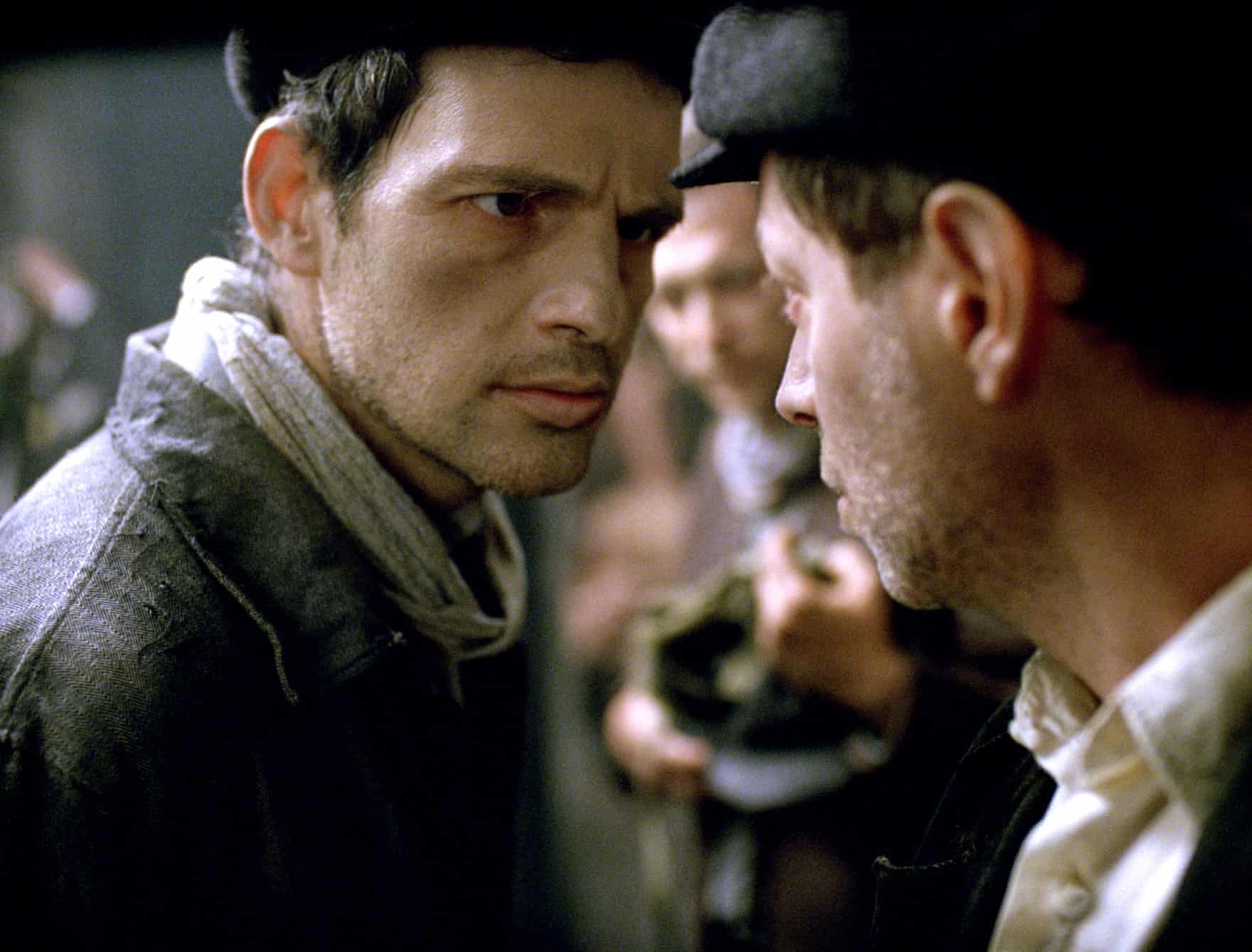
Son of Saul was the film that launched Nemes. Released in 2015, it was his first feature as a director, an astonishing, unflinching study of a day and a half in the life of a Sonderkommando, one of the slave labourers of Auschwitz-Birkenau forced to perform the bleakest task imaginable: clearing the gas chambers of the corpses of their fellow Jews, depositing the bodies in ovens to be incinerated. Son of Saul dared to stare into the abyss of the Shoah and was swiftly recognised as among the greatest films about the Holocaust ever made. It won every prize going, including the Oscar for best foreign language film.
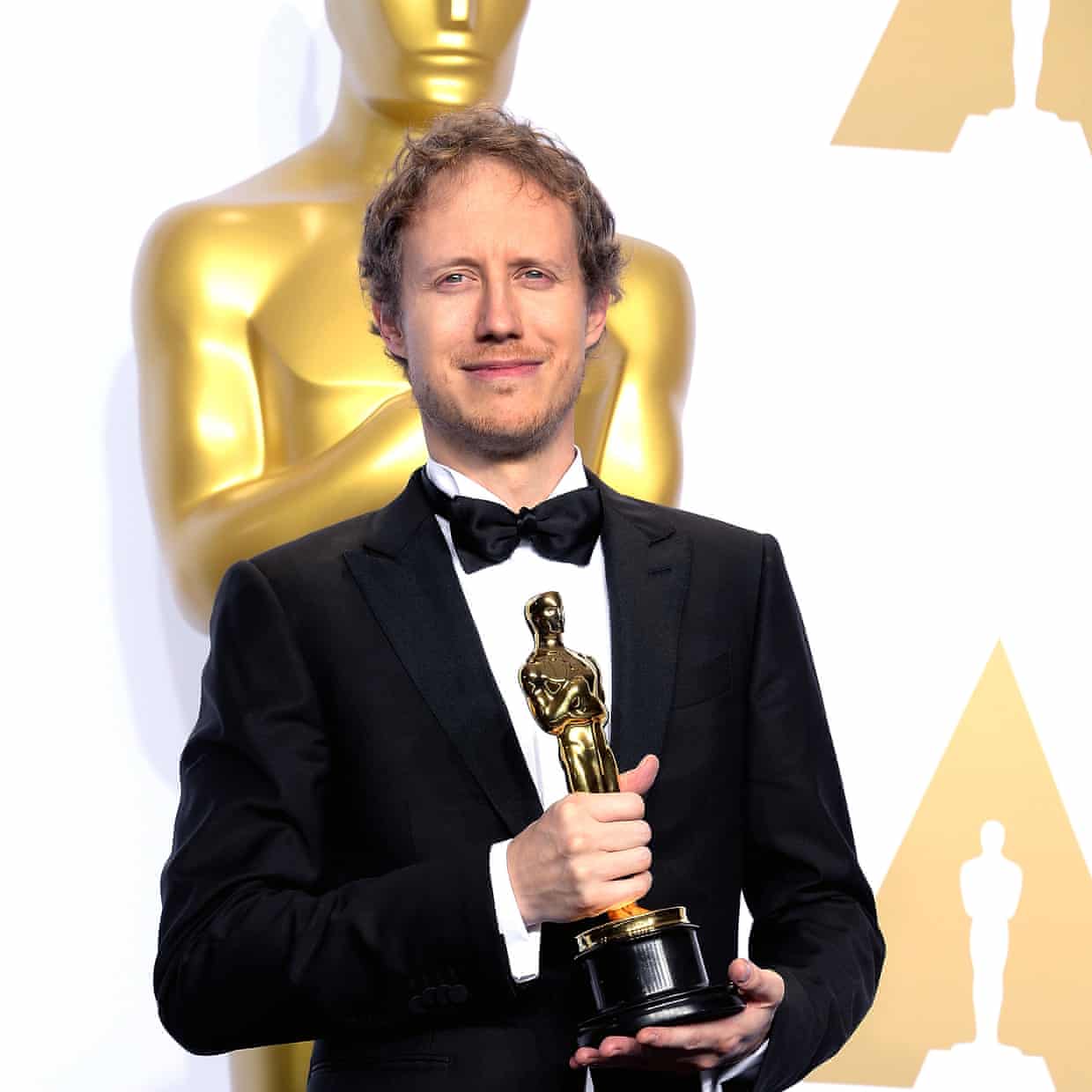
Orphan is only the second movie Nemes, now 49, has made in the 11 years that have passed since Son of Saul (though a third, Moulin, about the last days of French resistance leader Jean Moulin debuted at Cannes on Sunday. Naturally, he had offers: he could have been a “gun for hire”, he says but: “I wanted to keep control. I wanted to be the director and not, you know, just someone who carries out the task … I have a hard time saying, ‘Yes, boss.’”
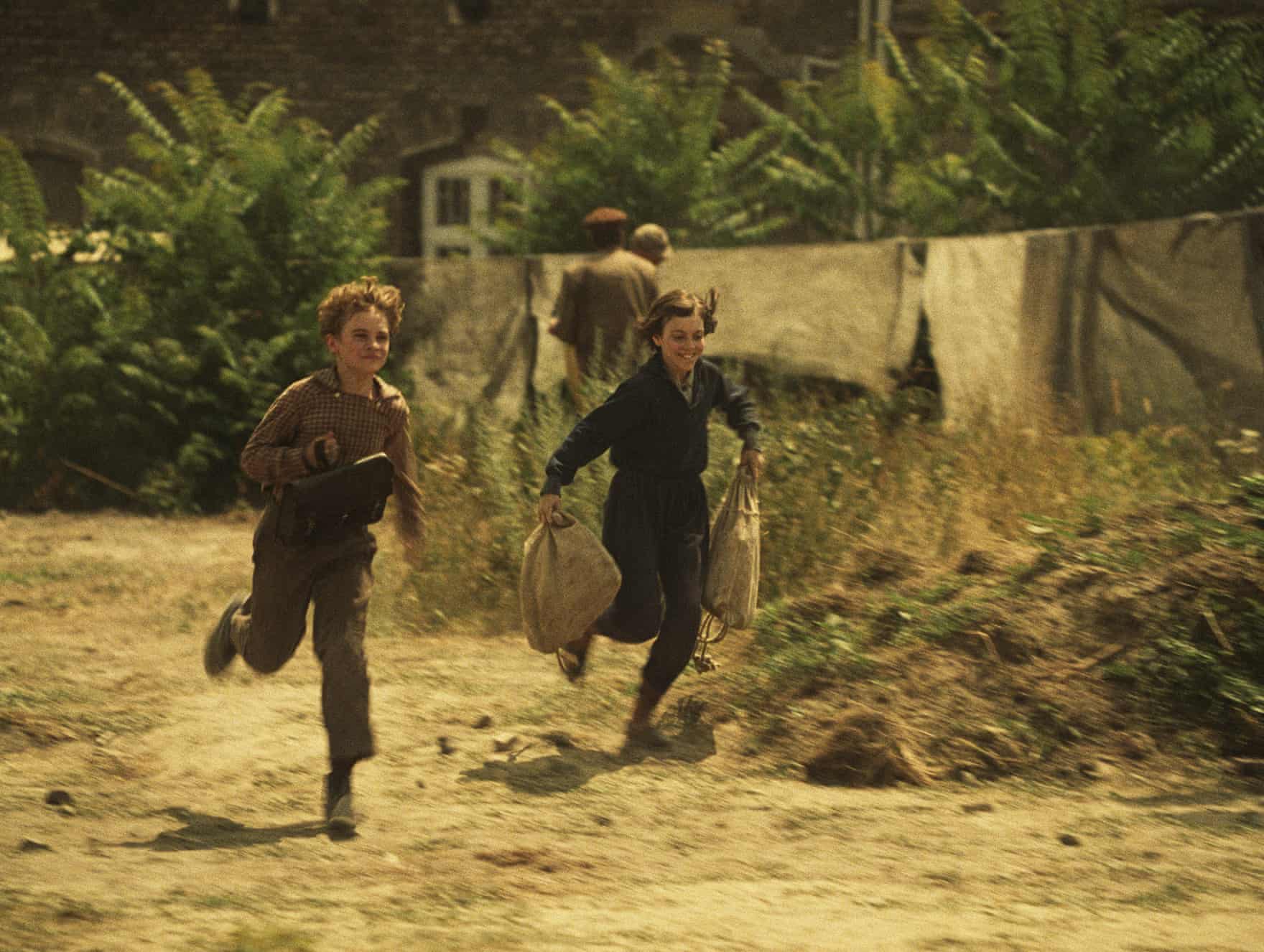
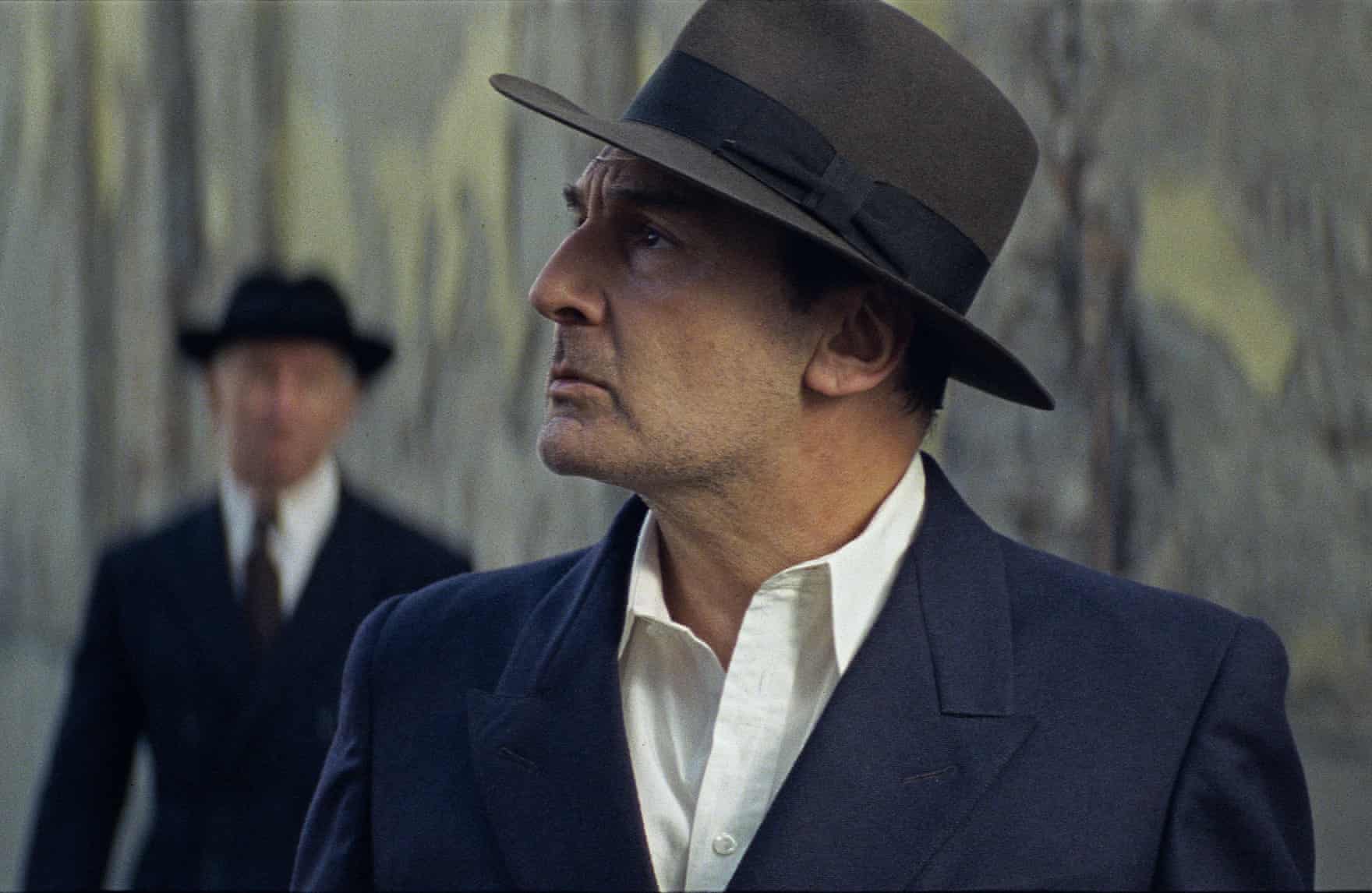
The result, in Orphan, is a film that could only have been made by Nemes. It tells the haunting story of Andor, a teenage Jewish boy growing up in Hungary in the shadow of both the second world war and the failed 1956 uprising against Soviet domination. Andor survived the Holocaust by being hidden in an orphanage, but less clear is how his mother made it. Meanwhile, the boy pines for his missing father, imagining him to be a war hero who will return any day.
Instead, a brutal, boorish man – a literal butcher – appears, ready to take up that paternal role. Slowly we piece together the compromises his mother made and whose child the boy really is.
It is an unsettling, absorbing tale of fathers and sons and of facing up to – owning – those parts of ourselves that most repel us. And it is Nemes’s own story. It turns out that what happened to Andor happened, almost exactly, to Nemes’s own father, András. András, says Nemes, was a boy who dreamed he was the son of one man, only to have to “cope with an abusive father who came back”.
András is now 81 and a theatre and film director in Hungary who still harbours “a little bit of doubt in his mind” over the identity of his true father. Nemes himself is keen to be free of such illusions. He grew up knowing, mostly from his grandmother, that the past was “full of shadows and traumas”. Orphan is, in part, his attempt to wrestle with those shadows. He has been, he says, “trying to integrate, to accept, almost the most hated part in my own self. That’s been my own journey. And I think that’s the journey my father was not capable of making.”
That process is contained even in Nemes’s own name (Nemes was the name of the butcher) and in a candour that is, in his industry especially, extremely rare. As will become clear, he is a man less interested in currying favour than in having the courage to voice what he believes is the unhappy truth.
When I say that his grandmother seems to have survived the Holocaust by becoming the sexual captive of his biological grandfather, he does not demur. When I ask about the impact this inheritance must have had on his father, he is utterly open about “all the psychopathologies” that were at work, and their effect on him.
He suggests his father “abandoned” him, replaying the “abandonment” he had endured as a child, not only through divorce but in the “hatred” András harboured towards his son because László had been so “much more lucky than he was”.
All of this has resonance far beyond the Nemes family. The director believes the Jews of Europe have been orphaned, partly by their own actions in the 19th century, “leaving Judaism for assimilation. And then by the cataclysmic event of the Holocaust, in which they were orphaned literally. One and a half million children were killed.” But there was a postwar abandonment too, he says, in the way Europe handled the Shoah, the way it did not truly listen to those who had endured it. “I don’t think the experience of the Holocaust was integrated into the very fabric of Europe. I think there’s shame, but there’s no understanding.”
I have an inkling that he is not talking about the past, but the present. I ask him how he thinks a film like Son of Saul would be received if it came out now. “I don’t even think it would make the [Oscar] shortlist today.” Why? “Because of the politicisation of cinema, because anything that’s Jewish is now considered … ” He doesn’t complete the sentence. “Nobody would touch it with a 10ft pole.”
He thinks that’s why Orphan – which, when we met last October, he considered his “best work so far” – hadn’t found a US distributor: no one wanted to go near a Jewish subject of that kind at that time. “You should be able to talk about these things without being ostracised.” Has he been ostracised? “A little bit.” His film was “ignored in Venice” and “even some response from the media smells of an ideological standpoint.” What exactly was that ideological standpoint?
It takes a while, but eventually he says: “There’s an orgy of antisemitism, an absolute, shameless orgy of antisemitism, overtaking the west.” He describes a clash of two camps, which he calls humanism versus anti-humanism. In the latter comes a brand of identity politics that no longer sees individuals, only groups. It is consumed by a “race obsession” and a “puritan, moralising, self-righteousness” that, he says, has overtaken the cultural and online worlds.
He’s referring to those artists and film-makers who call for a boycott of Israel. “I think it’s all anti-humanist regression. And because it’s not identified as this, I think it’s very effective at spreading. And one of its very potent vectors has been antisemitism … The Jew has always been [cast as] the sort of internal enemy, and I think now [the idea of] the Jew as the internal enemy of the west has reached the dimensions of European antisemitism before the takeover by the National Socialist [Nazi] party.”
He thinks it’s at that pitch? “I think it’s getting there.” But surely the people he has in mind would say they’re not thinking at all about race or antisemitism? They would say they’re championing human rights. “We know how totalitarian mindsets work … This kind of ideology always attaches itself to the sense of being on the right side of history, being on the righteous side. There’s a very strong, moralising, puritan surface on which this ideology can attach itself.”
If any of the big name actors and celebrities who call for cultural boycotts of Israel or protest over Gaza were here, I say, they would surely insist that they were motivated by nothing more than anger at Israel’s conduct, including the killing of 70,000 Palestinians, many of them civilians, in the strip.
“Well, where were they when Bashar al-Assad killed at least 600,000 people in Syria? Where were these people with their beautiful ideas when children [were] in direct need of UN feeding, by the million, in Yemen? The list goes on and on and on. So where were these beautifully moral people then?
“Obviously they prefer to attach themselves to an ideology that’s been around for a long time and that pretends to be humanitarian, but it’s actually not what it purports to be … Had they really cared about the people in this region, they would have revolted against these people being ruled by a totalitarian death cult that’s actually killing its own population and at unprecedented levels.”
I ask who he’s speaking about. It’s Hamas.
“That’s a globalist jihadist ideology, very much aimed at killing Jews.” But, Nemes says, these people don’t care about that, or the killings committed by hideous regimes elsewhere in the Middle East. Only one issue arouses their passion. “There’s this … obsession with Jews.”
He points to the struggles to get distribution for Orphan and how “people [would] ask me about Gaza, instead of, you know, asking about the movie. [They ask] if I signed this or that petition.”
He says it’s “tiring to hear the overclass of Hollywood lecture us morally. You know, from their pools and luxury homes in the Valley and Hollywood hills. Do I really have to listen to millionaires lecture the world about morality? I don’t think anybody wants that.”
I’m struck by a leading film-maker bold enough to refer to the big players in Hollywood as the “overclass”.
“Not only in Hollywood, but in the world. There’s definitely an overclass of people cut from reality, and they are eager to preach to us.”
It’s rare to hear someone in his line of work speak like this. Does he feel alone?
“I don’t think I’m very alone. I think people are mostly [too] coward[ly] to talk about it. People want to preserve their positions.”
In 2024, Nemes criticised the speech of Jonathan Glazer when the director was awarded the foreign language film Oscar for another Auschwitz story, The Zone of Interest, just as Son of Saul had eight years earlier. Today, Nemes is at pains to say how much he admired Glazer’s film, but of his speech – which centred on Gaza and a denunciation of “Jewishness and the Holocaust being hijacked by an occupation” – he was less enamoured. “Making a film about the Holocaust imposes on its maker a need for responsibility,” says Nemes. “I didn’t feel that he was responsible at all. I thought he wanted to please that overclass of Hollywood with the line of good, righteous thought.
“I don’t believe that he understands anything about the reality of the region, yet he feels the need to do it. And I think it’s very presumptuous, very condescending.” Nemes thinks film-makers should focus on making good movies and resisting “the treacherous, destructive power of the studio system”. Instead, “everybody just celebrates some kind of stupid orgy of – again – self-righteousness”.
And if he’s scathing about directors, there’s no exemption for those in front of the camera. “Sometimes I think it’s better if actors don’t, you know, speak up that much, because I don’t think they’re very much qualified to talk about anything. They should try to be actors, the best they can, and not become activists. It’s not really their role.”
He finds the whole thing maddening, the binary nature of it, the way “the internet wants us to split the world into the good guys and the bad guys,” with, he says, “certain cultures” cast as the embodiment of all that is angelic and good “just because they’re different”, a condescension he compares to the Victorian notion of the “noble savage”. He wants instead a culture that recognises that humans are complicated, that “we’re all good and bad at the same time. It’s not like we are bad here in the west and they are good in the east. This is not how it functions. Whoever thinks that is an idiot. I think there’s a full-blown movement toward idiocy and intellectual self-destruction.”
It’s possible Nemes’s views have softened somewhat since that conversation. Far from being shunned, his latest movie, Moulin, was selected for Cannes. And the prospects for his country suddenly look brighter, after the defeat of Hungary’s longtime ruler, Viktor Orbán, which Nemes told me when we spoke again earlier this month was “a beautiful moment”, a popular uprising akin to the revolutions of 1848. He admits that the world is currently going through a major period of upheaval, full of dangers, but also, he hopes, of “big, big possibilities”. But if Nemes feels a little lighter, he won’t let go of the dark. The point, the task, is to accept and embrace both. As he says of Orphan, it’s about reconciling with the “most hated part of yourself”. Because, as the film’s central character comes to understand, “You can’t get rid of it.”