










By 1969 student protests were raging across Japan, as anti-university, anti-war and anti-government movements mingled in strikes and classroom blockades. “Students were getting really violent,” Makoto Kubota recalls of Kyoto’s Doshisha University, leaving his studies in shambles. But when his quiet, magnetic fellow student Takashi Mizutani invited Kubota to the first gig by his band les Rallizes Dénudés, their deafening psych-rock became his calling. “I’d never experienced that amount of volume. My body ached.”
Les Rallizes Dénudés, which Kubota soon joined, have become the stuff of rock mythology: a mysterious, ever-shifting group whose early use of extreme distortion has won fans ranging from Osees’ John Dwyer to Lady Gaga. As its sole constant member since founding it in 1967, vocalist-guitarist Mizutani’s secretive nature and aversion to studio recordings have meant their story is still being pieced together, and their music chiefly circulated as live bootlegs. Discovering these had generated a cult international fanbase long after the band’s final gig in 1996, and Mizutani and Kubota reconnected in 2019 with plans to reunite – cut short by Mizutani’s death later that year. In his memory, Kubota is restoring and releasing their music, including an extraordinary lost album.
Months after that first gig, Mizutani’s bandmates left. Speaking from his studio in Tokyo, Kubota notes those original members were keen on radical student politics, especially bassist Moriaki Wakabayashi, who “was getting more serious about the Red Army stuff”. Armed with samurai swords, Wakabayashi would join these hardline communists in the March 1970 hijacking of Japanese Airlines Flight 351. “I heard they wanted to go to Cuba. Instead of that, they landed in North Korea.” After initially securing asylum, their residency became somewhat less voluntary – Wakabayashi supposedly still resides there.
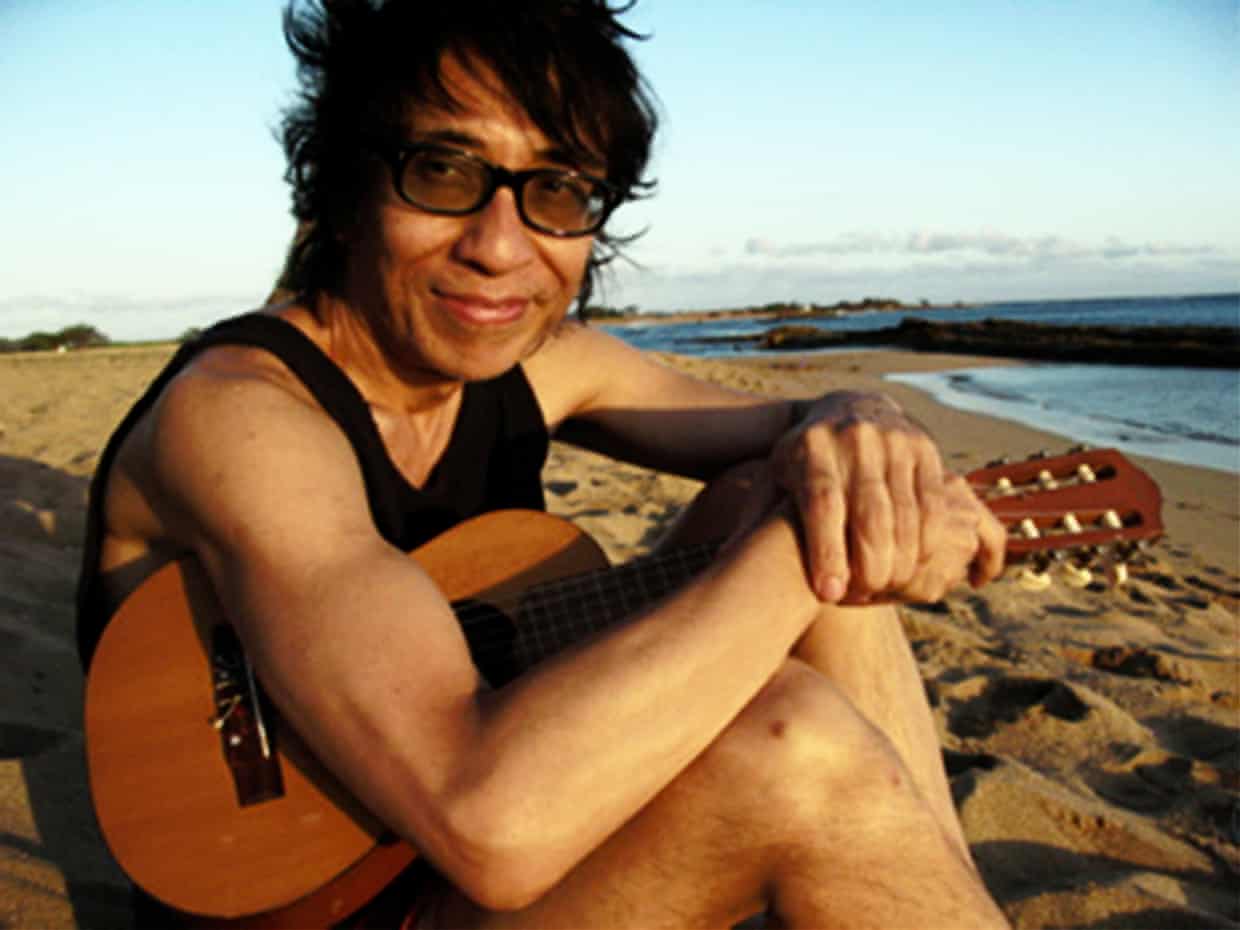
In late 1969, Kubota recalls Mizutani inviting him to start jamming together. “He was already super knowledgable about American music,” he says, showing Kubota LPs by the Grateful Dead and Velvet Underground, although how the unsociable student acquired these in Japan at that time “is a big mystery”. They bonded, visiting a university studio one night in February 1970 to record tender psych-folk songs: “When we finished, it was morning light outside.” These were eventually released on the 1991 album Mizutani/Les Rallizes Dénudés, alongside the shrieking live track The Last One, recorded at their first gig together in early 1970 at Doshisha student hall. It started with the band playing those quieter songs. Then, Mizutani “suddenly pressed the fuzz pedal”, leaving Kubota trying to match him on an acoustic guitar with a pickup. “I went to my amp and turned it to full, which is the same but worse – more howling!”
It became Kubota’s first ear-melting show of many. He played intermittently with les Rallizes Dénudés for three years, but he left as his own career began taking shape. Landing record deals as a soloist and with his roots rock group the Sunset Gang (later Sandii & the Sunsetz), he would eventually tour the world with the likes of Talking Heads, INXS and Eurythmics, while the industry-unfriendly les Rallizes Dénudés – as far as can be confirmed – never played outside Japan.
He rarely heard from his reclusive former bandmate. But in 1991 Mizutani asked permission to release Mizutani/Les Rallizes Dénudés as one of three albums on the Rivista label, alongside ’67-’69 Studio et Live and ’77 Live. Compiled of archival recordings (mostly from live shows) and released in limited quantities on CD, these became the band’s only proper, sanctioned releases in Mizutani’s lifetime. “Rallizes was a live band, not a recording band,” Kubota says, claiming Mizutani couldn’t find producers able to capture their live sound. “They were too loud, and uncontrollable.”
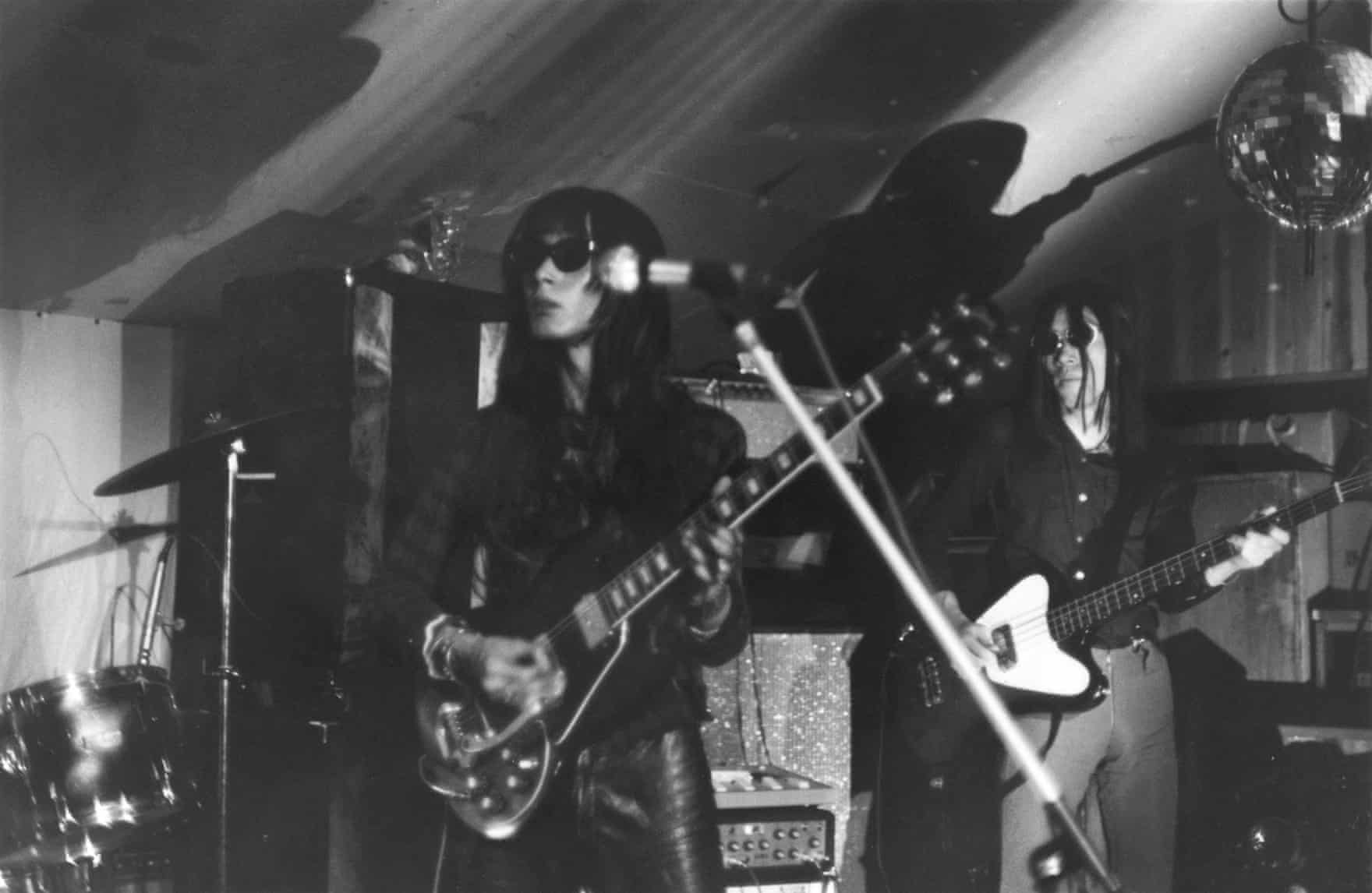
One night in 2010, Kubota was in Tsutaya, a video and CD rental chain he likens to Blockbuster. “I saw 10 black CD covers saying ‘Rallizes’ from 1 to 10,” he says. “The first thing I thought was: ‘Mizutani finally did it, he got a good deal!’” But others were responsible: “Pirates.” Fans taping their shows had yielded dozens of poor-quality bootlegs. Despised by Mizutani, they “crossed the ocean to America and Europe, then local pirates started copying them”. Bearing titles such as Heavier Than a Death in the Family and Blind Baby Has Its Mothers Eyes, these gritty recordings became sought-after collectibles by Western psych and noise-rock enthusiasts. One was Julian Cope, who devoted an entire chapter of his 2007 book Japrocksampler to the band and the “sonic executioner” Mizutani. His account is highly sensationalised and speculative, but a useful marker for how the band captured imaginations in the west: “Bootlegs, bootlegs, and more bootlegs.”
In August 2019 Mizutani phoned Kubota again. By this point Kubota was a well-travelled career musician, and had discovered les Rallizes Dénudés fans across the world. He asked Mizutani: “‘Why shouldn’t we give them your live music again, and official records?’ He liked the idea.” For Kubota, it was “just like he approached me in 1969 and said ‘let’s do music together’. Although we hadn’t met in 30 years, I always liked him, and he always thought about me. Like brothers.”

But soon, Kubota stopped hearing back. Mizutani’s partner reached out to say that he had died in December. “She knew the ideas we’d discussed, and agreed we had to keep the Rallizes legacy.” Mizutani had kept “hundreds of tapes”, and they helped found record label The Last One Musique to restore and release them.
Recently, they uncovered Mizutani’s plans from 1991 for an unreleased album compiled from that archive. He had labelled some of his tapes and open-reels for a potential fourth record and written corresponding tracklists, which helped Kubota restore and release what Mizutani called Disque 4. A mix of live, rehearsal and rare studio recordings, it includes two real game-changers – recordings from the fabled Virgin demo. In 1976 journalist Aida Akira produced les Rallizes Dénudés sessions at Tokyo studio Big Box. “He was so passionate about Rallizes’ music, and he wanted to introduce it to Virgin,” says Kubota. He claims that Mizutani was displeased with the sessions due to “the lack of production direction”, but Akira was permitted to take the demo to the British label – then known for making stars of leftfield acts such as Mike Oldfield. While it got discussed, the label was pouring resources into signing the Sex Pistols, and the deal never happened. “It was just unlucky.”
The Big Box tracks help explain Akira’s vision for how les Rallizes Dénudés might have found some commercial success. Live recordings of The Night, Assassin’s Night on records such as ’77 Live are proto-shoegaze monsters, but the Disque 4 version exposes its catchy surf-rock foundation. The real gem is the dreamy White Awakening. A few Kubota-restored live takes exist – the stripped-back cut on The OZ Tapes, the snarky 10-minute freakout on Citta ’93 – but the Disque 4 version is a transcendent, glimmering ballad. It shows a softer side to Mizutani, long undersold by his associations with shock-and-awe distortion. “He was a good melody maker,” says Kubota.
As Kubota continues restoring les Rallizes Dénudés’ music, he feels the weight of his friend’s expectations – “he was really, really picky” – keeping a photo of Mizutani by his mixing desk, “always standing next to me, checking how I’m doing”, he laughs. “I hope he likes my work.”