







What kind of play is The Cherry Orchard? As a new production starring Helen Hunt and Kenneth Branagh beckons in Stratford, I am reminded that it is a question people have been asking since the play’s inception. Chekhov himself wrote that what had emerged in his play was “not a drama but a comedy, in places almost a farce”. Stanislavski, who directed the Moscow premiere in 1904, violently disagreed. “It is a tragedy,” he told Chekhov, “whatever prospect of a better life you hold out in the last act.”
While the debate continues, I hope we shall not be told by anyone involved in the new RSC production that they are at long last restoring the play’s comedy. It is a critical cliche that the British sentimentalise the play and treat it as a lament for the decline and fall of a pseudo-Edwardian aristocracy. In my experience of the play – and I have seen about 20 productions – this is simply untrue. We generally do The Cherry Orchard very well because its blend of styles and moods is something baked into our own dramatic heritage. Eschewing the academic formality of the French, for whom tragedy and comedy are rigidly defined genres, we are used to a glorious impurity in drama: a culture that can produce Twelfth Night should have no problem in comprehending The Cherry Orchard.
I first saw the play in 1961 in an RSC production directed by Michel Saint-Denis. It was full of laughter, not least in the airy nonchalance of John Gielgud’s Gaev as he ridiculously claimed, “I shall be a financier”: he’s going to work in a bank. But, equally, I have never forgotten the look of haunted sorrow on the face of Dorothy Tutin’s Varya as she knelt downstage packing a trunk, awaiting the marriage proposal from George Murcell’s Lopakhin that never came. Even that had its comic side as Murcell fumbled with the doorknob trying to make his escape.
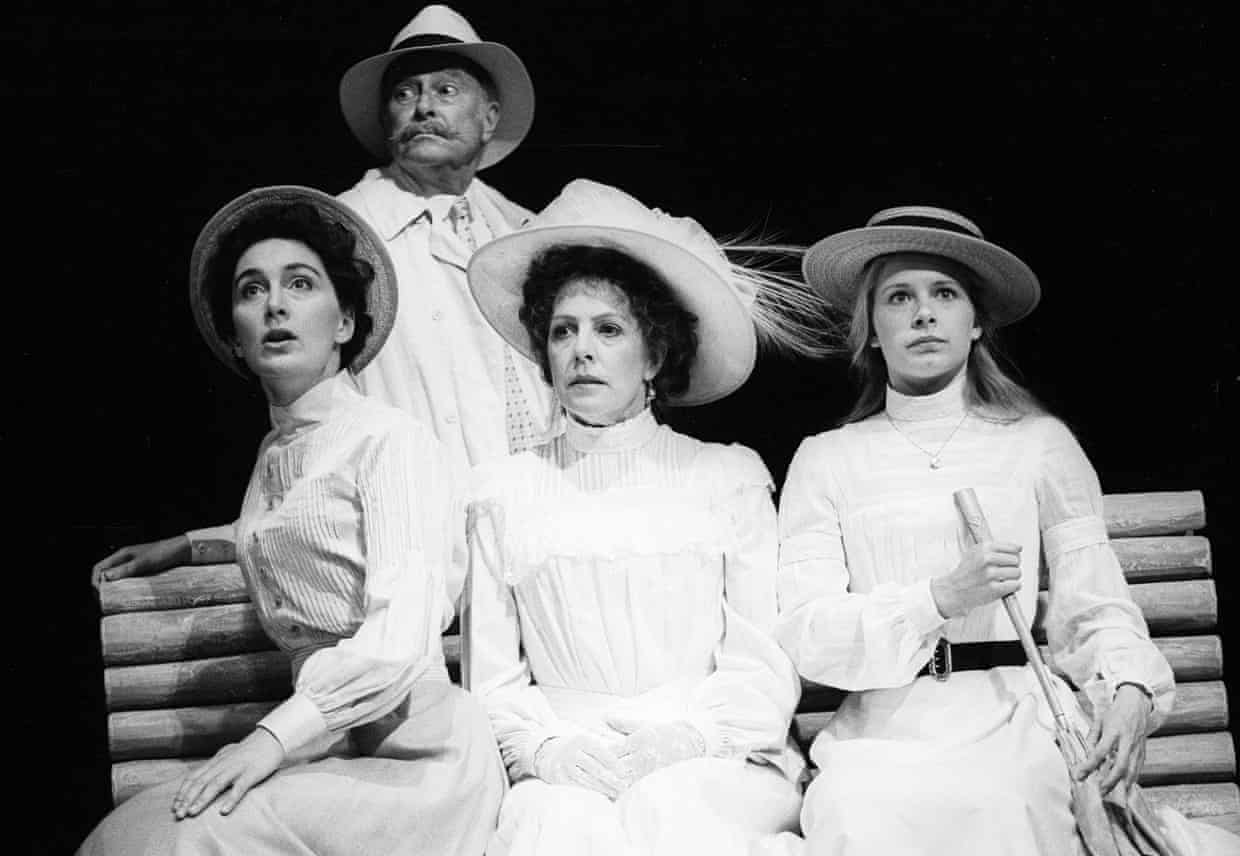
The critic Eric Bentley, as so often, got it right when he said there is nothing nebulous about Chekhov: he is, if anything, precise. That has been the hallmark of British productions. Michael Blakemore did a fine version for the National Theatre in its Old Vic era where he made the destruction of the cherry orchard seem part of an inevitable historical process. At the same time, there was a constant thread of humour with the revolutionary Trofimov talking of mankind’s struggle towards a greater truth while wrestling hopelessly with his galoshes.
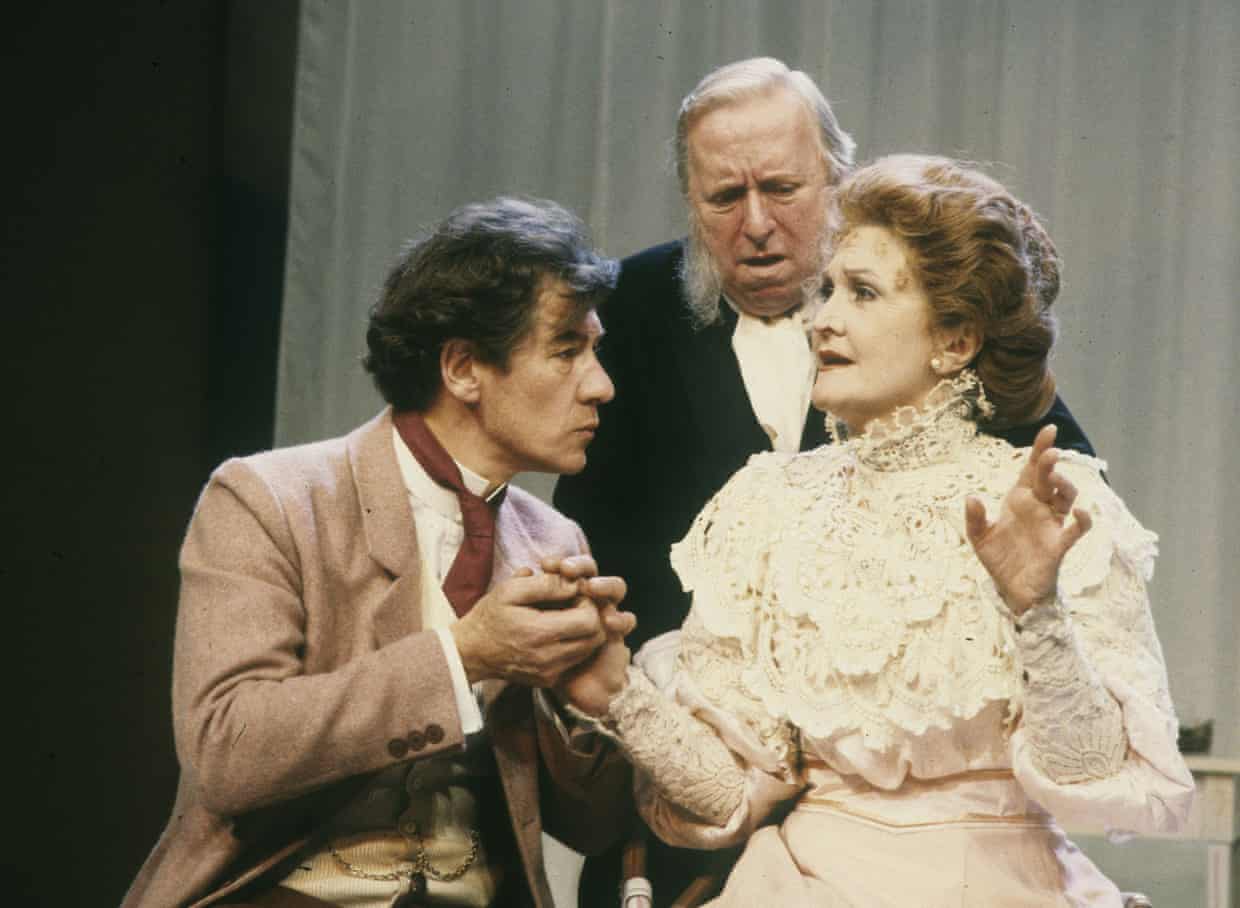
Mike Alfreds did an even more radical version for the National in 1985 that caught perfectly the emotional contradictions that are essential to Chekhov. Ian McKellen’s Lopakhin, having made his purchase of the estate, gloatingly whirled the house keys above his head as if about to poke out someone’s eye and then rushed over to comfort Sheila Hancock’s weeping Ranyevskaya.
Steeped in Shakespeare, British actors are particularly good at pinning down the sudden shifts of mood that are pervasive in Chekhov. Penelope Wilton’s Ranyevskaya in a 1995 RSC production was one moment gigglingly imitating the crocodiles she claimed to have eaten in Paris and the next extending a hand for David Troughton’s stooping Lopakhin to kiss in the manner of a grand duchess. Those same contradictions were evident in Zoë Wanamaker’s performance of the role in Howard Davies’s 2011 National production: having called Mark Bonnar’s Trofimov, in Andrew Upton’s brutal version, “retarded” she immediately smothered him in consoling embraces.
What I am saying loudly and clearly is that the British are very good at Chekhov. But, if there is one production of The Cherry Orchard that haunts me, it is the one Peter Stein created for the Berlin Schaubühne in 1989. In a programme note, Stein described the play, Polonius-like, as “Tragedy. Comedy. Pastoral. Farce” and he pushed each category to the limits. The farce was blatantly farcical with the party in the third act acquiring a Gogolian absurdity as very short men danced with excessively tall women. The pastoral element was epitomised by the breathtaking moment in the first act when the shutters of the nursery were flung open and we saw a profusion of white cherry blossom that made you realise, as never before, why the family couldn’t bear to part with the estate.
Stein had the kind of resources, rehearsal time and ensemble that are simply not available to British directors. For all that, we still have a temperamental and stylistic affinity with Chekhov. With two new productions of his last and greatest play due – first in Stratford-upon-Avon and then in the West End with Kristin Scott Thomas in the autumn – you could say that the time is ripe for more Cherry Orchards.
-
The Cherry Orchard is at the Swan theatre, Stratford-upon-Avon, 10 July-29 August and at the Harold Pinter theatre, London, 3 October-9 January