

惯性聚合 高效追踪和阅读你感兴趣的博客、新闻、科技资讯
阅读原文 在惯性聚合中打开

推荐订阅源

L
LangChain Blog
小众软件
小众软件
Apple Machine Learning Research
Webroot Blog
Webroot Blog
T
The Blog of Author Tim Ferriss
S
Schneier on Security
罗磊的独立博客
P
Privacy & Cybersecurity Law Blog
阮一峰的网络日志
阮一峰的网络日志
F
Fortinet All Blogs
P
Palo Alto Networks Blog
月光博客
月光博客
MongoDB | Blog
MongoDB | Blog
Threat Intelligence Blog | Flashpoint
Simon Willison's Weblog
量子位
NISL@THU
NISL@THU
C
CERT Recently Published Vulnerability Notes
Cisco Talos Blog
Cisco Talos Blog
Stack Overflow Blog
Stack Overflow Blog
Recorded Future
Recorded Future
K
Kaspersky official blog
cs.CV updates on arXiv.org
Hacker News - Newest:
Hacker News - Newest: "LLM"
L
Lohrmann on Cybersecurity
酷 壳 – CoolShell
酷 壳 – CoolShell
GbyAI
GbyAI
L
LINUX DO - 热门话题
Help Net Security
Help Net Security
B
Blog RSS Feed
www.infosecurity-magazine.com
I
InfoQ
CTFtime.org: upcoming CTF events
The Cloudflare Blog
H
Heimdal Security Blog
Last Week in AI
Last Week in AI
美团技术团队
云风的 BLOG
云风的 BLOG
C
Check Point Blog
cs.AI updates on arXiv.org
W
WeLiveSecurity
V
Visual Studio Blog
G
GRAHAM CLULEY
AI
AI
Security Latest
Security Latest
OSCHINA 社区最新新闻
OSCHINA 社区最新新闻
雷峰网
雷峰网
Cyberwarzone
Cyberwarzone
Microsoft Security Blog
P
Proofpoint News Feed

The Guardian

New Zealand’s North Island braces for Cyclone Vaianu with thousands ordered to evacuate Artemis II splashdown – in pictures Swalwell denies allegations of sexual assault as calls grow for him to withdraw from California governor race Trump news at a glance: Epstein survivors have words for Melania Trump after surprise statement Multiple people face charges, including murder, in California fireworks blast Rory McIlroy surges into six-shot Masters lead with stunning second-round flourish Roberto De Zerbi targets ‘Ange-ball’ revival to save Spurs from relegation Bath hit back to reach semi-final after stunning Northampton in 11-try epic Australia crash out of BJK Cup after Britain secure upset with doubles win Zebras, wealth and power: Hungary’s election tests Orbán’s grip on power ‘TikTok effect’ brings sellout crowds and younger fans to Grand National meeting King signs up David Beckham to his Chelsea flower show team The war over Omagh’s gold: the £21bn mine plan tearing a community apart Britain’s shadow workforce is paid as little as 65p an hour. Who cares for the carers? Tim Dowling: my wife is on a quest to restore my thinning hair SUVs are making Britain’s potholes worse, say scientists Blind date: ‘She claimed she was usually shy. I wouldn’t have guessed’ I’m a sauna person now: the Becky Barnicoat cartoon ‘I got everything I dreamed of – when I had no ability to handle it’: Lena Dunham on toxic fame, broken friendships and her ‘lost decade’ Six great reads: the man who let snakes bite him, masked heavy metal and the brutal reality for foreign students in the UK Meera Sodha’s recipe for noodles with rose beancurd, spring greens and egg Cuba’s doctors were a lifeline for the world. Now the Caribbean is shamefully complicit in the US drive to expel them An environmental disaster in Moldova has Russia’s fingerprints all over it ‘This is as important as your teeth’: are you skipping this key part of mouth hygiene? Man arrested after four die trying to cross Channel in small boat Ukraine war briefing: doubts linger in Kyiv over Moscow’s promise to uphold Orthodox Easter ceasefire Ichiro Suzuki statue unveiling goes awry as bronze bat snaps during ceremony Arrest of national war hero Ben Roberts-Smith cuts deeply to core of Australian psyche European football: Real Madrid held at home by Girona to extend winless run ‘You come back different’: how rugby players change after motherhood Human rights groups decry US plan for Guantánamo camp for Cuban migrants Potential US host cities for 2031 Women’s World Cup games mull withdrawal over Fifa concerns Arne Slot insists he is ‘aligned’ with Liverpool board and fans as squad is rebuilt Kamala Harris ‘thinking about’ running for president again in 2028 JD Vance warns Iran against trying to ‘play’ the US in peace talks West Ham double up twice to thrash Wolves and put Spurs in relegation zone Trump administration releases new renderings of so-called ‘Arc de Trump’ Bafta apologises for events surrounding John Davidson’s Tourette’s outburst Cocktail of the week: Bar Shrimp’s la rosita – recipe New drug may extend survival in aggressive ovarian cancer, trial shows One dead and 27 injured after bus with British passengers crashes in Canary Islands OpenAI CEO Sam Altman’s home targeted with molotov cocktail Alarm as acting CDC director delays report showing Covid vaccine benefits Argentina just ripped up its pioneering glacier law. What does this mean for millions of people’s drinking water? ‘Illegal’ forest service overhaul risks causing ‘chaos’ across US public lands, union claims Prince Harry sued for defamation by charity he co-founded Anthropic’s new AI tool has implications for us all – whether we can use it or not Concerns raised about motorbike tourist trail after death of British teenager in Vietnam The Guardian view on Trump’s civilisational threats: the words that fuel war must be condemned The Guardian view on dystopias for our times: the American nightmare Weather tracker: Cyclone Maila batters Solomon Islands with 115mph winds Doctors’ leader claims new reduced pay offer killed chances of ending strikes in England Netanyahu-ism has achieved nothing for Israelis – and come at a monstrously high price Deborah Levy: ‘CS Lewis’s White Witch terrified me – but I wanted to meet her’ How I Shop with Michelle Ogundehin: ‘We grownups have enough stuff already’ ‘Butter Birkin’: popcorn plastic It bag in demand by Devil Wears Prada fans Trump’s war and Melania’s Epstein statement, with US editor Betsy Reed – The Latest Orbán and Magyar trade accusations in last days of Hungary election campaign Reckonwrong: How Long Has It Been? review | Safi Bugel's experimental album of the month Martin Rowson on Middle East peace talks – cartoon Fears of UK and EU flight cancellations as airports warn of jet fuel shortages Peers vote to ban pornography depicting sex acts between stepfamily members Week in wildlife: an ostrich on the lam, a tortoise crossing a road and surfing seals ‘There’s no shortage of terrifying technology’: how AI became TV drama’s new go-to villain Texas court overturns sentence for man on death row for nearly 50 years Power up! Could force be the secret to supercharging your fitness? ‘Irresponsible failure’: Google, Meta, Snap and Microsoft slam EU over child sexual abuse law lapse Blank canvas: what to wear with white trousers Critics assemble! Here’s my list of the greatest superhero movies of all time Amazon to finally launch Leo satellite internet in ‘mid-2026’, says CEO Pete Hegseth’s holy war: the militant Christian theology animating the US attack on Iran Toxic putdowns, brutal zingers ... and an unexpected love story – inside the joyful climax to brilliant sitcom Hacks Add to playlist: the beautifully dazed, countrified indie-rock of Tracey Nelson and the week’s best new tracks ‘I’m worried there’s too much of me,’ says a birch: inside the interspecies council giving nature a voice Dolce & Gabbana says co-founder Stefano Gabbana has quit as chair Why is anyone surprised by the US and Israel’s latest war? It’s only what the world allowed them to do in Gaza Super Mario what?! The seven best obscure Mario games Holly Humberstone: Cruel World review – Taylor Swift fave trades gothic melancholy for pop glow-up Thrash review – cursed shark thriller sinks like a stone on Netflix ‘The biggest, baddest, saltiest chick you would ever see’: why no one sang the blues like Big Mama Thornton Go Gentle by Maria Semple review – a joyfully clever New York romcom ‘Tranquil, natural and barely a tourist in sight’: readers’ favourite hidden gems in Spain Benjamina Ebuehi’s sweet and salty chocolate chip cookies recipe ‘I’m not a commercial director – I’m not even a professional film-maker’: Jim Jarmusch on the seven-year journey to make his new film Malcolm in the Middle: Life’s Still Unfair review – the TV magic they’ve created here is absolutely miraculous The Miniature Wife review – Matthew Macfadyen is wasted in this pointless comedy From soups and greens to roots, how to survive the ‘hungry gap’ From fat transplants to LED mittens: how the fear of ‘old lady hands’ mobilised the beauty industry Anna Wintour’s Vogue cover is more than a cameo – it’s a power play ‘They’re gonna make me cry’: I competed at a speed puzzling championship You be the judge: should my girlfriend stop mixing gold and silver jewellery? Maritime and port workers: how is the Middle East conflict affecting you? How games capture the awe and terror of cosmic isolation Why does alcohol make us both happy and miserable – and what else does it do to our minds and bodies? I never text back – and it’s ruining my relationships The pet I’ll never forget: Beau, the labrador who saved my life Life Is Strange: Reunion review – a decade-long story comes to an impassioned close Why is gaming becoming so expensive? The answer is found in AI Sign up for the First Edition newsletter: our free daily news email Sign up for the Feast newsletter: our free Guardian food email
AI won’t decimate the arts. We must interrogate it, but we can collaborate with it
Netia Jones · 2026-06-02 · via The Guardian

The disquiet and distrust surrounding artificial intelligence among artists and creatives remain real and consequential, and the language used by leading arts commentators is often apocalyptic: AI will decimate the arts, it is evil, it is the devil. Like many emerging technologies, AI has been driven by the corporations at the forefront of its creation. Introduced to the public at a rapid rate and continuously evolving, machine learning has become closely entwined with fear, antipathy and foreboding. At the same time, its powers and possibilities are expanding exponentially, becoming embedded in almost every aspect of human activity.

The upcoming RBO/SHIFT festival at the Royal Opera House aims to interrogate all sides of this fast-evolving landscape to enable artists, performers, creatives and audiences to think deeply and widely about where we are now, and where we may be tomorrow. Machine learning represents a seismic shift, both in society and in the arts, and we need storytellers, artists, teachers and thinkers in this space to help determine the direction of that shift and help us navigate this unfamiliar territory.

Opera is a particularly good place from which to examine technology. It synthesises multiple art forms – music, visual arts, architecture, poetry, dance, theatre and film – making it both niche and remarkably broad. Opera has also always engaged with technology. From its emergence around 1600, opera makers embraced the latest inventions: pyrotechnics, automata, flying machinery and trapdoors. Later came electric lighting, film, digital media and advanced acoustics. At the same time, opera preserves historic crafts: scenic painting, embroidery, dyeing, the conservation of period instruments and the rediscovery of forgotten repertoires. It is an art form that looks simultaneously backwards and forwards.

The question most frequently asked about AI is whether it will replace people, and concern centres particularly around ownership, consent and the use of performers’ likenesses. Those concerns are legitimate and deserve serious attention. Yet in opera it remains surprisingly difficult to identify artistic roles that might be replaced by AI. That does not mean change will not come, but the reality is more complex than the rhetoric.

Actors Melvin Fauchoux, Coraline Renaux and Raphael Robert perform L'Astrologue ou Les faux presages (The Astrologer or the False Omens), written in the style of the famous 17th-century French playwright Moliere by artificial intelligence (AI), Moliere scholars from Sorbonne University and French AI artist collective Obvious, at the Royal Opera of the Chateau de Versailles in Versailles, May 2026.
Actors Melvin Fauchoux, Coraline Renaux and Raphael Robert perform L'Astrologue ou Les faux presages (The Astrologer or the False Omens), written in the style of the 17th-century French playwright Molière by artificial intelligence (AI), Moliere scholars from Sorbonne University and French AI artist collective Obvious, at the Royal Opera of the Chateau de Versailles in Versailles, May 2026. Photograph: Stéphanie Lecocq/Reuters

Having spent the past year discussing AI with makers, coders, researchers, composers and performers, I am not sure it is possible for this technology to decimate the arts. The most written-about aspect of machine learning – generative AI creating images, words and music – is, in many ways, the least interesting. There have been operas created with and by AI for decades by researchers and musicians, yet these have had little impact on the creation of new work more broadly.

The prospect of a machine producing a “new” Molière play, or, potentially, a “new” Mozart opera, captures headlines, but creative applications of AI are already moving beyond imitation. For me, the more interesting questions concern collaboration, interaction and entirely new forms of artistic practice. Interactions with machines can expand our understanding of our own capacities. Photography transformed the way painters looked at the world. The pianola works of Conlon Nancarrow influenced composers including György Ligeti and Gérard Grisey. New technologies do not simply replace existing art forms; they often alter the conditions in which artists think and create.

Many of the most useful applications of AI may prove to be practical rather than artistic. Machine learning systems are being used for workforce planning, scheduling, booking management and operational data analysis. Within opera production itself, AI can be used to analyse the loading of scenery and improve safety applications. Such applications rarely make newspaper headlines, but they may ultimately have greater long-term impact than AI-generated images.
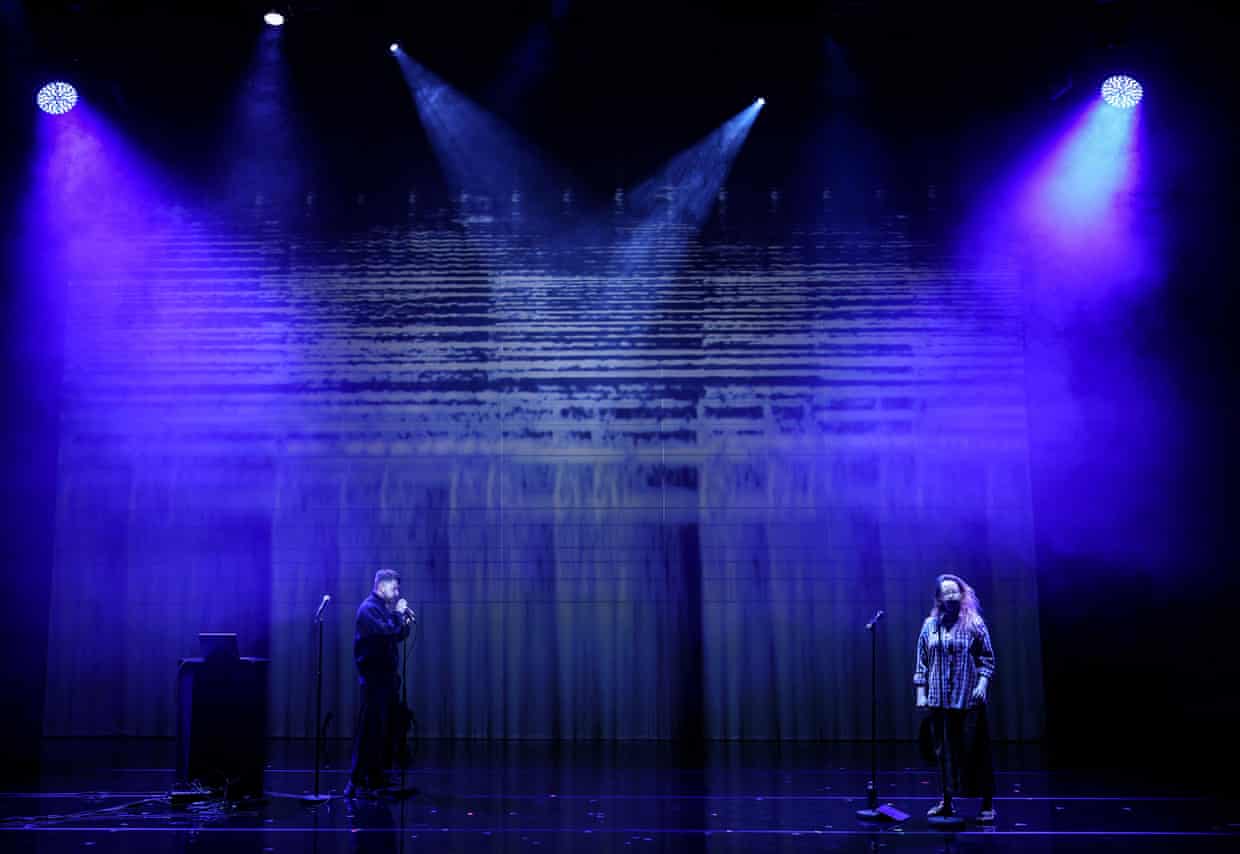
British artist Harry Yeff (also known by his stage name Reeps100) and British-Canadian soprano Patricia Auchterlonie (right) perform Transference, which uses AI to render the human voice.
British artist Harry Yeff (also known by his stage name Reeps100) and British-Canadian soprano Patricia Auchterlonie (right) perform Transference, which uses AI to render the human voice and will be part of the RBO/SHIFT festival Photograph: Henry Nicholls/AFP/Getty Images

AI may also become a useful tool in reducing waste. Opera makers spend much of their lives imagining things that do not yet exist, and there is inevitably a degree of creative experimentation along the way. AI-enhanced pre-visualisation can reduce much of this process in both set-building and costume making. Already, AI tools can place costume drawings on to three-dimensional bodies and allow designers to examine them from every angle, while innovations in VR-driven set visualisation are becoming increasingly sophisticated.

The ethical questions remain substantial. Does it matter if the voices of singers, the words of writers or the work of artists are appropriated and misused? It does. If there is direct profit from direct appropriation, legislation, controls and protections are essential. At the same time, creativity itself has always depended on access to culture, knowledge and previous work.

The ethical, environmental and social implications of machine learning raise questions every institution must address, just as representation, access and the impact of international touring are central challenges for any opera or ballet company.

AI appears to have emerged suddenly, but in reality it is part of a continual expansion of technology that has unfolded over centuries. It is also a space in which differing artistic and imaginative voices are essential. RBO/SHIFT asks two questions: what can AI do for creatives, and what can creatives do for the world in the age of AI? As our interaction with machines becomes ever more prevalent, it may be that, rather than decimating the arts, AI will lead us to value them even more highly, protect and preserve them. In the opera house, stratospheric singing, virtuoso instrumental playing, stunning scenery, incredible costuming, bold theatrical invention and the buzzing communal energy of a live audience are not things challenged by AI.

We can look forwards and backwards at the same time.

RBO/SHIFT is in the Linbury theatre at the Royal Ballet and Opera, London, from 4-7 June.