


Seven years clean, Oleksandr believed he had left addiction behind. Then, a year into fighting Russia, the Ukrainian soldier was prescribed painkillers for a shoulder injury. Under the strain of war, he relapsed and quickly began using stronger illicit opioids.
“From that moment, I was fighting two wars – one inside myself and one with Russia,” he said, speaking at a rehabilitation facility in Kyiv.
Oleksandr continued to serve for another two years, rising to the rank of officer even as his addiction deepened. “I was hiding my use from the others. It’s the kind of thing you’re ashamed of,” he said.
Last winter, he reached a breaking point. Unable to perform his duties, he came clean to his superiors. “Luckily, they were understanding and I was sent to rehabilitation.”
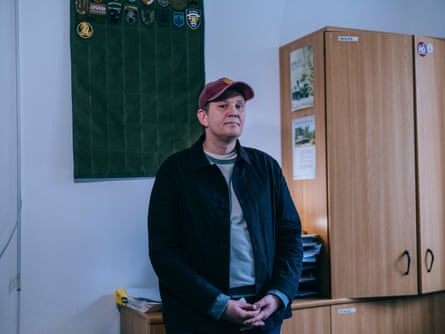
Oleksandr relapsed into addiction after treatment for a shoulder injury sustained during fighting.
Drug and alcohol abuse have shadowed every modern conflict. In Ukraine’s war, now in its fifth year, the psychological toll on soldiers has been immense – and for some, addiction has followed.
“Drug use among troops is a grey area,” said Oleh Olishevskiy, who runs a specialised rehabilitation clinic at Kyiv City Clinical hospital No 10, treating addiction alongside psychological trauma since the start of Russia’s full-scale invasion. “Everyone knows it exists, but few want to talk about it.”
The scale of the problem is hard to measure. Ukraine’s military does not disclose how many soldiers are dealing with mental health problems, let alone addiction. “I don’t think we’ll ever know the real numbers. No one is keeping track,” Olishevskiy said.
He cited a 2024 study by the Ukrainian charity 100% Life of 1,000 soldiers that found more than a third had used amphetamines at least once a month, while one in five reported using prescription drugs such as pregabalin. About 15% reported using cheap synthetic cathinones, known as “salt”, and opioids.
At the Kyiv clinic, a drab three-storey building in a leafy part of Kyiv, Olishevskiy and his team treat about 25 patients at a time, with stays of up to four months. The aim, ultimately, is for the soldiers to return to the army.
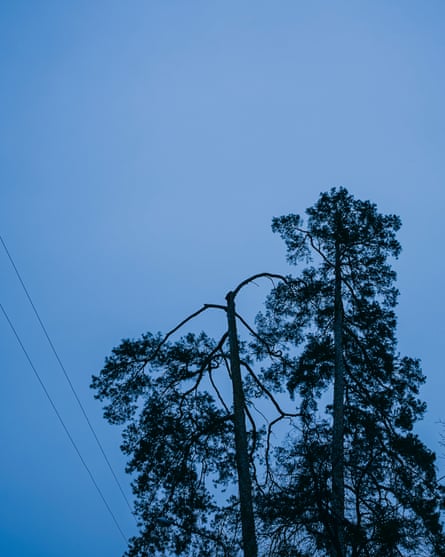
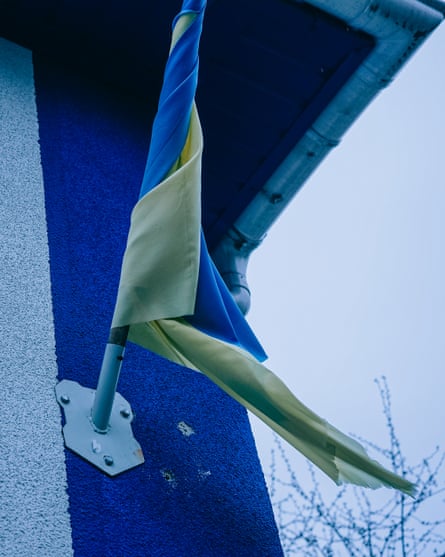
Above left: Pine trees near the rehabilitation centre in Kyiv. Above right: The Ukrainian flag outside the centre.
But those working in the mental health field say the need for addiction-related care among Ukraine’s troops far exceeds available treatment and will persist long after the fighting ends.
As in many other countries, substance abuse also remains difficult to discuss openly – particularly for men, and even more so for soldiers. “The war’s scale is unmatched in modern history. And it is not even over; the worst still lies ahead when soldiers return,” Olishevskiy said.
Widespread drug use in the Russian army has been well documented in media reports, at the front and in the rear, where soldiers can be punished by deployment to high-risk assault units or forced to sit in pits and cellars for days.
In Ukraine, there are efforts to take a different approach. While stigma around drugs remains, attitudes among commanders are shifting, medics say, with more soldiers being sent for treatment.
“There is more understanding now, but much still depends on your superiors,” said Petro, one of the clinic’s counsellors, who asked for his last name to be withheld. “It’s getting better,” he added.
Some of the rehab staff, including Petro, are former addicts and servicemen themselves. At the core of the clinic’s work is the belief that addiction and war trauma are inseparable. Counsellors say drug use can only be understood alongside the untreated PTSD and psychological wounds that often precede it.
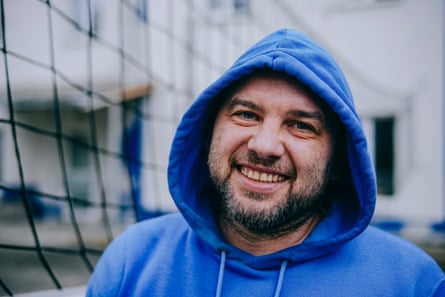
Petro, a war veteran, who has been treated at the rehab centre and now works there.
Stimulants are sometimes used to stay awake during long stretches of duty. But most patients say their addiction worsened away from the front, when they returned to base after weeks of fighting and struggled to unwind, turning to drugs or alcohol to blunt intrusive memories, manage anxiety or simply get through the night.
“I never used it on a mission – you’d get killed quickly. You’re already running on adrenaline anyway,” said Dmytro, a Ukrainian soldier, speaking in the rehab’s cafeteria over a bowl of soup. “When you’re back, you just want to switch off. Forget everything you’ve seen – all the death and other shit.”
Dmytro, who was undergoing rehabilitation for an addiction to synthetic stimulants, asked for his name to be changed, fearing Russia could use his addiction against him if he were taken prisoner. Like others, Dmytro said drugs were relatively easy to obtain – ordered through the Ukrainian post service or collected from hidden stashes shared through messaging apps.
The drugs left him paranoid. He described strapping grenades to the door of his bedroom in Kramatorsk, an eastern Ukrainian city near the front where troops come to rest, convinced he was about to be ambushed by Russian forces. “I started to lose track of what was real,” Dmytro recalled.
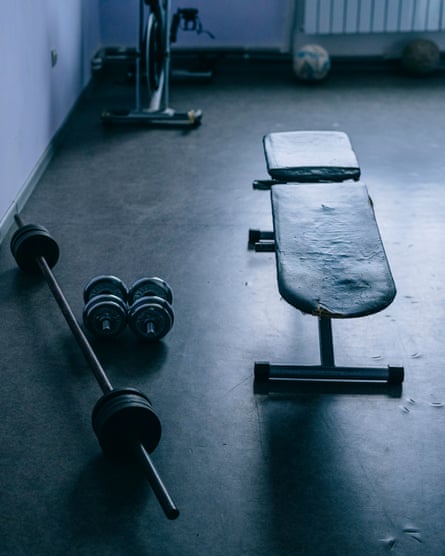

Above left: A gym room at the rehabilitation facility. Above right: Artwork produced by servicemen treated at the centre.
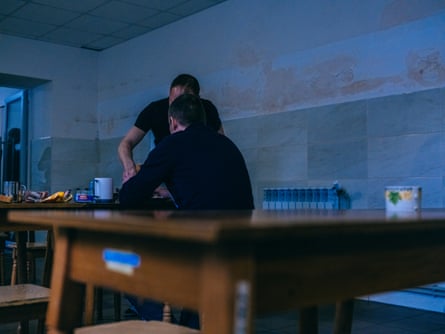
The canteen is a place where the soldiers, veterans and civilians being treated can all share a meal.
Inside the facility, the daily routine for Dmytro and others is structured, much like in any other rehab centre. Mornings begin with group therapy, followed by individual sessions and physical activity – yoga, light exercise, table tennis. But the war is never far away: drawings by patients on the walls show guns and other scenes of combat.
Olishevskiy said he stays in close contact with specialists in western countries, drawing on their latest medical research. This summer, he has planned a retreat for his patients at a farm with horses in Kharkiv. His eyes lit up when talking about promising results for a trial using ketamine to treat PTSD.

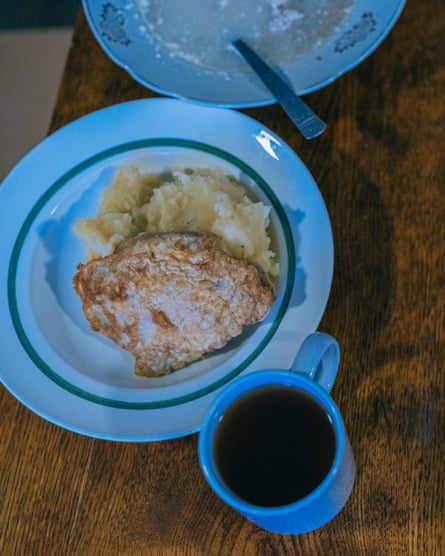
Above left: The rehabilitation centre is based at Kyiv City Clinical hospital No 10. Above right: Lunch at the centre.
“If trauma isn’t processed and someone copes through drugs or alcohol, within months you can have severe PTSD that becomes much harder to treat,” said Olishevskiy.
“Punishing a soldier at the front by docking his pay will not help treat the underlying issue behind drug use,” he added. But Ukraine’s acute manpower shortages create difficult trade-offs for Olishevskiy and his staff. Pressure to fill gaps has led to some patients being sent back to service before fully recovering.
Complete recovery is the “ideal scenario”, said Olishevskiy. In practice, however, even reducing drug use to a level where they can function may be considered good enough, he added.
Patients and medics also said mobilisation officers often allow prospective soldiers with existing drug use to serve in the army. “It was obvious to everyone, including the doctors, that I was addicted during my enlistment medical,” said Anton, who had been using synthetic drugs for six months before joining the army.
He later developed a severe addiction and was sent to hospital after suffering a heart attack. Still, Anton said he wants to get better and return to the frontlines. “This clinic gave me another chance at life. I want to give something back.”
此内容由惯性聚合(RSS阅读器)自动聚合整理,仅供阅读参考。 原文来自 — 版权归原作者所有。