



Rupert Everett is struggling with the heatwave. It reminds him of the summer of 1976, when he was 17, basking in the sun, serene as a sloth, his future spread out ahead of him. It’s so different now. “When you were young, hot weather was nice. But when you’re chubby like me now, it’s not so nice,” he says.
“You’re not chubby,” says his publicist, with reassuring brio.
“I am chubby,” insists Everett, in his breathy, blue-blooded drawl.
Well, none of us are as thin as we once were, I intercede, and you were probably too skinny back then.
Everett gives me a magnificent how-very-dare-you look. “No, I wasn’t. I was wonderful-looking at one point. I had muscles. Everything.” He’s talking about his golden era in the movies, when he was big box office. “It was quite short-lived. I call it my Hollywood year.” He chuckles. Everett’s got a wonderful chuckle. A barely audible hum. A tiny rise in inflection here, a little stress there, and you realise he’s amused. Occasionally, he just hoots with laughter.
The period he’s talking about began in 1997, with his comeback as Julia Roberts’ gay buddy in My Best Friend’s Wedding. For a while, he became the dream accessory for Hollywood’s leading ladies – a charismatic, camp bestie. There was no shortage of lucrative work, but he was stuck in typecasting hell. Everett was hit with a triple whammy. He was gay, posh and unhelpfully tall at 6ft 4in. (“If you have to lean down to do a kissing scene, you look like a freak,” he says.) It was never going to be easy to get leading man offers. And so it proved.
His first shot of success had been 16 years earlier in Another Country, the Julian Mitchell play set in a private school dominated by the three Bs: bullying, bigotry and buggery.

Everett went on to star in the movie of the play, perfectly cast as horny, anarchic rebel Guy Bennett (based on the future spy Guy Burgess) because he had pretty much been that boy. The son of a British army major who became a successful stockbroker, Everett grew up in Norfolk and Essex, attended the Catholic private school Ampleforth in Yorkshire, and went on to be expelled from the Royal Central School of Speech and Drama for insubordination.
The public didn’t realise quite how badly behaved he had been until he published a couple of brilliantly written, kamikaze memoirs: Red Carpets and Other Banana Skins in 2006, and Vanished Years in 2012. He treated us to crisp vignettes of himself dabbling in heroin, more than dabbling in cocaine, selling himself for sex when times were hard, seemingly hellbent on destroying every opportunity and betraying every friendship that came his way.
Nobody was let off the hook in the memoirs, least of all his A-list friends. He said Madonna and Julia Roberts smelled “vaguely of sweat”, which he found a turn-on. Roberts was “beautiful and tinged with madness”, and, when stressed, Madonna “had power cuts and the old whiny barmaid came screaming out of the defrosting cold room”. (She didn’t speak to him for a long time after this was published.) His pen portraits were as barbed and outrageous as they were finely observed. Describing his truncated appearance on The Celebrity Apprentice for Comic Relief (he walked out on the first day), he said Alastair Campbell had “a big knobbly nose that was made for aggression or at least cunnilingus” and Alan Sugar had “that blunt insolence peculiar to all barrow-boy billionaires”. Everett established himself as a modern-day Hedda Hopper – a ruthlessly indiscreet gossip.
His ruthlessness extended to self-criticism. He called himself “a terrible monster”, “impossible” and “a cunt”. And this, alongside the weather, is what he’s struggling with today. He says he simply cannot begin to understand the man he used to be.
Describe him, I say. “Brash. Pushy. Disingenuous. Lethal.” Whoa, stop; there’s a lot to go at there. Pushy career-wise, I presume? “Yes, obsessed. But not in the proper way. I was just obsessed about getting on rather than doing my job.”

In fact, he says, back then, he did his level best not to do his job. He was always trying to pull out of shows or disrupt them, right from the off. “In Another Country, I behaved incredibly badly. That’s another thing I can’t understand – the equation that allowed me to feel right in doing that. I can’t quite figure out how it happened.” How did he behave badly? “Making everyone laugh, and ruining the show. Dressing up as a rabbi and going to sit in the box [in the audience] in scenes I wasn’t in.” He hum-laughs, but he sounds genuinely horrified at what he got up to. The playwright, Julian Mitchell, came to see Another Country one day when Everett had set up a horrible joke: “Sugar lumps that turned into flies in a tea party scene.” The actor who discovered the flies in his tea screamed mid-show. “A little bit of fun is OK, but I would ruin things.’
And on he went, behaving appallingly in show after show. When he was in Noël Coward’s The Vortex, an audience member wrote to him, saying he spoke too quietly. He apologised profusely and sent him a cutting of his pubic hair by way of compensation. That doesn’t bother him too much today. What does is his lack of respect for the audience when he was performing. So often he was off his head on drugs, wishing he was somewhere else.
“I had the weird remains of a punk upper-class attitude,” he says. What does he mean? “Fuck everything. Fuck everything.” How did that differ from, say, a working-class punk attitude? He smiles. “Well, punk wasn’t really an upper-class movement. Heroin is more the upper-class version of punk, which was the complete opposite.” He mimes falling asleep, mid-conversation. “Setting yourself on fire with a cigarette, that was the upper-class version of punk.”
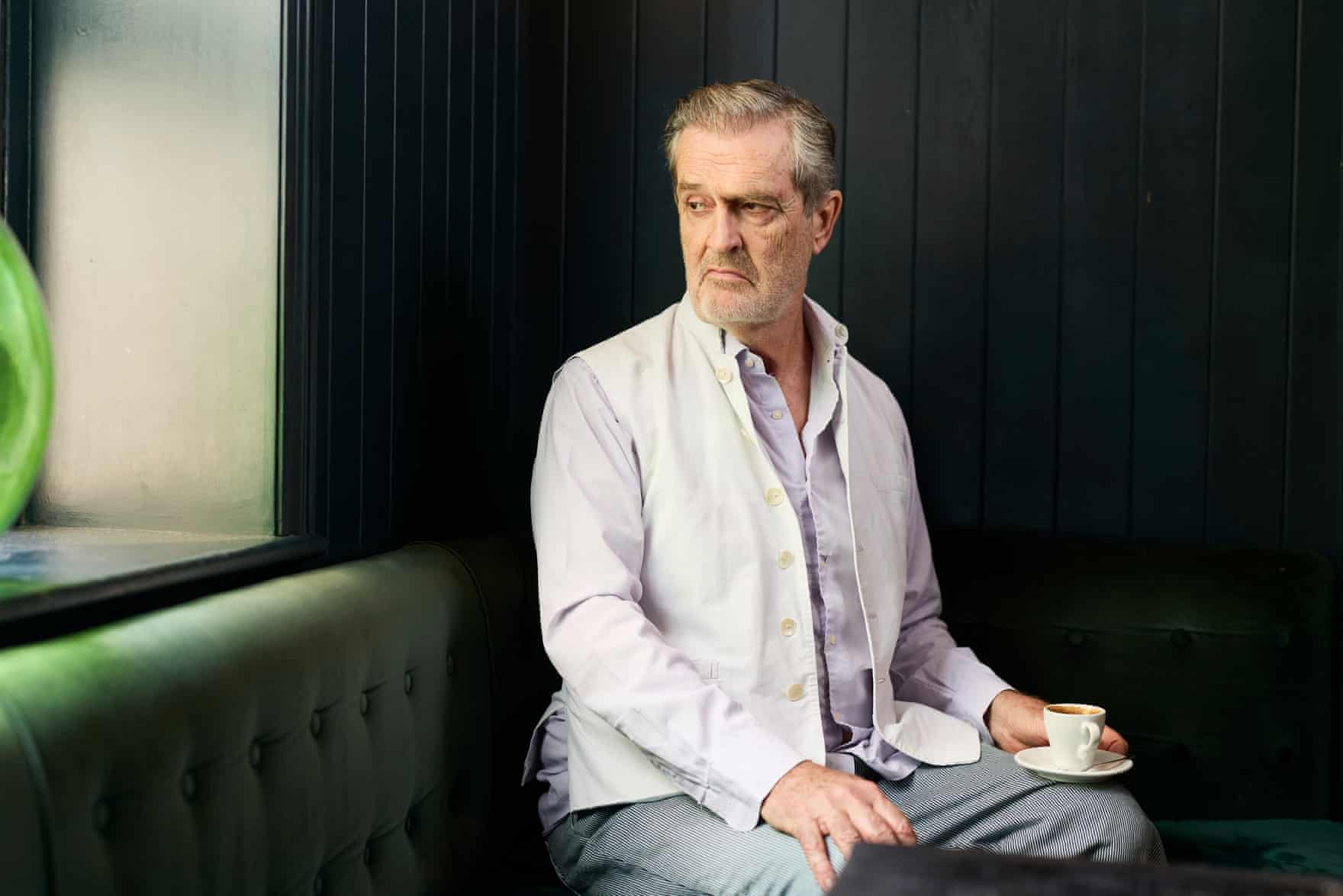
We’re at a cafe in Bloomsbury, London’s literary quarter, close to where he has a flat. Everett, who has just turned 67, is still handsome and huge, with a great head of hair. But he looks his age. The butter-cutting cheekbones of old have gone. He used to be too pretty to play character roles, which he says he always wanted to do. Now he’s in perfect shape for them. He can’t be bothered with the gym these days, or yoga or pilates, even though he knows they may be the route to a longer life. He enjoys walking his labrador, and that’s as far as it goes, exercise-wise.
Even when he became bodybuilder buff in Hollywood, he says, he didn’t do it properly. “I ruined myself. Now I’m almost crippled as a result. I could never be bothered to do all those things, like stretching, which were necessary for lifting weights, because your tendons get tighter and tighter. So boring. I didn’t do any of that. So now my demise will be musculoskeletal, I think.”
Everett is fantastically polite. Even when he goes to the loo, he asks if I mind, and apologises for the discourtesy. Occasionally, a more assertive side emerges. “Would you like a bacon sandwich?” he barks out of nowhere, with such enthusiasm that it sounds more like a command than an invitation. He seems to belong to a different age. There are so many reasons not to ask a stranger if they fancy a bacon butty – from vegetarianism to religion – none of which appear to have occurred to him. As it happens, I can’t think of anything nicer.
I ask him what advice he would give the young Rupert now. “Well, in terms of going into the theatre, one of the things you really have to take on board is that everyone has paid quite a lot of money to see you, and so, no matter how depressed you might be feeling, or how you might feel you’re missing out on something …” His sentence trails off, as they often do. “I always felt I was missing out on some mythical life that was taking place somewhere else. That was my problem.”
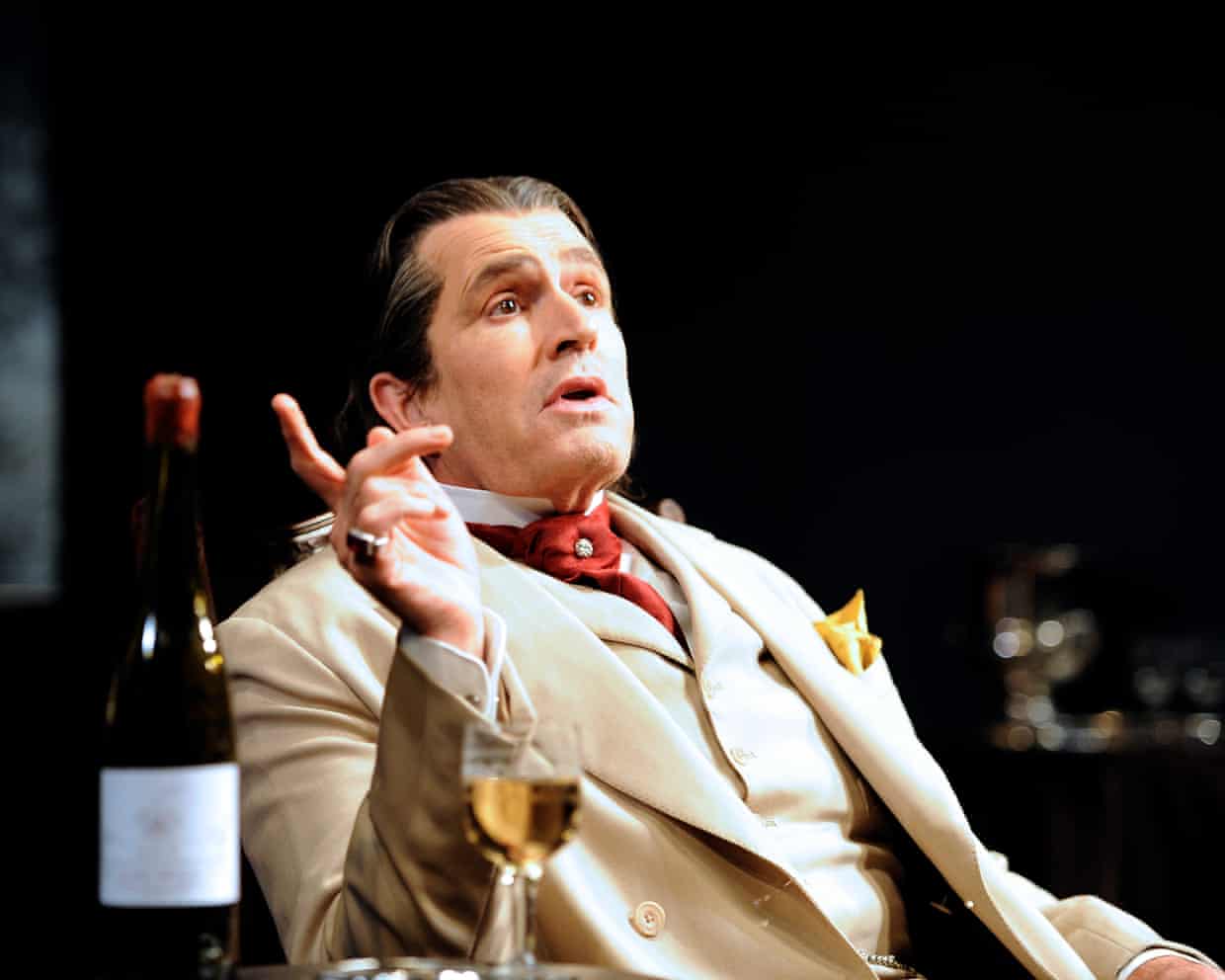
That fear of missing out was usually connected to sex. Was he as sexually obsessed as he makes out in his memoirs? “Oh yes.” It sounds as if he couldn’t get through a day without shagging a stranger. “Yes! Remember, the sexual revolution had only happened 10 years before. It was a boom time for sexual liberation. I think people felt you could get some kind of liberation. I felt I could smash my past up through sex. That it would somehow liberate you.” He regarded his privileged background with disdain; dull, hidebound and conservative in every sense. He wanted a life of total adventure.
Was it fun, reckless or both? “It’s just another thing I can’t imagine. I can’t imagine that person. I think the hunger of one’s hormones is something one does forget once hormones dry up. And then it’s impossible to remember what that surge, those spring tides, really felt like. But those spring tides of hormones are intense.”
He talks nostalgically about his nights cruising on Hampstead Heath in London. The thrill of the unknown; the promise of lit cigarettes in the distance; being a leather queen. “Hampstead Heath was like being in A Midsummer Night’s Dream. You’d go down into the darkness, it would be pitch black and you’d hear scrunch scrunch scrunch of someone coming up, and then suddenly you’d see a galaxy of cigarette lights, like stars, a cluster of guys, and you’d hear someone being spanked and the echo of it deep across the heath.” Was he a spanker or spankee? He smiles. “I was more an observer. You’d make for where the spanking was happening and sometimes you’d have to walk for miles.” So you just observed? “Well, really, I didn’t like going that far. I was also very polite. I remember once thinking: ‘My God, that’s an incredible guy.’ And I’m cruising him for about half an hour, getting closer and closer, and eventually I realised it was a tree!”
Was sex more of a driver than work? “Totally. That’s what I realised. Even work was about cruising, really. Trying to be attractive. Which obviously came from the feeling of not being attractive enough. My vanity for me wasn’t about ‘mirror, mirror on the wall, who’s the fairest of them all?’. Vanity is often a feeling of deep insecurity rather than feeling how fabulous I am.”

For so long he felt like a freak – Gollum. At the age of 15, he was only 5ft tall. By the time he was 18 he was 6ft 4in – a human stick insect. “My arse was like two bones and a hole. And my legs were skeletal.” He didn’t know what to do with his new body, how to stand or hold himself up properly.
Years before building himself a new body in the gym, he hit on a simpler solution. “I met these two queens in Tufnell Park who made bodysuits, and they made me a false bottom, false calves, false shoulders, false everything.” And did he wear them in movies? “Yes, in everything.” Did the directors know? “No! I’d go into the fittings for the costumes with all my things on.”
He seems to look back on the early years with a mix of warmth and horror. So many of his friends died young – from drugs, alcohol, heart attacks, accidents and, of course, Aids. As a young man he belonged to the live-fast-die-young school. “I couldn’t imagine being alive after 30.” Did he want to be? “No, not when I was 20. It was James Dean. I aspired to die in a car crash.”
Now he realises it was the background he so despised that protected him. For all the drugs he took, he never became an addict. And despite his chaotic lifestyle, he continued to turn up for jobs. “There was a very middle-class work ethic underneath it all which kept me just standing back from the edge. And miraculously I never got HIV. A lot of other people I knew did.” In Red Carpets and Other Banana Skins, he writes about finding out that his then boyfriend had been diagnosed with HIV and just walking away because he couldn’t cope. Life was supposed to be fun, and this was anything but.
“A lot of people like me got HIV and died. That’s another thing to factor in when I can’t quite understand my behaviour. And for a long time you couldn’t really test for HIV. So you didn’t know if you had it or not, and that was an added weird pressure for someone who had just become famous, because it was a very difficult time to be gay.”
Did he think he had HIV? “I thought I must have. Also, people treated you in an odd way. You went to families’ houses, and you could see people taking gay people’s plates away to wash them separately. Everyone felt under siege.”
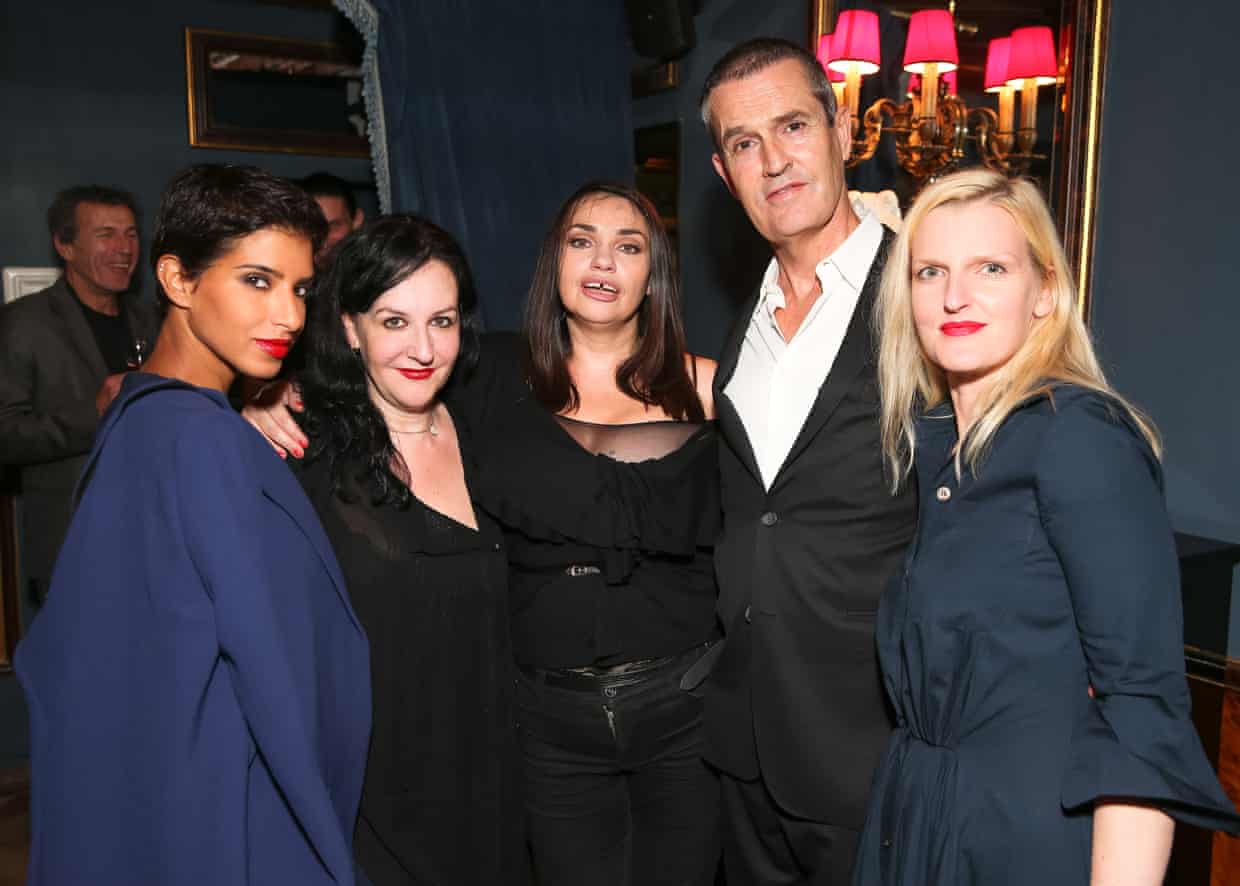
The astonishing thing is that, throughout the years of cruising, Everett was also having relationships with some of the world’s most famous women – Susan Sarandon, Béatrice “Betty Blue” Dalle, and a six-year affair with TV presenter Paula Yates, while she was married to Bob Geldof. I can’t imagine you with Sarandon, I begin to say; I think she would … He finishes my sentence. “Swallow me whole?” He grins and tears into his bacon butty. “Well, she didn’t. I loved all my relationships with women. I’m not sure they loved it, though.” Why? “Because I was so slippery.” In what sense? “Going off with other people.”
Why did he say his younger self was disingenuous? “Relationships,” he says instantly. “I just wanted to have more.” So how did the disingenuousness express itself? “Well, pretending to feel the right things when you weren’t.” And were you good at pretending? “Yep. I was always shifty. I was always trying to get on to the next thing. No one was ever enough.’
Did Geldof know about the relationship with Yates? “Yes.” Did it bother him? “I don’t know.” Yates died at 41 in 2000 from a heroin overdose. I ask Everett what she was like. “She was adorable and beautiful. She had the most adorable neck and Tweety Pie forehead. We were bonded by our sense of drama. We loved things being dramatic and dangerous. She was a fragile rock – tough, but very vulnerable, too. We were kindred spirits.”
When they were mistaken for a regular heterosexual couple, he got an insight into a wholly different way of life. “Being straight was heaven, because you fitted in so well. When I was seeing Paula Yates, one night we went for dinner with [the actor] Gordon Jackson and his wife Rona when I was doing a play with him. He was a divine man. And it felt that the whole restaurant was celebrating the normalcy of two couples getting together, and Gordon was telling me about getting a mortgage, and I remember thinking: God, this is fitting in!” I bet you didn’t like it, I say. “Oh no, I felt like a wolf who wanted to get back out on to the heath. But I did feel for a moment: that’s what it’s like, belonging.”
Everett has always considered himself an outsider. He has never been successful for long enough to be an insider in the movie world. Not surprisingly, at his most dissolute he fell out of favour. So he moved to France in 1986 for 12 years, where he hung out with a ragtag crowd of artists and celebrities, drunkards and druggies, sex workers and people who were street homeless. He has also spent extended periods living in Italy, the US, Brazil and Ireland.
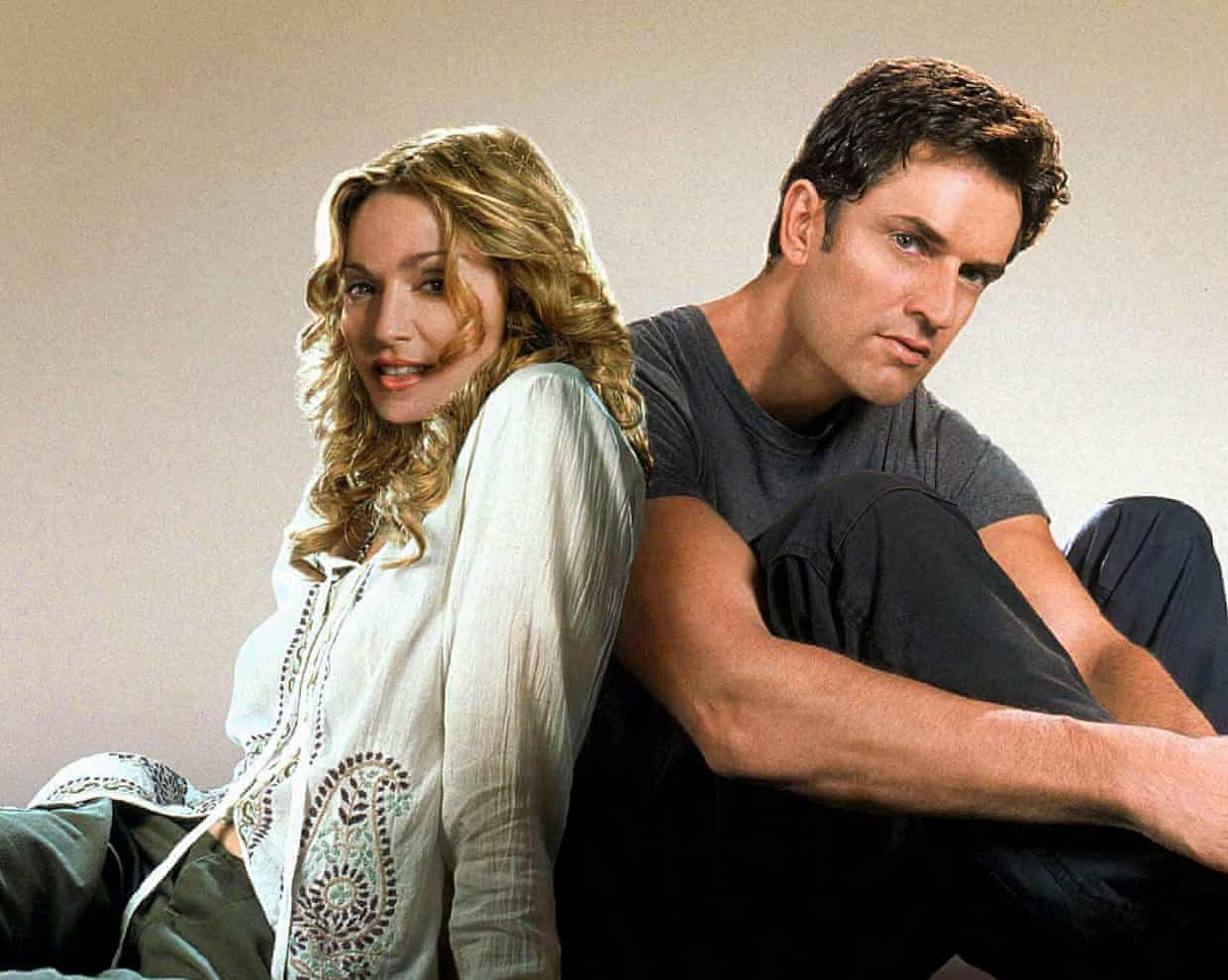
There have been a fair few successful movies (two St Trinian’s films, Shrek 2 and Shrek the Third, The Madness of King George, An Ideal Husband), but there have been so many flops. Perhaps the most notable is The Next Best Thing, from 2000, which did for his career in Hollywood and his friendship with Madonna. Have they made up? “Yes!” he screeches. Would he care to add to that? “Nope! No point in reopening old wounds.” But the great thing about failure, he says, is that it provides you with so many new opportunities. “Lack of success is a good thing for actors. It drives you on. And you never know where you’re going to end up. It forces you to reinvent.”
If he hadn’t had spells of being out of work, he would never have written his memoirs, novels (Hello Darling, Are You Working? and The Hairdressers of St Tropez) and short stories (The American No, based on all his rejected screenplay ideas). Nor would he have written, produced, directed and starred in The Happy Prince, his movie about the final years of Oscar Wilde, which he regards as his finest achievement. It’s a good film, I say, and surprisingly disciplined, considering he was in control of the whole shebang. “Well, I think that’s what I’ve become. Someone who is quite disciplined.”
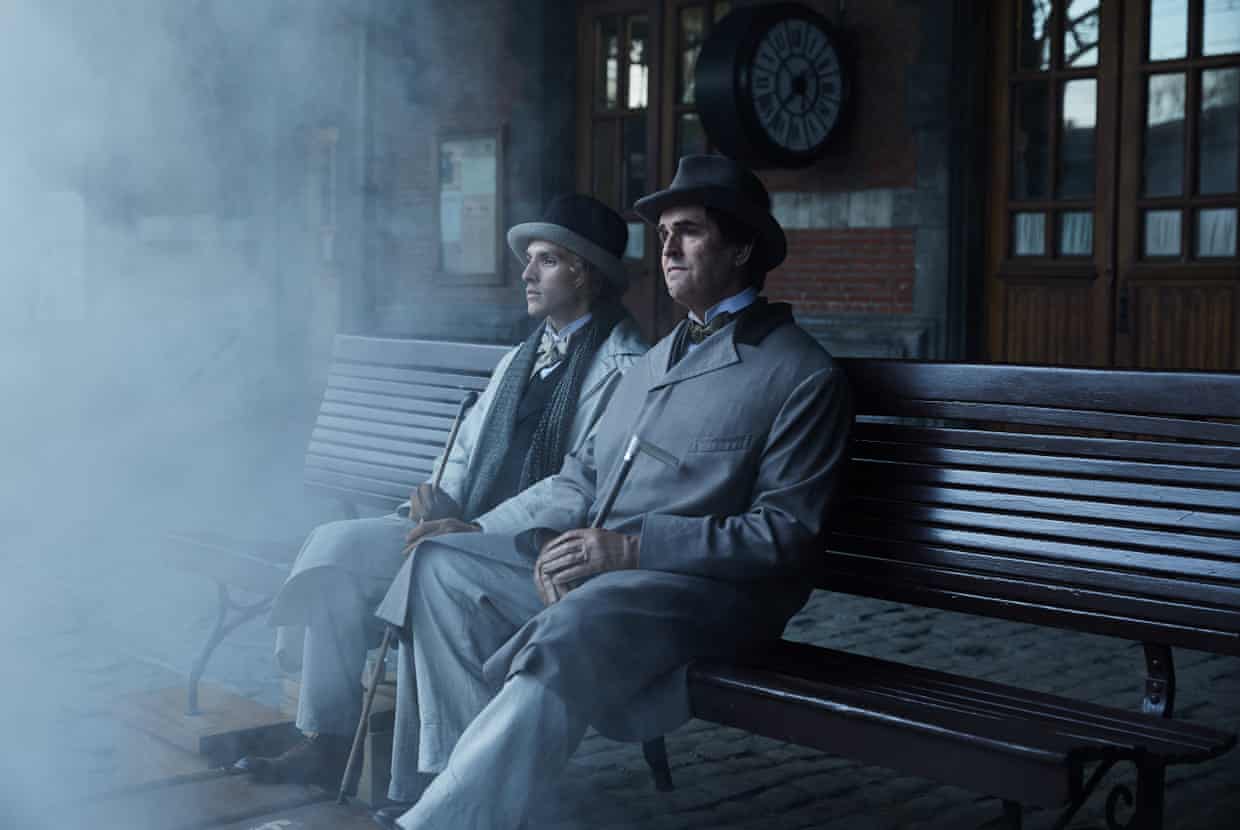
He says it’s just a shame that it took him until he was 60 to find that discipline. “I definitely regret that, because I had it in me somewhere. But I was too busy thinking about silly things.” Such as? He giggles. “Sex. If I’d found discipline earlier, I think I could have done a lot more. As it is, I’m trying to pull together my second film, but at the rate I’m going I’ll be saying ‘Action!’ aged 86.”
I mention the Portuguese film-maker Manoel de Oliveira, who premiered his final feature film aged 104 in 2012. “That was then, darling! Nowadays nobody does that.” What’s his second film about? “It’s about me, aged 17, when my parents thought I was totally out of control, and I was, and they decided to send me on an exchange trip to Paris.” This was when the hormones were really raging.
I take it sex isn’t as important to him these days as it once was? “No.” He mentions #MeToo. “I had my own little #MeToo movement.” What does he mean? “I spent so much time having dinner with boring men, I thought: I’m not so into them any more.” For decades he’d been obsessed with the idea of men – their physicality, their sexuality – and it finally dawned on him that he found most of them dull. “They’re not what you think they are in the end. No one is. I liked certain superficial aspects, but I couldn’t really cope with the idea of them as wholes.” He bursts out laughing. “Not holes. Wholes!’ What, he no longer fancied the wining, dining and talking bit? “Yeah, you know. Getting to first base you had to ride around the rodeo slightly.”
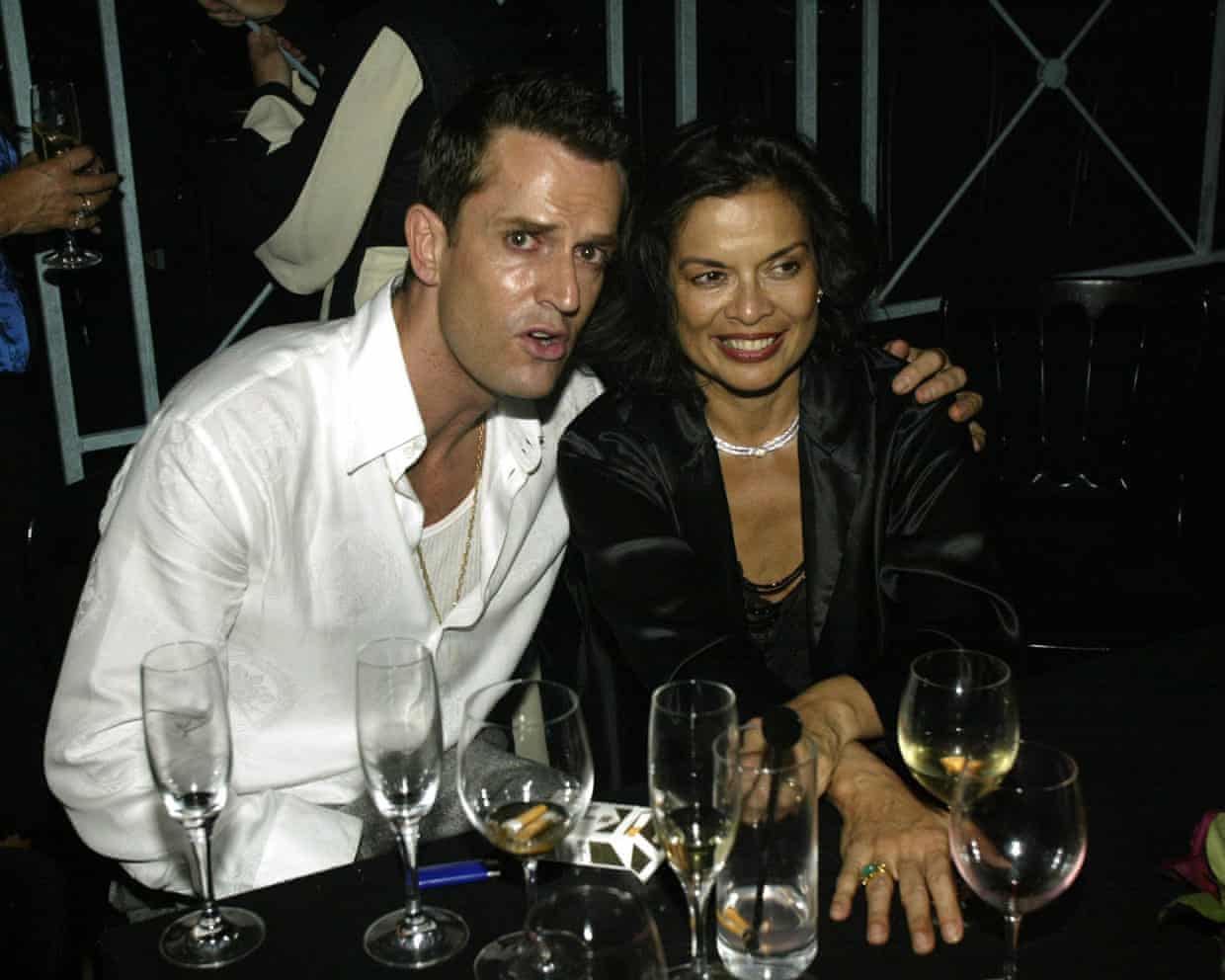
He says he’s astonished by the change in him. “I always thought when I was still clubbing and hanging out that I’d be one of those 75-year-olds in a tie-dye T-shirt at raves.” And you never go clubbing now? “No. I’m not interested. Not remotely interested. Well, I’m hardly interested in anything any more.” It seems like such a bleak thing to say, but he makes it sounds like he’s achieved a higher state of contentment. “I’m interested in dust particles and things like that.” Another hum-laugh. “I could quite happily sit just watching spring.” Well, what’s better than that? “Yeah, exactly. I love smaller things now, thank God. I have to go for a pee quickly, do you mind?” he asks.
While he’s away, I’m thinking of another word he used to describe his early self – lethal. On his return I ask about it. “Well, I was lethal. I was just interested in myself and my own pleasure. That’s always lethal. I think I was slightly sociopathic. I was a terrible gossip, and I repeated everything everyone told me. I’d borrow people’s clothes and never give them back.” How did you justify that behaviour? “I don’t know. Very weird. I can’t. I don’t know how I justified it to myself. I was lethal.”
Is he less selfish now? He looks a little affronted. “I’m still quite selfish.” He pauses. “I’ve been very lucky. I’m spoilt to a certain degree, but yes, I think I am less selfish. Probably more thoughtful about other people’s spaces. You have to be when you live with someone.” He and Henrique, a Brazilian accountant, have been together for 16 years and married two years ago. “As soon as you live with someone, that’s the end of that – otherwise you’d split up after five minutes. You have to make allowances, give territory.”
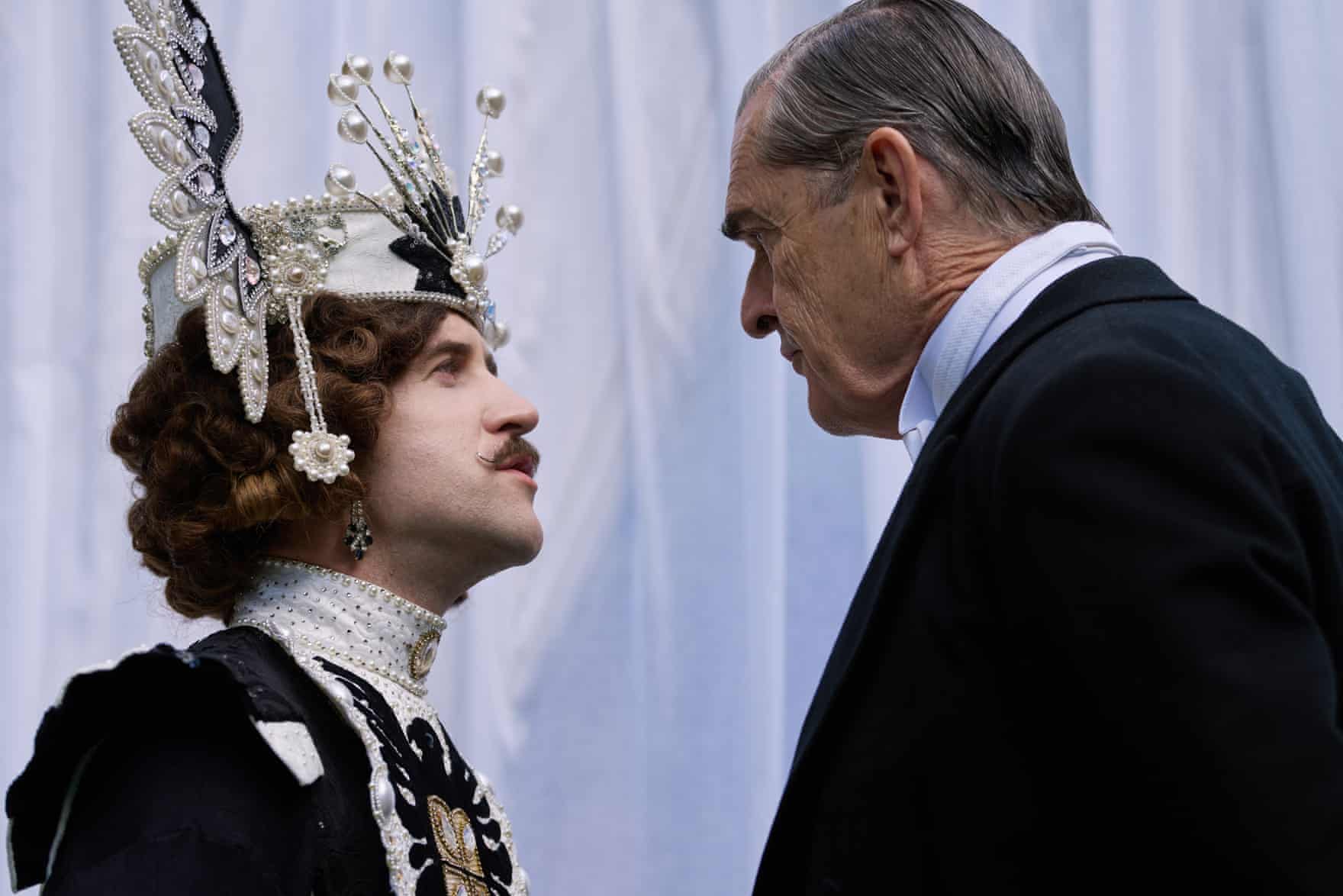
I ask him what he’s most proud of. He mentions the Wilde film, and then he says himself. It makes sense – Rupert Everett is probably his greatest creation. At 67, he’s getting more work than he has in a good while. He’s in the second series of Rivals as the fabulously named Malise Gordon; plays an ancient stooped butler to the eccentric 5th Marquess of Anglesey, Henry Paget, in the film Madfabulous; recently worked on Mel Gibson’s biblical epic The Resurrection of the Christ; and next year is in the Harold Pinter play No Man’s Land, directed by Patrick Marber, at the Donmar Warehouse in London. But what pleases him even more than getting the work is that he’s finally giving it – and the audience – the respect they always deserved. “I now really enjoy acting and take it incredibly seriously.”
He bites into his bacon butty, and says it’s taken a while, but he does believe he is now a fully fledged adult. “I think I only grew up aged 55. My voice didn’t break till I was 35. I think it’s because I had a very protracted adolescence.” Shortly after turning 50, he was cast in Pygmalion at the Chichester Festival theatre, and he could feel all the old failings threatening to knock him down again – boredom, petulance, Fomo. “I felt the whole thing starting off again. I went in feeling ugh and I went to see a hypnotist and said please can’t you just make me feel happy going to work, and it worked.” And it has kept working.
In 2018, after decades away from home, he and Henrique moved back to Wiltshire to be close to Everett’s mother and look after her. His father had died nine years before, and he felt he had let them down so many times. Now he wanted to do right by her in her final years.

Looking after his mother, he says, has changed him more than anything. It made him reassess his early adulthood and the type of person he has evolved into. “I was so near to the cliff edge in so many ways when I was young, without even thinking it. Then, living with my mum and her generation of rationing, blitz-mentality folk, I realised that’s what got me through that early installation of me. Discipline that I didn’t even realise I had.”
Everett used to be a socialist (champagne type, of course) and despised David Cameron because he reminded him of the toffs he grew up with. Now he describes himself as a pro-Europe conservative with a small c.
For all the rebellious chaos of his life, he seems quite old-fashioned, I say. Even his early rejection of social norms seems to be a throwback to an older age of gay radicals such as Wilde and Quentin Crisp. “Well, I think I have thrown myself back in a way. Living with my mother in the last years of her life and being close to her and her world was like being dragged back on the tide to the beaches of one’s youth. I found that I really admired the people that I’d rather rejected all my life. They were so stoic about their problems.” Has he become one of them? “I’ve become a country blob. That’s what I am. I walk my dog, I write my books, and I feel I have become my mum and my dad since they died. I feel very much I am them, in one sense.”
Despite adoring his mother, he spent so much of his life trying to win her disapproval. Not any more. She died last year and he can’t begin to say how much he misses her. As I prepare to leave, he asks if there’s any chance of not mentioning that he used to be a rent boy. Well, it’s a bit late, I say – it’s been out there for 40-odd years, and it’s part of your story. “I know,” he says, a little sheepishly. “It’s just that Mum used to get so upset about it.”