


The world’s biggest miner has halted or delayed projects to cut vast amounts of emissions and has quietly war-gamed options to push major climate investments in its Western Australian iron ore operations into the next two decades, internal documents show.
An exclusive investigation based on documents leaked to the Guardian and the ABC’s Four Corners can reveal that BHP, one of Australia’s biggest historic emitters, has dumped plans for a facility that could have significantly reduced emissions and has put on ice renewable projects designed to power its iron ore operations in the vast, resource-rich Pilbara region.
The cache of leaked internal records, dubbed the BHP files, reveals that the company was aware delayed climate action in the Pilbara would pose a “reputational risk” and that “urgent decarbonisation in line with BHP’s public commitments” effectively underpinned its “licence to operate”.
Despite the warnings, it announced a slowdown of its decarbonisation program last year, slashing spending and putting off meaningful investment until the 2030s at the earliest. It did so in the face of overwhelming shareholder support for urgent climate action and board approval of a key solar project.
The documents reveal:
-
BHP’s first planned investment in its inland Pilbara decarbonisation plan – a 50-megawatt solar farm and 20MW battery at its Jimblebar mine – was effectively shelved soon after being approved and funded by the board in mid-2023. The move prompted internal criticism from staff, some of whom questioned the decision to unilaterally close a board-approved project.
-
A huge system of almost 500MW solar, wind and battery that could power a small city has been significantly delayed. Documents show it will “not progress in its current form” and has been given no capital funding until 2031 at the earliest, despite an initial plan for it to deliver its first power from December 2027.
-
BHP quietly dumped an iron ore processing plant that could have prevented 1.7m tonnes of emissions a year, the equivalent of taking more than 350,000 cars off the road. This was despite describing it as “well-aligned” with its climate transition action plan, which shareholders voted overwhelmingly in favour of, and its stated decarbonisation targets.
-
The company initially planned to replace its fleet of diesel trucks – one of the biggest sources of BHP’s emissions – with electric ones beginning in 2027-28 but documents show it has continued to acquire polluting diesel haulage trucks for long-term use, including a purchase of more than $500m for new diesel trucks at Jimblebar. Public documents also suggest it is planning to use diesel trucks at a proposed new mine at Ministers North.
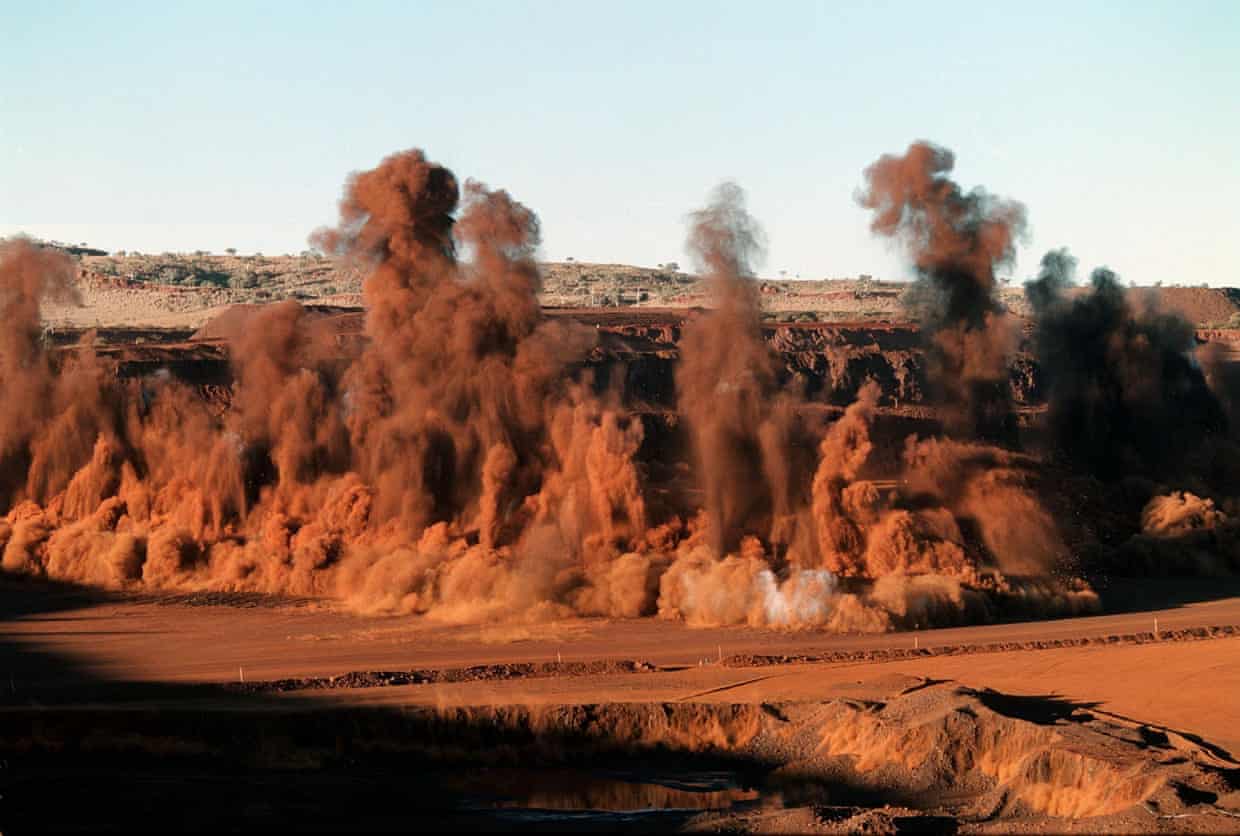
BHP says it is still focused on its emissions reductions goals and has reduced emissions by 36% on 2020 levels, pointing to analysis suggesting it is one of the best climate performers of large publicly listed companies.
“Despite this progress, many of the technologies the resources industry will need to achieve net zero are not yet ready to be deployed,” a spokesperson said.
Experts and environmental groups have voiced concerns that BHP’s failure to urgently decarbonise could put national climate targets – including a 43% cut below 2005 levels by 2030 – in doubt.
“BHP is fundamentally putting Australia’s emissions targets at risk,” said Tim Buckley of the thinktank Climate Energy Finance. “It’s the single biggest company in Australia, and its annual report shows its emissions going up between fiscal year 2025 and fiscal year 2030. It isn’t showing leadership and it is refusing to act on its own policy.”
The Australian Centre for Corporate Responsibility’s head of engagement, Naomi Hogan, said the company’s actions had oversized influence in driving climate action, including in the development of technological advancements in electric trucking and rail.
Big miners were more than mere “participants” in the energy transition, she said. “They can help shape it through their scale and purchasing power.”
BHP is one of the world’s biggest historic emitters but has spent years trying to reposition itself as an industry leader on climate. It has previously set a target to cut emissions by 30% by 2030 and has a goal to reach net zero in 2050.
Quick GuideContact us about this story
Show

The best public interest journalism relies on first-hand accounts from people in the know.
If you have something to share on this subject, you can contact us confidentially using the following methods.
Secure Messaging in the Guardian app
The Guardian app has a tool to send tips about stories. Messages are end to end encrypted and concealed within the routine activity that every Guardian mobile app performs. This prevents an observer from knowing that you are communicating with us at all, let alone what is being said.
If you don't already have the Guardian app, download it (iOS/Android) and go to the menu. Select ‘Secure Messaging’.
SecureDrop, instant messengers, email, telephone and post
If you can safely use the Tor network without being observed or monitored, you can send messages and documents to the Guardian via our SecureDrop platform.
Finally, our guide at theguardian.com/tips lists several ways to contact us securely, and discusses the pros and cons of each.
Illustration: Guardian Design / Rich Cousins
In 2019 its then chief executive, Andrew Mackenzie, said fossil fuel dependence posed “existential” risks and tackling climate change would require “the biggest global mobilisation since World War II”.
But the BHP files show that, within six years, the company was war-gaming options that would massively delay action on key decarbonisation initiatives in its Western Australian iron ore business.
A memo seen by Guardian Australia, dated May 2025, shows BHP no longer considered its current decarbonisation plan to be achievable, claiming it had a “low probability of success” and blaming slow technological advancement by truck manufacturers.
“The urgency to source renewables generation and storage services by 2030 has diminished,” the document said.
The memo contemplates major delays to key decarbonisation projects. That includes two options to delay electrifying its highly polluting truck and rail fleets until 2035 or 2040, and a third to simply take no action at all.
It said early studies for BHP’s landmark renewables project, almost 500MW of solar, wind and battery storage installations, would be “delayed”.
The project would have produced enough energy to power a small city and could have accounted for up to 70% of the energy used on the inland power grid that supplies BHP’s Western Australian iron ore operations. A proposed second stage of the project was hoped to increase renewable generation even further.
But documents show the renewables project has no capital funding allocated to it until 2031 at the earliest and that, as of last year, BHP said it would “not progress in its current form”.
In a statement, BHP said its progress towards net zero emissions was dependent on technological shifts in trucks, trains and bulldozers, which were not yet ready to be deployed.
“For example, no Australian mining operation is currently utilising critical 240-ton battery-electric haul trucks as the technology is not advanced enough to scale to an operational fleet,” a spokesperson said.
The company is trialling battery electric trucks and rail in the Pilbara and is using solar energy to power 30% of its Port Hedland operations.
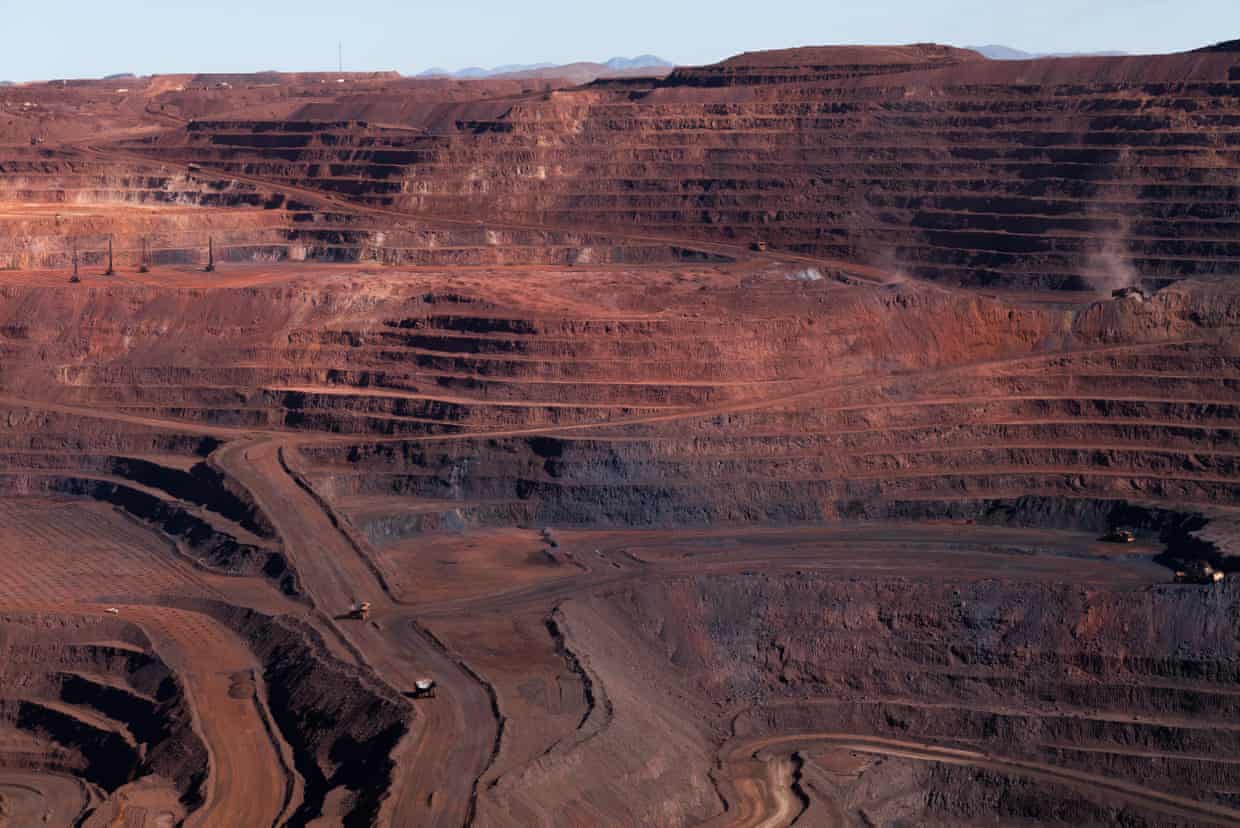
The Chamber of Minerals and Energy of Western Australia, an industry group, said the shift to electrified haulage was incredibly complex and required a whole-of-sector effort to pioneer technological change.
“There is currently no mining operation anywhere in the world with the scale, complexity and operating conditions of the Pilbara running a fully electrified haulage fleet, because the technology to do so simply does not exist,” said its chief executive, Aaron Morey.
“Companies including BHP, Rio Tinto and Fortescue are all investing heavily and partnering with equipment manufacturers to change that.”
But Hogan said the big miners need to do more.
“Remaining hooked on expenditure for diesel trucks and pointing to technology delays demonstrates BHP and Rio Tinto are taking a back seat on decarbonisation,” she said.
“Right now, they could be boosting investment and upping the scale and speed of trials of early deployment low-emissions technologies to shape core investment decisions.”
-
Do you know more? Contact christopher.knaus@theguardian.com