






Dressed in civilian clothing with Pasto Indigenous motifs across his sleeves, Royer Garzón, a guerrilla commander and delegate at the peace negotiation table, sits alongside about two-dozen combatants on a small stand beside a concrete sports field in one of Nariño’s state-recognised Indigenous collective territories in Colombia.
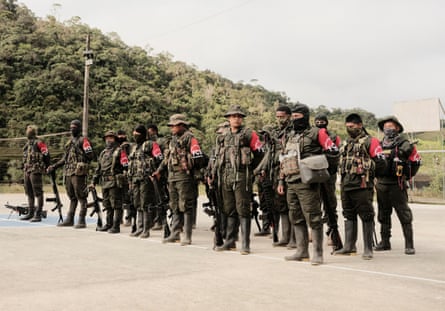
Most wear military fatigues and rubber boots, matching a huge red-and-white banner reading FC Sur-ELN – Frente Comuneros del Sur, or National Liberation Army, the guerrilla group they once belonged to – an identity they have not lost.
“Our bet for peace is a territorial peace, one where communities play a leading role,” Garzón says, adding that as long as there is no comprehensive peace treaty, the Comuneros will remain at arms.
The Comuneros del Sur are pioneering President Gustavo Petro’s, Total Peace agenda by signing 12 partial accords to exchange arms for legal gold mining.
-
Members of Comuneros del Sur. The group is estimated to have about 250 fighters in the Nariño department
As presidential elections loom and armed rivals circle, the group’s 250 combatants, led by commander Garzón, propose legalising mines to secure livelihoods. But delays in disarmament and fears of rival incursions threaten to derail progress. With gold prices hitting record highs of more than $5,000 (£3,700) an ounce in 2026, armed factions feud over Nariño’s mineral wealth, taxing miners and fuelling conflict.
As Petro’s term ends, the fate of Nariño’s peace hinges on whether legal gold can outshine the conflict – or if elections will leave a vacuum for warlords to exploit.
The Comuneros del Sur broke away from the ELN in May 2024 after deciding the guerrilla organisation’s leadership denied it autonomy during peace negotiations. It says it wanted to advance faster than the ELN allowed.
-
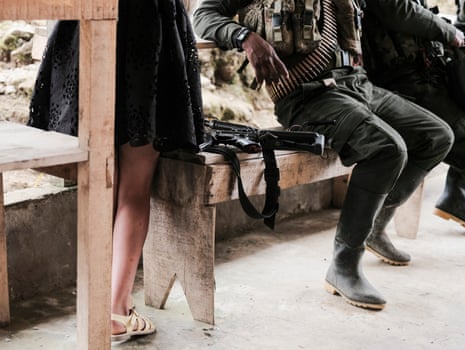
Members of Comuneros del Sur relax in front of a shop
-
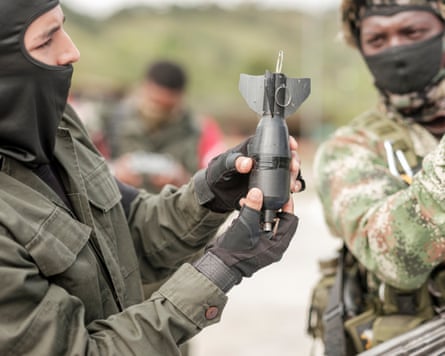
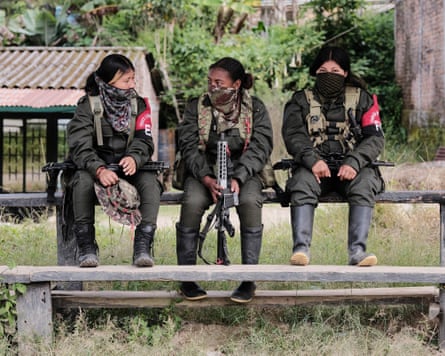
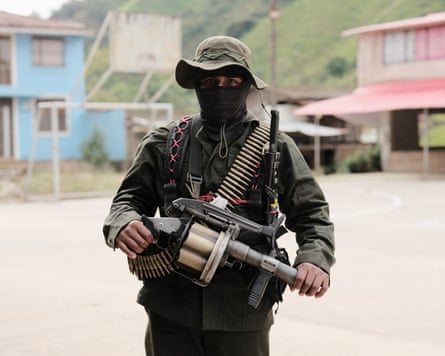
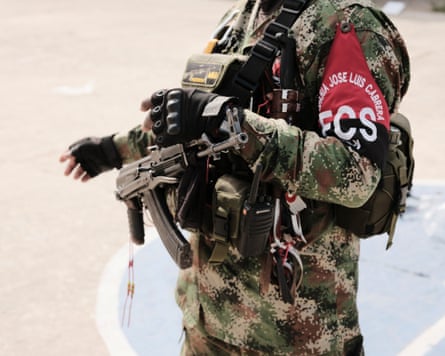
Clockwise from top left: demonstrating a drone grenade; three female members of Comuneros del Sur; the FCS arm band; a combatant holds a grenade launcher
Most of its combatants come from Nariño, but the ranks also include a Venezuelan migrant and an Ecuadorian – youths from Indigenous, Afro-Colombian and farming families inhabiting areas where coca and gold dominate the local economy.
Now in his early 40s, Garzón has been involved for more than 20 years in the conflict, but his manner is more that of a history teacher than an armed leader. He speaks softly about his group’s involvement in Colombia’s most lucrative illicit economies. He says he is weary of war, hoping to seize what he sees as an historic opportunity to broker peace and return to civilian life.
The 12 partial agreements signed by the group cover weapons destruction, coca crop substitution and territorial development, with implementation progressing as they are reached.
“We represent a territorially based movement, and our guerrilla force is deeply rooted across various sectors and territories of the Nariño department,” says Garzón.
While no armed group is likely to be fully demobilised during Petro’s term, some advances have been made. But in areas like Nariño, where high-profit illicit economies such as gold mining and coca cultivation thrive, peace remains elusive.
-
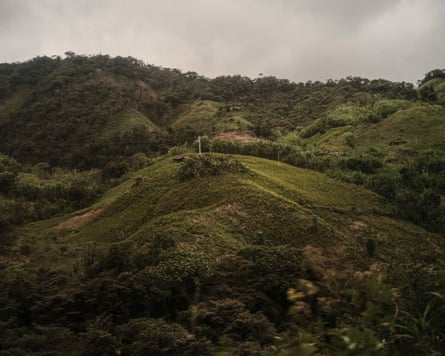
Trade in coca, the other local industry, cannot sustain communities or potential ex-combatants, says Garzón
Yet Garzón still holds on to hope. He believes that coca, the raw material for cocaine, cannot serve as an alternative for local people and potential ex-combatants if the group disarms since there is no pathway for its legalisation. Prices have also dropped sharply due to overproduction and other factors.
“Coca is no longer profitable,” says Garzón.
Even as coca cultivation recently reached record levels, coca farmers – the poorest and most vulnerable link in the cocaine supply chain – have borne the brunt of decades of counternarcotics crackdowns, including aerial glyphosate spraying.
Gold mining, on the other hand, offers an alternative.
Nariño’s green mountains contain extraordinary mineral wealth, including gold and critical minerals such as manganese, essential for steel production and a key component of EV batteries. These resources are fought over by six armed groups – in Latin America gold has long been associated with violence and crime, since the Spanish conquistadors massacred Indigenous populations as they sought gold-rich regions.
Nariño officially reported producing 344kg in 2024 and 196kg last year, but sources within the departmental government estimate monthly production to be between 1,000kg and 2,000kg, suggesting the official figure is inaccurate.
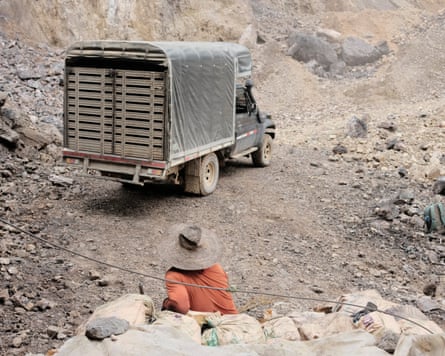
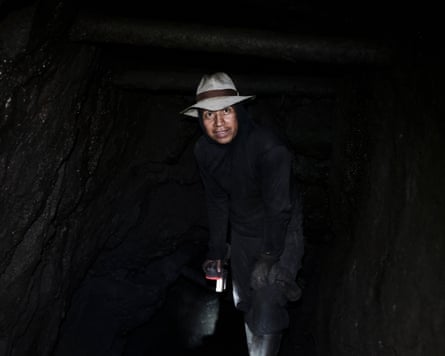
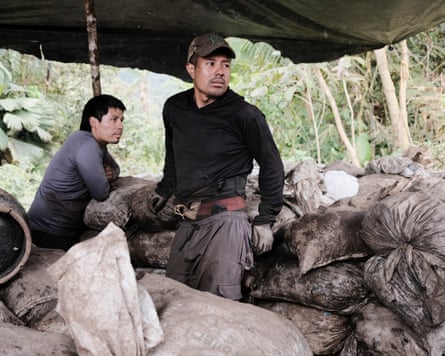
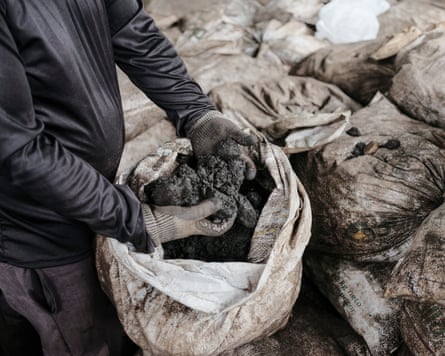
For now, Nariño’s manganese supplies the cocaine trade. Potassium permanganate, derived from manganese ore, is essential for transforming coca paste into cocaine hydrochloride. “Wherever there’s manganese, they set up a [coca paste] kitchen or there’s a crystallisation lab,” says a local miner.
-
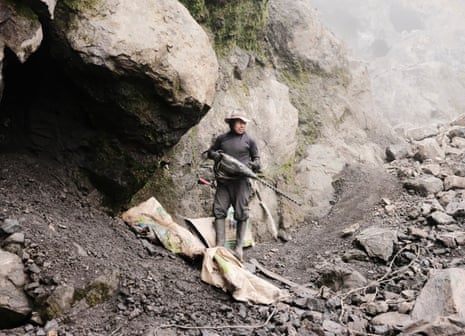
A manganese miner. Manganese is used to process coca into cocaine, but also in the production of EV batteries and steel
-
Manganese mining in Nariño, where the mineral is currently supplied to the cocaine industry
Illegal manganese miners can earn 5m Colombian pesos (about £1,000) a tonne on the hidden market but only a 10th of that when it is sold legally. This could change as global demand for manganese surges with the rise in EV production. Legal manganese mining for the renewable energy sector could prove far more lucrative than processing it for cocaine labs, offering armed groups and communities an economic alternative.
Organised crime groups, including Brazil’s Primeiro Comando da Capital (PCC) and Comando Vermelho (CV), now control much of the continent’s gold mining, alongside Colombian armed groups such as the Gaitanistas, dissident factions of the Farc and the ELN, as well as Ecuadorian crime groups such as Los Lobos.
Violence has surged against rival armed groups, civilians – particularly Indigenous land defenders and environmental activists – and state forces. In May 2025, 11 soldiers were killed in an ambush in Alto Punino, Ecuador, during operations against illegal mining infrastructure.
In Nariño, armed groups feud to control mines, coca plantations and trafficking routes. “Other groups highly desire this territory because of the gold mining here,” says an Indigenous community representative involved in illegal gold mining in Guachavés, Nariño, who requested anonymity for safety.
Armed groups get involved in illegal gold mining by investing in equipment to produce gold themselves, by buying gold directly to launder drug profits or, as the Comuneros del Sur does, taxing local miners’ production.
-
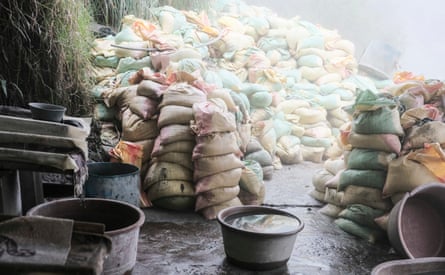
Bags of sand containing gold-bearing mineral ore waiting to be processed
-
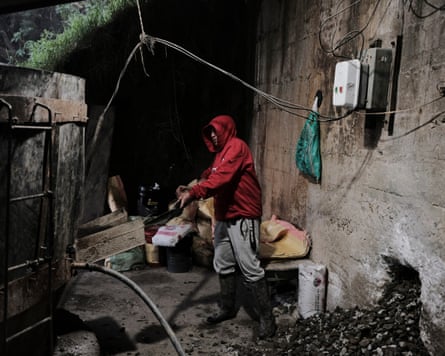
A worker shovels stones containing gold into a mill, in order to crush them into small pieces
Local miners pay about 15% of their annual gold production to Comuneros del Sur, a stake that other armed groups dispute.
In 2023, an incursion into Comuneros-controlled areas by the EMC caused forced displacements, and EMC dissidents have recently launched brutal attacks against civilians. The group currently remains outside peace negotiations.
“We have to be realistic. Another group will come, and they are not coming in a good mood,” says a local miner from a family that has worked these mountains for decades, who requested anonymity for safety. One miner described the relations between Comuneros and EMC as “like oil and water”.
After months of social media tensions, Petro’s visit to the White House in February brought renewed momentum to the rocky US-Colombia relationship based on joint interest in combating drug trafficking, with the Colombian president asking Donald Trump for help to combat the ELN.
On the day of the meeting, three cocaine laboratories in rural Nariño were bombed by drones, allegedly in fighting between armed groups. Several cocaine seizures also occurred in Nariño, near the Ecuadorian border.

-
San Sebastián is seen as the patron saint of armed forces, including the police and guerrilla groups
After Comuneros del Sur signed agreements on partial demobilisation and reducing coca cultivation in areas under their control in June 2025, the next steps were to include disarming and moving combatants into zones of temporary location. But these have not happened yet, and doubts about their safety remain.
The process, guerrilleros say, depends on the military to prevent other armed groups from stepping into the vacuum, and the state providing ex-combatants and local people with legal livelihoods.
According to Andrei Gómez-Suárez, a government delegate in the peace negotiations and a visiting scholar at the University of Edinburgh, the Comuneros and local populations share a dependence on illegal economies.
“This allows for a deep understanding between the communities and the group’s objectives,” Gómez-Suárez says. “They got tired of war and want to get out, but they know the only safe way to exit the war is by resolving the issue of illegal economies for the communities and for themselves.
“It doesn’t mean the solution is to expand the mining frontier and destroy nature, but rather to find a balance that doesn’t deny mining but understands it as an important element for peace and development in the department.”
Nariño miners are split between those who are hopeful about peace and mine formalisation and those concerned that ongoing armed groups will extort legal operations. “Mining is a reality. With or without formalisation, it will continue,” one says.
For now, Nariño’s illegal miners continue working the mountains. Whether they hand control to a functioning state presence or the Comuneros or leave a vacuum for more violent rivals remains unclear.
“Mining is not good or bad,” Garzón says. “It is a traditional activity that communities have developed for generations.”
For Nariño, the question is whether it will continue fuelling war or finance peace.
-
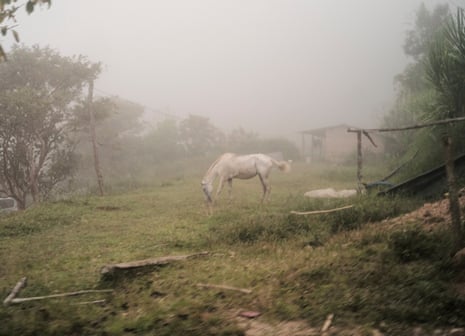
The Nariño countryside. Armed groups are vying for control in the department