








When Sadiq Khan was first elected as mayor of London 10 years ago, Barack Obama was US president, the UK was still in the European Union and Leicester City had just been crowned the unlikely champions of the English Premier League.
In the intervening decade, Donald Trump has gone from reality TV star to two-time US president, the UK has had six different prime ministers, and Brexit has convulsed the country. London has been rocked by tragedies ranging from terror attacks to the Grenfell Tower fire.
Through it all, Khan, the son of a bus driver from south London, has remained a constant. Still less well known than his predecessors, the leftwing radical Ken Livingstone and the divisive Tory populist Boris Johnson, Khan has been mayor for longer than either and at the last election easily saw off his latest Tory challenger.
From his office overlooking the Thames on the eastern fringes of the capital, Khan says the biggest lesson he has learned in his time as mayor is to be a “coalition builder”.
“I’m somebody who’s quite pugnacious. I used to be a litigation lawyer, so I’m quite adversarial,” he says. “But my experience as mayor has taught me that actually working together achieves far more.”
He says the “winning coalition” of voters that has helped him triumph three times at the polls includes “Tory remainers, Greens, Lib Dems, Labour supporters”.
“It is really important to say I am all in favour of building a coalition of the willing … if we have a similar north star, the fact that you are from a different tribe to me, that should be by the by. Let’s work together because we love this city.”
Coalition building may be Khan’s takeaway from his decade in City Hall but others have taken a different view. London’s first Muslim mayor has faced a torrent of racist abuse that has only risen in recent years.
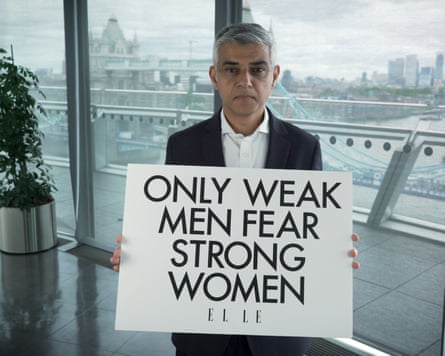
He has been repeatedly attacked by Trump, who told the UN general assembly in 2025 that Khan was a “terrible, terrible mayor” and claimed London was being steered towards sharia law.
At the time, Khan hit back, accusing Trump of being “racist, sexist, misogynistic and Islamophobic”. Now, he says London’s very existence is an affront to people like Trump. “If you’re a nativist, you believe in mono-ethnicity, you believe in mono-religion, then London is the antidote and the antithesis, because we are diverse, we are pluralistic, we are liberal and we are incredibly successful on any objective criteria.”
But he accepts such attacks do take their toll. “It is not nice. It has a personal cost to me and my family and my staff.”
Khan is not the only mayor of a major city to stand on a progressive platform. Anne Hidalgo transformed Paris, and Zohran Mamdani was elected as New York mayor on a promise of free childcare, fast buses and a rent freeze.
Khan says he works closely with other mayors. “I’m a firm believer in stealing well rather than inventing badly. And so if another city’s doing a great job, I’ll nick it.”
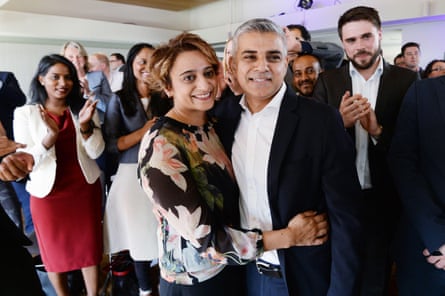
He is particularly keen to highlight his environmental record. In an interview with the Guardian in 2015, before he was first elected, he promised to put the environment front and centre, with a list of pledges including extending the ultra-low emission zone (Ulez), planting 2 million trees, building a network of cycle lanes, introducing a fleet of electric buses, divesting London’s pension fund from fossil fuels and pedestrianising the main shopping thoroughfare of Oxford Street.
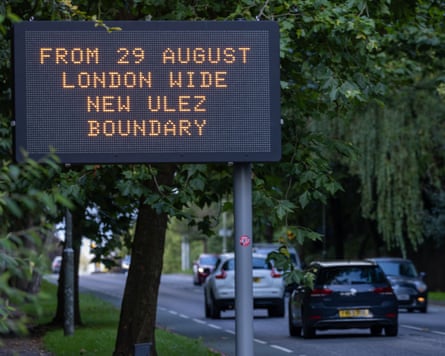
Ten years later, the scorecard is reasonably impressive. Ulez has been extended to cover the whole of Greater London, taking the dirtiest vehicles off London’s streets. The mayor has funded 640,000 new trees to improve the city’s resilience in the face of worsening floods and heatwaves. The cycle network has more than quadrupled and the number of cyclists continues to rise.
Electric buses have been rolled out across much of the capital, London’s pension fund has been largely divested, and Oxford Street, already partially closed to traffic, is to be fully pedestrianised by the end of the summer. Beavers and otters have returned to some of London’s waterways and later this year it is hoped white storks will return to the capital.
Khan highlights the growing number of people cycling in the city and the rollout of the 20mph speed limit, which has helped reduce emissions and is estimated to have prevented more than 250 road fatalities.
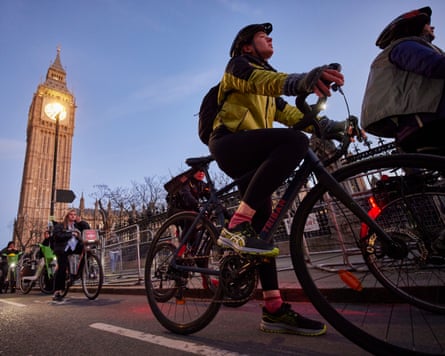
“I’m just so proud that we have put environment front and centre,” he says. “People call it different things … clean air, better public transport, safer cycling, keeping fares affordable, planting trees, rewilding. But genuinely I think London has been transformed. It would take the harshest critic not to say we are a greener, safer, fairer city.”
Experts agree that overall Khan’s environment record is impressive. In 2019, air pollution experts at King’s College London estimated that without further action it would take 193 years for London to meet government-set limits for nitrogen dioxide pollution (NO2). But last year the NO2 level in London fell to within the legal limit for the first time since UK regulations were introduced in 2010.
Khan had faced severe opposition to the 2023 expansion of Ulez to outer London boroughs – a key plank of his drive to improve the health of millions of Londons – not just from political opponents but also from Keir Starmer and the national Labour party.
“I had no support from the Conservative government, no support from the national Labour party, no support from the Liberal Democrats, no support from Reform,” he says. “So we built a coalition because of the urgency … and we’ve done it.”
After last week’s local elections and Labour’s defeat by the Greens in February’s Gorton and Denton byelection to the Green party, Khan says he worries the national Labour party is on the wrong track. He says the denigration of the Greens as extremists by Labour strategists is a turn-off for progressive voters at a time when parties on the centre and the left need to work together to see off the growing threat from Reform.
“The national Labour party did incredibly well in July 2024, winning a landslide in the general election. That was built on a coalition of progressives wanting a party that was not the Conservatives – a party that would take on vested interests whether they are Donald Trump or the fossil fuel companies,” he says.
“They may well have voted Green in the past, or Liberal Democrat, or be Tory remainers, but they are a key part of that winning coalition that we will need to beat the Conservatives and Reform, and to denigrate them is utterly counterproductive, it turns people off … We need to treat people and their votes with more respect than that … and we need to work together to build those crucial coalitions.”
Khan is keen to point to his own record of working successfully with the Green party in London on issues including air pollution and youth clubs.
“I’m not suggesting that we’ll agree on everything, but actually there are so many things we can work together on and building coalitions is so important, and I’ve got real evidence of the difference it makes.”
Despite his achievements over the past decade, there are still environmental challenges ahead as London’s climate changes and the city experiences more flooding, more extreme heat and more wildfires – often with the most deprived communities being hit the hardest.
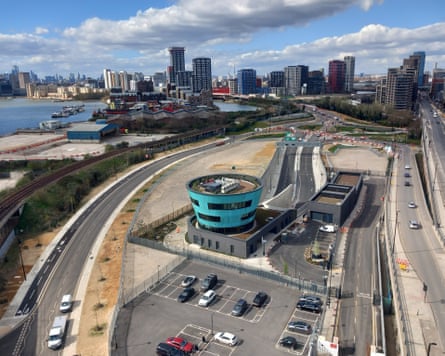
The mayor’s decision to press ahead with the new Silvertown tunnel in east London still sits uncomfortably with many climate and public health experts. And although the capital’s air quality has rapidly improved over the past decade, experts are clear there is still more urgent work to be done to get people out of their cars and on to public transport.
The hugely damaging particulate pollution PM2.5 remains above World Health Organization guidelines, in part due to the growing use of wood-burning stoves in the capital. New tougher EU air pollution limits have been announced but will London try to keep pace or let residents in nearby European cities breathe cleaner air and enjoy better health? What will the mayor do about the rise of SUVs on London’s roads and what can be done to improve the capital’s housing stock to make it more resilient to heatwaves and flooding?
Khan agrees that the challenges posed by the worsening climate crisis means there is no space for complacency. “I’m impatient for change,” he says. “I’m ambitious for this city.”
He says he wants to clean up the capital’s waterways and riverside walks in the same way he has tackled London’s toxic air. He says he is looking at how to reduce the growing number of SUVs on London’s roads and is working with the City of London to make it the world’s green finance capital.
As he enters his second decade as mayor, Khan, who still runs five miles most mornings before work, shows little sign of slowing down, brushing aside questions about how long he may go on for.
“London is a case study in hope,” he says. “We’re a city that, in the last 10 years alone, has gone through Brexit … we went through the pandemic, we’ve suffered the consequences of austerity and the mini-budget. We had four terror attacks in 2017. We had Grenfell Tower in 2017. But the history of London is one where we bounce back, we bounce back stronger.”