







East Jerusalem to Amman should have been an easy trip: a short drive down to the Dead Sea, across the border checkpoint and swiftly on to the Jordanian capital.
But in the early summer of 2024, the distance appeared an almost insurmountable obstacle to humanitarian workers from Unrwa (the United Nations Relief and Works Agency for Palestine Refugees), as they sought to safeguard huge quantities of archival documents vitally important to decades of recent Palestinian history.
A 10-month operation to save the archives kept by Unrwa in Gaza and East Jerusalem was reaching its final stages. The effort had been highly sensitive and sometimes dangerous. It had already involved dozens of Unrwa staff in at least four different countries, risky trips to rescue documents under bombardment, officials carefully carrying unmarked envelopes into Egypt, and precious boxes airlifted to safety in military planes.
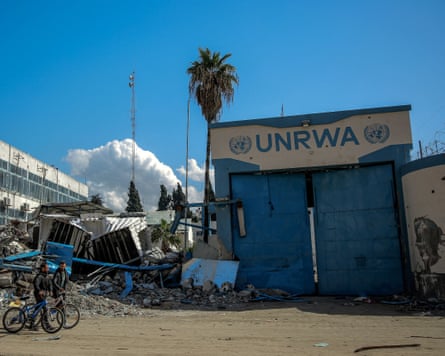
But now time was running out. Unrwa’s sprawling compound in East Jerusalem had become the focus of a concerted Israeli effort to expel the agency, and a target of rightwing groups.
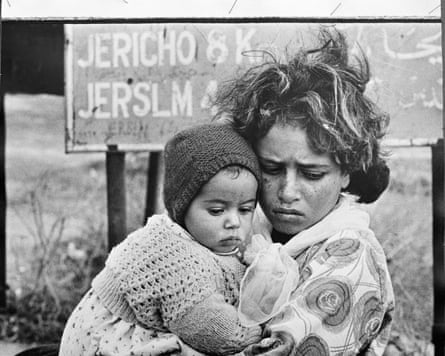
The significance of the Unrwa archives, much of which detailed Palestinians’ experiences as they fled or were forced from their homes during the wars that led to the foundation of Israel in 1948, was clear.
“Their destruction would have been catastrophic … If there is ever a just and durable solution to this conflict, then this is the only evidence people can use to show there were once Palestinians living in a particular place,” said Roger Hearn, a senior Unrwa official who oversaw the operation.
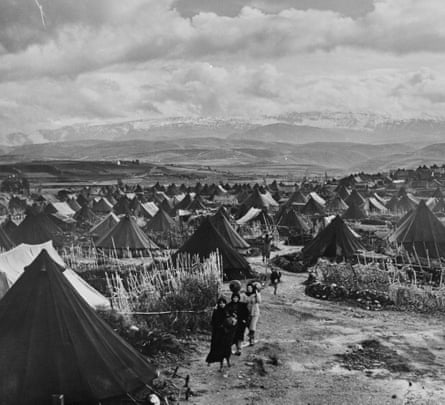
Such clandestine efforts were never supposed to be the task of Unrwa, which was founded in 1949 to provide healthcare, food and education to about 750,000 Palestinian refugees.
At the start of the war in Gaza, which followed the surprise Hamas attack on Israel that killed 1,200 people, mostly civilians, the organisation’s archives were spread across the countries where it works in the Middle East. In dusty boxes in the Unrwa compound in Gaza City were the original registration cards of Palestinian refugees who had sought safety in Gaza in 1948, as well as birth, marriage and death certificates dating back generations. These might allow Palestinians whose ancestors had been forced to leave their homes to trace family origins in what became Israel.
Despite previous efforts to scan the documents, hundreds of thousands of historical records remained only in paper form in 2023, vulnerable to fire, flood or deliberate destruction.
Jean-Pierre Filiu, a professor of Middle East Studies at Sciences Po in Paris, who visited Gaza during the war, described the documents as “crucial to the Palestinian experience”.
“There are testimonies of how people were forced to flee in 1948, where they came from, where their property was, what was destroyed. Two hundred thousand came to Gaza in between 1948 and 1949, from all over Palestine,” Filiu said.
For decades, Israel has been hostile to Unrwa, blaming the agency for keeping alive Palestinian hopes of a return to their original homes by granting refugee status to the descendants of those originally displaced. Israel has also frequently accused Unrwa of using text books in its schools that promote anti-Israel and antisemitic views.
After the 2023 Hamas raid, Israel alleged that Unrwa staff in Gaza had taken part in the attack. The agency later fired nine of its employees after an investigation.
The first stage of the document rescue operation was dramatic – and risky.
Days after its forces invaded Gaza, Israel ordered the evacuation of Unrwa’s offices in Gaza City. International staff left within hours, unable to take the vital archives with them.
“There was a real risk that the Israelis would move in and destroy them, or they would just be destroyed in a fire or an explosion or whatever,” said Sam Rose, the acting director of Unrwa affairs in Gaza.
Just months earlier, Unrwa’s digital registration system had to be temporarily shutdown after being hacked, and there was widespread anxiety too that another cyber-attack could wipe servers of the records that had already been scanned.
“There was this very dangerous period where we were getting many, many [cyber]attacks every day and genuinely thought we could see both the originals destroyed and any digital copies we had made. Then everything would have been gone for good,” Hearn said.
Despite continuing airstrikes and shelling in some of the most deadly attacks of Israel’s relentless offensive, which killed more than 70,000 people, mostly civilians, a small team of Unrwa officials drove rented pickup trucks back to the organisation’s sprawling compound in Gaza City. They made three trips to bring the documents south to a food warehouse in Rafah, on the border with Egypt.
But Cairo would not allow the archives out of Gaza unless Israel was consulted. Unrwa officials were certain that Israeli officials, who had imposed an almost total blockade on Gaza, would immediately understand the significance of the documents, and seize them or refuse to let them through. In 1982, when Israel invaded Lebanon, its military removed the archives of the Palestinian Liberation Organisation from offices in Beirut.
Instead, Unrwa officials with international passports were tasked with getting the archives out unobserved.
“If anyone was stopped at the border, they just said they were carrying paperwork. There was mountains [of documents] to take out. Everyone was carrying stuff with them,” said Rose.
Over the next six months, the documents were collated in Egypt and then transported by a Jordanian charity using the kingdom’s military planes as they returned to Amman after delivering aid for Gaza. The final cargo was on its way just two weeks before Israeli tanks moved to seize Rafah in May 2024, definitively blocking the way out.
But this still left another set of equally significant documents in Unrwa’s East Jerusalem compound that also needed urgent rescue.
Within weeks of the beginning of the two-year war, Israel had intensified its accusations that Unrwa was collaborating with Hamas, and launched a campaign of obstruction and harassment of the agency. By early 2024, the East Jerusalem compound was the target of protests and a series of arson attacks that caused extensive damage. Moves to expel Unrwa were gathering pace.
“In East Jerusalem, we had months of warnings that we would lose access [to our offices],” Rose said.
Efforts to persuade friendly diplomatic missions to store the archives were unsuccessful. So, with time running out, these too were removed by staff members and secretly transferred over several months, eventually reaching Unrwa offices in Jordan. In January 2025, new Israeli laws barred the agency from Israel and Israeli-occupied Palestinian territories.
In Amman, a new and extensive effort was launched to digitise the documents. Funded primarily by Luxembourg, more than 50 Unrwa staff worked in a crowded, cramped basement to scan by hand large numbers of postcard-sized original refugee registration documents as well as millions of other items.
“Now [the archives] are out of Palestine, but at least they are protected,” Filiu said.
With almost 30m documents now digitised, Unrwa aims to be able to provide every Palestinian refugee with their family tree and all supporting documents, as well as to build maps showing patterns of displacement in 1948. The archives will also provide a better understanding of the much-disputed events around the expulsion and flight of about 750,000 Palestinians at that time. Officials estimate the task could take another two years.
Dr Anne Irfan, a historian of the modern Middle East at University College London and author of the recently published A Short History of the Gaza Strip, said the documents provided a vital record of Palestinian national history.
“The Palestinians are a stateless people and without a fully unified national archive … so the Unrwa archive has a particular significance for them,” Irfan said.
The digitised archives open up multiple avenues of inquiry into the experience of Palestinian refugees, the role of the UN and international community, and core elements of Middle Eastern politics over the last 80 years, Irfan told the Guardian.
“It is highly contested history, and history that has potentially very real ramifications for the present.”