


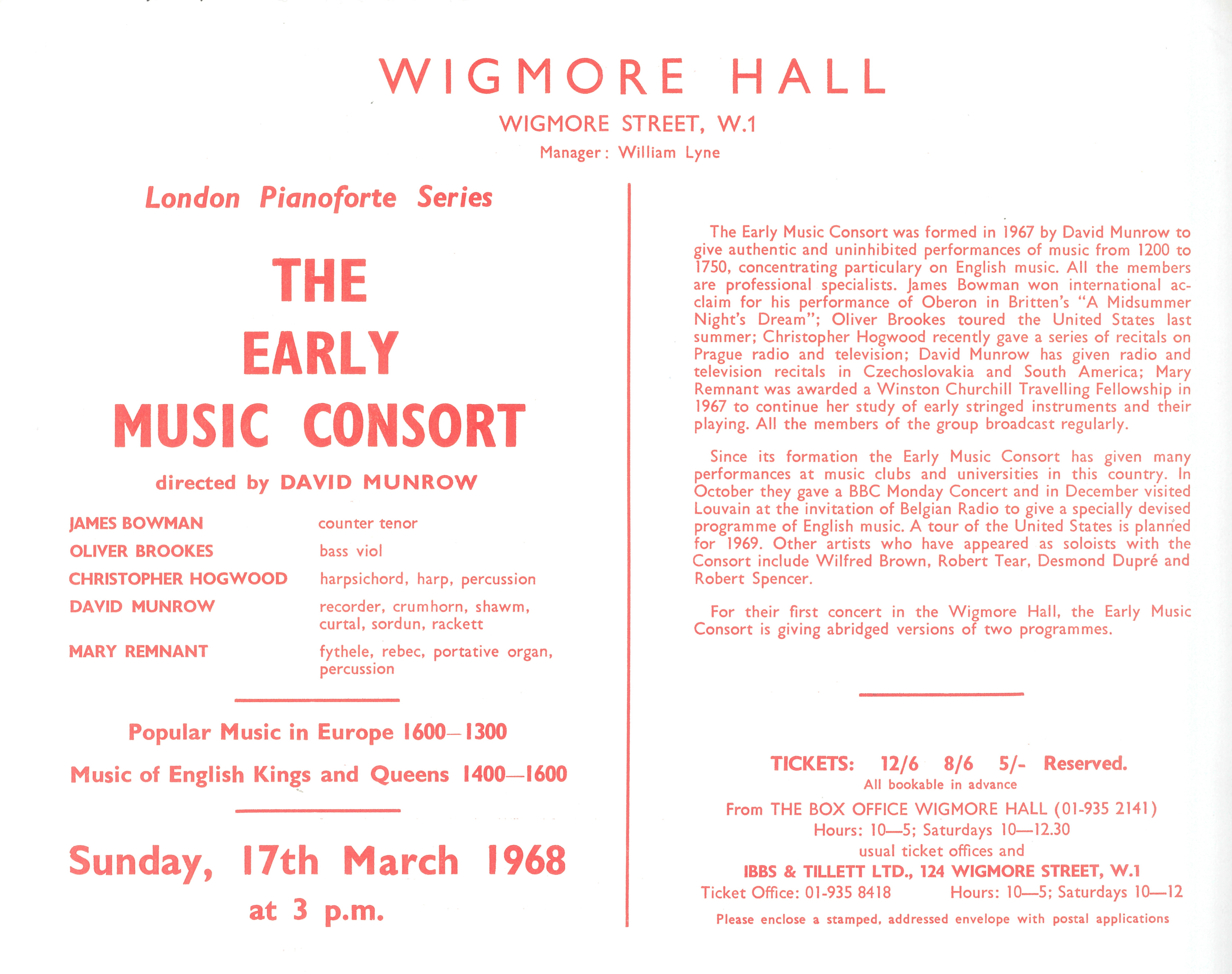
In March 1968, a 25-year-old musician strode on to the stage of London’s Wigmore Hall with a collection of unusual instruments. He proceeded to entertain the audience with tongue-in-cheek descriptions of a shawm, a crumhorn and a rackett – the first time they’d ever been seen, let alone heard, on the Wigmore stage – and he played them with breathtaking virtuosity. That concert, the London debut of the Early Music Consort, was greeted with delight, which set the pattern of things to come. With all the bravura of the 1960s, David Munrow erupted into the world of early music and transformed what had been a minority interest into popular listening.
His flame burned brightly, but briefly: in May 1976 he took his own life at the age of 33. But his impact lives on in the music he rediscovered and popularised, and the innovative ways in which he presented and performed it. The Dufay Collective’s William Lyons has said that his own “programming ethos was very much influenced by that of Munrow: variety and information”. Recently, Skip Sempé, the director of Capriccio Stravagante, wrote that “Munrow … inspired all those who, however unconsciously, followed him with great professional and commercial success. To this day, I feel that every early musician in the UK owes their career to him.”
“Munrow’s playing has caused [these early] instruments to be taken seriously,” wrote Meirion Bowen in a profile of the young virtuoso for the Guardian in 1971. “To be thought of not merely as musical fossils, but as a range of sonorities that hold unlimited delights for the listener, and which today’s composers can find an invaluable stimulus.”
Munrow was born in 1942 in Birmingham. As a child, he sang in choirs, played the recorder and bassoon and organised his friends in extracurricular music-making – lots of it. He postponed university for a year and took himself off to South America on a Voluntary Service Overseas placement at a school in Lima. During the Christmas break he went exploring: “I made a marvellous journey down the Andes from Peru,” he said, “and I came across instruments that had been brought over by the conquistadores and adopted by the Indians. And they’d gone on making them in the same way that flutes and recorders and harps were made in the Renaissance.”
It was a defining experience for him: he was exhilarated and deeply moved by all the folk music that he heard and he returned home with a large collection of flutes and pipes, all of which he had taught himself to play.
At Cambridge University, where he studied English, he spent much of his time once again organising and playing in student concerts. The musicologist Thurston Dart lent him a crumhorn and he made a direct connection between his folk instruments and those played by European musicians in the middle ages and Renaissance. Munrow began to look at early music scores and organised an early instruments big-band performance of some dances by Tielman Susato, which would later feature on his first hit record for EMI.
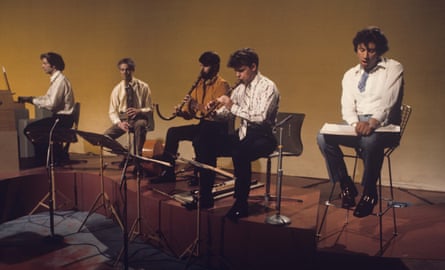
After university, he was hired to play bassoon in the wind band of the Royal Shakespeare Company at Stratford, but its music director, Guy Woolfenden, soon became interested in Munrow’s other instruments – by then he was collecting his own curtals, crumhorns, shawms and more – and Woolfenden began including them in the music he wrote for the RSC’s stagings.
Meanwhile, while he was playing in the onstage band, Munrow was eagerly observing the company at work: “One can watch performances develop, see an actor’s performance enriched by a new part in another play.” It was a finishing school for his own natural gift for communication.
Munrow left the RSC determined that his newly formed Early Music Consort would give “authentic and uninhibited performances”, as he wrote in the programme for that first Wigmore Hall concert. In practice, this meant that he researched widely in the academic printed sources of early music available and then lifted the notes off the page in expertly imaginative performances. He was enchanted by the music he discovered and passionate about sharing it in the most vivid and engaging way.
Concert programmes were rehearsed intensively and arranged around themes and linked sequences of pieces, and Munrow surrounded himself with the best musicians, including the young countertenor James Bowman. He explained the music to the audience with a natural charm and humour. His critics accused him of being a showman, which he was, but in the best sense of the word: someone who could reveal the full energy, eloquence and colour of early music. “Most important of all is expression,” he said. “A Machaut song should communicate as directly, albeit in a different way, as one by Schubert.”
Just listen to this captivating 13th-century song, S’on me regarde – a medieval earworm!
From early on, the Consort was taken up by BBC Radio 3, with Munrow unusually presenting the broadcasts himself. In 1971 he was invited to front Pied Piper, a new music appreciation programme for younger listeners, which he did brilliantly, four times a week, attracting a loyal audience over 655 editions. BBC Television commissioned him to provide arrangements of Tudor music for two blockbuster historical dramas – The Six Wives of Henry VIII and Elizabeth R – which made Munrow a household name. He also appeared on television with the Consort in two trailblazing series: Early Musical Instruments and Ancestral Voices.
And, crucially for us, he recorded many LPs and relished every aspect of making them. When Ecco la Primavera, his album of Italian 14th-century music, was released in 1969, listeners could feel that they were sharing the excitement of one of his concerts, with Munronw on hand to offer elucidation in his informally written sleeve notes. His masterstroke was persuading the major label EMI to promote him and his Consort. Early Music went mainstream and he produced a long list of recordings for EMI in just five years. Chief among them were two glossy box sets – The Art of Courtly Love and The Art of the Netherlands – and the Mass Se la face ay pale by Guillaume Du Fay. All three were groundbreaking in the music they introduced for the first time and the way it was performed – notably without vibrato for the vocal works.
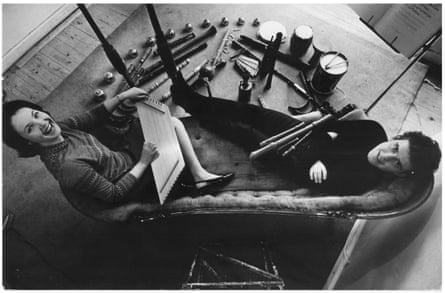
A Cambridge friend once observed Munrow “pedalling furiously” on his bicycle through the university town. It’s a good metaphor for how he lived his life. Extroverted and ebullient, he was constantly on the move – organising, playing, directing, recording, broadcasting, writing, teaching and even composing. But since childhood he had also been prone to bouts of deep depression, which he concealed from other people. His suicide, therefore, was a profound shock to all who knew him.
In barely 10 years of relentless professional activity David Munrow achieved a prodigious amount. Happily, 50 years on, his artistry is still there for us to enjoy in his recordings – the living legacy of this free-spirited pioneer of early music.
Edward Blakeman’s The Essay series on David Munrow runs from 11 to 15 May on Radio 3/BBC Sounds. His book The Artistry of David Munrow: Pied Piper of Early Music will be published later this year by Oxford University Press. The Art of David Munrow: The Complete Warner Edition of 21 CDs is released on 15 May.