


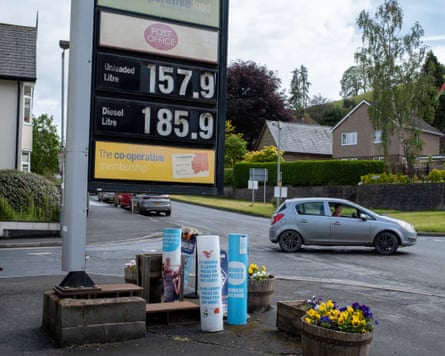
A friend of mine was recently left in tears after filling up the car she relies on to drive to work. Thanks to the US-Israeli attacks on Iran, prices at the pumps have soared. She wasn’t sure how her family was going to make it to the next paycheck.
It is a personal story and a distressing one, but the big picture is truly obscene. Fossil fuel companies are raking in monstrous, unearned war profits taken from the pockets of people like you, me, my friend, and any of us who fills up a vehicle or pays an energy bill.
These, too, are the very companies and countries that have worked so hard to delay climate action and keep us all hooked on oil and gas. In short, we are paying for big oil’s outrageous profits while it cooks the planet – and our way of life along with it.
The scale of the war-profits bonanza is hard to comprehend, so I’ll try to illuminate it (I promise there’s a silver lining). First, this week’s top stories.
Essential reads
-
Rainforests pushed to breaking point by new demands for resources, report says
-
‘Should we leave them to die?’ The battle over how to save orangutans from the curse of palm oil
In focus
$30m an hour: that’s the pure, unearned profits banked by the world’s top 100 oil and gas companies in the first month of the conflict in Iran, purely due to the spike in the oil price. I revealed this exclusive analysis, commissioned by the Guardian, in April – while it was based on the best data in the industry, it was an estimate.
Now the first numbers are in, and that $30m may have been a major underestimate.
Shell’s profit for the first three months of 2026 more than doubled to $6.9bn, as did BP’s, to $3.2bn. TotalEnergies profits also surged by more than 50%, up to $5.8bn. Even in the Gulf itself, where the flow of oil through the strait of Hormuz has been heavily restricted, some companies have still flourished. Aramco, the state oil company of habitual climate obstructers Saudi Arabia, saw its profits soar by 26% to $33.6bn in the first quarter.
Those four companies alone, benefiting not just from the oil price hike but also bumper oil-trading profits, made $23m an hour for the whole of January, February and March. And the Iran conflict only started on 28 February.
To get some idea of the scale of this, imagine I gave you $6,200. What would you do? Pay off a loan? Book a fancy holiday? A second later, I give you another $6,200; then again, for hours, weeks and months. That is the rate of profit of just those four companies.
There is plenty more to come for the industry. Oil and gas supplies will take months to return to prewar levels, and reserves are getting dangerously low. Even if the oil price remains at today’s level of about $100 a barrel, those 100 companies will make $234bn by the end of the year. Remember, the companies, and petrostates such as Russia, have done no extra work for this, just ridden a soaring oil price. Also remember, you are paying for this. Where I live in the UK, household energy bills are about to jump by £209 ($280) a year for the average home.
The profits are extreme, but not new: big oil and gas has been wildly profitable for decades. It has made an average $1tn a year in pure profit for about 50 years. The fossil fuel sector also benefits from explicit subsidies that totalled $1.3tn in 2022, according to the International Monetary Fund.
These riches have funded the lobbying and campaigns that block climate action and have done so for years, long after the science became crystal clear. As an example of the consequences, the UK’s official climate advisers said on Tuesday that all care homes and hospitals will need air conditioning within the coming 10 years, to stop the heat killing people.
Talk of a windfall tax in the European Union – designed to “send a clear message that those who profit from the consequences of war must do their part to ease the burden on the general public” – has faded.
The most incisive big-picture take I have seen was from climate analyst and writer Ketan Joshi, who recently wrote: “We cannot survive in this system. Hooking humanity on a fuel that becomes more profitable for companies when there is more bloodshed and conflict is a guaranteed recipe for more suffering in every way imaginable.”
But here’s that silver lining I promised: these peak profits contain the seeds of their own downfall. Sky-high fossil fuel prices are pushing people, companies and nations to supercharge their rush towards green power for the simple reason that it is now cheaper and more reliable. Solar power does not need to transit through the strait of Hormuz, as Bill McKibben has observed.
The numbers on the surge in renewable energy deployment, already exponential, are not yet in, but they will almost certainly be huge. Green funds are already attracting billions of dollars in new investments and one consultancy estimates that an oil price of $100 a barrel will drive $4tn of extra green investment by 2030.
Big oil remains a formidable political force but, on the ground, people are already voting with their feet. Sales of new electric cars in the UK leapt by 59% in April, for example. The pain and anger of today’s energy crisis may yet become a critical turning point in confronting the climate crisis.
Read more:
Trump’s Iran war may stymie climate gains with boost to big oil
Outrage as oil giants profit billions from Iran war – The Latest podcast
As household bills soar, is it time for a ‘working-class climate agenda’?