






I finally got round to watching Louis Theroux’s Inside the Manosphere documentary. It was uncomfortable viewing, not just for the obvious reason that watching men revel in degrading women and manipulating young men is disturbing, but because I couldn’t shake the feeling that our cultural obsession with a handful of high-profile US and British influencers is a distraction from the deeper, darker global problem.
HStikkytokky, Myron Gaines and co are the visible, “glamorous” figureheads of misogyny. Brash and offensive, they make good telly – and there is nothing wrong with that if it provokes public debate and conversations with teenagers. But behind that flashiness, in the murky depths of the internet, lies a world of abuse, threats and sexualisation of women and girls that gets little, if any, media coverage.
Women with public roles, such as politicians, journalists and activists, are particularly vulnerable to online harassment and worse, forcing them to either withdraw from digital spaces or “grow a thicker skin”. The effects go far beyond personal harm. Silencing women is a threat to democracy.
It is not just women in public roles under attack. In Ethiopia, women who identify as feminists, or who simply have an online profile, have been subjected to intense campaigns of abuse, including death threats. For a small number, the situation became so dangerous they fled the country, as our journalist Aisha Down reported.
In Africa – which, as Sarah Johnson reported, has its own burgeoning manosphere – activists are calling for urgent action to address digital violence. In most countries, existing cybercrime laws are used to prosecute the few cases that are acted on, but legislation is needed to explicitly address gendered abuse.
A crisis of this scale requires robust responses, from lawmakers, tech companies and researchers. There are already people devoted to bringing about changes – it is hard, unglamorous work – but it deserves the limelight. We can’t keep watching and reading about the sordid details of the manfluencers without thinking more deeply about how to resist the views they are reflecting.
Isabel Choat is commissioning editor of the Global development series
Spotlight
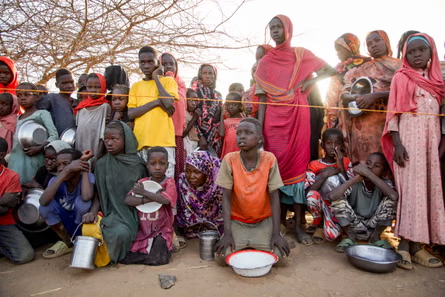
As the war in Sudan enters its fourth year, efforts to end the conflict have been called “bloody unacceptable” by the UN’s top official in the country. The comments from Denise Brown came as a series of new reports confirmed that the world’s biggest humanitarian crisis was worsening. At a conference in Berlin on Wednesday, countries including the UK are calling for an end to the bloodshed, but hopes of securing a ceasefire and a diplomatic roadmap to peace remain fragile.
Top picks
-
Soaring rents and a four-hour commute: the misery of the Lagos housing crisis
-
Sluts, simps and body shaming: the rise of Africa’s manosphere
Rights and freedom
Opinion and analysis
-
In the Rohingya refugee camps, we really want you to keep the gas running | Ajas Khan
-
And the election winner is … the candidate who can afford Africa’s soaring nomination fees
Southern frontlines
In pictures
Listen to this
Editors from around the world are meeting in Perugia, Italy, this week for the International Journalism Festival to discuss some of the most pressing issues facing the sector, from navigating the impact of AI to fighting disinformation and misogynistic attacks. Tracy McVeigh, editor of Global development, Foundations and philanthropic projects at the Guardian, joins a panel of female journalists for Rewriting her story: how news coverage can fight, not fuel, violence against women, which will be live streamed and on-demand at journalismfestival.com.