





It’s not unusual to see a gulf between the quality of a blockbuster hit as described by critics, and the greater acceptance of that film as determined by its viewing public. But it’s been a while since a movie quite as derided as Michael has been quite this big of a hit. This biography of pop star Michael Jackson is already one of the bigger-grossing musician biopics of all time; even with a steep second-weekend drop, it’s on its way to becoming one of the biggest global hits of 2026 so far.
Perhaps more notable, however, are the vast, chasm-sized reality gaps that have been opened up (or at least enlarged) by the film’s half-blessed, half-cursed existence. First, there’s the gap between the realities of Michael Jackson’s life and what this estate-approved biography is willing (and in some cases legally able) to depict – a disparity that’s part of any work of biographical fiction but that feels vaster here for a number of reasons. Scale over that one, and you might next encounter the related gap between the film that was originally planned, which was going to cover most or all of Jackson’s life, and the film that’s being released in theaters, which leaves off in 1988 before teasing a sequel. That change is owed in part to a bizarre snafu where the film-makers and estate didn’t realize they didn’t have the legal right to depict one of the people who accused Jackson of child molestation in 1993 (his estate claims this version of events to be “inaccurate and irrelevant”).
And there’s perhaps the biggest reality gap of all: the one between casual fans who may be interested in a movie about Michael Jackson’s life, compartmentalizing the controversies of his later years as so many of us do with problematic but brilliant artists, and the dedicated stan army that may not have finished reading this sentence before sending off a virulent email or social media post explaining that actually, Jackson was found “innocent” (the correct term, “not guilty”, is rarely enough for these folks) of all charges, and any words spoken against him for the past 35 years are part of a bought-and-paid-for smear-campaign conspiracy and, further, any heretics who don’t believe in the saintliness of Michael Jackson may be the real pedophiles in our midst. (I wish I were joking. The last time I wrote about the Jackson film for the Guardian, I had people patiently explaining that someone who had been credibly accused of sexual abuse but was found not guilty was actually more innocent than people who haven’t faced such accusations, because Jackson had been subjected to scrutiny that most people aren’t. Ah, ha.)
Michael hasn’t been made for those hardcore fans specifically; it’s clearly made with the broader Bohemian Rhapsody audience in mind, to the point of retaining that film’s writer, editor and, strangest of all, celebrity cameo from Mike Myers. But the film itself does come across as something that could please and pacify those who hold the Trump-style belief in Jackson’s full exoneration, happy to explain why any other troublingly detailed accusations, like those from the subjects of the 2019 documentary Leaving Neverland, simply don’t count in light of Jackson’s 2005 acquittal.
This version of Michael doesn’t explain away any of that, which is key to its simultaneous blessing and curse. Those who had read earlier versions of the screenplay reported that the movie was once intended to begin with Jackson’s home being searched after the original 1993 accusations of child molestation. Plenty of movies change heavily on the journey from page to screen, but fewer of them must engage in rewrites, reshoots and release-date delays after finding out that their biographical subject actually agreed to a legal settlement that barred any depiction of his accuser in exactly this kind of project. It’s particularly ironic that the Jackson estate would make this mistake, given how they exploited a non-disparagement clause in connection to a 1992 HBO concert broadcast to goad the channel into removing the 2019 documentary Leaving Neverland from its streaming service decades later. Maybe when that happened, somewhere in the Jackson archives a finger on a monkey’s paw (or a chimp’s? Bubbles, is that you?) curled.
Regardless, the new film was essentially forced to work with a partial story that simply doesn’t get up to that more controversial section of Jackson’s life. The strangest thing about Michael, apart from how dull so much of it is on a dramatic level, is how the film refuses to look that gift horse in the mouth. Faced with a legal requirement essentially forcing them to kick any material related to Jackson’s later life down the road, the film-makers still see fit to pack the movie with cheerful nods and even Easter eggs to later developments in Jackson’s life. It’s especially full of calls forward to Neverland, the estate Jackson acquired around the end of the movie’s timeline, and which figures heavily into the allegations against him.
The movie’s Jackson is constantly looking wistfully at illustrations of Peter Pan in scenes that would have come across as evidence of a disturbing fixation – had the movie looked at its subject with even the mildest of critical eyes. As the world-famous pop singer, Jaafar Jackson (Michael’s nephew) nails the dance moves, but offstage maintains a kind of too-pure-for-this-world soft-spoken gentility. He’s an abused puppy-man, yearning simultaneously for a lost childhood and adult independence. Given this utter lack of darkness in his character, the movie vaguely implies that his Neverland is the paradise he will eventually create, teasing it the way an X-Men movie might seed hints of the living island Krakoa.
Is the movie’s credulous reading of Jackson’s inherent innocence cowardly avoidance of real-life messiness, or a weird form of daring? Michael often takes the tone of rightwing-coded movies that don’t come out and say anything prejudicial, but include dog whistles intended to snap certain audiences to attention. It doesn’t want to sound like the obsessive Jackson-innocent rantings of a stan army, but it doesn’t want to be subjected to their ire, either. That’s probably more of a side effect than a primary goal of the actual film-makers – but the side effect comes from the Jackson estate essentially acting as the (barely) more respectable iteration of those online warriors.
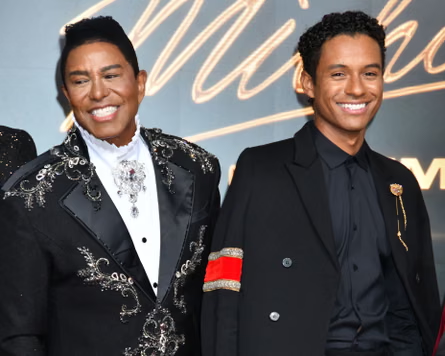
The Jackson estate is not the first such organization to involve itself in the production of a biopic. That’s practically the norm at this point, to seek approval of artists if they’re still alive and sometimes actively work them or their representatives into the creative process. The artists or their reps hold a lot of cards when they control the use of the music that can seriously wound these movies, commercially and artistically, when withheld. (There are movies about David Bowie and Jimi Hendrix that attempt to work around this blockade, to little good effect.) Moreover, fans no longer seem as jazzed by the prospect of watching famous actors attempt to embody or interpret artists. The success of Bohemian Rhapsody and Michael suggest a preference for watching a virtual resurrection, just a step or two shy of those long-promised, sometimes-enacted performing holograms of dead artists.
It’s hard to tell what mutates that desire to resurrect a musician into a belief that they’re some kind of higher-power instrument. But it’s an impulse that only helps movies like this. In another context, the fact that Michael ends with on-screen text more or less promising a sequel that would have to address a whole bunch of less triumphant moments might seem unusually bold, compared with the cop-out of simply screeching to a halt in 1988. The movie on hand, though, serves as a feature-length dog whistle signaling the intention to turn that sequel into a perverse celebration of Jackson’s martyrdom. In other words, the most fanatical contingent of Jackson acolytes have won. And like a lot of fans, they’ve responded to their victory by virulently attacking anyone they see as continuing to fight on the wrong side.
Their mistake, of course, and with them the movie’s is the construction of neatly organized “sides” when it comes to the legacy of a man whose reputation will never be fully settled. That’s nearly impossible for any artist, let alone one who was repeatedly accused of horrific crimes. Here’s a simple test: never mind whether this movie addresses all (or any) of the most difficult aspects of Jackson’s life. Does the Michael Jackson in this biographical film seem like a complicated guy, or a saint with a difficult upbringing that he ultimately shakes off? Michael isn’t just afraid of controversy. It’s afraid of what makes artists actual humans.