


Israeli forces in Gaza killed a water engineer and two drivers who transported water to displaced families over four days in mid-April, exacerbating severe shortages of clean water that are fuelling the spread of preventable disease.
Israeli limits on the shipment of soap, washing powder and other hygiene products into Gaza have also forced prices up, adding to the challenge of keeping clean and avoiding infection in overcrowded shelters and tent encampments.
Over more than two and a half years of war, Israeli attacks have destroyed most of Gaza’s civilian infrastructure, including networks that provided clean water and removed and treated sewage. They have also repeatedly killed Palestinian civilians trying to maintain or restore them.
‘‘Since the beginning of the war, we have lost about 19 workers from water facilities who were carrying out repair and distribution work,” said Omar Shatat, the deputy director of Gaza’s coastal municipalities water utility. “Targeting has become part of the operational reality.’’
The most recent attack was a strike on al-Zein well in northern Gaza last Monday, when water engineers were working inside.
The attack killed one, injured four and caused extensive structural damage to “a critical water source serving the surrounding population”, according to an incident report seen by the Guardian. The document warned that the disruption to water supplies would affect thousands of people.
Four days earlier, Israeli forces shot dead two drivers working for Unicef, the UN agency for children, at the main water collection point for northern Gaza. Two others were injured in the attack, which Unicef said threatened the humanitarian networks bringing clean water to hundreds of thousands of people in Gaza.
The UN has recognised access to clean water as a basic right, setting a standard of 50 to 100 litres daily per person except in emergency situations.
Across Gaza, the average daily supply is only 7 litres of drinking water and 16 litres of domestic water, Unicef said, and many people do not have access to even the minimum 6 litres a day of clean drinking water.
The price of soap and other cleaning supplies has doubled over the last month. Scarcity and high demand have created a “major crisis”, said Anwar al-Maghribi, who has a shop at a market in Deir al-Balah.
“A 7kg pack of laundry detergent has risen from 50 shekels to 100 shekels or more, and other cleaning products have also seen similar increases,” he said.
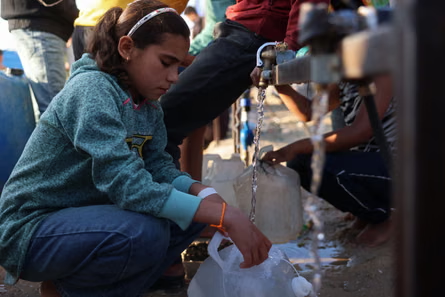
Laureline Lasserre, Médecins Sans Frontières’ emergency humanitarian affairs manager for Gaza, said people were getting sick because they could not access clean water and basic sanitation.
“No clean water, no soap, overcrowded living conditions; this is the root cause of a huge proportion of what we treat every day,” she said.
Many Palestinians have to choose between drinking, cooking and washing on a daily basis, she said. Women report infections because they are unable to wash even when they are menstruating and after giving birth, and babies repeatedly get sick because there is no clean water for formula.
Wounds become infested with larvae because people cannot wash them. MSF doctors have also reported psychological problems including suicidal ideation caused by extreme water shortages, Lasserre added.
“The Israeli authorities have destroyed water infrastructure and are blocking humanitarians from providing alternatives. They are causing the water crisis and preventing the solution.”
Omar Saada, 38, a displaced father of four in Khan Younis, said one water truck served more than 50 families in his area. That is not enough to meet the allowance of 20 litres per person, so each morning is a race to fill the family’s containers.
“We wake up as early as 6am to be able to collect water from the trucks. Before, it was available from early morning until after noon, but now it is usually just for two hours,” he said. The family have cut back on bathing and washing clothes, giving his children skin infections, and the water does not always feel safe to drink.
“It sometimes causes intestinal infections and stomach pain due to contamination, but we are forced to drink it because it is the only water available.”
Water trucks only come once a week to the area of al-Qarara, where Nesma Rashwan, a 31-year-old mother of five, is living in a tent. She too says the water smells and tastes unsafe, but the family has no other options.
“For about a year now, we have not had clean drinking water that truly quenches thirst,” she said. “I bought fresh drinking water once when my son was sick, but I cannot afford it regularly; a gallon costs five shekels. So we make do with what is available.”
She struggles to find water to wash dishes and clothes, and sends her children to bathe in the sea, pouring just a minimal amount of the stored fresh water over them when they return.
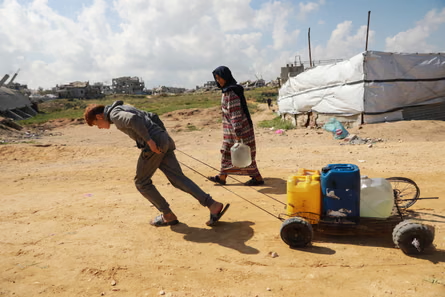
The impact of damage to water pipes and desalination plants has been compounded by Israeli restrictions on bringing fuel, spare parts and basic equipment into Gaza.
Shatat said: “We have been forced to improvise by recycling and assembling parts from destroyed facilities to create a single functioning unit, what I describe as ‘assembling fragments’.
“For example, we collect usable spare parts from multiple destroyed wells to operate one functional well, or combine parts from several damaged pumping stations to build one working station.”
Earlier this month, shrapnel from an Israeli airstrike damaged the power line to the Deir al-Balah desalination plant, which provides water for up to 400,000 people.
The lack of spare parts delayed repairs for a week, and during that time it could only run at 20% capacity on backup generators. Saada said water deliveries to his area stopped during that period.
The impact of water shortages is compounded by the lack of sewage treatment facilities, and as temperatures rise over the summer the risks to human health from both are likely to increase unless large amounts of equipment are allowed into Gaza.
Shatat said: “The greatest tragedy is in the camps, where approximately 1.1 million people live without sewage networks, relying instead on absorption pits that frequently overflow, creating a severe health and environmental disaster.”
In school buildings now used as shelters, septic tanks regularly overflow, creating sewage leaks into classrooms that spread between rooms.
There is no cement for repairs, while the fleet of trucks that once emptied septic tanks was decimated in the war, and no new trucks have been allowed in. Gaza needs 100, but only 15 remain and they are worn out from intense use, Shatat said.
Israel denies there are any restrictions on equipment or fuel needed to run water and sanitation systems in Gaza, and said it provided clean water through three pipelines and allowed passage of water from Egypt in a fourth.
A spokesperson for Cogat, the Israeli body that oversees aid in Palestine, said these pipelines contributed to an estimated supply in Gaza of 70,000 cubic metres a day, or approximately 30 litres a person.
“There are four active water pipes [supplying] the Gaza Strip. There are operational desalination plants and there are dozens of water wells that receive regular fuel [to power pumps],” they said.
Asked about the shooting of truck drivers near a humanitarian supply point, the Israel Defense Forces said troops who opened fire had “perceived a threat”, without providing further details.
Asked about the water engineer killed at al-Zein well, the IDF declined to comment.