








They were times in which prime ministers seemed to be on their way out as soon as they’d arrived. The big strategic decisions the country faced were ducked or postponed. The public finances repeatedly wobbled, yet efforts to rationalise the tax system faltered in the face of vested interests, including farmers. Reforms to social security were trumpeted before being diluted. The whole business of politics was animated by rancour and rivalry, rather than practical action. All the while, populists waited in the wings.
This is not a sneak peak into a future history book about today’s Britain, but a description of the French fourth republic, which staggered after a difficult birth in 1946 until 1958, when the exhausted regime ceded the authority to create a new order to Gen Charles de Gaulle, effectively putting itself out of its misery.
Keir Starmer is not going so gently, instead raging against the dying of the light. Overseas precedents for our political tumult are all there is, because British history can’t provide them. There has “never been a period like the present,” said Anthony Seldon, author of The Impossible Office?, which charts the 300-year story of the premiership.
Yes, there was a decade in each of the 18th (1760-1770) and 19th (1827-1837) centuries where we burned through prime ministers at a similar rate. But the six – and soon likely seven – PMs since 2016 rank as “unique” once we factor in the wider churn at the top. There have also been eight chancellors and nine foreign secretaries – before any post-Starmer reshuffle.
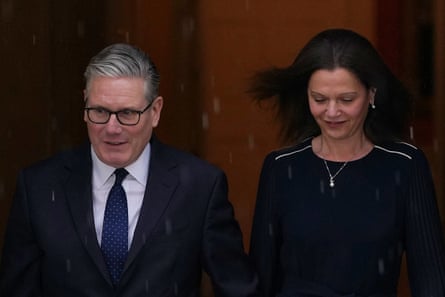
Cameron, May, Johnson, Truss, Sunak, Starmer, and now, if he can prevail in a tough byelection, maybe Burnham: cast your mind over the list and the first thought is not of anything solid actually happening, just the simple fact of the frenzy. That is not a coincidence.
Gus O’Donnell, the former cabinet secretary, has seen three transitions “at close hand”: Thatcher to Major, Blair to Brown and Brown to Cameron. In the “access talks” with the leader of the opposition before the 2010 election, David Cameron briefed him on the changes he would be asking for in Whitehall.
Then, O’Donnell said: “He asked me: ‘And what can I give you?’ I told him: ministers who stay in the same job for as long as possible, so they’ve got some sort of chance to get on top of their brief.”
O’Donnell sounded world-weary as he recollected trying to sustain strategies for big issues through games of ministerial musical chairs. Pensions is one field that cries out for a long-term approach: individuals are meant to plan, save and accrue rights over the course of a lifetime. Whereas, O’Donnell recalls, at one stage there were “nine pension ministers over the course of five years”.
An obvious but underdiscussed consequence of changing prime minister is that a huge proportion of other ministers will automatically change too. Any new PM will, naturally, want to shape their own cabinet, and no politician with the guile to reach the top of the greasy pole will be blind to the opportunities of using the junior ranks of government to reward loyalists and keep tricky customers under control.
And at the helm of the resulting team of novices will be an inexperienced leader – counselled by a new kitchen cabinet of advisers, mostly new to the workings of the centre of British power. As Cath Haddon of the Institute for Government thinktank acknowledges, there comes a point where personally ineffective PMs have to go. But she also worries about rendering the individual in the office ineffective by denying “the time needed to learn, govern and see projects through”. As “the conversion rate from prime ministers under pressure to prime ministers out the door” increases, she sees the second part of that equation becoming “underpriced”.
The evasions embodied in Labour’s one-word manifesto title, Change, have unravelled but lessons have not been learned. The demand from all sides through this leadership crisis is: “faster and less incremental change”.
Excitable lobby reporters, and indeed the passionate party activists who get the final say on who becomes prime minister these days, sometimes forget that big speeches do not in themselves alter much. Effective reforms become reality only after the drawing up of credible blueprints, the use of consultations to reaffirm principles and adjust for practicalities, the rewriting of laws, the securing and effective marshalling of resources.
“You need to do the work,” says Haddon. “And that inevitably takes time.”
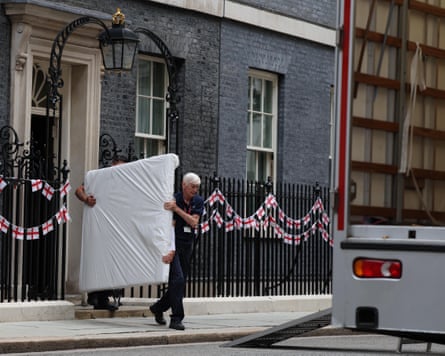
The threat of removal can cause almost as much distraction and disruption as the fact of it. Damian Green was a close ally of Theresa May when the June 2017 election saw her lose her majority, raising questions about her survival that hung over her final two years in office.
“Theresa was clearly in trouble then – it became much more difficult to do anything long term,” Green recalls. During the early months of her premiership she had projected interest in big social challenges, and approached difficult subjects, such as domestic violence, that too many others had foregone. But now the order of the day was survival, which was bound up with one and only one issue. Suddenly, her singular and defining job was to “get a Brexit deal”.
To give her half a chance with this, May and Jeremy Heywood, then the cabinet secretary, made an extraordinary move. They shuffled Green from the Department for Work and Pensions to the made-up job of first secretary of state, in effect deputy prime minister, and handed him control of nearly everything else.
“I was in charge of all cabinet committees doing domestic policy, at one point 28, to take the load off Theresa’s shoulders,” said Green.
A loyalist, Green drove through the worthwhile if lower-profile priorities of his boss, such as restrictions on modern slavery. But no deputy has the profile or patronage that the PM can deploy to break logjams, and progress on bigger challenges including social care, a personal passion of Green, ground to a halt.
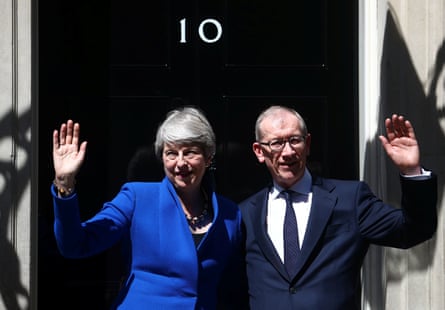
Today’s bouts of regicide mania were foreshadowed 30 years ago. John Major lasted longer than May: six and a half years. But within two, sterling had collapsed on Black Wednesday.
Thereafter, the battle for survival was constant and often uncertain. A former civil servant, Jill Rutter, did a spell in his No 10 policy unit. That’s the outfit tasked with doing the serious thinking about how to make prime ministerial ambitions concrete, but circumstances weren’t conducive.
After Major was forced to resort to a confidence vote on one step in the Maastricht process, Rutter recalled the unit’s director, Sarah Hogg, assembled the politically appointed half of her team and explained that if things went wrong they’d be imminently out of a job.
“No 10 felt very embattled, super suspicious with enemies at every corner. Often, the only concern was getting back on track,” said Rutter. Smart solutions are harder to hit on when you’re “walking on eggshells all the time”.
Causes like peace in Northern Ireland, in which Major developed a very personal stake, were advanced. But the PM really “can’t be and really shouldn’t need to be directly on top of everything,” said Rutter. Most of the time, it should be enough for “No 10 to know things on their behalf”, and steer the broader machine in line with their wishes.
The possibilities for such “good delegation”, Rutter added, can break down either because the instincts of the PM are too uncertain for staffers to be confident about what they would want, or because other ministers come to regard themselves as working for a temporary boss, go their own way and cease to keep Downing Street in the loop. The Starmer administration was dogged by the first problem from the off. Then the second set in.
Starmer is not wrong to warn there will be financial consequences from all the chaos. As economist Paul Johnson said: “The sad truth is we are in hock to the bond markets … We are already paying many billions more in debt interest than we would be if markets were charging us the same as they are charging other countries. And it is notable that the premium really began at that moment of maximum instability – the Truss premiership”.
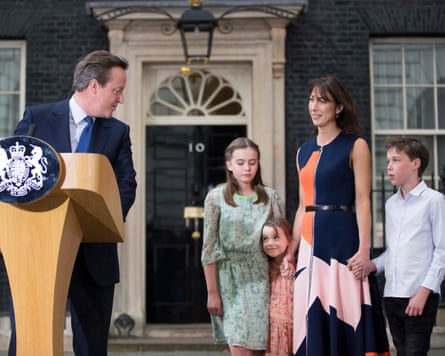
Starmer’s problem, however, is that he has ceased to be a credible answer to the chaos. Just like May’s early promise of “strong and stable leadership,” his vow to “end the chaos” has become a sour joke.
So what it is about 2020s Britain that has, after a long period post-Major in which leadership crises were the exception rather than the norm, rendered the premiership an impossible office? Could it be the same sort of thing that has made the country, for example, sink untold billions into building a national high-speed rail network only to pare it back to the point where it connects Birmingham to London?
We are also a society that frets about public debt, yet shrinks from putting an end date on the arbitrary and unaffordable pensions triple lock. We have an economy that groans under an incoherent tax code, but can’t or won’t simplify it. Even modest moves towards big wealth paying a little are followed by retreats like we saw on the (misleadingly labelled) “family farm tax”. Nearly all politicians have now said they’d like to spend far more on defence, but almost none can explain where they’d find the money.
The obvious explanation for the paralysis on underlying substance and the uncontrolled political froth on the top is economic. Stagnation since the financial crisis has, undoubtedly, made the arithmetic of public policy harsher. But many earlier generations have regarded the economic plight of the country as exceptional.
The inflation of the 1970s is one case, the unemployment of the 80s another. Indeed, the author and historian Anthony Seldon points out that when the elderly Winston Churchill returned to power in the growing and fully employed economy of 1951, the newspapers screamed that ration books, balance of payments woes and the need to fund the Korean war made for the most overwhelming “prime ministerial in-tray” in history.
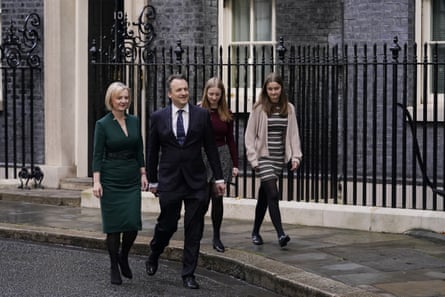
Yet back then, politics was remarkably stable. In that year’s election, a record 97% of the votes were split fairly evenly between the Labour party of Clement Attlee, whose leadership spanned 20 years, and the Tories of Churchill, who was at their helm for a 15-year stretch.
What’s changed, I think, is that the simple class divide of postwar society has been replaced by a variety of deep, overlaying cleavages: cultural divides like Brexit, values divides such as Gaza, and generational divides between older homeowners and younger tenants.
The historian Sudhir Hazareesingh tells me that the real roots of the French fourth republic’s woes were similar – too many separate schisms were drawn through politics at once, with polarised attitudes to the cold war, the constitution, the colonies and the social role of the church all segmenting the electorate in different ways.
Today, with all the enmities electrified by social media, summoning and then holding together a coalition together takes a blend of political talents. Boris Johnson’s levelling up agenda was one attempt, but he abjectly lacked the application to see it through.
The great lack with Starmer has been in understanding and imagination. He settled on a view of public opinion as irredeemably reactionary, and sought to impress it with cultural conservatism, instead of emphasising the economic radicalism that could have appealed across the cultural divide. He made the contemptuous bet that the people who should have provided his own base had nowhere else to go, however much he provoked them. Now he appears to be finished, and gnawing doubts are setting in about whether anyone can assemble a governing coalition based on anything other than chauvinism.
That, however, is too dark a conclusion. Margaret MacMillan, a historian who studies leadership, said the “need is to appeal to people’s better natures”, and level with the public about the need for effort, perhaps sacrifice, and above all time to get great things done. She sees Mark Carney doing at least some of this in her native Canada, and notes his popularity is holding up well.
Back in France, once the fourth republic yielded to the fifth, Gaullist rule proved imperious and sometimes blinkered – but effective. A way was found through a lot of problems that had looked intractable. Bitter conflicts lingered and occasionally exploded but now, instead of simply drifting, problems were gripped.
The political frenzy slowed dramatically, and the French earned their reputation for getting roads, bridges, railway lines and other infrastructure built. The key to unlocking the far-sighted policies the country needs is not taking the politics out of everything, but doing politics properly. Andy Burnham and his rivals should take that lesson to heart.