







‘I’ve been on three television shows that moved the needle a little bit,” says Jane Krakowski. “It sounds obnoxious for me to say it, so hopefully you’ll phrase that as if you said it.” In fact, I did also say it: the first was Ally McBeal, from 1997 until 2002, in which she played Elaine Vassal, an idiosyncratic character in a groundbreaking show. The kind of people who liked to sit around arguing about telly and post-modernism talked constantly about what kind of feminism McBeal was iterating, in the late 90s, with its scatty, neurotic heroine, such an unfamiliar screen trope of Career Woman, but somehow so much closer to life. Krakowski was almost the photo-negative of Calista Flockhart’s title character: brassy, eccentric, unconcerned by others’ opinions. Similarly, her character in 30 Rock, Jenna Maroney, acted as the bookend to Tina Fey’s Liz Lemon – Krakowski untouched by self-awareness, Fey beset by it. That ran from 2006 until 2013, and two years later, Fey’s follow-up, Unbreakable Kimmy Schmidt, featured Krakowski as Jacqueline White, a magnetically unlikable wealthy socialite, in a fictional world so surreally improbable that it feels like a high-wire act only this particular cast could have pulled off.
You could split hairs about whether Ally McBeal invented the “dramedy” or just honed it, and the question of Fey’s comic sensibility could suck you in like quicksand. But in each show, Krakowski creates a character that you cannot imagine having landed, fully formed, on the page. She is expressive in a way that’s so high-voltage but so controlled, funny in a way that feels so instinctive but so deliberated, that the dialogue and the performance seem to explode together like two chemical elements.
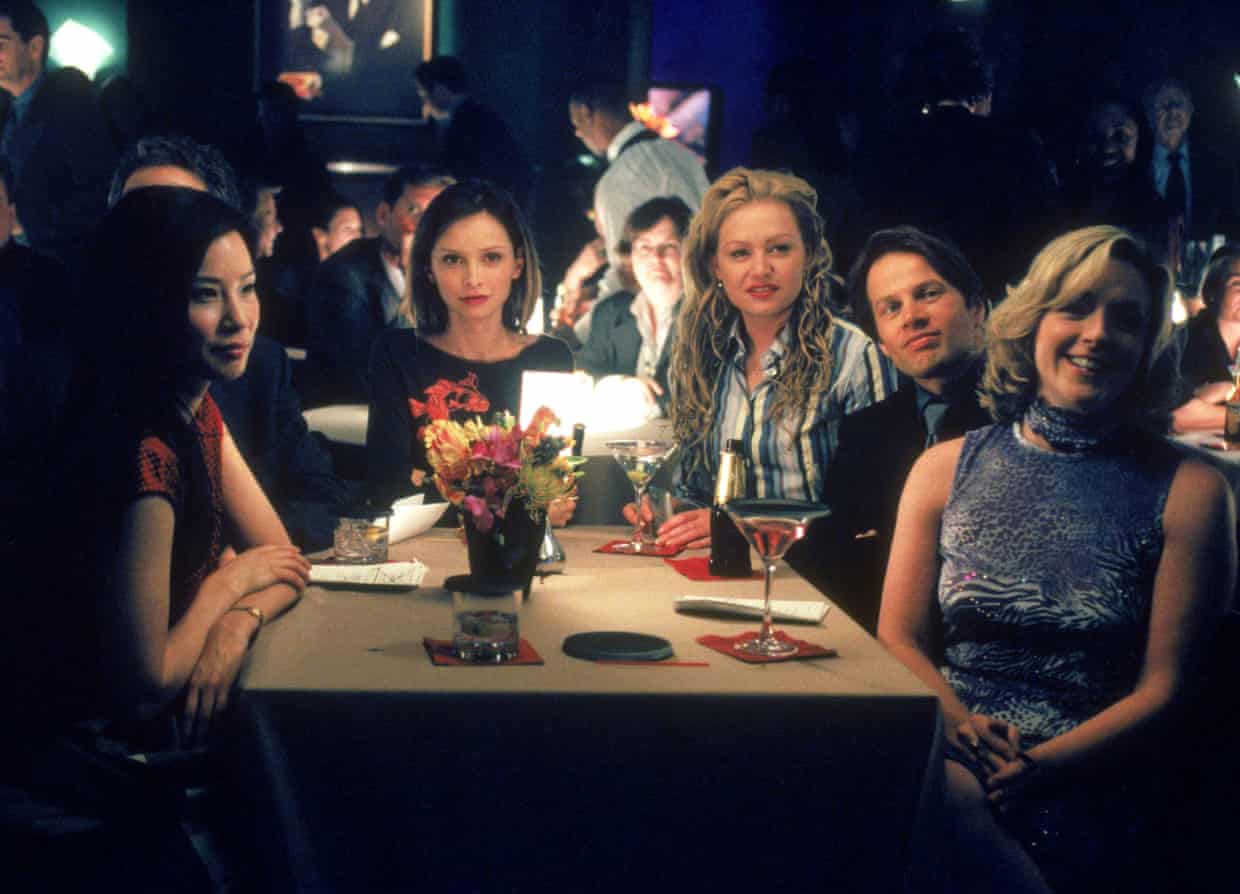
None of this is a particularly novel take. Krakowski’s unusual gifts have been recognised throughout her career; she is rarely off the nominations list for Emmy, Golden Globe and Actor (formerly Screen Actors Guild) awards. She’s one of those actors who always gets mentioned during Tony season, even when she’s not nominated (which she has been three times, winning once), and was in London at the weekend for the Oliviers, nominated for Here We Are, the maddening final musical by Stephen Sondheim, 20 years after winning an Olivier for Guys and Dolls. She didn’t win this time, and knew she wouldn’t – or rather, said when I spoke to her three days before, “I don’t think the odds are going my way, but I’m so thrilled to be here.” It takes a lot to get used to, how unwaveringly sunny she is, after a career of exquisitely difficult characters.
It’s presumptuous, given her years on screen, to decide that someone’s main love is the stage, but it’s also a fact that Krakowski, 57, rarely goes two years without being in a play, most recently Oh, Mary! on Broadway. It has an “incredibly loyal and returning gay fanbase”, she says. “That experience was so joyous.”
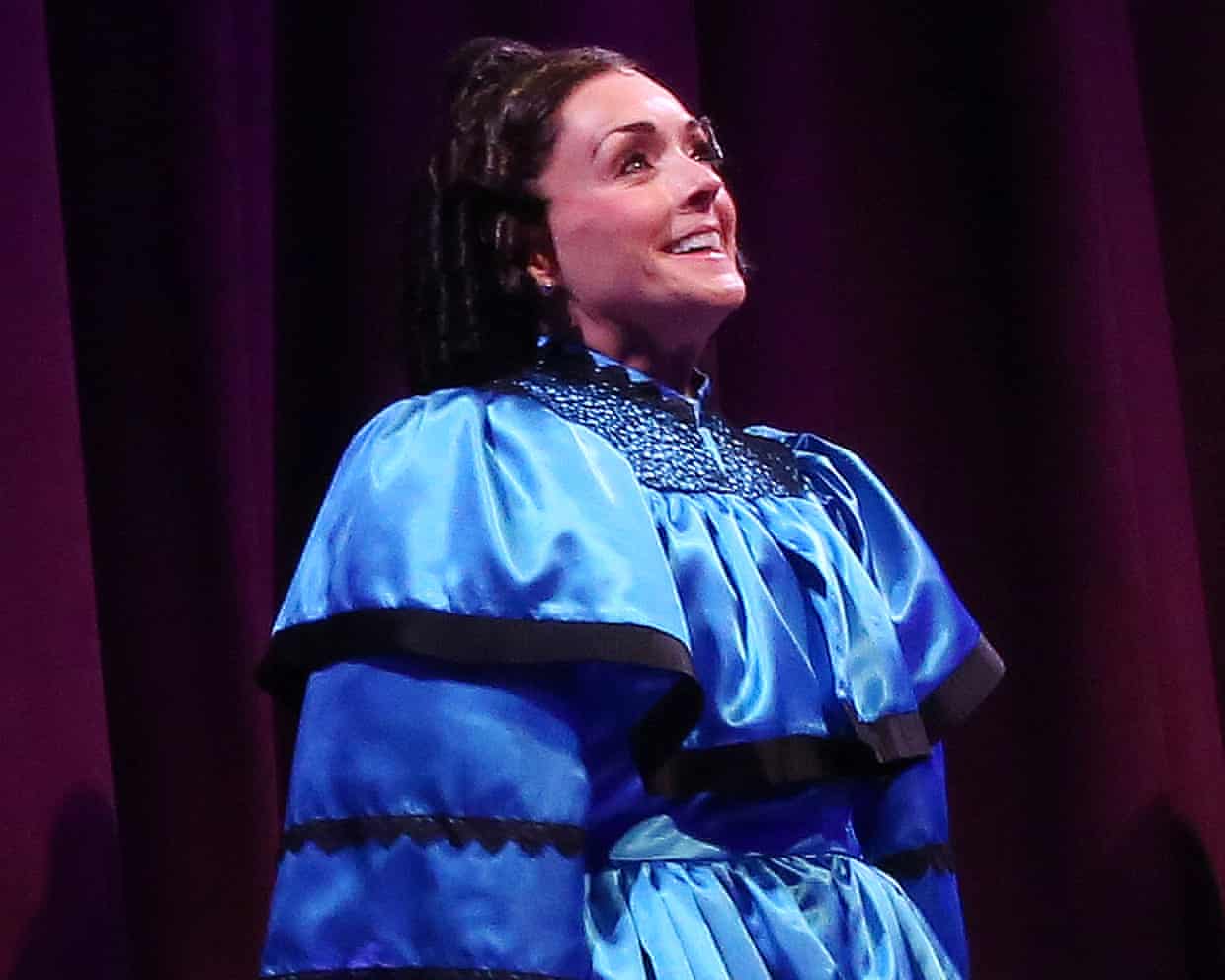
She is, as she tells it, the product of a family eccentrically in love with the stage. She grew up in New Jersey, her dad a chemical engineer, her mother a college theatre teacher: “We were a family that would wait in the TKTS line in New York City for hours to get tickets we could afford, and we would see everything we could.” She wanted to be a ballet dancer, but then “at a certain point, I realised I was not going to be picked for the School of American Ballet”. That world was “always striving for a version of perfection”, she says. “It was a very different time.” This was the late 70s, early 80s. “I think that now there’s more interpretation of who would be in a ballet company. The world has opened up and changed in a beautiful way. But back in the day, you needed to have a very strict body type to be accepted into a company.”
Indirectly, that early discouragement shaped her performing identity, as she came to realise “there is no perfection, really. What makes people interesting is their quirks and flaws and singularities. I became very drawn to that, and that’s what I look for and celebrate in the characters I’m lucky enough to play.”
It also left her with a discipline that she’s audibly proud of, that classic hoofer’s grit – never missing a show, never getting a cold. She went to the Professional Children’s School, which was founded in the early 20th century so that kids with stage careers would have an education. “So I grew up learning with people who were in ensembles and were Broadway dancers – the athleticism is striking.”
She saw Chicago when she was eight, and the legendary Chita Rivera threw a rose straight at her as the curtain came down. That feels like a much more vivid and meaningful memory of hers than, say, already having a film career by the age of 12, when she was cast in National Lampoon’s Vacation. “Years later [2003], I got to do Nine with Chita. We were both nominated for Tony awards in the same category, and on the final day, after the show closed, she said, ‘You’re like me. You grew up under the same discipline.’ I was so touched by that because basically what she said was: ‘We don’t miss shows. Unless I’m in an ambulance going to the hospital with an entirely broken leg, there’s no reason I’m not going to be coming to the theatre.’”
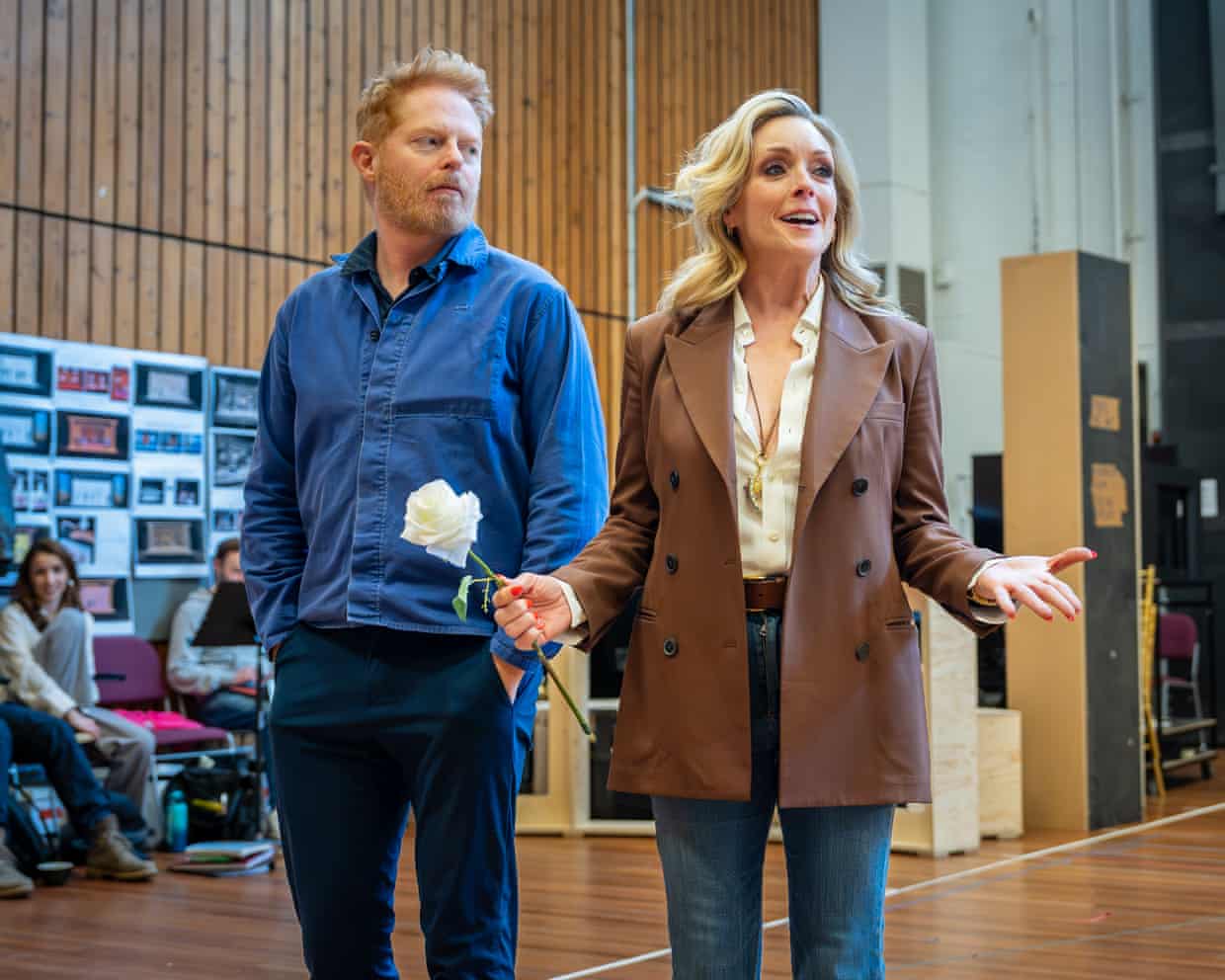
In the 80s, Broadway was invaded by Britons – specifically, Andrew Lloyd Webber and Trevor Nunn, who Krakowski is always careful to give his full title, calling him “Sir”. She auditioned for Les Misérables but they went with another actor (Frances Ruffelle – “I’m so happy that happened, we became really close friends”), and Lloyd Webber asked her to audition for Starlight Express. This, plot-wise, was the objectively absurd tale of the inner lives of a group of trains, performed on roller-skates. “I had roller-skated at preteen birthday parties in New Jersey and had the moxie to give it a go, and got that role not really even knowing what I had signed up for. My first trip to London was to see it in the West End, to see what I’d gotten myself into.”
That was 1987 – the same year Fatal Attraction came out. She had a part in the film, having auditioned on her 19th birthday. Most of it hit the cutting-room floor, but the film itself was easily the most talked-about in a decade.
Krakowski doesn’t give the impression of having chased a Hollywood career, even though, she says, “I’ve loved the movie experiences I’ve had, and making films is also really hard, the hours people put in. It might be slightly geographical, like growing up in New York and having the Broadway influence. Then with television – I don’t want to say it was my babysitter, because I had great parents who were very involved with my life – but I’ve always had such a love of theatre and such a love of television, it’s not lost on me that that’s mostly where my career went.”
Looking back, part of the originality of Ally McBeal wasn’t that it centred on an independent woman, with a job, but rather, that they weren’t played straight, Krakowski’s character least of all. She was a one-off: a mad entrepreneur, a limelight-hogger, quintessentially imperfect and unlikable. Elaine Vassal invented a face bra and a sperm-preserving Cool Cup, and an automatic toilet-seat warmer. It’s a shtick you see reprised quite often in dramedies and sitcoms now (Gina in Brooklyn Nine-Nine is a classic iteration), but it was bracingly unusual in 1997. “It became such a water-cooler show,” Krakowski says, “and I still don’t know the reasonings why certain things took off and certain things didn’t,” though she detours to mention the genius of creator David E Kelley.
Between then and 30 Rock, she was in London’s West End doing Guys and Dolls. To be honest, I’ve never seen a bad production of it, but she was so memorable as Miss Adelaide, rendering the tribulations of the showgirl waiting for the guy to pop the question as funny yet achingly poignant, that she ruined the role for everyone after – at least for a time.
“I really had trouble with that role,” she says. “I remember saying to [director] Michael Grandage: ‘What is Adelaide really saying here? Because I don’t understand where she’s coming from.’ And he said: ‘She’s saying what she means.’ Every musical I had been in was written post-Sondheim, until that point. I did not understand, until Adelaide, how to play a role without subtext.”
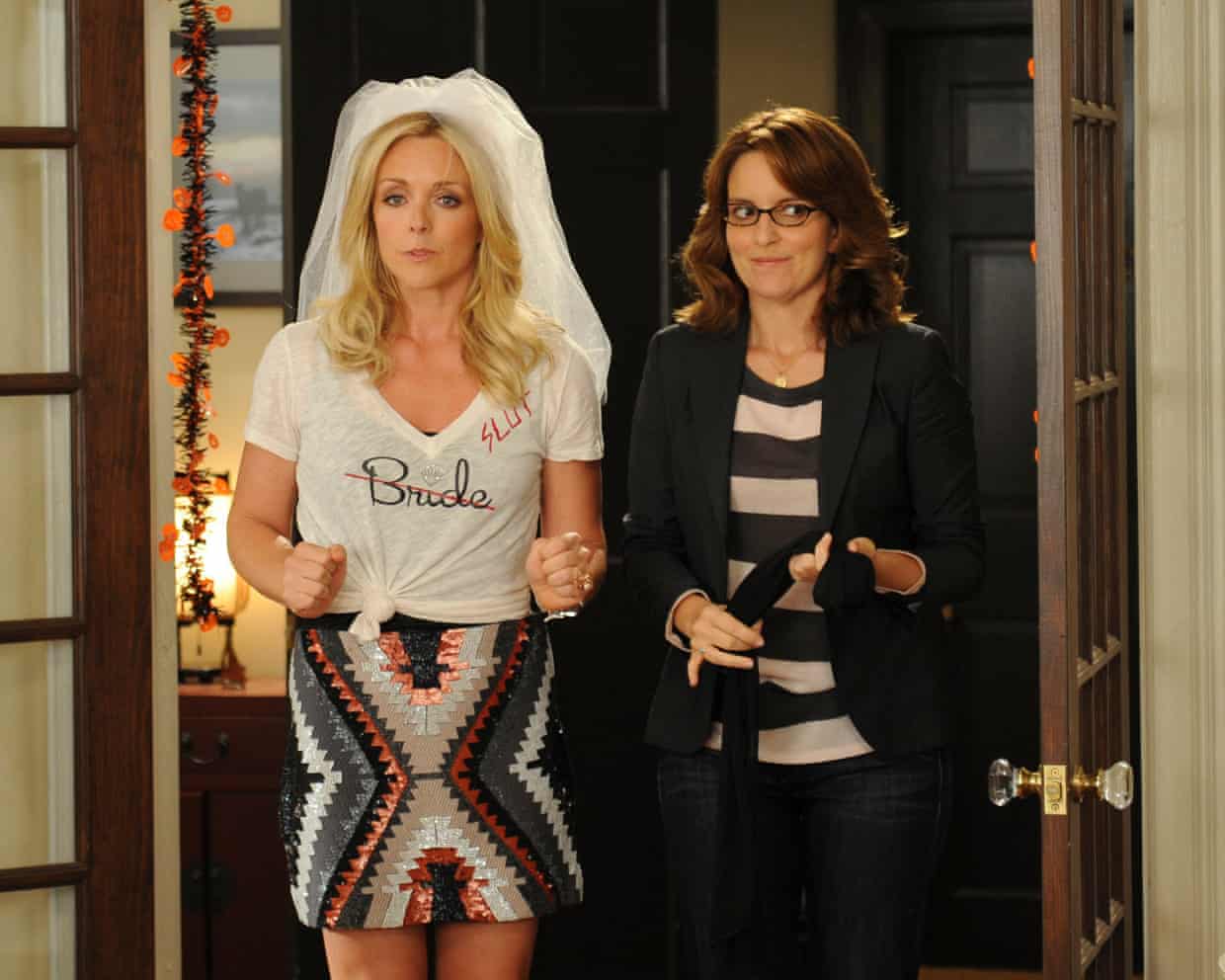
Jenna Maroney from 30 Rock is arguably the character that amassed Krakowski’s cult following. “Tina [Fey] honed my comedic voice,” she says, “a genius writer but such a smart producer, such an incredible person.” She remembers the scripts coming off the photocopier and everyone reading them while they were still warm in their hands, with no idea what was coming next – which was pretty much the viewer experience, also, in that the sitcom was so anti-formulaic.
In season five, she and Fey both got pregnant within three months of each other. Krakowski says it was a “loving and supportive environment”, but a viewer might recall the caustic lines about motherhood that started popping up in the scripts.
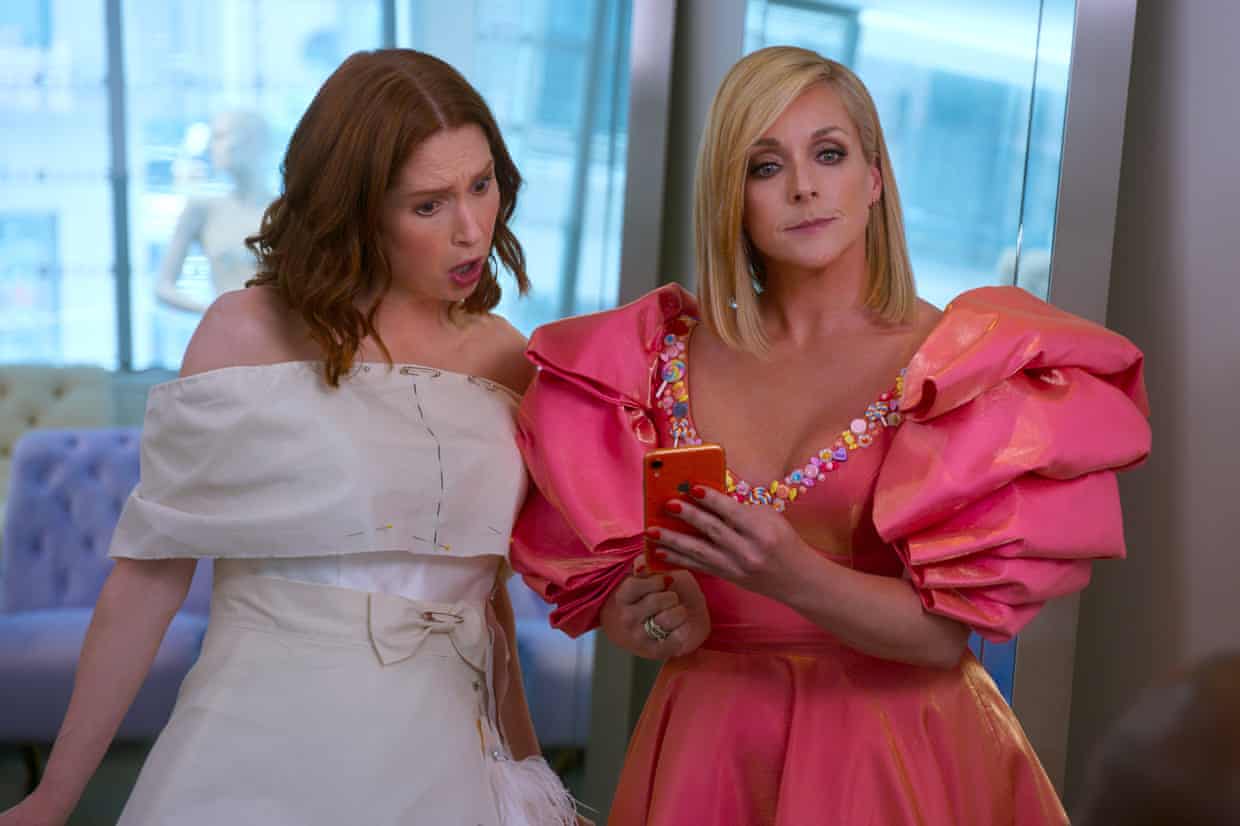
In Unbreakable Kimmy Schmidt, Krakowski merges the charismatic narcissism for which by then she was fabled with a rich-person brittleness that makes every line instantly quotable; in a way, she is again a counterpoint to the lead. Kimmy Schmidt’s backstory, of course, is that she has been locked in a cellar and out of the real world, and yet Krakowski’s Jacqueline is the one who is totally unfit for life, so spoilt that the most basic task of going to the chemist or getting water out of a fridge defeats her. She brings a quality to the most obnoxious creations – maybe not warmth, maybe just humanness – without which it’s hard to imagine Fey’s work being what it is.
Here We Are, which was on at the National Theatre in London last year, tested that to its limits, because this musical is nuts. She saw it at the Shed in New York before she was in it, and remembers “just being so envious of everyone who worked on it – what a gift to get to work on Sondheim’s final puzzle”.
It’s a puzzle all right; a family goes from one restaurant to another. They can’t get served, so they get up and leave. “Two or three songs into act two, the music just stops.” Particularly with the London cast, who were all so committed – Rory Kinnear was also brilliant, as was Chumisa Dornford-May – it’s a little bit baffling how so much thought and verve could go into something, and the audience come out none the wiser. “It is tricky!” she concedes. “It is complicated. There were times when Joe [Mantello, director of both the off-Broadway and London productions] would say: ‘I don’t have an answer for you on this. You just have to be in the room.’” You have to really love Sondheim, I think, to forgive its imperfections, which luckily Krakowski does. “What always felt very emotional to me in act two,” she says, “is that you feel Sondheim leave the room. We never want Sondheim to go away.”
Krakowski said once that her preference is for the wrong-but-right – jokes you shouldn’t laugh at, situations you can hardly bear to watch. In person, she is the opposite of that, a tumble of gratitude and generosity towards everyone she has worked with. The harder-edged work of dragging gold out of the swamp of human nature, she saves for the stage and screen, like the absolute grafter she is.