惯性聚合 高效追踪和阅读你感兴趣的博客、新闻、科技资讯
阅读原文 在惯性聚合中打开

推荐订阅源

Vercel News
Vercel News
Recorded Future
Recorded Future
CTFtime.org: upcoming CTF events
The GitHub Blog
The GitHub Blog
Application and Cybersecurity Blog
Google DeepMind News
cs.AI updates on arXiv.org
Microsoft Azure Blog
K
KPMG report finds enterprise disconnect between AI and its ROI | CIO
M
MIT News - Artificial intelligence
云风的 BLOG
云风的 BLOG
Y
Y Combinator Blog
N
News | PayPal Newsroom
freeCodeCamp Programming Tutorials: Python, JavaScript, Git & More
Help Net Security
Help Net Security
博客园 - Franky
SecWiki News
SecWiki News
Recent Announcements
T
Troy Hunt's Blog
The Register - Security
The Last Watchdog
The Last Watchdog
Webroot Blog
Webroot Blog
S
Security Affairs
博客园 - 司徒正美
S
Schneier on Security
I
InfoQ
博客园_首页
www.infosecurity-magazine.com
T
Threat Research - Cisco Blogs
Forbes - Security
Forbes - Security
腾讯CDC
N
Netflix TechBlog - Medium
N
News and Events Feed by Topic
Cloudbric
Cloudbric
T
The Exploit Database - CXSecurity.com
P
Proofpoint News Feed
A
About on SuperTechFans
Engineering at Meta
Engineering at Meta
Recent Commits to openclaw:main
B
Blog
V
Vulnerabilities – Threatpost
C
Check Point Blog
Google DeepMind News
Google Online Security Blog
C
Cyber Attacks, Cyber Crime and Cyber Security
Hacker News - Newest:
Hacker News - Newest: "LLM"
C
Cisco Blogs
Schneier on Security
O
OpenAI News
K
Kaspersky official blog

The Guardian

New Zealand’s North Island braces for Cyclone Vaianu with thousands ordered to evacuate Artemis II splashdown – in pictures Swalwell denies allegations of sexual assault as calls grow for him to withdraw from California governor race Trump news at a glance: Epstein survivors have words for Melania Trump after surprise statement Multiple people face charges, including murder, in California fireworks blast Rory McIlroy surges into six-shot Masters lead with stunning second-round flourish Roberto De Zerbi targets ‘Ange-ball’ revival to save Spurs from relegation Bath hit back to reach semi-final after stunning Northampton in 11-try epic Australia crash out of BJK Cup after Britain secure upset with doubles win Zebras, wealth and power: Hungary’s election tests Orbán’s grip on power ‘TikTok effect’ brings sellout crowds and younger fans to Grand National meeting King signs up David Beckham to his Chelsea flower show team The war over Omagh’s gold: the £21bn mine plan tearing a community apart Britain’s shadow workforce is paid as little as 65p an hour. Who cares for the carers? Tim Dowling: my wife is on a quest to restore my thinning hair SUVs are making Britain’s potholes worse, say scientists Blind date: ‘She claimed she was usually shy. I wouldn’t have guessed’ I’m a sauna person now: the Becky Barnicoat cartoon ‘I got everything I dreamed of – when I had no ability to handle it’: Lena Dunham on toxic fame, broken friendships and her ‘lost decade’ Six great reads: the man who let snakes bite him, masked heavy metal and the brutal reality for foreign students in the UK Meera Sodha’s recipe for noodles with rose beancurd, spring greens and egg Cuba’s doctors were a lifeline for the world. Now the Caribbean is shamefully complicit in the US drive to expel them An environmental disaster in Moldova has Russia’s fingerprints all over it ‘This is as important as your teeth’: are you skipping this key part of mouth hygiene? Man arrested after four die trying to cross Channel in small boat Ukraine war briefing: doubts linger in Kyiv over Moscow’s promise to uphold Orthodox Easter ceasefire Ichiro Suzuki statue unveiling goes awry as bronze bat snaps during ceremony Arrest of national war hero Ben Roberts-Smith cuts deeply to core of Australian psyche European football: Real Madrid held at home by Girona to extend winless run ‘You come back different’: how rugby players change after motherhood Human rights groups decry US plan for Guantánamo camp for Cuban migrants Potential US host cities for 2031 Women’s World Cup games mull withdrawal over Fifa concerns Arne Slot insists he is ‘aligned’ with Liverpool board and fans as squad is rebuilt Kamala Harris ‘thinking about’ running for president again in 2028 JD Vance warns Iran against trying to ‘play’ the US in peace talks West Ham double up twice to thrash Wolves and put Spurs in relegation zone Trump administration releases new renderings of so-called ‘Arc de Trump’ Bafta apologises for events surrounding John Davidson’s Tourette’s outburst Cocktail of the week: Bar Shrimp’s la rosita – recipe New drug may extend survival in aggressive ovarian cancer, trial shows One dead and 27 injured after bus with British passengers crashes in Canary Islands OpenAI CEO Sam Altman’s home targeted with molotov cocktail Alarm as acting CDC director delays report showing Covid vaccine benefits Argentina just ripped up its pioneering glacier law. What does this mean for millions of people’s drinking water? ‘Illegal’ forest service overhaul risks causing ‘chaos’ across US public lands, union claims Prince Harry sued for defamation by charity he co-founded Anthropic’s new AI tool has implications for us all – whether we can use it or not Concerns raised about motorbike tourist trail after death of British teenager in Vietnam The Guardian view on Trump’s civilisational threats: the words that fuel war must be condemned The Guardian view on dystopias for our times: the American nightmare Weather tracker: Cyclone Maila batters Solomon Islands with 115mph winds Doctors’ leader claims new reduced pay offer killed chances of ending strikes in England Netanyahu-ism has achieved nothing for Israelis – and come at a monstrously high price Deborah Levy: ‘CS Lewis’s White Witch terrified me – but I wanted to meet her’ How I Shop with Michelle Ogundehin: ‘We grownups have enough stuff already’ ‘Butter Birkin’: popcorn plastic It bag in demand by Devil Wears Prada fans Trump’s war and Melania’s Epstein statement, with US editor Betsy Reed – The Latest Orbán and Magyar trade accusations in last days of Hungary election campaign Reckonwrong: How Long Has It Been? review | Safi Bugel's experimental album of the month Martin Rowson on Middle East peace talks – cartoon Fears of UK and EU flight cancellations as airports warn of jet fuel shortages Peers vote to ban pornography depicting sex acts between stepfamily members Week in wildlife: an ostrich on the lam, a tortoise crossing a road and surfing seals ‘There’s no shortage of terrifying technology’: how AI became TV drama’s new go-to villain Texas court overturns sentence for man on death row for nearly 50 years Power up! Could force be the secret to supercharging your fitness? ‘Irresponsible failure’: Google, Meta, Snap and Microsoft slam EU over child sexual abuse law lapse Blank canvas: what to wear with white trousers Critics assemble! Here’s my list of the greatest superhero movies of all time Amazon to finally launch Leo satellite internet in ‘mid-2026’, says CEO Pete Hegseth’s holy war: the militant Christian theology animating the US attack on Iran Toxic putdowns, brutal zingers ... and an unexpected love story – inside the joyful climax to brilliant sitcom Hacks Add to playlist: the beautifully dazed, countrified indie-rock of Tracey Nelson and the week’s best new tracks ‘I’m worried there’s too much of me,’ says a birch: inside the interspecies council giving nature a voice Dolce & Gabbana says co-founder Stefano Gabbana has quit as chair Why is anyone surprised by the US and Israel’s latest war? It’s only what the world allowed them to do in Gaza Super Mario what?! The seven best obscure Mario games Holly Humberstone: Cruel World review – Taylor Swift fave trades gothic melancholy for pop glow-up Thrash review – cursed shark thriller sinks like a stone on Netflix ‘The biggest, baddest, saltiest chick you would ever see’: why no one sang the blues like Big Mama Thornton Go Gentle by Maria Semple review – a joyfully clever New York romcom ‘Tranquil, natural and barely a tourist in sight’: readers’ favourite hidden gems in Spain Benjamina Ebuehi’s sweet and salty chocolate chip cookies recipe ‘I’m not a commercial director – I’m not even a professional film-maker’: Jim Jarmusch on the seven-year journey to make his new film Malcolm in the Middle: Life’s Still Unfair review – the TV magic they’ve created here is absolutely miraculous The Miniature Wife review – Matthew Macfadyen is wasted in this pointless comedy From soups and greens to roots, how to survive the ‘hungry gap’ From fat transplants to LED mittens: how the fear of ‘old lady hands’ mobilised the beauty industry Anna Wintour’s Vogue cover is more than a cameo – it’s a power play ‘They’re gonna make me cry’: I competed at a speed puzzling championship You be the judge: should my girlfriend stop mixing gold and silver jewellery? Maritime and port workers: how is the Middle East conflict affecting you? How games capture the awe and terror of cosmic isolation Why does alcohol make us both happy and miserable – and what else does it do to our minds and bodies? I never text back – and it’s ruining my relationships The pet I’ll never forget: Beau, the labrador who saved my life Life Is Strange: Reunion review – a decade-long story comes to an impassioned close Why is gaming becoming so expensive? The answer is found in AI Sign up for the First Edition newsletter: our free daily news email Sign up for the Feast newsletter: our free Guardian food email
From sleeping lions to spitting snakes: a year in the life of London zoo vets
2026-04-19 · via The Guardian

Some images may be upsetting to young audiences

How do you shift a sedated rhino? Can a dormouse be drugged? What happens to a lion with an unusually small ear canal? How does the world’s longest venomous snake respond to treatment?

Not easily, was the answer to the final question, as Guardian photographer David Levene discovered during a year following intricate veterinary operations on some of the world’s most endangered animals.

When Levene took a photograph of a king cobra snake just after it had received an anaesthetic, the animal affectionately known as King Arthur gave him its own version of the hairdryer treatment. “I was the first person he saw after he’d been jabbed in the tail and he reared up and opened his mouth and started spitting at me. I was behind glass but I told him, ‘It wasn’t me!’” says Levene.
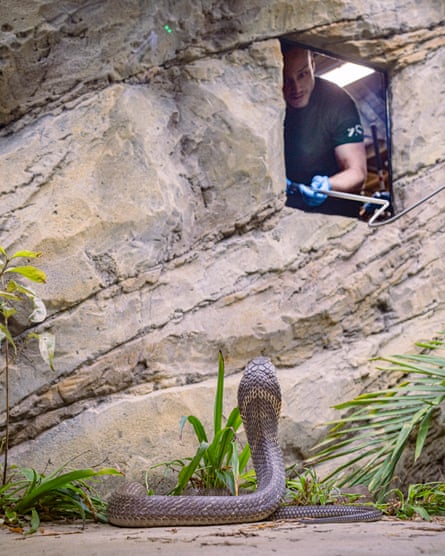
Joe Capon, reptile and amphibian keeper, tries to secure Arthur, a king cobra, inside his habitat – one bite from the young snake could kill an elephant

Large, dangerous, small, incredibly rare – the exotic and native animals kept by the Zoological Society of London (ZSL) at its zoos in London and Whipsnade pose very different challenges for the veterinary team who work for the charity.

“On the second day of the project, I found myself face-to-face with a lion – it was definitely a baptism of fire,” says Levene.

The Asiatic lion, Bhanu, was suffering chronic recurrent ear infections, which caused him to have an unusually narrow ear canal. He required a general anaesthetic to be examined fully. A “GA” is always a last resort, but Bhanu was fine. While he was under, the vets performed as many checks as they could, including inspecting his teeth – which are, of course, crucial for a carnivore’s health and happiness.

The vets who treat the animals at Whipsnade and London are a special team. Only a handful of British zoos employ their own in-house veterinarians. ZSL, which celebrates its 200th birthday this spring, has five vets, six nurses, a pathologist, a pathology technician, a molecular diagnostician and a microbiologist.
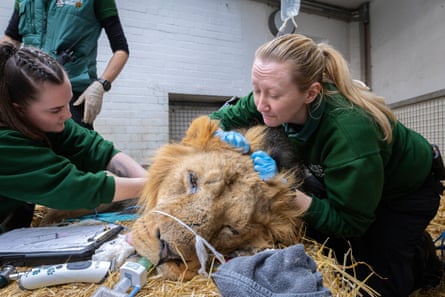
Zookeeper Tara Humphrey gets in a quick cuddle with Asiatic lion Bhanu while he is anaesthetised for a routine check on his ear canal

Over its 200 years, ZSL vets have played pioneering roles in animal health and welfare. The journals of the zoo’s first “medical attendant”, Charles Spooner, provide some of the earliest written evidence of veterinary care. A young lion cub called Nelson was suffering from mange, teething troubles and an ulcer on his lower jaw, which is often fatal for lion cubs. Spooner lanced the ulcer and administered a daily solution of sulphate of zinc, and the cub recovered.

Herpetologist Joan Beauchamp Procter, who was made the first female curator of reptiles and amphibians in 1923, transformed their care with an innovative reptile house. Oliver Graham-Jones, Britain’s first dedicated zoo vet, was appointed in 1951 and invented the handheld dart gun, allowing anaesthetics to be safely administered from a distance.

Levene’s year at the zoos began when he visited London to take photos of an art exhibition based on animal poo. Close to the artist’s studio was the veterinary hospital. “Instantly I thought, ‘Wow, I need to see what’s inside,’” says Levene, who wanted to be a vet as a boy. Months of negotiations later, he was given unprecedented access during 2025.

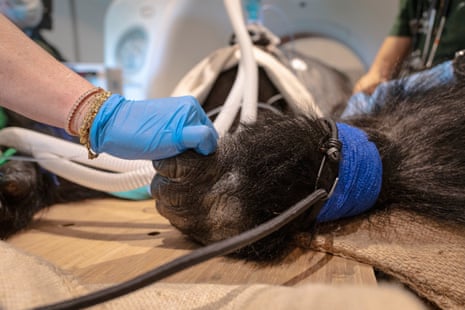
It takes more than a dozen vets, nurses and keepers to haul a sedated rhino into place for an operation – anaesthetised animals do not always fall asleep in a convenient location. Security staff had to also be on high alert when Kiburi, the 177kg, 21-year-old patriarch of London zoo’s western lowland gorilla troop, was sedated and taken for a CT scan and full health check.

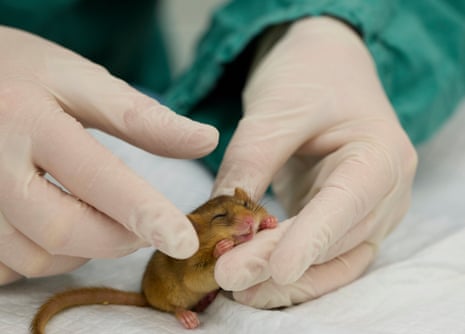
All operations require precision, but the daintiest of procedures are particularly taxing. The dormouse pictured under anaesthetic is part of a captive population bred by the zoo for UK conservation and reintroduction programmes, with the severely declining species under threat. Levene watched as nine mice were weighed “and then put under anaesthetic with gas delivered by these tiny little face masks” so their health and growth could be meticulously checked.

Although Levene was drawn to the drama of treating big, charismatic animals, his favourite picture is another image of an intricate procedure: four medical staff tending to a mountain chicken frog – a small specimen that can grow into a huge 1kg amphibian. Just 21 of the critically endangered frogs were found left in the wild during a 2023 census; ZSL is now playing a key role in the Mountain Chicken Recovery Programme, working out its wild challenges (chiefly amphibian chytridiomycosis, caused by a deadly microscopic fungus) while breeding it in captivity to increase their numbers.
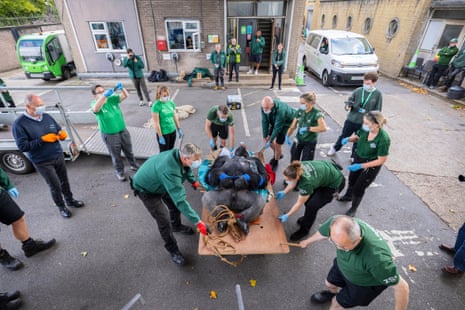
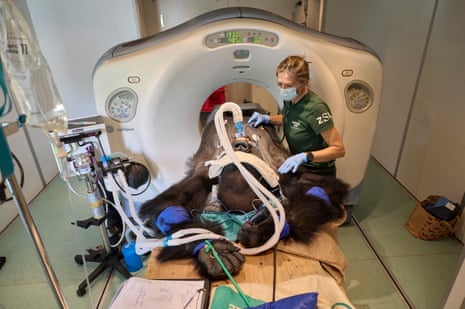
Kiburi, the 21-year-old patriarch of London’s gorilla troop
Kiburi is being investigated for potential gastrointestinal concerns
Head vet Amanda Guthrie holds Kiburi’s hand
Head vet Amanda Guthrie with Kiburi

This particular mountain chicken frog was suffering from gallstones, so vets operated on its gallbladder. “I love the intent on their faces,” says Levene. “It just shows the level of care and attention that goes into creatures large and small. They are all equal in the vets’ eyes.”

During his year behind the scenes, Levene was struck by “the passion and the professionalism that goes into the care of the animals. I was also taken with the steely focus that came over people. The vets, nurses and keepers were really lighthearted. There was lots of joking, but as soon as we were in that surgical setting, they were laser-focused. They were so concerned with the welfare of the animal that it was almost uncomfortable for the observer, because you didn’t want to get in the way.”
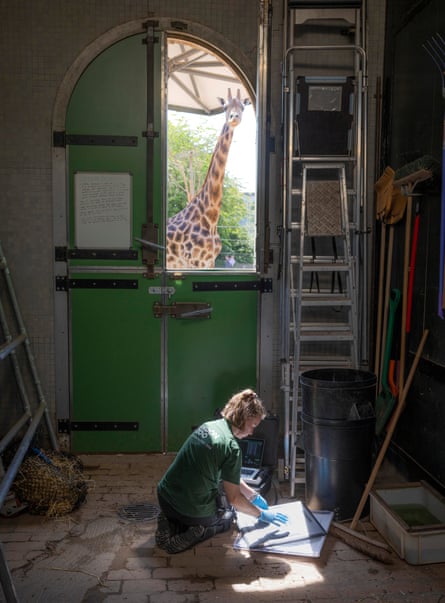
Molly the giraffe looks on while vet nurse manager Sheryl Bradley prepares the plate of a portable digital X-ray for Spot, a 20-year-old Chapman’s zebra. Zebras and giraffes share London zoo’s giraffe house, built in 1836
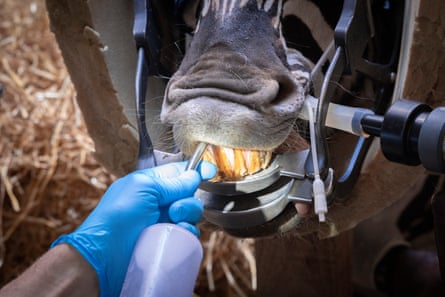
Spot has his mouth flushed out by Chris Pearce, an external vet who specialises in equine dentistry. Zoo staff were worried that Spot – normally ‘a bit of a hoover’ – had dental issues after noticing his eating habits had slowed

There was a delicate balance between Levene’s need for up-close access alongside the urgency of emergency procedures and the safety requirements of working with dangerous wild animals. “I was lucky that they trusted me, to allow me to be that close,” he says of the moment he captured the vets clustered around Bhanu the lion’s mouth, one vet using a phone – covered in big cat stickers, naturally – to better illuminate its gums.
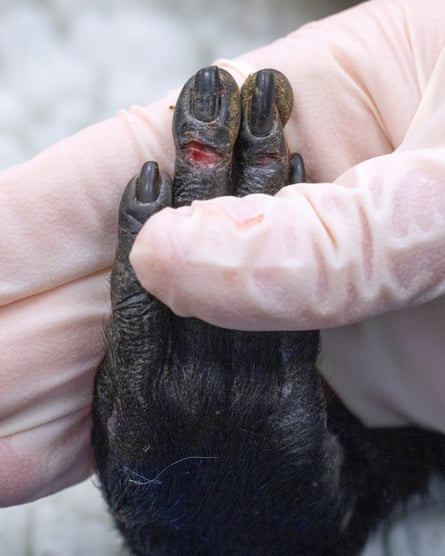
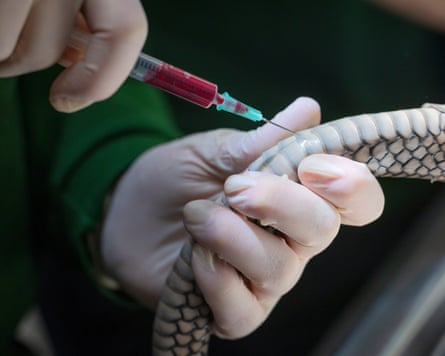
Mika, a 24-year-old diana monkey, is given a routine health check for geriatric animals
Arthur, the 11-year-old king cobra, has a small abnormality on his spine which needs regular checks

While the vets sought to maintain their detachment while treating animal patients, the keepers can’t avoid a more intimate relationship. “The keepers are living with the animals every day and get to know them really well,” says Levene. “They are still very professional, but a procedure is a much more emotional thing for them. When a dangerous animal is under anaesthetic, they are all over them – taking the opportunity to cuddle these animals, smell them.”

After taking 50,000 photos of multiple procedures over the year, Levene felt the wonder of proximity to these incredible animals, and the dedication of the professionals who care for them. The texture of a lion’s tongue; the weight of its paw – these are unforgettable encounters. At one point, Levene was persuaded to put down his camera and gently hold a sedated lion’s paw. How was it? “It was biiiiig,” he says. “It was a big unit of a paw. A good two hands-worth.”
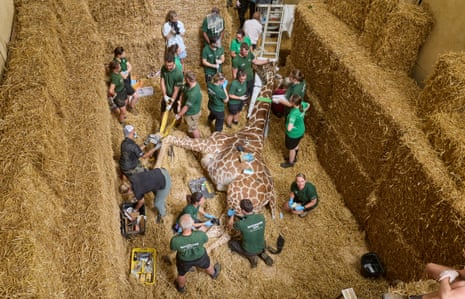
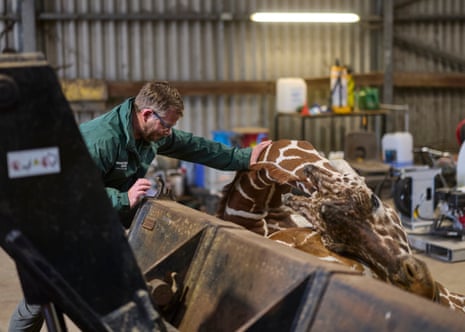
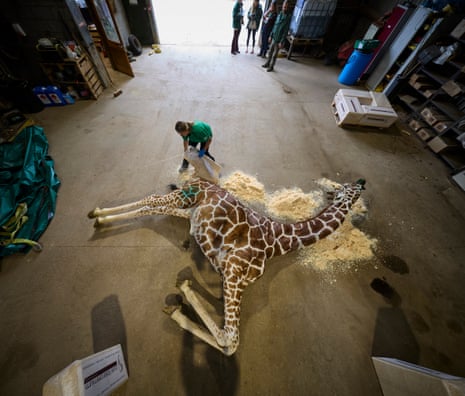
Bashu, a 4.8m (16ft) tall, reticulated giraffe at Whipsnade zoo, undergoes a life-changing hoof trim
Bashu, a reticulated giraffe at Whipsnade, has a hoof trim
Four months later, Bashu died after suffering unrelated kidney issues. He is photographed with Matthew Webb, head of zoological operations
Bashu is prepared for a postmortem examination

‘It’s a huge undertaking to anaesthetise a rhino’: the animals ‘going under’

Inside the veterinary hospital at London zoo, each day begins with a meeting, writes David Levene, shared by video link with the team at Whipsnade, to run through the schedule of treatments and procedures for the day ahead.

Cataract removal of Hugo the rhino at Whipsnade zoo | Credit: David Levene

At 8am sharp, all the Wildlife Health Services team gather in the coffee room to run through the tasks for the day ahead, typically including a mix of inpatient procedures for more serious health concerns, plus inspections and medication for animals with minor ailments. Treatments for more serious conditions, or to work safely with dangerous animals, require a general anaesthetic (GA). These can sometimes be managed in the treatment room with a vet and a nurse. More complex procedures might require multiple in-house vets, external specialist teams, three or four nurses and a supporting cast of zookeepers and other staff, often taking place within the animal enclosures rather than the vet hospital.
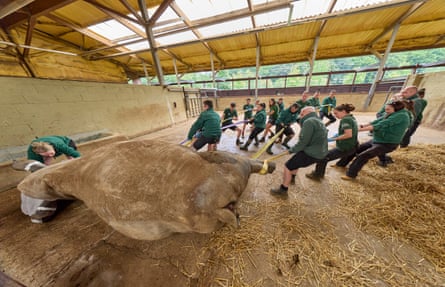
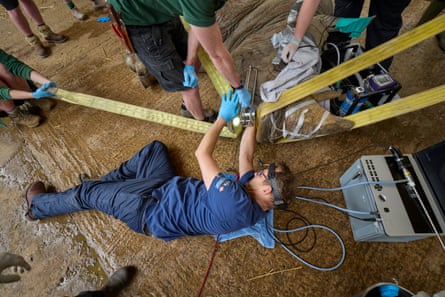
Vet staff and keepers at Whipsnade move a 38-year-old southern white rhino called Nsiswa (Sizzle, for short). It’s a huge undertaking to anaesthetise such a large animal – he weighs about 2,200kg. Sizzle is the patriarch of the Whipsnade group and has fathered many calves
Veterinary dentist Chris Pearce check’s Sizzle’s teeth using specialist equipment

Anaesthesia is routinely used for welfare and safety reasons, and to reduce stress levels placed on animals. For animals that have undergone training to teach them to offer their tail to the nurse, anaesthetising can be a straightforward process with a simple injection through a protected opening to the animal enclosure. Very large, dangerous or downright obstinate patients might require a different tack, such as a dart fired from an air rifle.

After a procedure where the animal is sedated, a “reversal” drug is sometimes used to gently bring them back to consciousness.
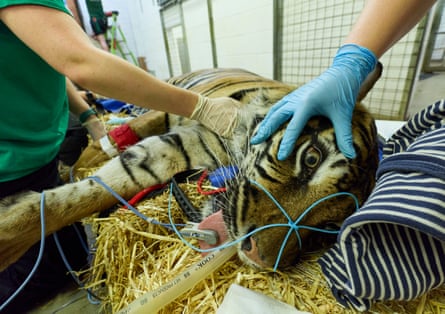
Gaysha, a 98kg, 14-year-old Sumatran tiger, is given a general anaesthetic. Gaysha has reared two litters since she’s been at London zoo; she is being implanted with a contraceptive to protect the genetic diversity of the breeding programme
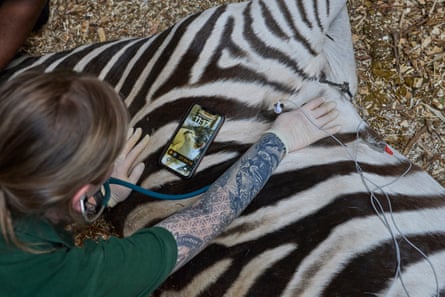
Spot the zebra has his heart rate monitored by vet nurse George Bardsley

‘I’ve had to upheave my life to do this!’ A veterinary resident’s first six months

Harriet Woodhall is the new veterinary resident at ZSL, a three-year training programme designed to offer a springboard to the lucky few candidates who have chosen zoological care as their veterinary specialism.

A large proportion of trainees would say that they’d love to become a zoo vet, but only a handful manage it.

“I’ve had to upheave my life, and my partner’s life!” Woodhall says. “If you’re not willing to make the sacrifices in pay and time off and life outside of work, then I can understand why people give it up.”
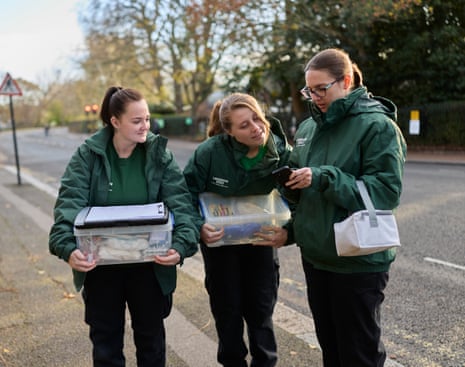
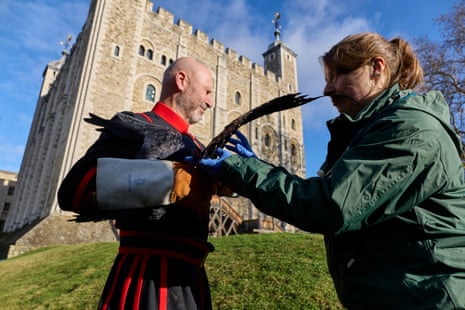
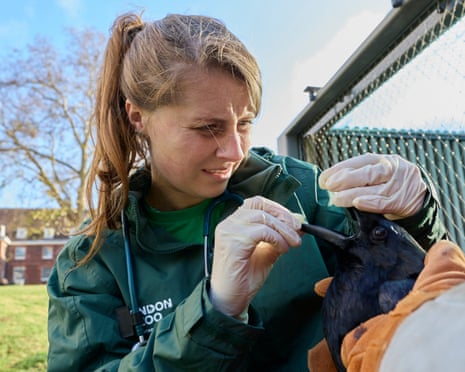
Harriet Woodhall (centre) heads to the Tower of London to check on its ravens
With ravenmaster Barney Chandler
Woodhall with one of the ravens. ZSL’s wildlife health team are responsible for carrying out annual health checks on the birds
ZSL’s wildlife health team carry out annual health checks on the birds

Like many other vets before her, Woodhall cut her teeth working almost exclusively with domestic cats and dogs in small-animal practice – where about 80% of UK vets work – before moving into exotics such as reptiles and amphibians. This foundational work is essential: traditional practice builds the surgical and clinical skills that can later be applied to the dizzying numbers of species and physiologies found in zoo settings, worlds away from the familiar mammals found in homes around the world.

As one ZSL veterinarian explained: “It’s very rare that someone will just graduate and go straight into a zoo. You need to be spaying pets, doing routine surgeries, caesareans, intestinal surgery, so you’ve got good foundational knowledge and skills.”

Woodhall knew from a young age that she wanted to work in zoos. “Whipsnade wasn’t our closest zoo, but it was the one that I would go to. I remember going a lot as a kid and seeing the changes over the years. I even remember the days when elephants were walking around the zoo and they had sea lions and all sorts. Going there inspired me to go into this field.”
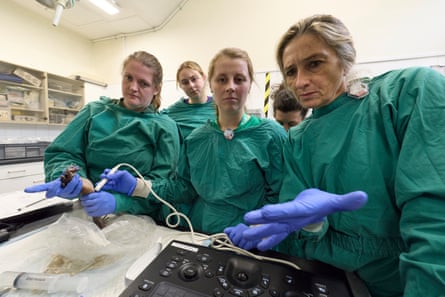
Vet Taina Strike (right) helps Woodhall as she gives an ultrasound scan to a mountain chicken frog, who is suffering with gallstones. Strike, who recently retired as a ZSL vet after 26 years, was a mentor to Woodhall. ‘She’s just an inspiration as one of the first women in zoo medicine,’ says Woodhall.
Vet Taina Strike (right) helps Woodhall as she gives an ultrasound scan to a mountain chicken frog. Strike, who recently retired as a ZSL vet after 26 years, was a mentor to Woodhall. ‘She’s just an inspiration as one of the first women in zoo medicine,’ says the young vet
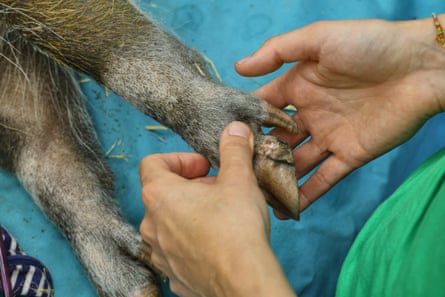
Woodhall checks a cracked hoof belonging to Cameron, a 10-year-old red river hog

‘These are rare animals. We want to learn more about them’: inside the pathology department

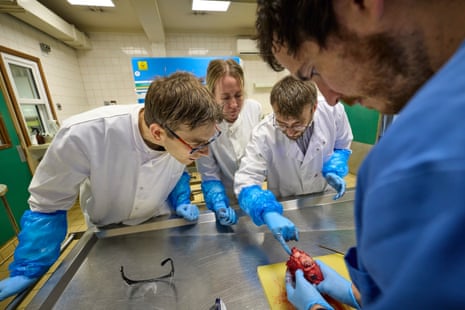
Simon Spiro is the UK’s only full-time zoo pathologist, “possibly the only one in Europe”, he muses. The pathology department he runs plays a vital role within ZSL and beyond, helping zoological science to achieve a deeper understanding of all the varied species held within the zoo’s collections.

Spiro is responsible for assigning a cause of death to every animal that dies at London and Whipsnade zoos, both as a legislative necessity as well as for general transparency. It’s “part of how we’re regulated and monitored, so people can be confident that animals aren’t dying for horrible reasons that no one would ever find out about”.

But his analyses also feed back to the team of vets working day in, day out to care for the zoos’ animals.
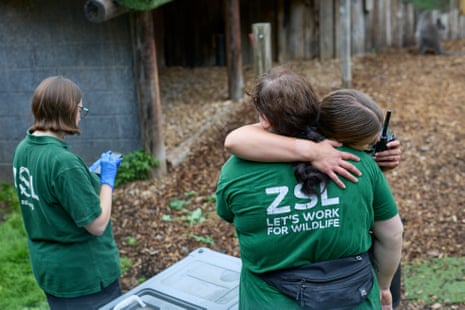
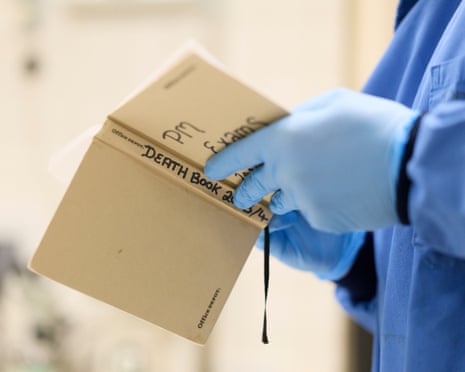
Zookeepers at London zoo. Nugget, an eight-year-old wallaby, had been found with a head injury
Simon Spiro, ZSL’s in-house pathologist, makes notes in his ‘Death Book’, after conducting a postmortem on Nugget
Pathologist Simon Spiro makes notes in his ‘Death Book’, after conducting a postmortem on Nugget
Pathologists examine Nugget’s brain
Pathologists examine the wallaby’s brain

“The vets are diagnosing animals, they’re treating animals. They need to know if they’re correct. It’s one thing to make a diagnosis, and we may work on the presumption that an animal has cancer, for instance, but until you have the pathology, until you have the results of the postmortem, you can’t really know for sure. So that lets us mark our own homework, as it were. It lets us know what we’ve got right, but then it also lets us know what we’ve got wrong.”

The work that Spiro and his team carry out in the pathology and molecular diagnostics labs also contributes to a multitude of research programmes and initiatives, helping to monitor the spread of zoonotic diseases, develop thinking about animal welfare, and inform governmental policy and decision-making.

“You can’t do all the investigations you might want to do on an animal while it’s alive. These are rare animals. There’s not much we know about them and we want to learn more about their anatomy, their physiology.

“ZSL is a conservation organisation, and conservation is fundamentally about stopping animals from dying, and if you don’t understand why they’re dying there’s no way you can do that.”
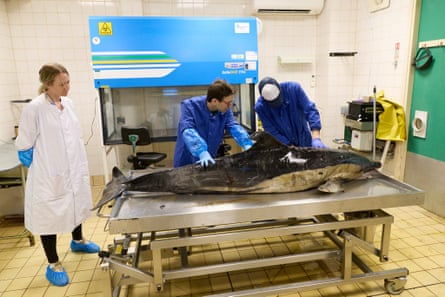
Spiro (centre) and his colleague Matt Perkins, conduct a postmortem on a porpoise that was found stranded in Cornwall. Spiro and Perkins are both part of ZSL’s Cetacean Strandings Investigation Programme
Spiro (centre) and his colleague Matt Perkins conduct a postmortem on a porpoise that was found stranded in Cornwall. Spiro and Perkins are both part of ZSL’s Cetacean Strandings Investigation Programme

‘The zoo was never originally intended to be a place of entertainment’: the importance of science and conservation

Gallbladder operation on a mountain chicken frog at London zoo | Credit: David Levene

London zoo isn’t just a zoo. It plays a major part in a global network of animal science and conservation. The ZSL, of which London and Whipsnade zoos are part, was founded 200 years ago by Sir Thomas Stamford Raffles “for the advancement of zoology and animal physiology”. That central ethos holds true to this day.

“The zoo was started as a scientific organisation to study animals,” says ZSL’s head vet, Amanda Guthrie. “It wasn’t originally intended to be open to the public. It wasn’t for quite a few years until people realised that they probably needed money to operate the zoo! Bringing visitors in would allow that. But the zoo was never intended to be a place of entertainment. It was primarily for the scientific study of animals and it stayed that way.”
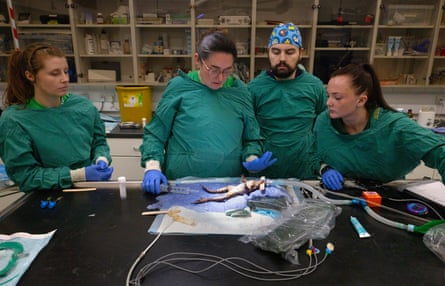
A mountain chicken frog has an operation to remove its gallbladder. The procedure on the frog – which can grow up to 1kg – is a success. ‘I’ve done surgery on smaller animals,’ says Guthrie (second left). ‘There’s nothing better than a giant frog’
A mountain chicken frog has an operation to remove its gallbladder. The procedure on the frog – which can grow up to 1kg – is a success. ‘I’ve done surgery on smaller animals,’ says head vet Amanda Guthrie (second left). ‘There’s nothing better than a giant frog.’ ZSL has been at the forefront of protecting and reintroducing this critically endangered species
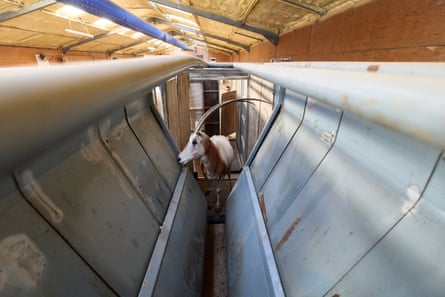
A scimitar-horned oryx is brought into a specially designed enclosure to allow the wildlife health team to carry out basic health checks. Once declared extinct, the scimitar-horned oryx has now been downlisted to endangered

The ways in which ZSL contributes to the advancement of scientific understanding and animal conservation are myriad, encompassing outreach, education, research, protection, preservation and even reintroduction of endangered species. It works with multiple partner organisations, domestic and international, to further knowledge and expertise about animal health and husbandry. It runs a wildlife disease risk analysis initiative with Natural England and contributes data to the Zoological Information Management System database that charts the health and welfare of thousands of species around the globe.

“We follow animals in the zoo from birth until death, we keep detailed records, and we do a full postmortem investigation when they die,” says Guthrie. “We understand every single aspect of their life. We get to learn new stuff every day, so the fulfilling and rewarding part of this job is to contribute to the science and knowledge that, in 30 years, someone can refer back to what we’ve discovered or described, and it’ll benefit those animals in the future.”
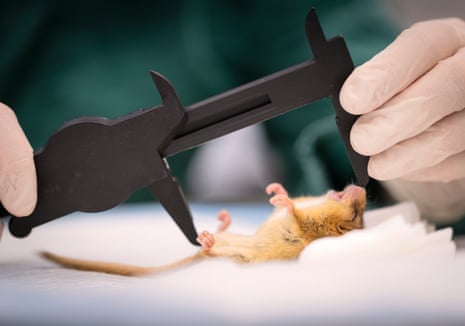
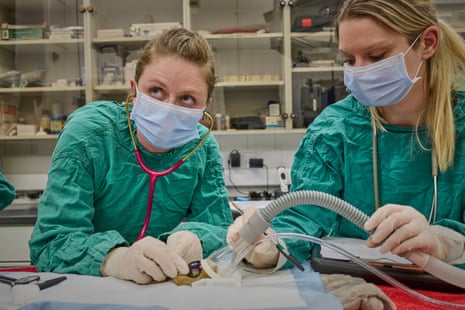
An anaesthetised hazel dormouse is given a health check
Dormice numbers have fallen by 70% in Britain since 2000
This one will be released to a new woodland home