







Scientists have found high levels of toxic Pfas, or “forever chemicals”, in soil, water and throughout the marine food chain in the UK’s Solent strait, including at protected environmental sites, according to a new study.
In some samples, pollution was 13 times the safe threshold for coastal waters. Others, which were below legal limits for individual chemicals, failed tests for combined toxicity.
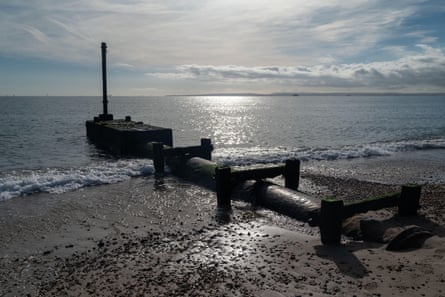
The samples were taken from the Solent strait, which runs between the Isle of Wight and the mainland, forming part of the Channel. The chemicals are thought to have entered the environment from wastewater treatment plants, sewage outflows, historic landfills and nearby military sites.
Researchers said their findings highlighted the need to monitor chemicals in combination and to make a blanket ban on Pfas part of the government’s water reform agenda.
Prof Alex Ford, a biologist at the University of Portsmouth and one of the study’s authors, said: “If there was an oil spill in the Solent that industry would have to pay for the restoration of those habitats, but that doesn’t happen with sewage.
But he added: “This is one thing I don’t necessarily pin on the water companies because they don’t have the capacity to treat these compounds. That’s why they should be banned at source.”
Per- and polyfluoroalkyl substances (Pfas) are a family of chemicals used for their long-lasting qualities in various industries and household products including non-stick cookware, food packaging and waterproof clothing.
They are often known as “forever chemicals” because they are not easily broken down and have been linked to a range of diseases in humans and wildlife by scientists.
Researchers analysed government data, testing at water utilities, and their own samples from a dozen species of fish, seaweed and invertebrates. They found Pfas were entering the Solent in treated effluent from wastewater plants in Portsmouth and Fareham operated by Southern Water, the utility that provides drinking water and sewerage for Kent, Sussex, Hampshire and the Isle of Wight.
The study also mapped 194 combined sewer overflow outfalls and more than 500 nearby historic landfills that researchers believe could also contribute to the pollution.
Some of the samples taken from marine wildlife contained individual chemicals above existing safe legal limits, including in the livers of harbour porpoises. Far more failed a newer European Union test for combined toxicity, which weighs the relative potency of Pfas combined.
All but seven of English surface waters tested fail the combined test, as would a number of remote lochs and burns in Scotland.
“I don’t think our story is specific to the Solent,” Ford said. “I think we would see a pattern all around the UK.”
A Southern Water spokesperson agreed on the need for new legislation “to restrict or ban certain chemicals”.
“Tackling the presence of these chemicals is a challenge for society as a whole,” they said. “The most sustainable solution is to meet the problem at source … and keep [the chemicals] out of pipes and the environment in the first place.”
Despite Pfas’ persistence in the environment, evidence shows that restricting their use can be effective.
The EU is moving towards a blanket Pfas ban, probably with some exceptions for medicine and other critical uses. The British government said it would consult on setting limits for the chemicals and carry out further tests when its own Pfas plan was published in February, promising a “framework … to understand where these chemicals are coming from, how they spread and how to reduce public and environmental exposure”.
However, the Marine Conservation Society, which funded the Solent study, said: “We need to go further and faster.”
“It’s not good enough to plan to have a plan,” said Calum Duncan, head of policy at the environmental charity. “We urgently need action and we have this once-in-a-generation opportunity with the water reform process to get on and do that.”