


Anger and momentum are building for Scottish style rights of access to mountains, meadows, rivers and woodlands in England where the public is allowed on just 8% of land, a new documentary suggests.
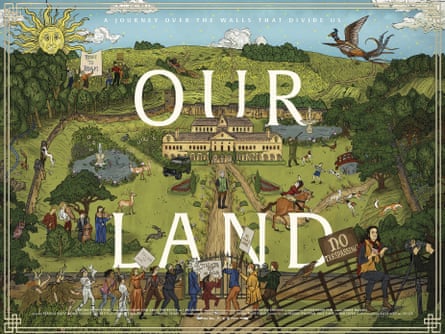
Our Land, a film whose title is a nod to the protest song by Woody Guthrie, explores the rise of the right to roam movement in England.
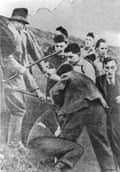
The movement, which began five years ago, uses tactics learned from early 20th-century campaigners, whose mass trespass on Kinder Scout in the Peak District in 1932 was seen as a catalyst for change, marking a shift in public opinion.
The documentary, directed by Orban Wallace, follows campaigners as they take members of the public on smaller mass trespasses on private land in England, and interviews landowners from Devon to Scotland.
Wallace said: “I hope this film will be a deep listening exercise for the country and start an informed conversation. No one is having that discussion at the moment, people are on opposing sides.”
In the last two years, those campaigning for public rights to be extended, say the momentum has built.
A catalyst was the battle to keep wild camping rights on Dartmoor in Devon, after landowners won a high court ruling that gave them the right to remove campers from their 1,600-hectare (4,000-acre) estate on the southern part of the moor. The move provoked fury and a campaign of mass protest rallies, with legal action leading to the supreme court overturning the decision.
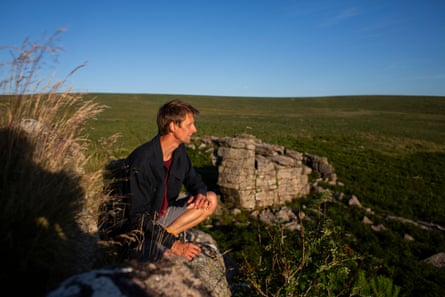
“When Dartmoor happened it unleashed this seam of energy that has been building in England … It is impossible to withstand. It has its own momentum now,” said Nick Hayes, the author of The Book of Trespass, and a right to roam campaigner. “What we need, what we are crying out for, is that these hundreds of thousands of acres of forests, meadows, of rivers and wetlands, should be opened up to the public that so badly need them. The people who own them can go on owning them.”
Campaigners want the government to introduce a Scottish-style rights of access law to allow ordinary people to responsibly enjoy nature that is contained on private land.
The 2003 Land Reform (Scotland) Act established a legal right of responsible access to most land and inland water in Scotland for walking, cycling, and camping. Similarly, in Sweden and Norway, the right of public access, or Allemansrätten, gives everyone the freedom to roam and explore the beauty of the countryside.
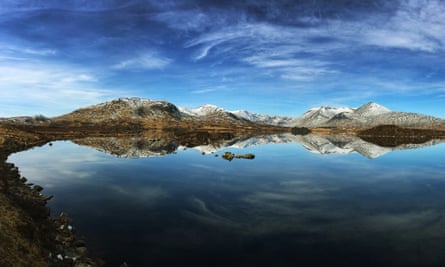
The Scottish peer and landowner John Grant is filmed in the documentary driving around some of his estate, pointing out areas where the public can camp, cycle and kayak.
“Everyone, whatever their age or ability, has access rights under [the] 2003 act but you only have rights if you exercise them responsibly,” he said.
“We have found that people then really do care for the land … We all belong to the land, the land doesn’t belong to us.”
Other landed gentry featured might take more persuading. When Francis Fulford, who owns a 1,200-hectare estate in Devon, is asked if he would like to share the beauty that he and his family can enjoy on private woodland walks on the estate, he says: “Only to people who pay, make a contribution to the upkeep.
“Imagine the cost to [a] landowner to make sure his whole estate is safe for the general public who are completely ignorant, most of them, of rural ways of life.”
Some farmers have expressed concern that the general public do not understand how the countryside works, with examples given of gates being left open, putting livestock at risk, and crops being disturbed by people and dogs.
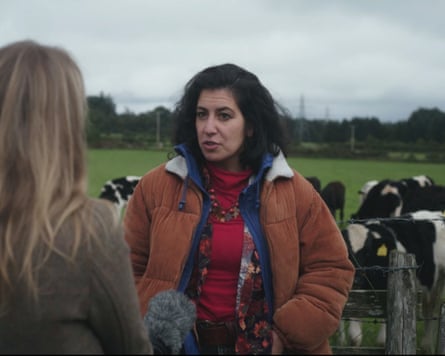
Nadia Shaikh, a naturalist and right to roam campaigner who has moved to Scotland, said closeness to nature gave people there a sense of belonging and responsibility. “If you are going to cut people from the landscape for hundreds of years there is going to be some deep learning to do,” she said. “But it’s not impossible that the English public can learn to, for example, shut gates, if we invest in some education.”
Guy Shrubsole, the author, land activist and right to roam campaigner, said access to the countryside would be dependant on people acting responsibly. He said there was no right to roam over 92% of the English countryside.
The last expansion of access was brought in by the last Labour government, in the Countryside and Rights of Way Act of 2000. Creating a new right to roam law would mean access would no longer be subject to the arbitrary whim of big landowners, 1% of whom still own 50% of England.
The government indicated it did not support a direct adoption of the Scottish model given differences in land use, population density and land ownership patterns in England. A Department for Environment Food and Rural Affairs spokesperson said: “Our countryside and green spaces are a source of great national pride, but too many people across the country have been left without access to the great outdoors.
“We are increasing access to nature and the countryside, creating nine new national river walks, designating the Coast to Coast route in the north of England, and launching the 2,700-mile King Charles III England coast path.”
-
Our Land is released in cinemas on 8 May